TL;DR
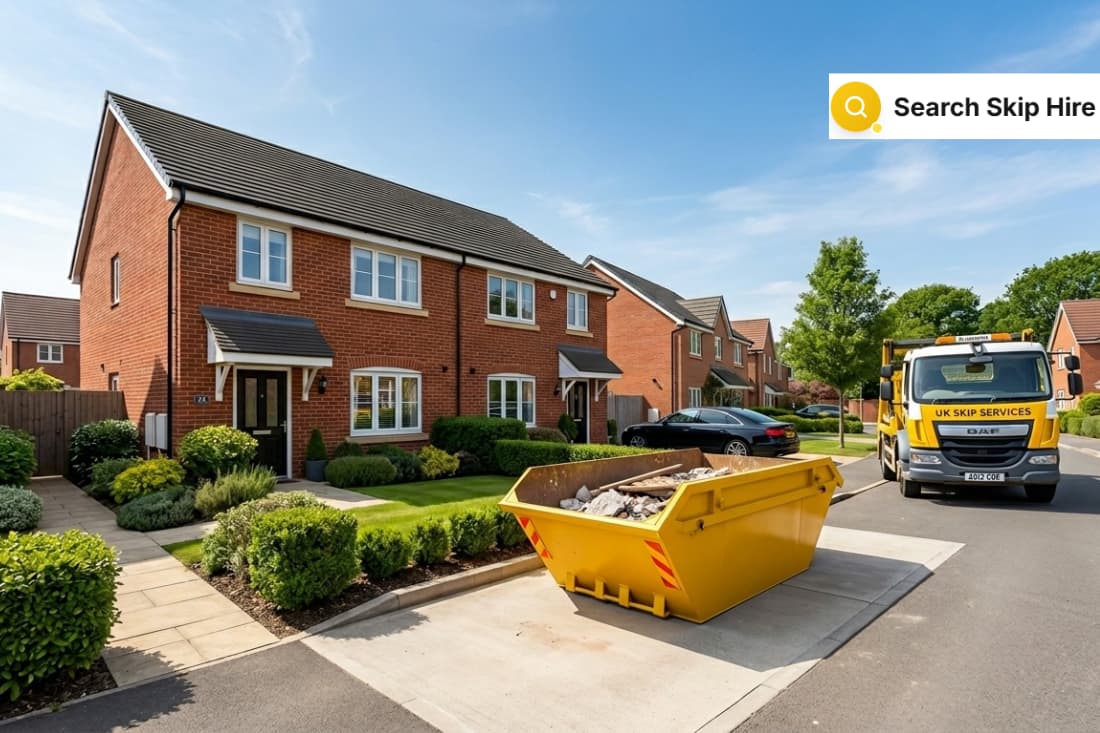
Skip hire in the UK is a waste management service where licensed companies deliver a large container to your property, you fill it with allowed materials, and they transport it to a licensed facility for proper processing and recycling. Understanding the rules around skip sizes, prohibited items like asbestos and batteries, and permit requirements for road placement helps you choose the right service while staying compliant with local regulations.
In the UK, hiring a skip means renting a large, open metal container for a set time to collect a lot of waste. A licensed company drops it off at your home or site, you fill it with allowed rubbish, and they take it away to be processed correctly.
This service is essential for handling waste from home renovations, garden clear-outs, or building work, making sure everything is dealt with responsibly under official rules.
Knowing how it works helps you pick the right service and stay on the right side of the law. Keep reading to learn everything you need to know.
Skip Hire Essentials at a Glance
Hiring a skip gives you a single, convenient container for collecting large amounts of mixed waste from your project.
The service is regulated. Placing a skip on a public road needs a council permit, and putting banned items in it can lead to big fines.
Costs depend on your location, skip size, waste type, and if you need a permit, so it's smart to get a few quotes.
The Definition and Core Service of UK Skip Hire
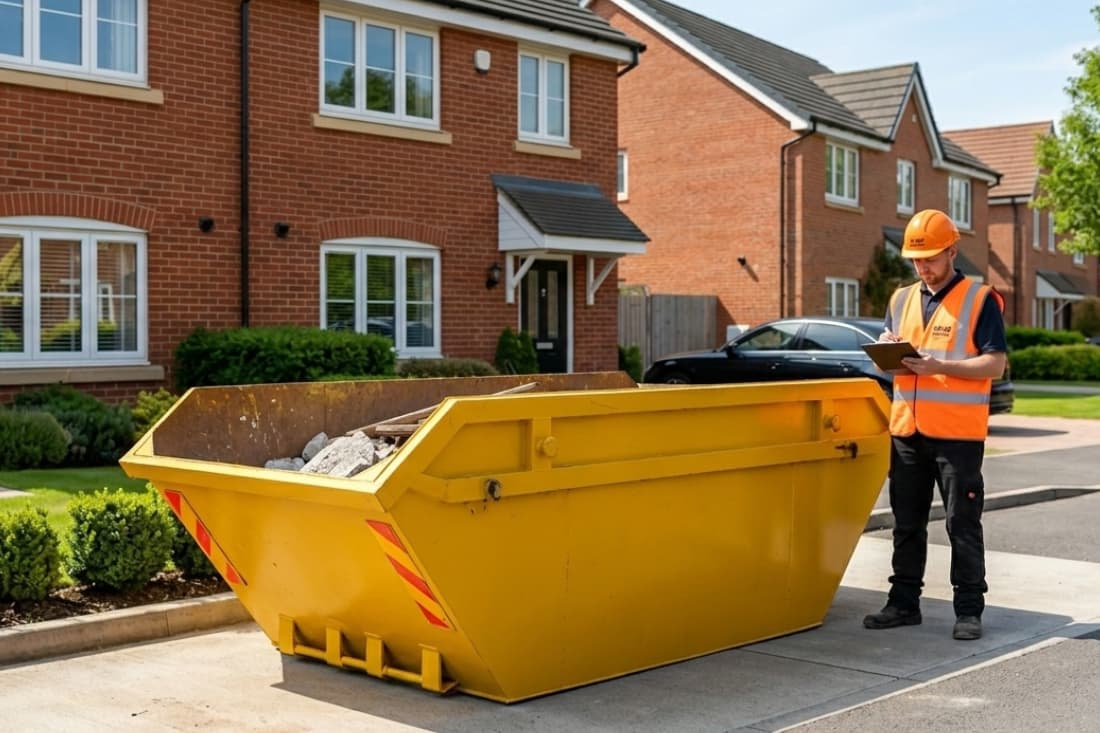
Skip hire is a temporary waste solution. A company delivers a large container, often called a builder's skip, to your home or site. You fill it with your project waste over the hire period, usually 3 to 14 days. The driver then comes back with a specialised lorry, picks up the full skip, and takes it to a licensed waste facility.
At the facility, the waste is sorted. Recyclable materials like metal, wood, and clean soil are separated and sent for recycling.
Any remaining general waste is processed following UK rules. The aim is to keep as much out of landfill as possible. According to the University of Oxford,
"From 31 March 2025, new legislation will be coming into force regarding how workplaces should segregate their waste... all workplaces in England have a legal duty to segregate their waste into the following categories: dry recyclable materials, food waste, [and] black bin waste." - University of Oxford
A Step-by-Step Walkthrough of the Skip Hire Process
The process is designed to be straightforward. Here’s how skip hire works step by step in practice.
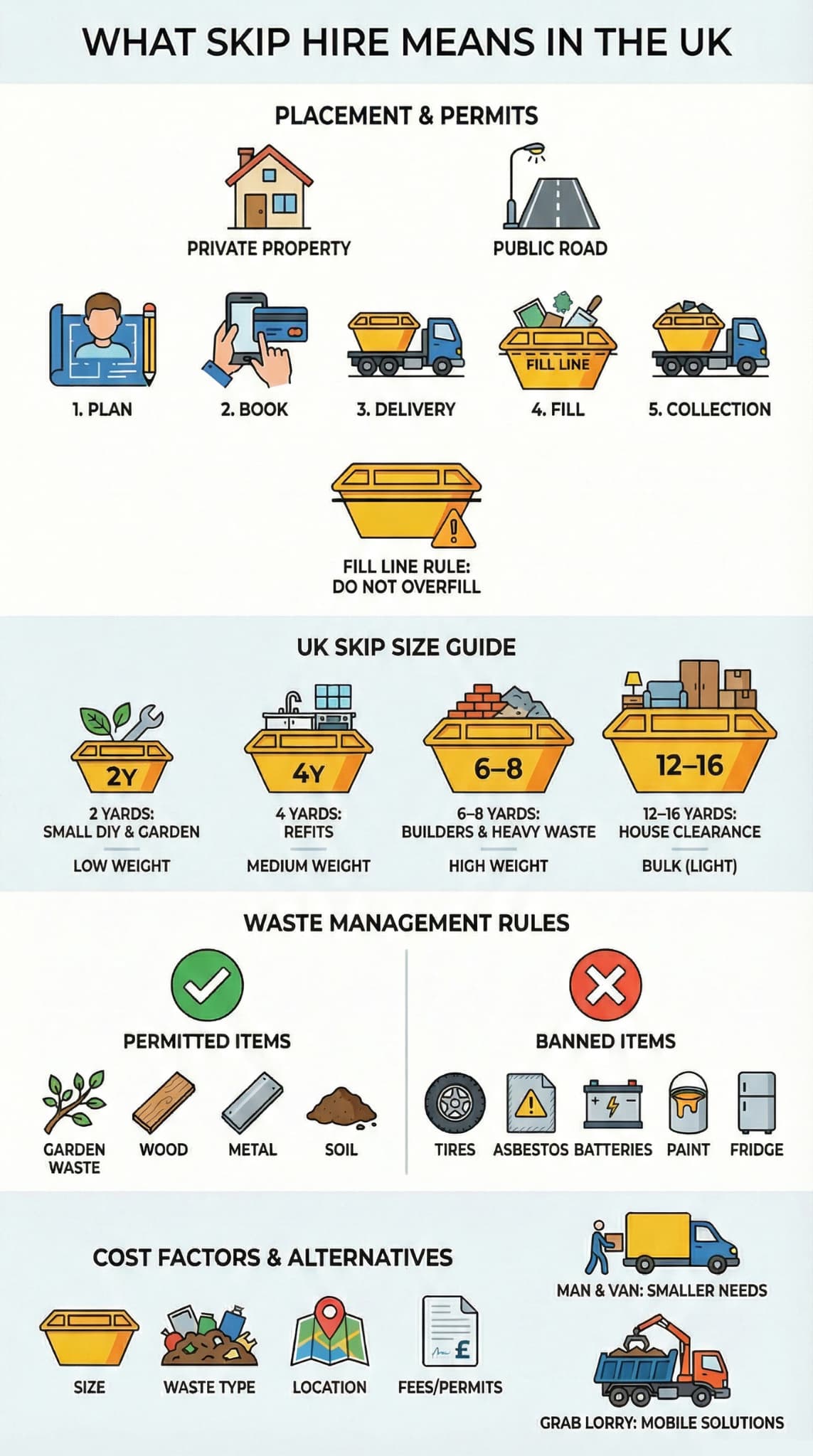
Plan your project. Start by thinking about your job and how much waste it will create. This helps you choose the right skip size.
Book your skip. Contact a local skip hire company by phone or online to check availability and get a price.
Arrange delivery. Tell the company where to place the skip, on your private driveway or on the public road. If it needs to go on the road, they will usually apply for the council permit for you.
Fill the skip. Load your waste into the skip, making sure not to fill it above the marked line or include any banned items.
Schedule collection. Contact the provider to arrange pickup once your job is finished or when your hire period ends.
Understanding Standard UK Skip Sizes and Their Uses
Choosing the right skip size is crucial for cost-efficiency and practicality, especially when you understand the core principles behind Skip Hire UK fundamentals. Sizes in the UK are measured in cubic yards, which refers to the volume they can hold.
Using a skip that's too small means you might need a second collection, while one that's too large wastes money and space.
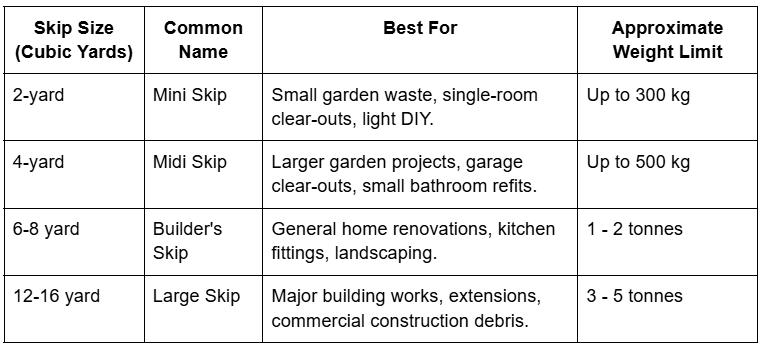
The table above shows the most common options, however, it varies by provider. It's vital to note each skip has a weight limit.
Overloading a skip with heavy materials like soil or rubble can lead to extra charges or the skip being refused for collection.
What You Can and Cannot Put in a Skip
Not all waste is created equal, and skip hire has clear rules about what materials are accepted. These rules exist for safety and environmental reasons. Generally, you can dispose of common household and construction waste.
Permitted waste typically includes:
Household waste from a clear-out
Garden waste and organic waste
Soil, bricks, and concrete (often called inert waste)
Wood and timber
Metal and plastic
There is also a strict list of prohibited items that cannot go in a standard skip. These require specialist disposal due to their hazardous nature or specific recycling regulations.
Banned items include asbestos, tyres, batteries, electrical appliances (like fridges or TVs), paint and chemicals, gas cylinders, and clinical waste. Disposing of these incorrectly can result in heavy fines.
Navigating Permits and Your Legal Responsibilities
A key part of hiring a skip is deciding where to put it. The rules are simple but important.
Where you can place a skip:
On your private property: If you have space on your own driveway or land, you can place a skip there. You don't need permission from the council, and this is often the easiest and most affordable option.
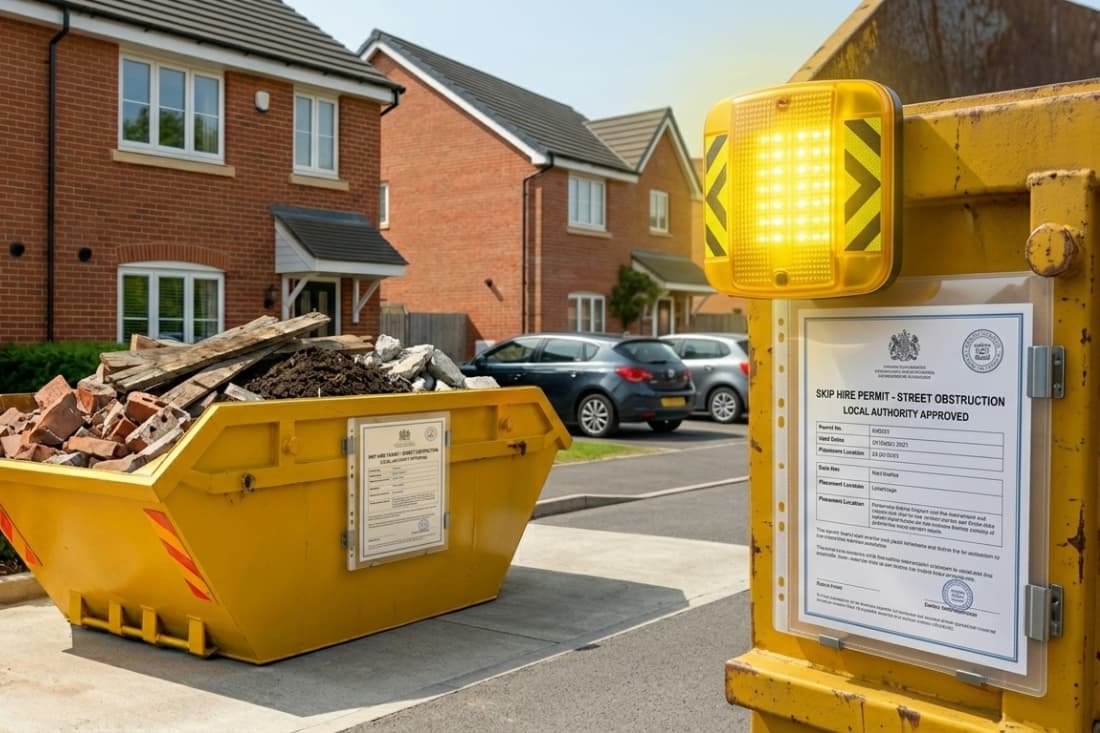
On a public road: If you need to put the skip on a public road or highway, you must get a skip permit from your local council. Your skip hire company will usually handle this application for you for an extra fee.
About the permit: The cost and time to get a permit can vary by location. The permit makes sure the skip is placed safely, with proper lights and cones, and controls how long it can stay there.
According to Southend-on-Sea City Council,
"There is a legal responsibility (Section 34 of the Environmental Protection Act 1990) on a business to: Make sure their waste is stored correctly and does not escape their control [and] Ensure that any person you transfer the waste to has the correct authorisation." - Southend-on-Sea City Council
What Determines the Cost of Skip Hire
Skip hire pricing is not a flat fee. A few different things affect the final cost, which is why quotes can differ.
What affects the price:
Skip size: A smaller skip, like a 2-yard mini, costs less than a large 12-yard skip.
Type of waste: Heavy, simple waste like soil and rubble is often cheaper to dispose of than mixed general waste, which needs more sorting.
Your location: Prices can be higher in areas like Greater London and the South East compared to other parts of the UK.
Extra costs: Remember to include any additional fees, like a council permit or charges for going over the weight limit.
Considering Alternatives to a Traditional Skip
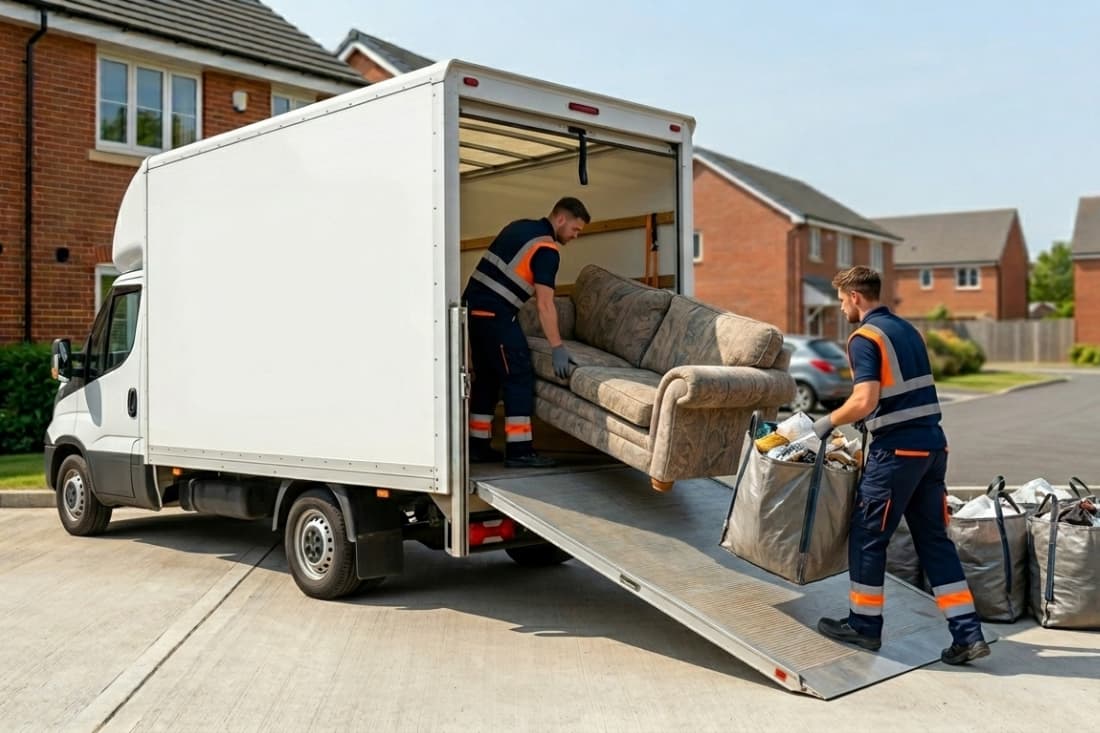
Skip hire is great for many jobs, but it's not the only way to remove waste. Understanding who should use skip hire services can help you decide whether a skip or another option is more suitable. Depending on your project, another service might suit you better.
For smaller amounts of waste: A man and van service could be more cost-effective and flexible. A crew comes to your property, loads your waste into their van, and takes it away. This can be quicker than waiting for a skip to be collected.
For large volumes of heavy waste: If you have a lot of uniform material like soil or rubble, a grab lorry or wait-and-load service might be more efficient. The lorry arrives. You load the waste directly into it, and it leaves. This means no container is left on your property, so you don't need a permit, and it's often faster.
The best choice depends on the size of your project, the type of materials, and the access to your site.
Common Skip Hire Questions Answered
We know you might have a few questions before you book a skip. Here are answers to some of the most common ones.
The fill line. This is a marked line on the inside of the skip. You shouldn't load waste above it. An overfilled skip is a safety risk during transport and isn't allowed on public roads.
Skip bags. These are large, strong bags offered as a flexible alternative to a metal skip. They can be good for smaller jobs, but they hold much less waste and have lower weight limits.
If someone else uses your skip. You are responsible for everything in your skip. To avoid this, try to place it on private land if you can, or fill it up soon after it's delivered.
FAQ
Skip hire in the UK means renting a large waste container for a set period. It is commonly used for waste disposal during home DIY, garden projects, or building projects. A local skip hire provider delivers the skip with a skip lorry service and collects it when you finish. It offers a simple and legal way to remove unwanted waste.
You need skip permits if the skip is placed on a public road or public highway. Your local council manages the permitting process and sets the council fees. In some areas, you may also need to pay a CPZ suspension fee. If the skip is placed fully on private property, such as a driveway space, a permit is usually not required.
You can place household waste, garden waste, building debris, and many recyclable materials in a skip, depending on the waste type. However, hazardous materials such as Gas Cylinders, hazardous wood, and other hazardous or special waste are not allowed. Electrical Appliances and White Goods often require disposal at a recycling centre or an approved electric recycling point.
Mini skips are suitable for small garage clear-outs and light garden waste. Midi skips work well for medium home renovations. A Builder's Skip is designed for construction debris and heavy materials. A Large Skip or roll-on/off skip is suitable for major construction waste and large items. A skip volume calculator can help you choose the correct size.
Delivery and Collection are arranged with your local skip hire provider in advance. The skip lorry places the skip on private property or an approved public location. When loading a skip, you must not exceed the fill line. After collection, the waste is taken to a transfer station, recycling facilities, or a disposal centre to increase recycling rates and reduce landfill waste.
Clear the Clutter. Take Control.
A skip isn’t just a container, it’s your tool for handling waste efficiently, legally, and confidently. Understanding sizes, permits, and costs lets you stop guessing and start acting. Every pile of waste that lingers drains your momentum; every misstep risks fines or delays.
You can take charge. Find a trusted local provider, get a clear quote, and schedule your Skip Hire today. Clear the waste. Protect your project. Move ahead lighter, focused, and fully in control. Your next step is simple: book your skip and reclaim your space.
References
Related Articles
Filed under:
Skip Hire