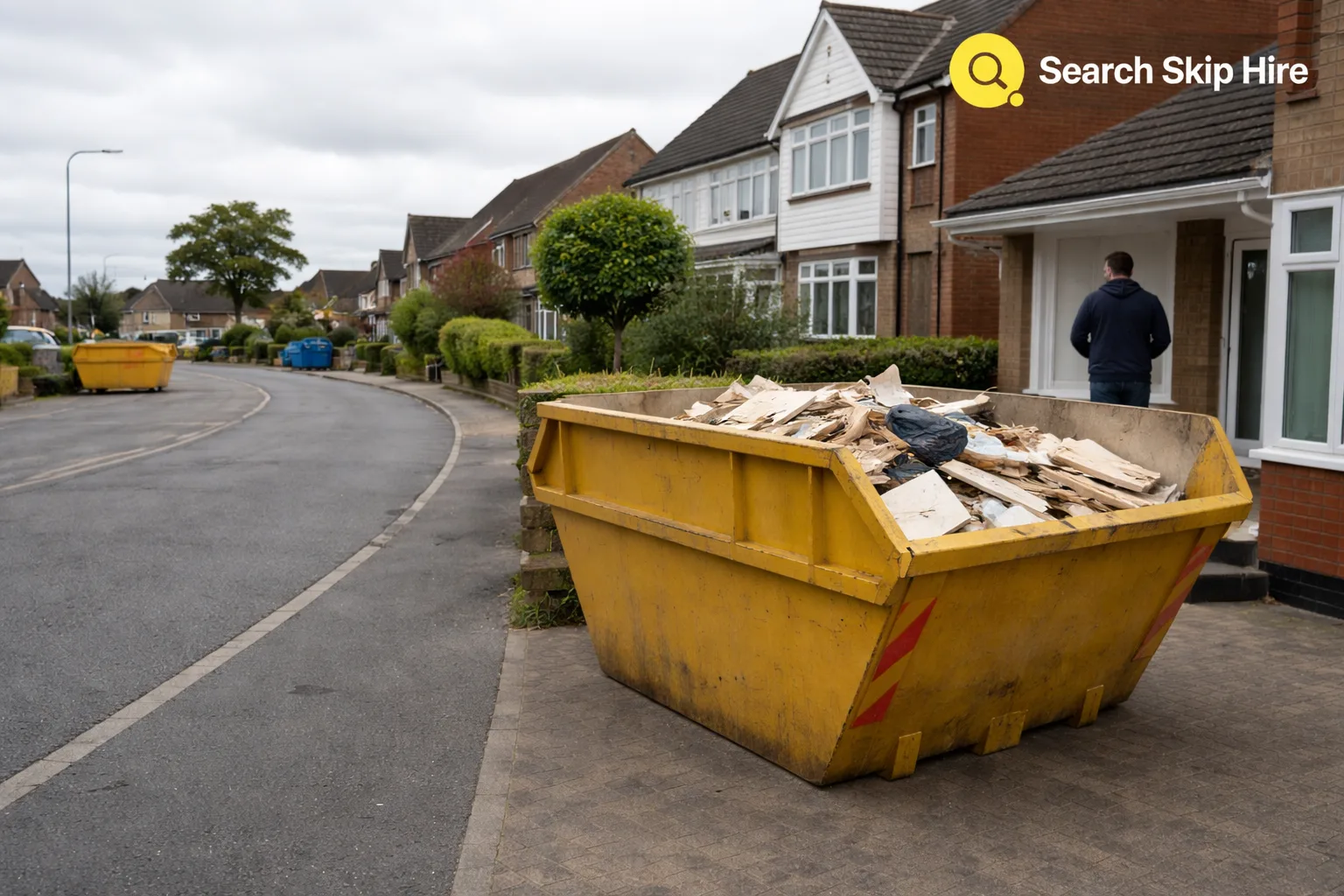
Skip hire in the UK usually costs between £75 and £600, depending on the size we choose, where we are located, and the type of waste we need to remove. Smaller skips cost less, while larger or specialist options increase the price.
Extra charges, such as permits or weight limits, can also affect the final total. When we understand these factors early, we can plan better and avoid unexpected costs.
This guide breaks everything down in a simple way so we can make informed decisions. Keep reading to see how skip hire pricing works in detail.
Skip Hire Costs UK: Key Pricing Points
Before we explore the full pricing guide, here are the most important points we need to understand about skip hire costs in the UK today.
Skip hire prices mainly depend on size, location, and waste type
Extra costs like permits and overage fees can increase the final price
Choosing the right skip size helps avoid paying more than necessary
Average Skip Hire Costs in the UK
Understanding how much skip hire costs in the UK helps us set clear expectations before booking. While prices can vary, there are reliable ranges we can use to guide our budget and avoid surprises.
Typical Skip Hire Price Ranges by Size
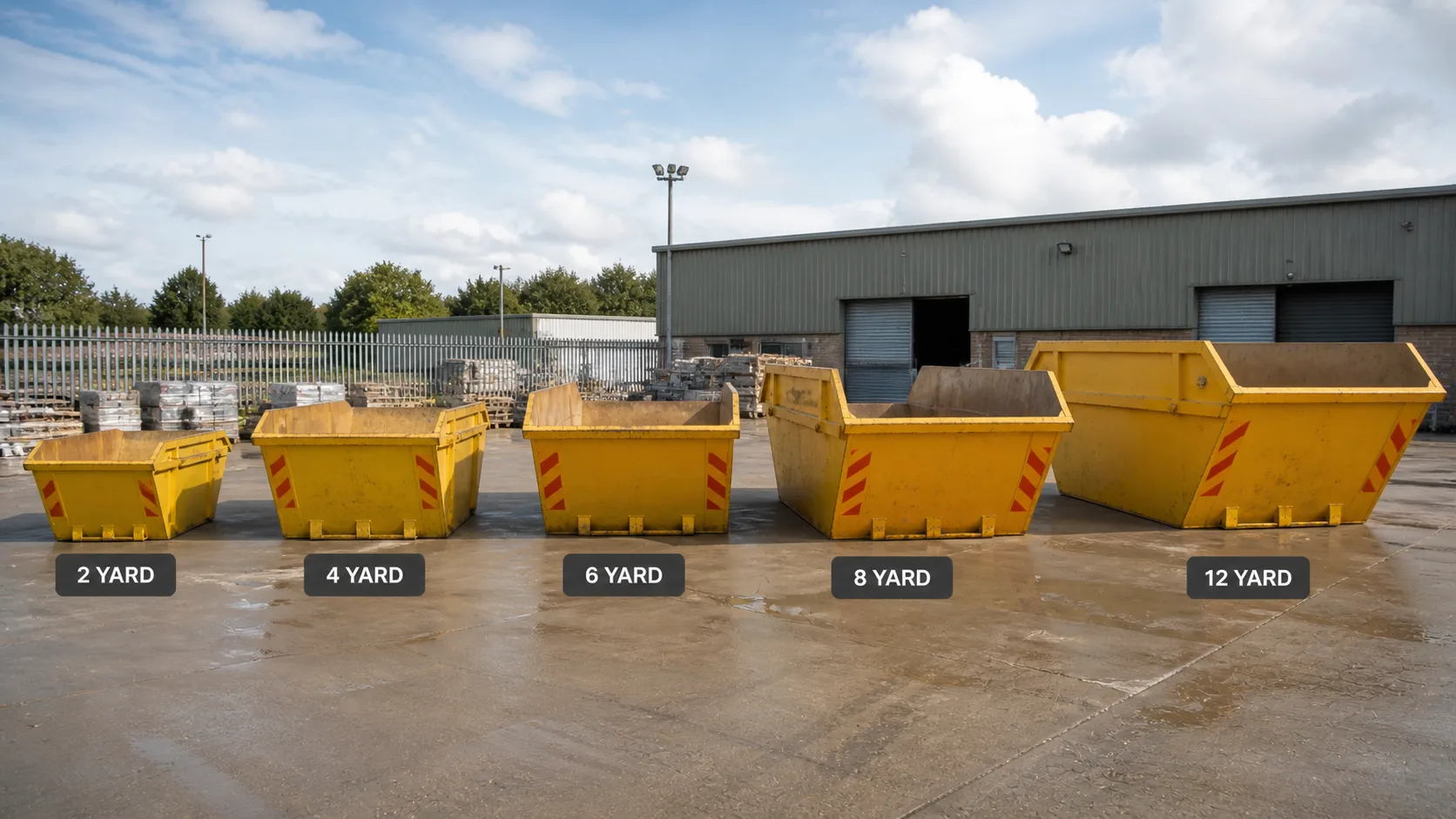
Choosing the right skip size helps us match the job properly and avoid paying for space we do not need or hiring a second skip later.
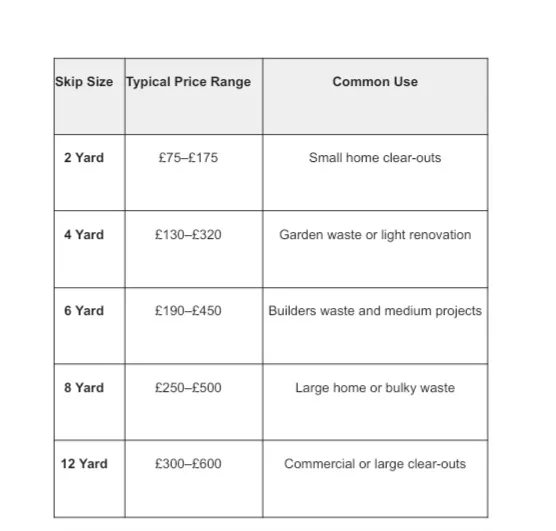
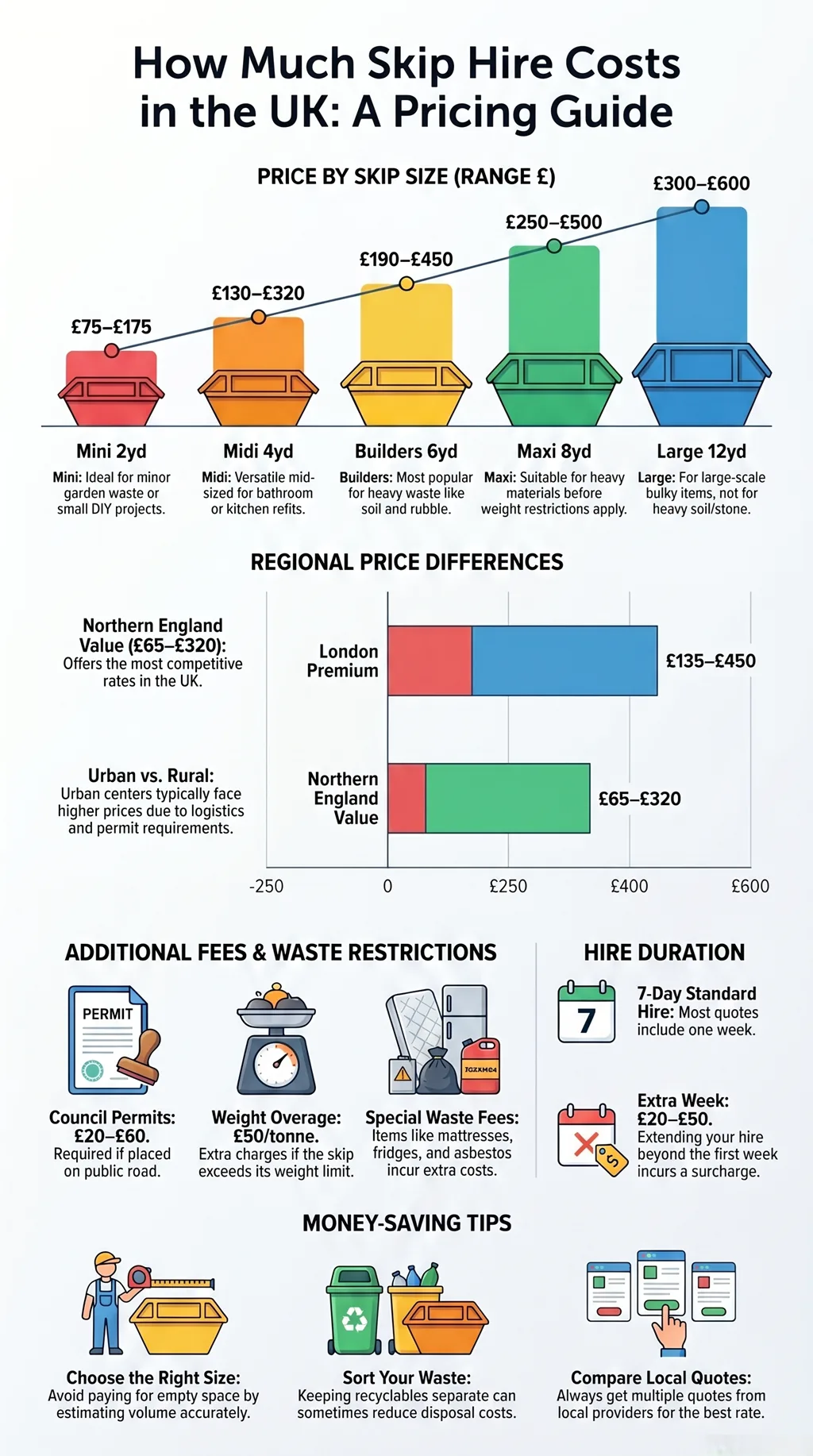
Mini skip (2 yard): £75–£175
Midi skip (4 yard): £130–£320
Builders skip (6 yard): £190–£450
Maxi skip (8 yard): £250–£500
Large skip (12 yard): £300–£600
Roll-on roll-off skips: £800+
Skip Hire Cost by Size Comparison
The table below gives a clear overview so we can compare sizes and typical use cases more easily.
Cost Per Cubic Yard Explained
Some providers base pricing on volume, which helps us understand how much value we are getting from each skip size.
Average cost is £20–£40 per cubic yard
Larger skips often provide better value per yard
Fixed pricing is still the most common approach
7-Day Standard Hire Pricing Model
Most skip hire services follow a standard hire period, which helps us plan our timeline more effectively.
Standard hire usually lasts around 7 days
The price includes delivery, collection, and disposal
Extra time may cost £20–£50 per week
Skip Hire Costs by Location in the UK
Where we are based can have a noticeable impact on pricing. Costs often reflect local demand, transport distance, and council regulations.
London vs Regional Pricing Differences
Prices in larger cities are usually higher due to increased operating costs and demand.
London pricing ranges from £135–£450
ULEZ and congestion charges may apply
Labour and transport costs are typically higher
In areas like Greater London, access restrictions and traffic conditions can influence skip delivery timing and pricing, while safety remains a key concern in high-traffic environments.
According to the Health and Safety Executive, workplace risks are significant in sectors such as construction and waste handling, where vehicle movement and site conditions add complexity.
As reported by the Health and Safety Executive,
“There were approximately 600,000 non-fatal injuries in Great Britain.”
Northern vs Southern England Price Trends
There is a clear regional difference in pricing, largely driven by cost of operations and landfill fees.
Northern England tends to be more affordable (£65–£320)
Southern regions often have higher pricing
Disposal and logistics costs vary
Whether we are arranging skip hire in Lancashire or Surrey, these regional differences can affect the final quote, particularly when local road conditions and regulations come into play.
According to the Department for Transport, safety requirements for placing skips on public highways are designed to protect all road users and ensure clear visibility in busy areas.
As the Department for Transport states,
“All skips placed on the highway must be clearly marked with traffic cones and lamps to ensure they are visible at all times.”
Scotland and Wales Skip Hire Costs
In rural or less populated areas, pricing can vary due to travel distance and service availability.
Rural delivery may increase costs
Fewer providers can limit options
Urban areas tend to have more stable pricing
What Affects Skip Hire Prices? Key Cost Factors
Understanding the main factors affecting skip hire price helps us plan more accurately and avoid unexpected charges.
Waste Type and Disposal Costs
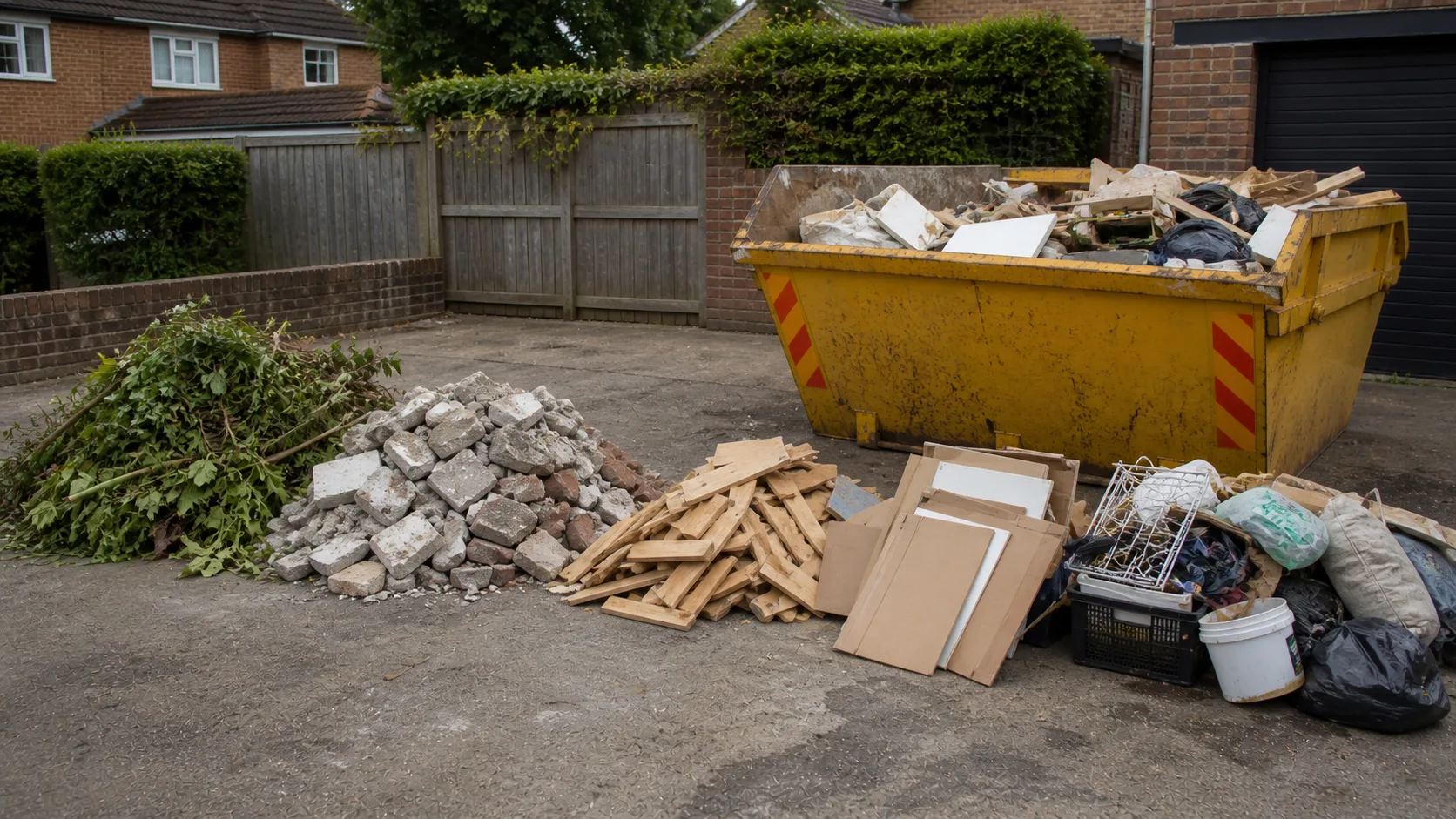
The type of waste we place in the skip plays a direct role in determining the final cost.
Mixed waste usually costs more to process
Clean loads like soil or rubble may be cheaper
Green waste may follow composting rates
Landfill Tax and Gate Fees
Part of the cost comes from how waste is processed after collection.
Landfill tax increases overall pricing
Waste transfer station fees are included
Environmental regulations influence cost
Distance, Fuel, and Delivery Charges
Transport is a key part of skip hire pricing, especially for longer distances or difficult access.
Fuel charges depend on distance
Restricted access areas may increase cost
Crane placement may cost around £100 per hour
Additional Skip Hire Charges You Should Know
It is important to understand the hidden charges to watch out for so we can avoid unexpected costs when booking.
Permit and Legal Fees
Permits are required when placing a skip on public land such as roads or pavements.
Council permits typically cost £20–£60
Not required for private driveways
Rules vary by local authority
In areas like Kent or Essex, permit requirements may differ slightly depending on the council.
Overage, Weight Limits, and Fines
Each skip comes with a weight limit, and exceeding it can increase costs quickly.
Overage charges are around £50 per tonne
Overloading fines may reach £100–£200
Choosing the wrong size can lead to extra hire
Special Waste and Extra Disposal Fees
Some materials require special handling, which increases disposal costs.
Mattress: £30–£50
Fridge/freezer: £40–£60
Tyres: around £10 each
Batteries: £5–£10 each
Asbestos: £500+
Contamination and Restricted Waste Fees
Placing restricted items in a skip may lead to additional charges.
Contamination fees start from £100
Paint and chemicals are restricted
Hazardous waste requires specialist handling
Optional Services and Premium Add-ons
Some optional services can make skip hire more flexible, but they will increase the overall cost.
Faster and Flexible Services
These options are helpful when timing or access is limited.
Same-day delivery may cost extra
Wait and load service costs around £50
Skip exchange allows quick replacement
Premium Skip Features
Additional features can improve safety or suit specific types of waste.
Lockable skips may cost around 10% more
Enclosed skips are used for certain waste types
Heavy-duty skips suit tougher materials
Extended Hire and Weekly Charges
Keeping a skip longer than the standard period will increase the cost.
Weekly extensions cost £20–£50
Long-term hire may reduce weekly rates
Planning ahead helps avoid extra fees
Domestic vs Trade Skip Hire Pricing
Pricing can vary depending on whether we are using the skip for household or commercial purposes.
Household Skip Hire Costs
Domestic skip hire is usually straightforward and follows standard pricing.
Suitable for clear-outs and home projects
Garden waste often fits a 4-yard skip
Prices follow standard size ranges
Construction and Trade Discounts
For larger or ongoing projects, bulk pricing may be available.
Discounts can range from 10–20%
Larger skips are commonly used
Ongoing work may reduce overall cost
Seasonal and Demand-Based Price Changes
Skip hire prices can change throughout the year depending on demand levels.
Peak Season Pricing
Higher demand periods often lead to higher pricing.
Summer is typically the busiest season
Christmas may increase prices by up to 25%
Availability may be limited
Off-Peak Savings Opportunities
Quieter periods can offer better value and more flexibility.
Winter often has lower pricing
More availability across locations
Potential for better deals
How to Save Money on Skip Hire
There are practical ways to reduce costs while still getting the service we need.
Choosing the Right Skip Size
Selecting the correct size is one of the most effective ways to avoid unnecessary costs.
Too small may require another skip
Too large means paying for unused space
Size guides help us choose correctly
Sorting Waste for Lower Pricing
Separating waste can reduce disposal costs and improve efficiency.
Clean loads are cheaper
Mixed waste costs more
Recycling can reduce overall fees
Comparing Quotes and Options
Looking at different options helps us understand fair pricing and find the best fit.
Compare a few quotes
Check what is included
Use online tools to estimate pricing
When we compare options across different areas, it becomes easier to find skip hire that suits both our needs and our budget.
Skip Hire vs Alternatives: Which Is Cheaper?
It can be helpful to compare skip hire with other waste removal options before deciding.
Skip Hire vs Council Tip Costs
Taking waste to a local tip may seem cheaper, but it requires more time and effort.
Skip hire offers convenience
Tips may have restrictions
Travel costs can add up
How to Get the Best Skip Hire Quote
Getting an accurate quote helps us stay within budget and avoid unexpected charges.
Online Skip Hire Calculators
Online tools make it easier to estimate pricing based on location and needs.
Postcode-based estimates are more accurate
Instant quotes help compare options
Simple and quick to use
Booking Methods and Price Differences
Different booking methods offer flexibility depending on how we prefer to arrange the service.
Online booking is fast and convenient
Telephone quotes allow us to ask questions
Digital tools are widely available
FAQ
Skip hire in the UK usually costs between £75 and £600. The final price depends on the skip size, our location, and the type of waste. Smaller skips cost less, while larger or specialist skips cost more. Extra charges like permits or longer hire periods can also increase the total.
The cheapest option is usually a 2-yard mini skip. It is suitable for small jobs like minor clear-outs or light household waste. Choosing a slightly larger skip may sometimes offer better value if we have more waste than expected.
We need a permit if the skip is placed on a public road or pavement. Permits are arranged through the local council. If the skip is placed on private property like a driveway, a permit is not required.
If we overload a skip, we may face extra charges of around £50 per tonne. In some cases, there can also be fines between £100 and £200. Overloading may delay collection, so choosing the right size is important.
We can reduce costs by choosing the right skip size, sorting waste into clean loads, and comparing options before booking. Planning ahead also helps us stay within budget.
Skip Hire Costs UK: Final Thoughts and Next Steps
Understanding skip hire costs in the UK helps us plan with more confidence and avoid paying more than we need to. Prices can vary depending on the skip size, location, and type of waste, but with the right approach, the process stays simple and manageable.
When we take time to choose carefully and compare available options, it becomes much easier to stay within budget.
If we are ready to move forward, we can check local availability, compare options across the UK, and arrange a suitable skip through Skip Hire.
References
https://www.hse.gov.uk/statistics/overview.htm
https://www.gov.uk/government/publications/safety-at-street-works-and-road-works
Related Articles
https://www.searchskiphire.co.uk/blog/skip-hire-prices/skip-hire-costs-pricing-decisions
https://www.searchskiphire.co.uk/blog/skip-hire-prices/factors-affecting-skip-hire-price
https://www.searchskiphire.co.uk/blog/skip-hire-prices/skip-hire-cost-by-size-comparison
https://www.searchskiphire.co.uk/blog/skip-hire-prices/hidden-charges-to-watch-out-for
Filed under:
Skip Hire Prices