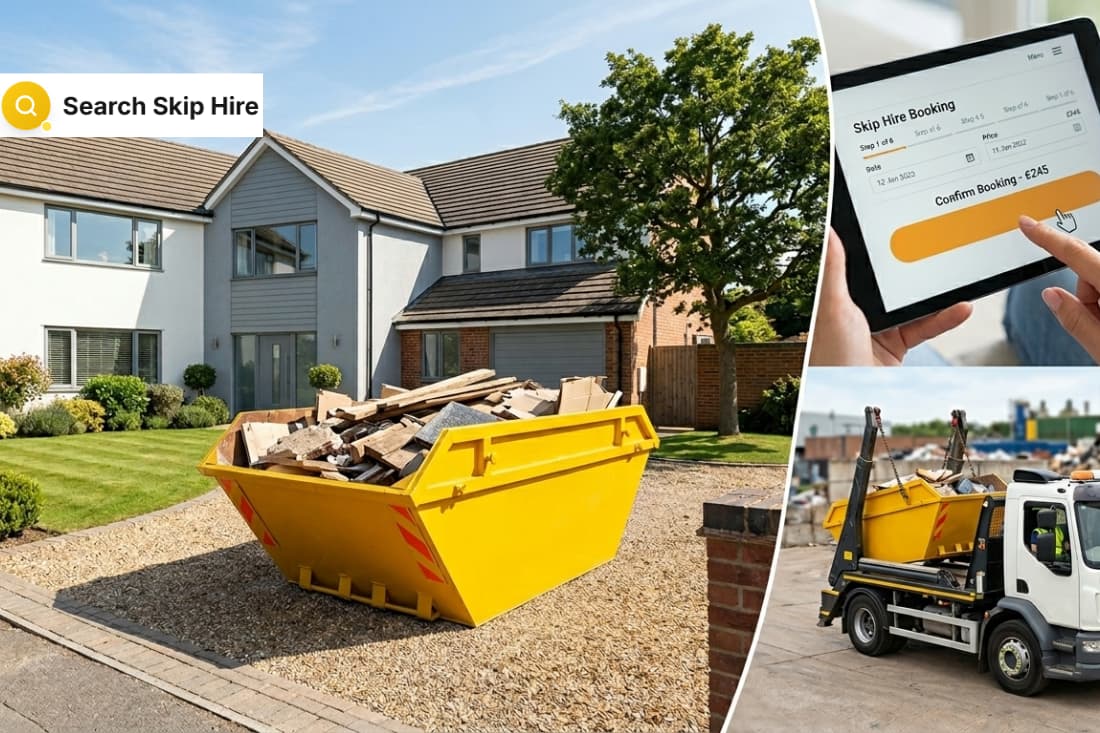
TL;DR
Renting a skip involves booking a licensed company, arranging any necessary permits if placing it on public roads, and loading it correctly with allowed waste before the company collects it for recycling and proper disposal. Understanding these key steps helps ensure the process is legal, safe, and cost-effective for your home or garden project.
Skip hire works by renting a large container for a set time to dispose of bulky project waste. You book a licensed company, they deliver the skip to your location, you fill it with allowed rubbish, and they collect it for legal disposal and recycling.
The process involves checking local permit rules, loading the skip correctly, and making sure your waste is handled responsibly.
Understanding each step makes hiring a skip straightforward and stress-free for any home or garden project. Keep reading for a detailed breakdown of how it all works.
Skip Hire Made Simple: Your Quick Guide
Start by choosing the right skip size and a licensed provider, and check if you need a council permit for where you'll place it.
Loading correctly is important. Don't overfill the skip or put banned, hazardous items in it to avoid extra fees and fines.
After collection, your waste goes to a licensed facility for sorting and recycling. You should get paperwork to show it was done properly.
Step 1: Booking a Licensed Skip Hire Company

The first step is to find and book a reliable skip hire company. You can search online for local providers or use a directory. These details should be confirmed when booking a skip.
What you need to provide when booking:
Skip size: Choose based on your project. Common sizes for home projects are mini skips for garden waste and midi skips for small renovations.
Type of waste: Specify what you're throwing away, such as general household rubbish, garden waste, or inert materials like soil and bricks.
Delivery details: Provide your exact address and confirm there is enough space and good access for the delivery lorry.
Hire period: Agree on a rental time, usually between 3 to 14 days.
Choosing a trustworthy provider:
Always ask if the company is a licensed waste carrier registered with the Environment Agency. This is a legal requirement, and a good company will share their registration details.
It's smart to get quotes from a few different companies to compare prices. Remember, the cheapest option isn't always the best if it means they don't follow the rules properly.
According to Cambridge City Council,
"Step 1: Decide on Your Skip Size. ... Skips typically measure 4 metres in length and 2 metres in width. All our skips are roll-on, roll-off (RORO) skips. ... For safety and access, please ensure that there is: a clear working area of at least 0.5 metres on all sides of the skip [and] a minimum entry width of 3 metres to allow the driver to manoeuvre the vehicle safely." - Cambridge City Council
Step 2: Arranging Permits and Delivery
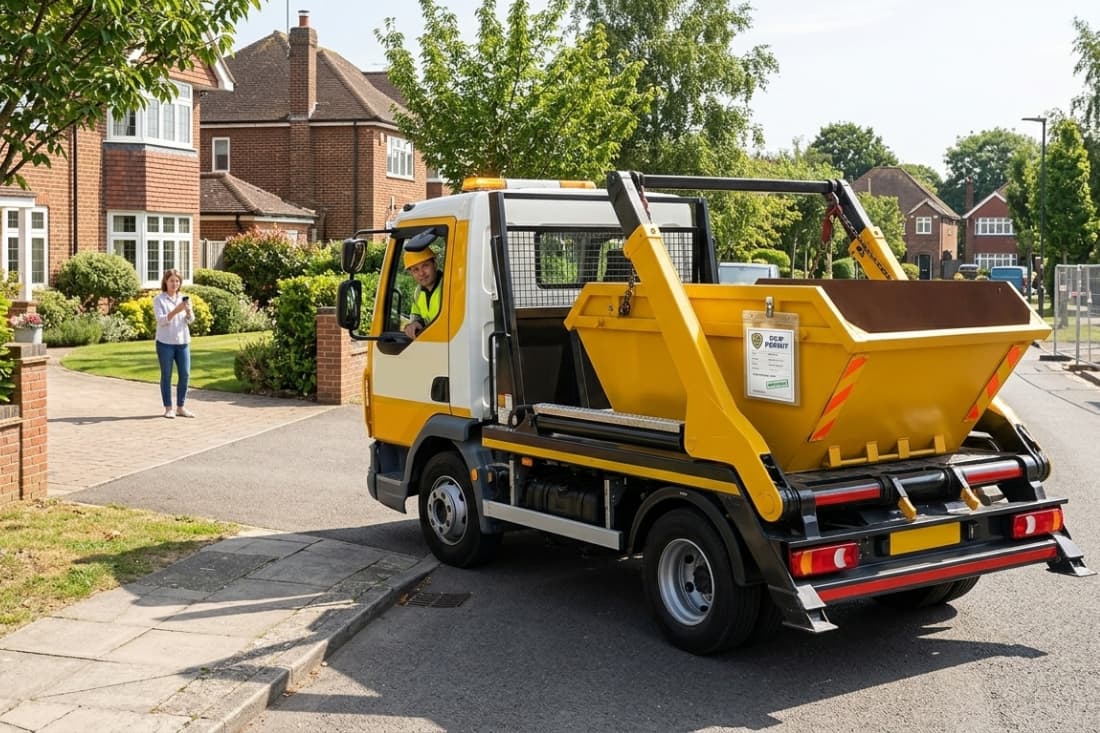
Once you've booked your skip, the next step is arranging delivery. A key part of this is deciding where the skip will be placed.
On private property: If you have space on your own driveway or land, you can place the skip there. You don't need any permission, and this is often the simplest option. Just make sure the surface is firm and level.
On a public highway: If the skip needs to go on a public road or pavement, you must get a skip permit from your local council. The cost and time to get this permit can vary by area.
For example, in areas like Greater London or West Midlands, the process and fees might differ from other counties like Kent or Devon.
Your skip hire company will usually apply for this on your behalf for an extra fee. The permit ensures the skip is placed safely with the right lights and cones.
According to the City of York Council,
"Skip hire companies are responsible for obtaining a 'skip permit' or 'skip licence'. They must complete a skip licence application form for permission to put a skip on the road or grass verge. ... Permits are needed for: skips [and] 'hippobags'. You don’t need a skip licence to put a skip on private land. We require 3 working days’ notice to process skip permit applications." - City of York Council
The delivery process: A specialist lorry with a crane delivers the skip, lowering it into the agreed spot and setting up any necessary safety gear if it's on the road.
Step 3: Loading the Skip Safely and Correctly
When your skip is delivered, you can start loading it with your project waste, whether you are a homeowner or one of those wondering who should use skip hire services for larger jobs. It's important to do this correctly for safety and to avoid extra charges.
Loading correctly:
Spread the weight of the waste evenly in the skip.
Never fill it above the marked fill line. An overfilled skip is dangerous to transport and illegal on a public road.
You must avoid hazardous items that need special disposal. Putting these in a skip can lead to big fines, and the company may refuse to collect it. Common prohibited items include:
Asbestos and other hazardous materials
Gas cylinders and canisters
Electrical appliances and batteries
Tyres, paints, and chemicals
Clinical or medical waste
Fluorescent light tubes
For general waste, try to load heavier, bulkier items first and place lighter materials on top. Break down large items like furniture where possible to make better use of the space.
Skips have weight limits; overloading with heavy materials such as soil or rubble may incur extra charges. For example, a 2-yard skip typically holds up to 300kg of soil.
Step 4: Understanding Skip Sizes and Common Projects
Choosing the right skip size is a key part of planning your project and understanding the basics of Skip Hire UK fundamentals. If the skip is too small, you might need to hire a second one, which costs more and adds hassle.
If it's too large, you're paying for space you don't use. The table below shows the most common skip sizes, what they hold, and the jobs they're best for.
This should help you match your project to the right container. Remember, these capacities are estimates for mixed general waste. If you're getting rid of very heavy materials like soil or rubble, you'll hit the weight limit long before the skip is full.
Local companies in your area can often give good advice on the most practical size for common projects.

Step 5: Compliance and Waste Documentation
When you hire a skip, you have a legal "Duty of Care" to make sure your waste is disposed of properly, which forms part of what skip hire means in the UK in practical terms.
This law applies to everyone, whether you're a household or a business. It means you need to take reasonable steps to keep your waste safe and use an authorized company to transport and dispose of it. This is why hiring a licensed waste carrier is essential.
A good skip hire company will give you a Waste Transfer Note after they collect your skip.
What the Waste Transfer Note does:
It is your proof that the waste was handed over legally to a licensed facility.
It shows what was collected and where it's going.
It confirms the company has a valid waste carrier licence.
Keeping your records:
For businesses: It is a legal requirement to keep these notes for at least two years.
For households: You are encouraged to keep them, as they provide a clear record.
This system helps tackle illegal dumping by making sure waste can be traced. If your waste is found dumped illegally and you can't show a valid Waste Transfer Note, you could be held responsible and face a large fine.
Step 6: Collection and Removal
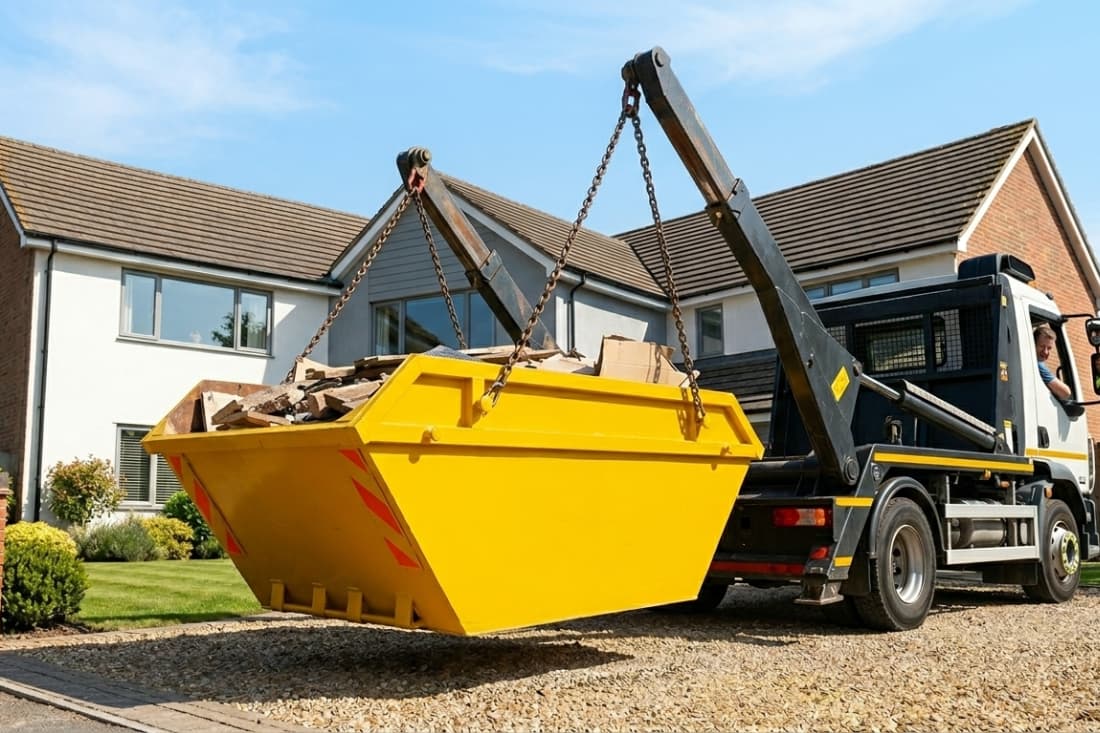
Once your skip is full or your hire period is ending, contact the company to arrange a collection. Give them 24 to 48 hours' notice if you can. A specialist lorry will arrive, lift the skip onto the truck, and take it away. The process is quick, clearing the space for you.
If you need the skip longer than planned, contact the company to extend the hire. There's usually a daily fee, and it's best to sort this out before your time runs out.
If the skip was on the road, the company will also remove the safety lights and cones. Collecting it within the time allowed on your council permit is important. A reliable company will handle all of this for you.
Step 7: Waste Processing and Final Costs
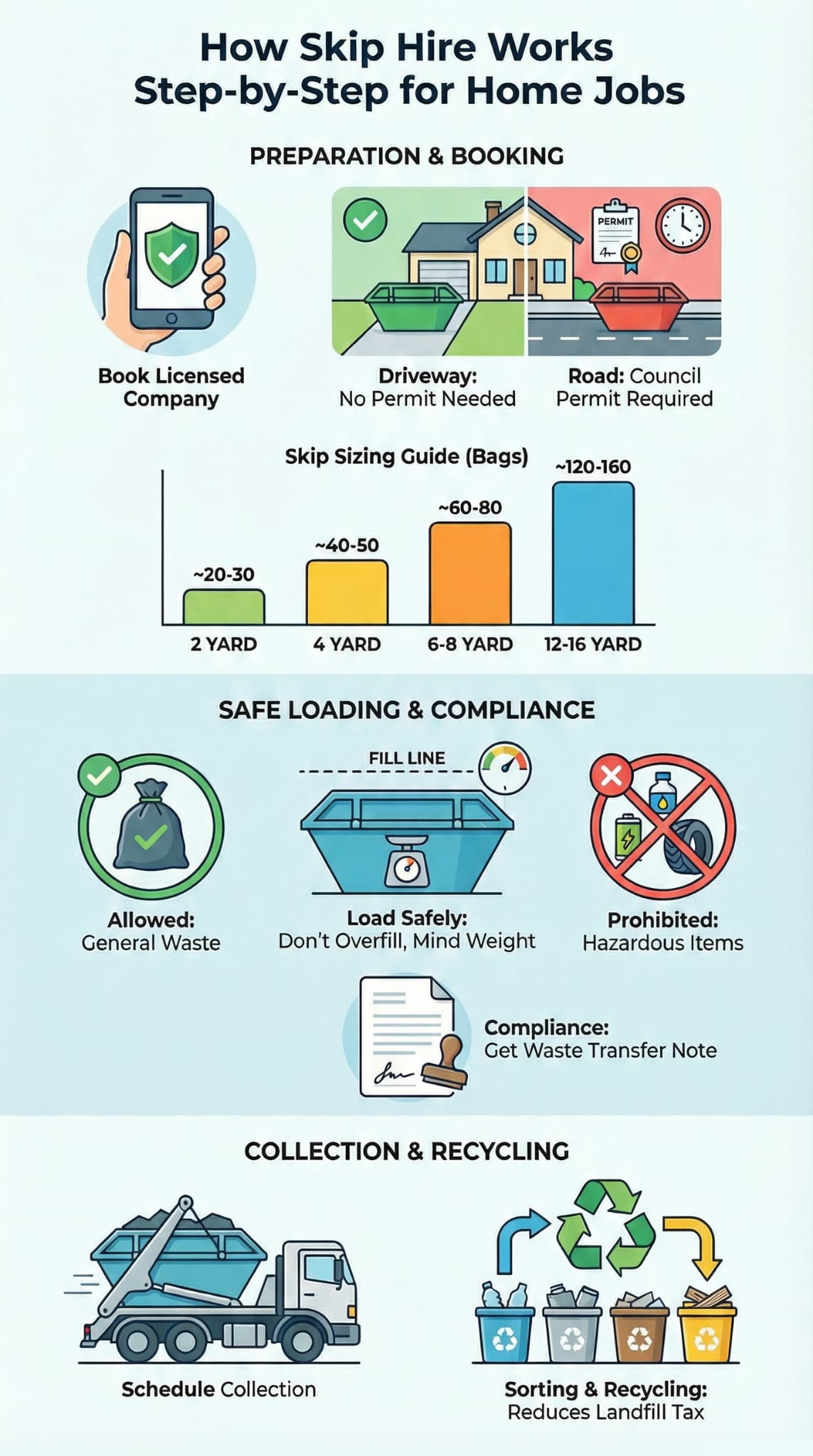
After collection, the skip goes to a licensed facility where the waste is sorted. Recyclable materials like metal, wood, and plastic are separated. Inert waste like soil and concrete is often crushed and reused in construction.
Your final invoice includes the base cost for hire, delivery, and collection. It may also include extra charges such as a permit fee or fees for exceeding weight limits. Business customers will additionally pay VAT.
The cost includes a government Landfill Tax. This tax is much higher for general waste sent to landfill. Choosing a company that recycles can lower disposal costs and is better for the environment. A good provider can tell you what percentage of their waste is recycled.
FAQ
When using a skip for DIY or garden projects, you can include household waste, garden waste, and construction debris. You should avoid hazardous materials such as gas cylinders or asbestos. Check the skip hire company’s guidance for prohibited items, as well as limits on heavy materials and large items to ensure your waste is disposed of safely and efficiently.
If your skip will be placed on a public highway, you usually need a skip permit from the local council or authority. The permit ensures safety and compliance with traffic regulations. It may require safety lights or traffic cones and adherence to local regulations, including limits on waste height and skip space, helping prevent fines or penalties.
Skip sizes range from mini skips to large skips. Consider your project needs, such as home renovation, garden projects, or construction waste. Estimate the volume of waste, including mixed waste and heavy materials, and make sure the skip fill line is not exceeded. Choosing the correct cubic yard skip improves efficiency, reduces overloaded skips, and makes collection easier for skip lorries.
Scheduling skip delivery and collection in advance is essential for smooth waste disposal. Confirm the delivery address, collection date, and collection options with the skip hire company. Reliable companies use skip delivery lorries and grab lorries efficiently to avoid delays. Proper planning helps manage recycling practices, segregation of recyclable materials, and ensures all waste reaches the appropriate disposal facility or transfer station.
When loading a skip, distribute weight evenly and avoid overloading past the fill line. Keep hazardous items like gas canisters separate and use safety lights and traffic cones if the skip is on a public highway. Take care with heavy or large items to prevent injury. Following these ground rules improves skip efficiency, ensures safe waste management, and aligns with local regulations and disposal practices.
Take Control of Your Project, One Skip at a Time
Skip hire isn’t just about disposing of waste, it’s about taking control of your space, your project, and your peace of mind. When you plan carefully, choose the right skip, follow permit rules, and load it safely, you turn a stressful task into a smooth, responsible process. Every misstep avoided saves time, money, and frustration.
So ask yourself: do you want delays, fines, or chaos slowing your project, or clarity and progress at every step? Find a trusted provider through Search Skip Hire, book your skip, and reclaim control.
References
Related Articles
Filed under:
Skip Hire