Skip hire in Aberdeenshire is a practical way to remove household waste, garden rubbish, renovation materials, and building debris without repeated trips to disposal sites. We help you understand skip sizes, costs, permits, and waste rules before choosing a service.
Explore your options with Search Skip Hire to compare local services, then continue reading to learn how skip hire works, what affects pricing, and how to plan your waste removal with confidence.
What Should You Know Before Hiring A Skip In Aberdeenshire?
Before arranging skip hire, it is helpful to understand the main factors that affect the service, from choosing the right size to knowing the permit requirements. These points can help you plan your waste removal properly, manage costs, and avoid common issues during your project.
Skip hire costs depend on the skip size, waste type, location, hire period, and whether a permit is required.
Choosing the correct skip size helps prevent extra costs and keeps your waste removal more efficient.
A permit may be needed when placing a skip on public roads, but it is usually not required when the skip is placed on private property.
How Can You Find The Right Skip Hire Service For Your Area?
Choosing the right skip hire service can make waste removal easier, whether you are clearing a home, managing garden waste, or working on a renovation project. The best option depends on your location, project size, and the type of materials you need to remove.
Local availability can affect delivery times, available skip sizes, and collection schedules. We help you understand the key things to check before booking, so you can choose a suitable option without unnecessary confusion.
If you are looking for information about nearby services, you can also learn more about skip hire Aberdeen City and how local options may vary. Keep reading to learn what factors matter when arranging skip hire for your project.
Before choosing a service, consider these important points:
Skip availability: Check that delivery and collection times fit your project schedule.
Skip size options: Select a size that matches the amount of waste you expect.
Waste acceptance: Confirm that your materials are suitable for the chosen container.
Collection arrangements: Understand when the skip will be removed after your work is finished.
How Much Does Skip Hire Cost And Which Size Do You Need?
Skip hire costs depend on a few key factors, including the skip size, waste type, delivery location, and hire duration. Smaller skips are often suitable for small clear-outs, while larger containers are better for renovation work, construction projects, and jobs that create more waste.
Choosing the right size from the beginning can help you avoid paying for unused space or needing an extra collection. The best option depends on how much waste you have and the materials you need to remove.
Here are the typical price ranges and common uses for each skip size:
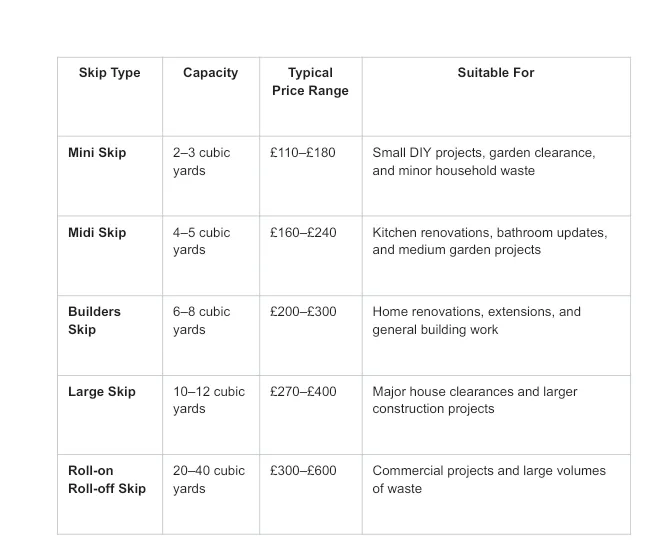
The final price may change depending on your specific needs. Heavy materials such as soil, rubble, and concrete may require different handling, which can affect the overall cost. Comparing skip hire quotes before booking helps you understand your expected expenses and choose an option that suits your project.
What Determines The Final Skip Hire Price?
Several things can affect the final cost of skip hire, including the skip size, type of waste, delivery location, hire period, permit requirements, and seasonal demand. Knowing these factors before booking helps you choose a suitable option and plan your budget more accurately.
A small household clear-out may only need a compact skip, while renovation or construction projects often require a larger container. Understanding what affects pricing can help you avoid extra costs and make waste removal easier to manage.
The main factors that influence the price include:
Skip size: Larger skips usually cost more, but they can be more practical for bigger projects because they hold a higher volume of waste.
Hire duration: Keeping the skip for a longer period may affect the final cost depending on the agreed hire terms.
Waste type: General household waste is usually easier to process, while materials like soil, rubble, and concrete may need additional handling.
Delivery location: Your address can affect delivery costs and the skip options available in your area.
Permit requirements: A permit fee may apply if the skip needs to be placed on public roads, pavements, or parking areas.
Seasonal demand: Prices and availability may change during busier periods, such as spring and summer.
Choosing the right skip size from the start can help prevent unnecessary expenses. A skip that is too small may require another collection, while a larger option may leave unused space.
Planning your waste needs carefully helps keep the process simple and efficient. You can also explore practical ways to manage your budget with these ways to reduce skip hire costs.
Do You Need A Permit When Hiring A Skip?
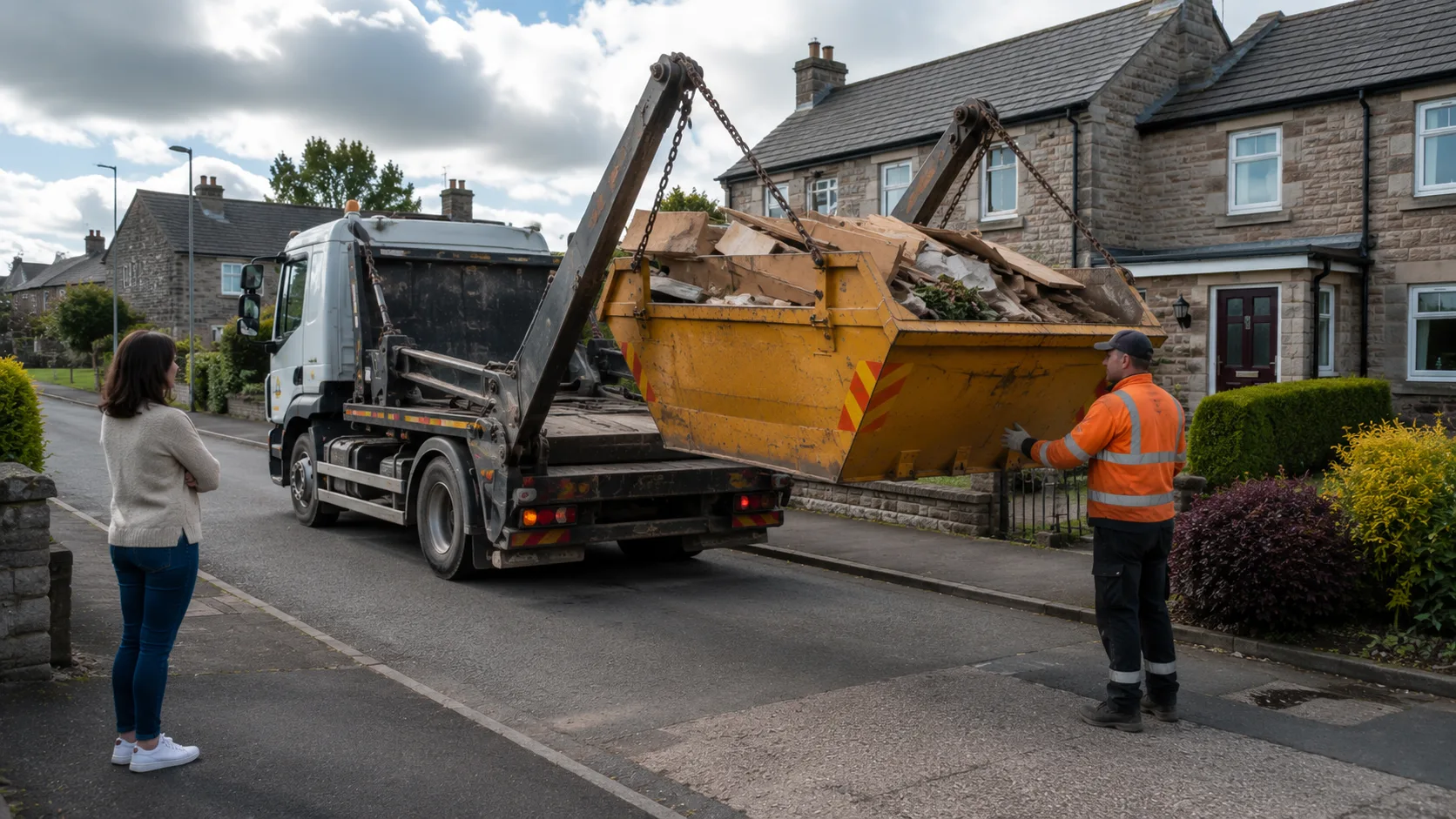
Yes, you may need a skip permit if your skip is placed on public areas, such as roads, pavements, or parking spaces. The main reason for this is to make sure the placement does not cause problems for pedestrians, drivers, or other road users.
If the skip is kept on private property, such as a driveway or front garden, a permit is usually not required. Checking the rules before booking helps you prepare properly and avoid delays during your project.
You may need a permit if:
The skip is placed on a public road: A permit is required when the container takes space on a roadside area.
The skip uses part of a pavement: A permit may be needed if it affects pedestrian access.
The skip occupies public parking space: Approval is usually required when a parking area is used.
You usually do not need a permit when:
The skip stays on private property: This includes driveways, gardens, or areas within your property boundary.
The skip does not affect public access: The placement does not block roads, pavements, or shared spaces.
Permit costs can vary depending on the area. In Aberdeenshire, a permit typically costs around £40.90, lasts for 28 days, and takes about five working days to process. Arranging this in advance can help keep your waste removal plans running smoothly.
What Waste Can And Cannot Be Placed In A Skip?
Knowing what waste can go into a skip helps you plan your project and avoid problems during collection. Most everyday household rubbish, garden waste, and common building materials are accepted, but some items need specialist disposal because of safety or environmental requirements.
Separating waste correctly before disposal can also support better recycling results.
“Sort your items at home so each waste type is separated. This makes your visit quicker and increases the amount we can recycle.” - Aberdeenshire Council
This highlights the importance of organising waste properly and keeping suitable materials separated before they are collected or processed.
Common waste that is usually accepted includes:
Household rubbish: General items from home clear-outs and decluttering projects.
Cardboard and paper: Packaging materials and unwanted documents.
Plastics and textiles: Common household materials that can be processed through normal waste channels.
Garden waste: Soil, turf, branches, logs, plants, and grass cuttings.
Building materials: Wood, timber, bricks, concrete, tiles, and plasterboard from renovation work.
Some materials cannot be placed in a standard skip because they require different handling methods.
Items that are usually not accepted include:
Asbestos: Requires specialist removal due to health risks.
Chemicals and solvents: These need controlled disposal methods.
Paint and oils: Certain liquids cannot be placed in general waste skips.
Batteries: Need separate recycling or disposal.
Electrical items: Fridges, freezers, TVs, and monitors often require specialist processing.
Tyres and gas bottles: These need specific waste management arrangements.
Medical waste: Requires appropriate disposal services.
Agricultural waste, such as farm chemicals and animal waste, may also need special arrangements and should not be placed in a standard skip. Checking waste rules before loading your skip helps ensure safe collection and prevents unexpected issues during disposal.
How Can Skip Hire Support Domestic And Commercial Projects?

Skip hire can support a wide range of projects, from small household clear-outs to larger building and commercial work. The right option depends on the amount of waste you need to remove and the type of materials involved.
For homeowners, skips are commonly used for:
House clearances: Removing unwanted items when decluttering or preparing a property.
Garden maintenance: Disposing of branches, soil, turf, and other outdoor waste.
Moving home: Clearing furniture, boxes, and general household items.
DIY renovations: Managing waste from small improvement projects.
Furniture removal: Handling bulky household items that are no longer needed.
For businesses and contractors, skips can help with:
Building projects: Removing materials created during construction work.
Construction waste removal: Managing bricks, timber, rubble, and other site waste.
Site clearance: Clearing unwanted materials from work areas.
Trade waste management: Supporting regular waste removal needs.
Commercial clear-outs: Removing waste from offices, shops, and other properties.
Having the right waste container available helps keep your project area organised and makes it easier to remove unwanted materials safely and efficiently.
How Can You Compare Local Skip Hire Services?
Choosing the right skip hire service involves more than looking at the price alone. A suitable option should match your project size, waste type, location, and preferred schedule. Taking time to compare the details before booking can help you find a service that fits your needs and avoid issues later.
Similar considerations also apply when arranging skip hire in West Sussex, where location, waste type, and availability can influence your choice.
Before arranging your skip hire, consider these steps:
Choose your service area: Look for options that cover your location and can deliver to your project site.
Compare available options: Check skip sizes, delivery times, collection schedules, and hire periods.
Review service information: Consider customer feedback and available details to understand the level of service provided.
Confirm waste policies: Make sure your materials are accepted and ask about any possible additional charges.
Check availability: Confirm delivery and collection dates before starting your project.
Planning these details early helps keep your waste removal organised and makes the skip hire process easier from start to finish.
How Do Delivery, Collection And Hire Periods Work?
Delivery and collection times can vary depending on your location, availability, and the type of project you are completing. Planning your schedule before booking helps ensure the skip arrives at the right time and can be collected when your work is finished.
Some projects only need a skip for a short period, while larger jobs may require more time to complete. Understanding the hire terms in advance helps you plan your waste removal without unnecessary delays.
Before booking, it is useful to check:
Delivery date and time: Confirm when the skip will arrive and make sure the space is ready.
Collection process: Understand how and when the skip will be removed after use.
Hire period: Check how long you can keep the skip and whether extensions are available.
Additional charges: Ask about any costs if you need the skip for longer than planned.
Access requirements: Make sure there is enough space for safe delivery and collection.
Demand can increase during busier periods, such as spring and summer. Booking ahead can help you arrange a suitable option that matches your project timeline.
How Does Skip Hire Support Responsible Waste Management?
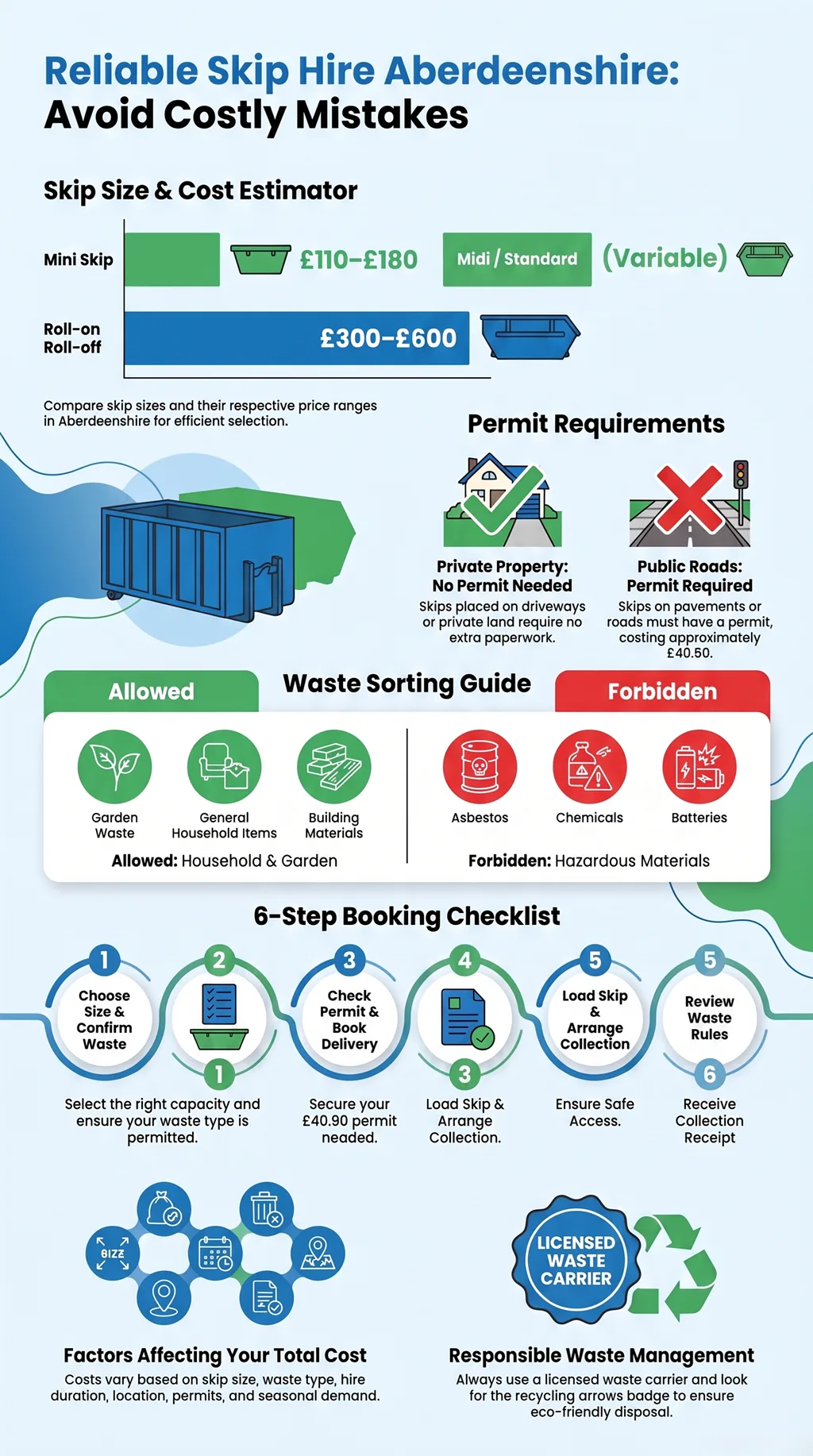
Skip hire helps make waste removal more organised by providing a simple way to collect, sort, and process different types of materials. When waste is handled correctly, more suitable materials can be recycled, helping reduce the amount sent to landfill.
Understanding the basics of the service, including waste handling and general skip hire processes, can make planning easier. Our guide to skip hire UK fundamentals provides more information about the key things to consider when arranging waste removal.
Using a licensed waste carrier is an important part of responsible waste management. Waste needs to be handled according to legal requirements, and proper disposal helps keep the process safer and more efficient.
Good planning also includes making sure there is enough space for the skip and that waste is stored safely before collection.
“Waste materials need storing safely before their removal from the site so make sure that you allow sufficient space for waste skips and bins etc.” - The Health and Safety Executive (HSE)
This highlights why choosing a suitable skip location and keeping the area organised are important parts of responsible waste handling.
Good waste practices include:
Separating recyclable materials: Keep suitable items such as cardboard, metal, and certain materials separate when possible.
Avoiding prohibited items: Do not place restricted materials, such as hazardous waste, into standard skips.
Choosing the right skip size: Selecting a suitable container helps prevent unnecessary collections and wasted space.
Following local requirements: Check disposal rules to ensure your waste is handled correctly.
Planning your waste removal carefully helps make your project more organised while supporting better recycling and disposal practices.
FAQ
The cost of skip hire depends on the skip size, waste type, delivery location, hire duration, and whether a permit is needed. Smaller skips usually start from around £110, while larger options can cost several hundred pounds depending on the project requirements.
The right skip size depends on how much waste you need to remove. Mini skips are suitable for small clear-outs and garden waste, while builders skips and larger containers are better for renovations, construction work, and bigger waste volumes.
You may need a permit if the skip is placed on a public road, pavement, or parking area. If the skip stays completely within private property, such as a driveway or garden, a permit is usually not required.
Items such as asbestos, chemicals, batteries, gas bottles, medical waste, tyres, and some electrical items are usually not accepted in standard skips. These materials often require separate disposal methods, so it is best to check waste rules before loading your skip.
The hire period depends on the service terms and your project needs. Some projects only require a skip for a short time, while larger jobs may need longer use. Checking the collection schedule and any extension costs before booking helps you plan more effectively.
How Can You Find The Right Skip Hire Solution For Your Project?
Choosing the right skip hire option can make waste removal much easier, whether you are handling a small home clear-out, garden work, or a larger building project. Knowing the available skip sizes, expected costs, permit requirements, and waste rules helps you plan your project with fewer surprises.
We help you compare local options and understand what to look for before arranging your skip. To explore available choices and find a suitable waste solution for your project, visit Search Skip Hire today.
References
https://www.hse.gov.uk/construction/safetytopics/storage.htm
https://www.aberdeenshire.gov.uk/waste/recycling/recycling-centre-rules
Related Articles
https://www.searchskiphire.co.uk/blog/skip-hire-prices/ways-to-reduce-skip-hire-costs/
https://www.searchskiphire.co.uk/blog/skip-hire/skip-hire-uk-fundamentals/
https://www.searchskiphire.co.uk/blog/skip-hire/skip-hire-aberdeen-city/
https://www.searchskiphire.co.uk/blog/skip-hire/skip-hire-in-west-sussex/
Filed under:
Skip Hire