Skip hire Eilean Siar gives us a practical way to remove household, garden, and building waste without making repeated trips to a recycling centre.
We can choose a skip based on the amount and type of waste we have, check whether we need a permit, and confirm what our chosen skip accepts before delivery.
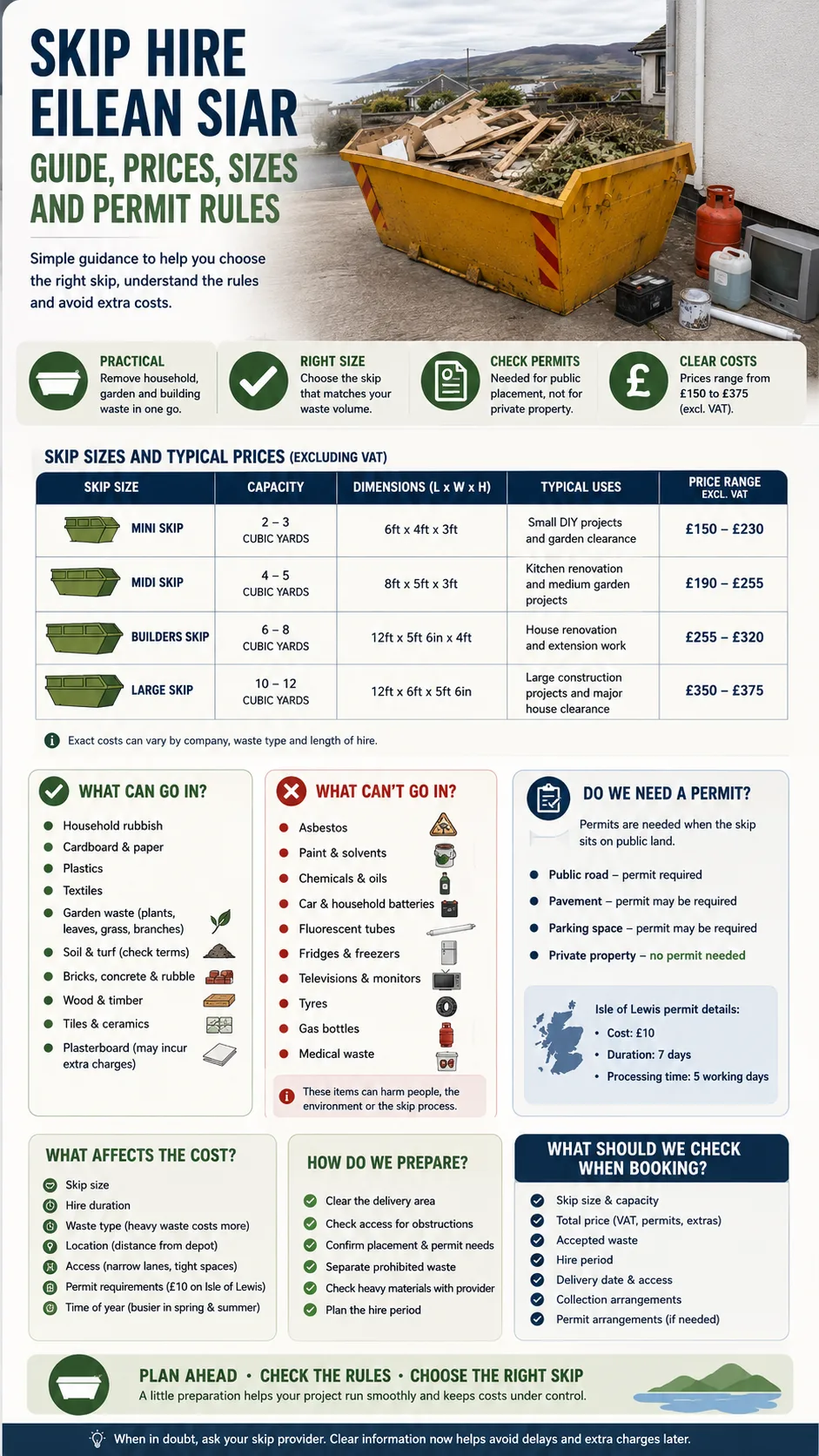
Prices listed for the area range from £150 to £375 before VAT, depending on skip size. Keep reading to understand the available sizes, typical costs, permit rules, accepted waste, and useful booking checks.
Quick Reads for Easier Skip Hire
These three points cover the main things we need to know before arranging skip hire and can help us plan clearly.
Choose the right skip size to avoid extra delivery costs. Mini skips hold 2–3 cubic yards, while large skips hold 10–12.
Check if you need a permit. Private property usually doesn’t, but public roads and parking spaces may.
Check waste restrictions. Household, garden, and building waste is usually accepted, but hazardous items aren’t.
What Can We Use Skip Hire For?
We can use skip hire UK for many ordinary projects where a large amount of waste needs to leave our property in one collection. The most suitable size depends on the waste volume rather than simply the type of project.
Before choosing a skip, we should estimate how much waste we expect and consider whether large or heavy items will take up most of the available space.
Home clearances can create a mixture of furniture, cardboard, packaging, textiles, and general household rubbish. A mini or midi skip may be suitable for smaller clearances.
Garden clearances can produce branches, logs, plants, leaves, grass cuttings, soil, and turf. We should check the waste terms before putting heavier garden materials into a skip.
Kitchen renovations often create old fittings, timber, tiles, ceramics, packaging, and other building waste. A midi skip may suit a medium sized project, although the amount of waste should guide our final choice.
House renovations can produce bricks, concrete, timber, tiles, plasterboard, and other materials. A builders skip can provide more capacity for these larger projects.
Larger construction work may need a large skip because the waste volume can build quickly. We should also check whether heavy materials have separate charges or disposal rules.
Skip Sizes and Typical Prices
The table below shows the typical prices published for skip hire in Eilean Siar, with all listed prices excluding VAT.
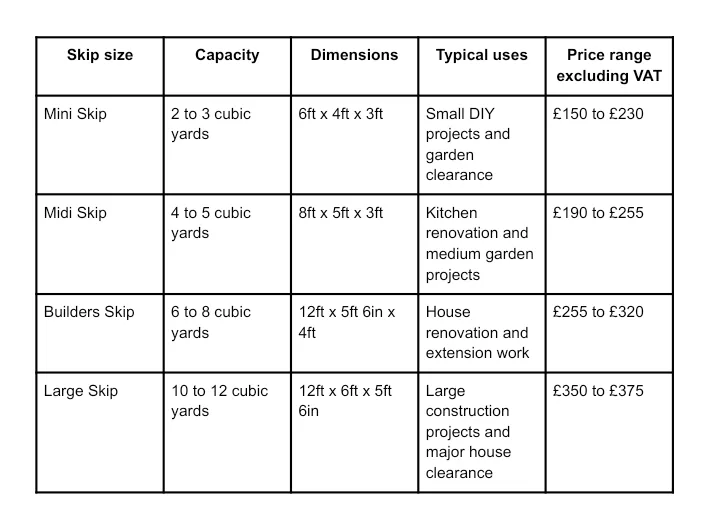
The published prices state that exact costs can vary according to the company, waste type, and length of hire.
What Affects Our Skip Hire Cost?
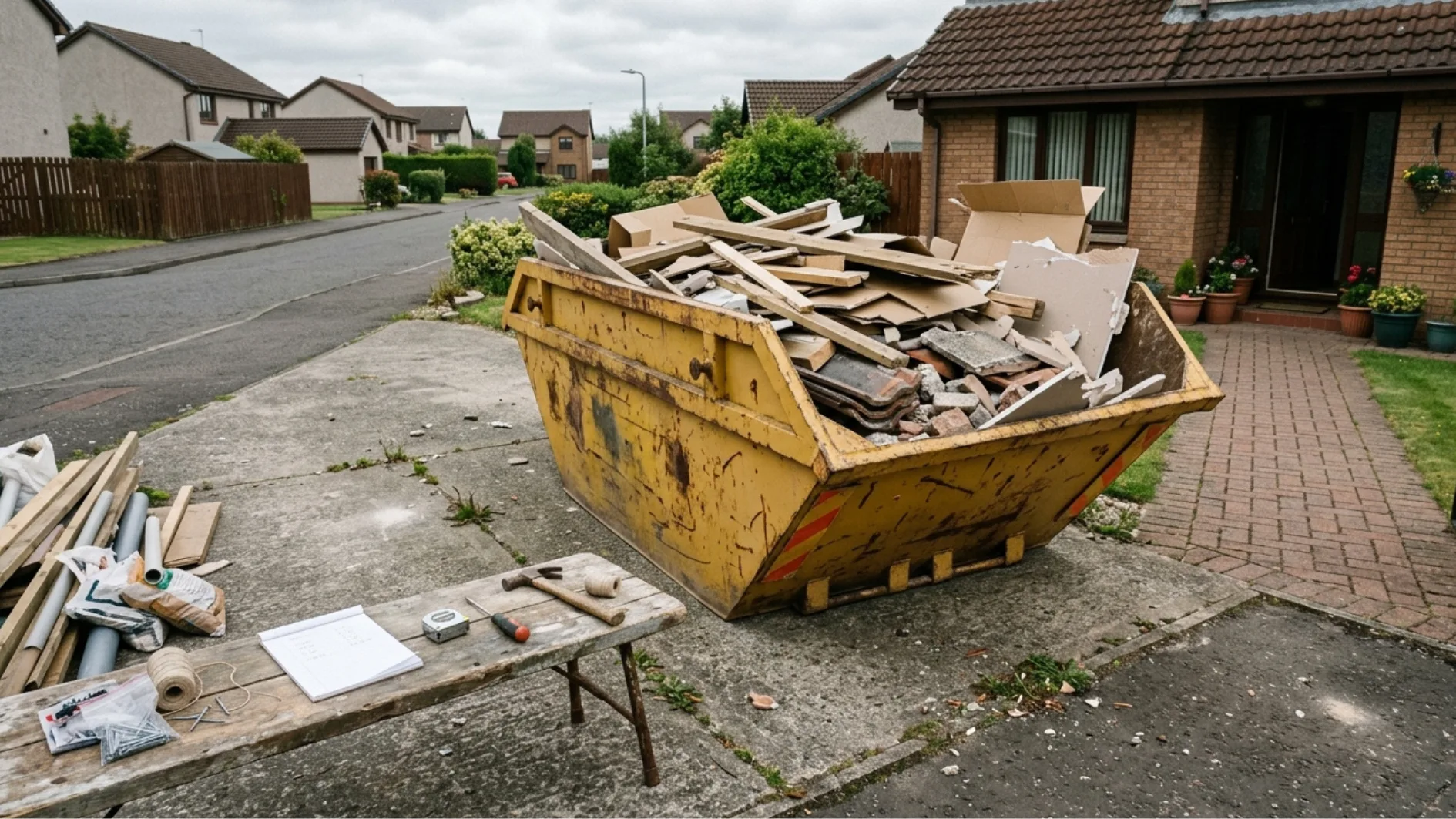
The size of our skip is only one part of the total cost, so we should check the other details before making a booking.
A clear quote should help us understand the expected cost, possible extra charges, and any conditions that apply to our waste or placement.
Skip size affects the starting price. Larger skips cost more, but choosing enough capacity can help us avoid needing another skip later.
Hire duration can affect the final cost when we need the skip for longer than the standard period. The published guidance says some arrangements allow flexibility, while some companies set a usual limit of one to two weeks.
Waste type can affect disposal charges. Soil, rubble, concrete, bricks, and plasterboard can cost more to handle than lighter general waste.
Location can affect delivery costs. Prices can vary between towns and postcode areas, especially where a delivery location is farther from the relevant depot.
Access matters because narrow lanes or restricted spaces can make delivery difficult. We should explain any access problems before delivery is arranged.
Permit requirements can add a cost when we need to place the skip on public land. The published information lists a £10 permit cost for the Isle of Lewis, with a seven day duration and five working day processing time.
Time of year can affect availability and sometimes pricing. The published guidance notes that spring and summer can be busier, while December and January are typically quieter.
Do We Need a Skip Permit?
We may need a permit when our skip cannot be kept entirely within our private property. Checking the placement before delivery can prevent problems.
As noted by GOV.UK:
“In most areas, skip hire companies are responsible for getting skip licences, also sometimes called skip permits.” - GOV.UK
The published local information gives the following basic permit position for the area covered by the page.
Public road placement requires a permit where the skip is placed on the road.
Pavement placement can require a permit because the skip occupies public space.
Parking spaces can require a permit when the skip occupies an on street parking area.
Private property normally does not need a permit when the skip remains completely inside our property boundary.
Driveways and front gardens can be suitable private locations when the skip can sit fully within our property.
For the Isle of Lewis, gives a £10 permit cost, a seven day duration, and a stated processing time of five working days.
What Waste Can We Put in a Skip?
We should sort our waste before the skip arrives because accepted materials can vary and some waste must not enter a standard skip.
Checking the waste rules in advance gives us a better chance of filling the skip correctly and avoiding problems with collection.
As highlighted by Comhairle nan Eilean Siar:
"Construction and demolition wastes are classed as Industrial Waste and the waste producer has a duty to dispose of this type of waste properly and pay any appropriate waste disposal costs even if the producer is a householder carrying out DIY work." - Comhairle nan Eilean Siar
Household rubbish can generally be placed in a suitable skip.
Cardboard and paper are listed as common accepted waste materials.
Plastics can normally be included when they form part of suitable general waste.
Textiles can be accepted as part of general household waste.
Garden waste can include plants, leaves, grass cuttings, branches, and logs.
Soil and turf may be accepted, although heavy waste can have different charges or conditions.
Bricks and concrete can be accepted for suitable building waste, but their weight means we should confirm the terms before loading them.
Wood and timber can be placed in a suitable skip.
Tiles and ceramics are listed as acceptable building materials.
Plasterboard may be accepted, although separate handling or extra charges can apply.
The published guidance advises us to confirm the exact waste terms because heavy materials, plasterboard, and bulky items can have additional charges or separate collection requirements.
What Cannot Go Into Our Skip?
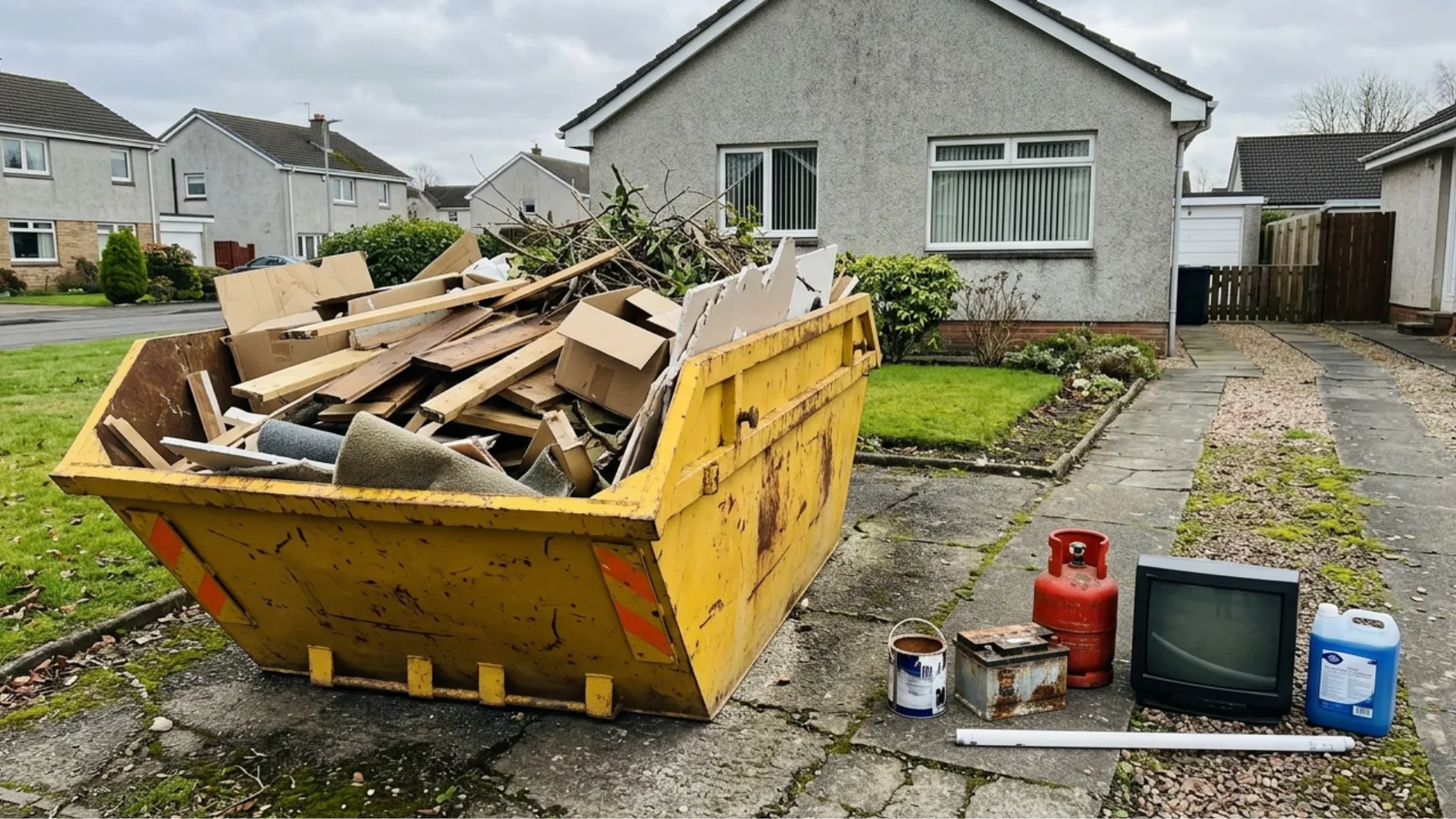
Some waste must stay out of a standard skip because it can create safety, environmental, or disposal problems. We should check the prohibited items in skip hire before loading anything unusual.
We should identify these items before starting our project so we can arrange suitable disposal instead of placing them into the skip.
Asbestos should not be placed in a standard skip.
Paint and solvents are listed as prohibited materials.
Chemicals and oils should not be loaded into the skip.
Car and household batteries are not suitable for standard skip disposal.
Fluorescent tubes should not be placed in the skip.
Fridges and freezers are excluded from standard skip waste.
Televisions and monitors should not go into the skip.
Tyres are listed as prohibited.
Gas bottles should not be placed inside a standard skip.
Medical waste requires suitable specialist handling.
The published guidance also notes that coastal environmental areas and Sites of Special Scientific Interest can require careful handling of certain materials.
How Do We Choose the Right Skip Size?
We should choose our skip by estimating the volume of waste first, then checking whether the material itself creates weight or disposal restrictions.
When we compare our requirements with skip hire East Sussex, we can see how skip sizes and services may vary by location.
Using the available capacities as a guide gives us a simple starting point for matching the skip to our project.
Mini Skip can suit a smaller DIY project or garden clearance where we expect around 2 to 3 cubic yards of waste.
Midi Skip can suit a medium project with around 4 to 5 cubic yards of waste.
Builders Skip can suit larger renovation work where around 6 to 8 cubic yards may be needed.
Large Skip can suit major clearances or construction work producing around 10 to 12 cubic yards of waste.
Extra capacity can be useful when we are unsure about the final amount, but we should still check whether the waste itself is suitable for the chosen skip.
How Do We Prepare Before Delivery?
Good preparation can make skip delivery easier and can reduce the chance of access or placement problems during our project.
We should check the space, waste, access, and timing before the delivery date so the skip can be used safely.
Clear the delivery area so there is enough space for the skip and the delivery vehicle.
Check access for narrow roads, gates, low branches, parked vehicles, and other possible obstructions.
Confirm placement and decide whether the skip will sit on private property or public space.
Arrange a permit when one is required. The published local information states that processing can take five working days.
Separate prohibited waste before loading begins.
Check heavy materials such as soil, rubble, concrete, and bricks with the relevant skip provider before placing them inside.
Plan the hire period around the project so the skip is available when we actually need it.
What Should We Check When Booking?
We should ask clear questions when arranging our skip because the final price and conditions can depend on our project details.
Keeping the booking simple means we can confirm the main points before delivery rather than dealing with unexpected issues later.
Confirm the skip size and make sure its capacity suits the amount of waste we expect.
Confirm the total price and ask whether VAT, permits, heavy waste, or other charges are included.
Confirm the accepted waste and explain any unusual materials before delivery.
Confirm the hire period so we know how long the skip can remain on site.
Confirm the delivery date and make sure the location is accessible.
Confirm collection arrangements so we understand what happens when the skip is full.
Confirm permit arrangements if the skip needs to sit on a public road, pavement, verge, or parking space.
Can Skip Hire Work for Smaller Projects?
Skip hire can be useful for smaller projects when the waste volume is large enough to make a skip practical.
We can start with the smallest suitable option rather than choosing a larger skip without checking how much waste our project will create.
Small DIY jobs can often fit within a mini skip when the waste volume stays within its 2 to 3 cubic yard capacity.
Small garden clearances may also suit a mini skip when we are removing branches, plants, leaves, and other suitable garden waste.
Room clearances can require a midi skip when furniture and household waste create more volume than a mini skip can hold.
Renovation work may need a builder's skip because building materials can quickly fill smaller containers.
FAQ
We can use the local Skip Hire directory page to find skip hire options for the area and browse the available location information. The page currently provides a town option for the Isle of Lewis.
The exact hire period depends on the arrangement we make. The published guidance says some companies allow us to keep the skip until it is full, while others can set a limit of around one to two weeks. We should confirm the hire period when booking.
We should not place asbestos, paint, solvents, chemicals, oils, batteries, fluorescent tubes, fridges, freezers, televisions, monitors, tyres, gas bottles, or medical waste into a standard skip.
We can use the expected waste volume as our main guide. A mini skip holds 2 to 3 cubic yards, a midi skip holds 4 to 5 cubic yards, a builders skip holds 6 to 8 cubic yards, and a large skip holds 10 to 12 cubic yards.
Delivery to island locations can require additional planning because transport arrangements can affect timing. We should confirm the expected delivery and collection dates when booking rather than assuming that a mainland delivery schedule will apply.
Skip Hire Eilean Siar Made Simple
Skip hire gives us a straightforward way to manage waste from clearances, garden work, renovations, and construction projects when we need more capacity than normal household collections provide.
The published price ranges give us a useful starting point, with mini skips listed from £150 to £230 before VAT and large skips listed from £350 to £375 before VAT. Exact costs can change according to waste type, location, hire length, and other conditions.
For the next step, we can use our Skip Hire Eilean Siar to check the available information and find the option that fits our project.
References
https://www.cne-siar.gov.uk/bins-and-recycling/household-waste/creed-park-household-waste-reycling-centre/disposal-options-wastes-are-not-permitted
https://www.gov.uk/find-licences/apply-skip-permit
Related Articles
Filed under:
Skip Hire