
Skip hire comes with strict rules, and many common household and construction items cannot go into a skip due to safety, legal, and environmental risks.
Knowing these restrictions helps us avoid fines and delays. Keep reading to understand exactly what we can and cannot put in a skip and how to handle restricted waste correctly.
Quick Guide to Items Prohibited in Skip Hire
These points sum up the most important rules we need to follow to avoid problems, extra costs, and unsafe waste handling.
Many everyday items like batteries, paint, and appliances are prohibited in skips due to hazardous risks
Incorrect disposal can lead to extra charges, delays, or legal issues under UK waste regulations
We must use proper recycling centres or specialist services for restricted and hazardous waste
What Are Skip Hire Restrictions in the UK?
Skip hire restrictions exist to protect safety, follow legal requirements, and reduce environmental harm, especially under UK waste disposal laws and landfill regulations enforced since 2012.
Skip hire companies follow strict waste carrier regulations to ensure waste is handled safely. According to UK waste management rules, hazardous materials must not mix with general waste due to contamination risks.
Improper disposal can result in skip contamination, making the entire load unsafe for landfill or recycling centres. This often leads to rejected collections or additional handling costs.
Waste segregation is required to separate recyclable, hazardous, and general waste. This helps reduce landfill pressure and improves recycling rates across domestic and commercial waste streams.
Before listing restricted items, it helps to understand how waste is categorized in skip hire services:
General waste includes non-hazardous household or builder’s waste
Hazardous waste includes toxic, flammable, or harmful substances
Restricted waste includes items needing special handling or permits
These categories guide what we can safely place in a skip and what requires alternative disposal routes.
Hazardous Waste: The Most Common Prohibited Skip Items
Hazardous waste is banned from skips because it can harm people, damage equipment, and pollute the environment if not handled under strict disposal regulations.
Hazardous materials include substances that are toxic, flammable, corrosive, or reactive. The UK Environment Agency classifies these materials under strict disposal laws.
Items like paint, oil, and chemicals can leak and contaminate other waste. Even small amounts can make an entire skip load unsafe for processing or landfill disposal.
Many hazardous materials also pose fire risks, especially when mixed with other waste types. This is a major reason skip hire companies enforce strict loading restrictions.
We often see confusion about what counts as hazardous waste, so here are common examples:
Paint tins, varnish tins, and solvent waste
Oil disposal items, including engine oil and lubricants
Cleaning chemicals, pesticides, and adhesives
Asbestos and contaminated soil
Toxic or chemical waste from construction or renovation
These items must go through specialist disposal services rather than standard skip hire.
Electrical Waste and Appliances (WEEE Recycling Rules)
Electrical waste cannot go in a skip because it falls under WEEE recycling laws, which require proper dismantling and recovery of materials.
Waste Electrical and Electronic Equipment regulations were introduced to reduce landfill waste and recover valuable materials like copper and aluminium.
In a recent analysis by Nationwide Waste Services
"In 2022, the UK collected 467,517 metric tons of household WEEE. Although this represents a slight decrease from the previous year, it remains a significant volume2. The challenge lies in efficiently managing this waste stream to minimize environmental impact." - Nationwide Waste Services
Items such as fridges and freezers contain gases that are harmful to the environment. These must be removed safely before recycling.
Large appliances are also classed as white goods disposal items. These require dedicated recycling processes that skips cannot provide.
We often deal with electrical waste during home clear-outs or renovations, including:
Fridge disposal and freezer disposal units
Washing machines, ovens, and dishwashers
TVs, computers, and unwanted electronics
Dead appliances and small electrical items
These should be taken to a recycling centre or collected through approved appliance recycling services.
Batteries, Gas Bottles, and Pressurised Containers
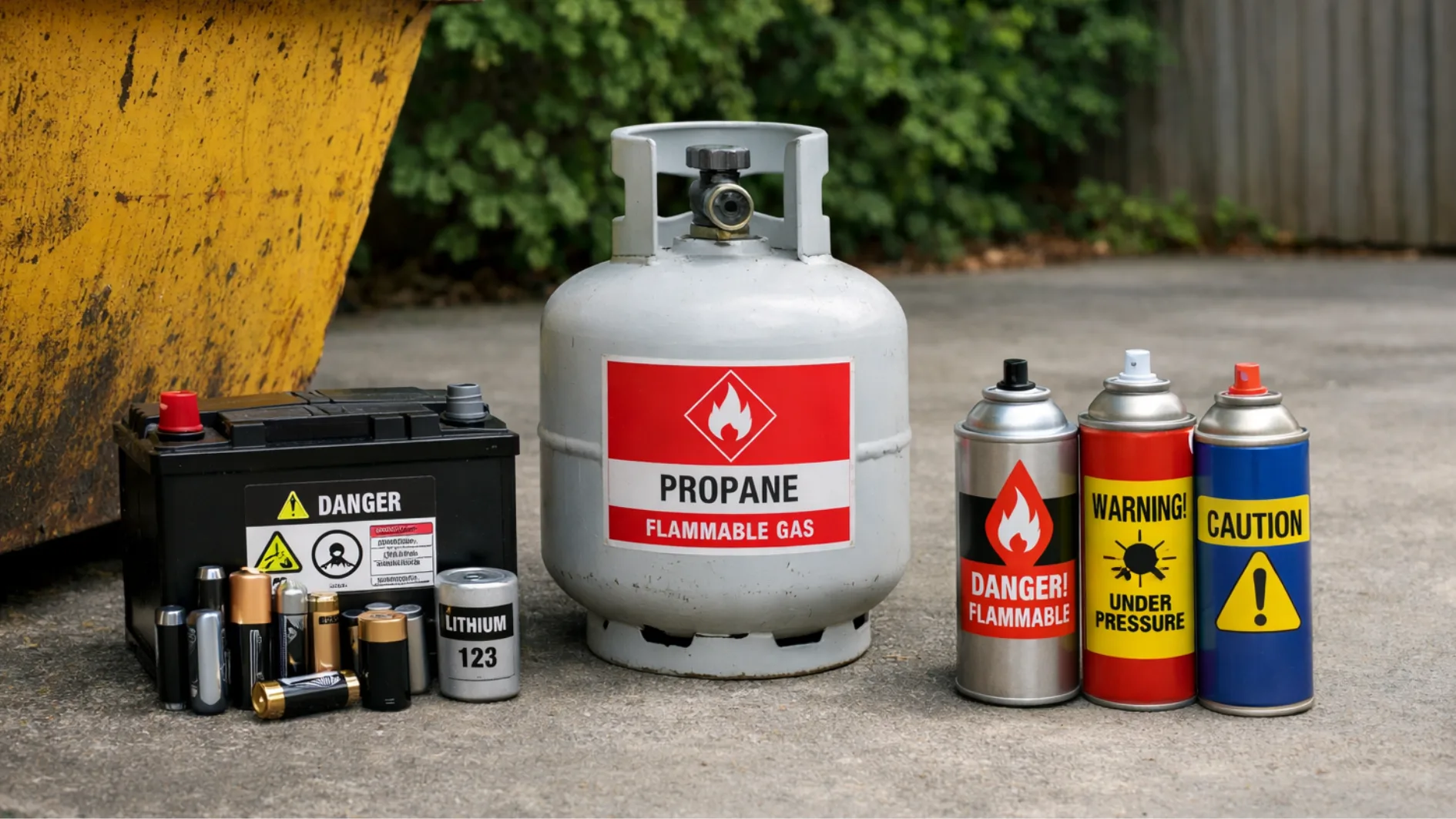
Pressurised and reactive items are banned from skips because they can explode, leak, or cause fires during transport and waste processing.
Batteries contain chemicals that can leak into soil and water. Lithium batteries are especially dangerous due to their fire risk when damaged.
Research from GOV.UK shows
"Lithium batteries are responsible for approximately 48% (over 200) of all waste fires occurring in the UK each year with a cost of £158 million annually to waste operators, the emergency services and the environment." - GOV.UK
Gas cylinders and gas bottle disposal require specialist handling because they remain pressurised even when empty. This creates a serious safety risk.
Fire extinguishers also fall under restricted waste due to internal pressure and chemical contents. They cannot be disposed of in general waste skips.
To avoid dangerous situations, we must separate these items carefully:
Car batteries, lithium batteries, and lead acid batteries
Aerosol cans and pressurised containers
Gas cylinders and gas bottles
Fire extinguisher disposal items
These should always be handled through approved recycling or specialist disposal services.
Construction Waste Rules and Plasterboard Disposal
Certain construction materials are restricted due to how they react in landfill and their impact on the environment under UK construction waste rules.
Plasterboard disposal is one of the most common restrictions. When mixed with biodegradable waste, it can release harmful gases like hydrogen sulphide.
The UK government introduced landfill restrictions on plasterboard to prevent these emissions. It must be separated and disposed of at approved facilities.
Other construction waste may also require careful handling, especially if contaminated or mixed with hazardous materials.
When dealing with renovation waste or builder’s waste, we must separate restricted materials such as:
Plasterboard and gypsum-based materials
Contaminated waste from demolition work
Treated wood or chemically exposed materials
Mixed waste that cannot be sorted safely
Proper waste segregation helps ensure compliance and avoids extra charges or rejected skip collections.
Clinical, Medical, and Dangerous Waste
Clinical and medical waste is prohibited because it poses serious health risks and must be handled under strict medical waste regulations in the UK.
This type of waste includes anything that may carry infection or cause injury. It requires controlled handling and disposal by licensed professionals.
Sharps disposal is especially regulated. Items like needles can cause injury and spread disease if not managed correctly.
Even small amounts of clinical waste can contaminate an entire skip, making it unsafe for workers and processing facilities.
We must never place the following items in a skip:
Medical waste from home or healthcare settings
Clinical waste such as dressings or contaminated materials
Sharps including needles or syringes
Biological or infectious waste
These must go through specialist clinical waste disposal services.
Tyres, Mattresses, and Furniture Restrictions
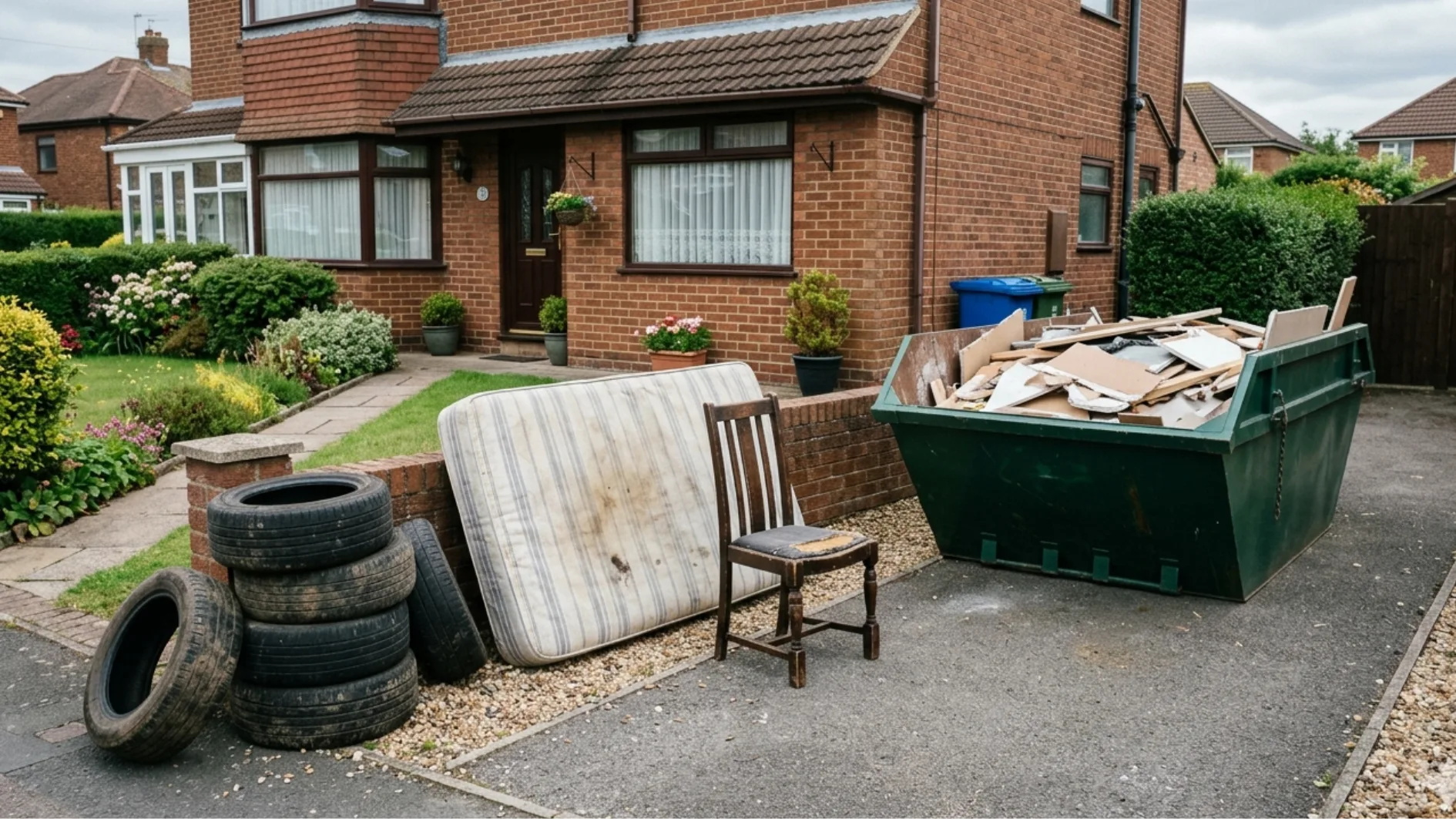
Some bulky items are restricted due to recycling requirements and landfill limitations, even though they may seem safe for general skip waste.
Tyre disposal is regulated because tyres cannot be sent to landfill in the UK. They must be processed through recycling systems.
Mattress disposal is also restricted in many cases due to their size and materials, which are difficult to break down.
Sofa disposal and other large furniture may be accepted depending on the skip hire rules, but often come with additional charges.
Here are common bulky items that may be restricted or require special handling:
Tyres and rubber materials
Mattresses and upholstered furniture
Sofas and large household items
White goods and heavy appliances
We should always confirm with our skip hire provider before loading these items.
Fluorescent Tubes, Paint, and Chemical Waste
Certain household items are restricted because they contain hazardous substances that require careful disposal under environmental compliance regulations.
Fluorescent tube disposal is controlled due to mercury content. Mercury lamps can release toxic vapours if broken.
Paint disposal is also regulated, especially liquid paint. It can leak and contaminate other waste during transport.
Solvent waste and chemical waste are highly flammable and must be treated as hazardous materials.
We often find these items during home improvement projects:
Fluorescent tubes and mercury lamps
Paint tins, varnish tins, and liquid coatings
Solvents, adhesives, and cleaning chemicals
Pesticides and toxic household products
These items should be taken to a recycling centre or handled through specialist disposal services.
Why Skip Contamination Leads to Extra Charges
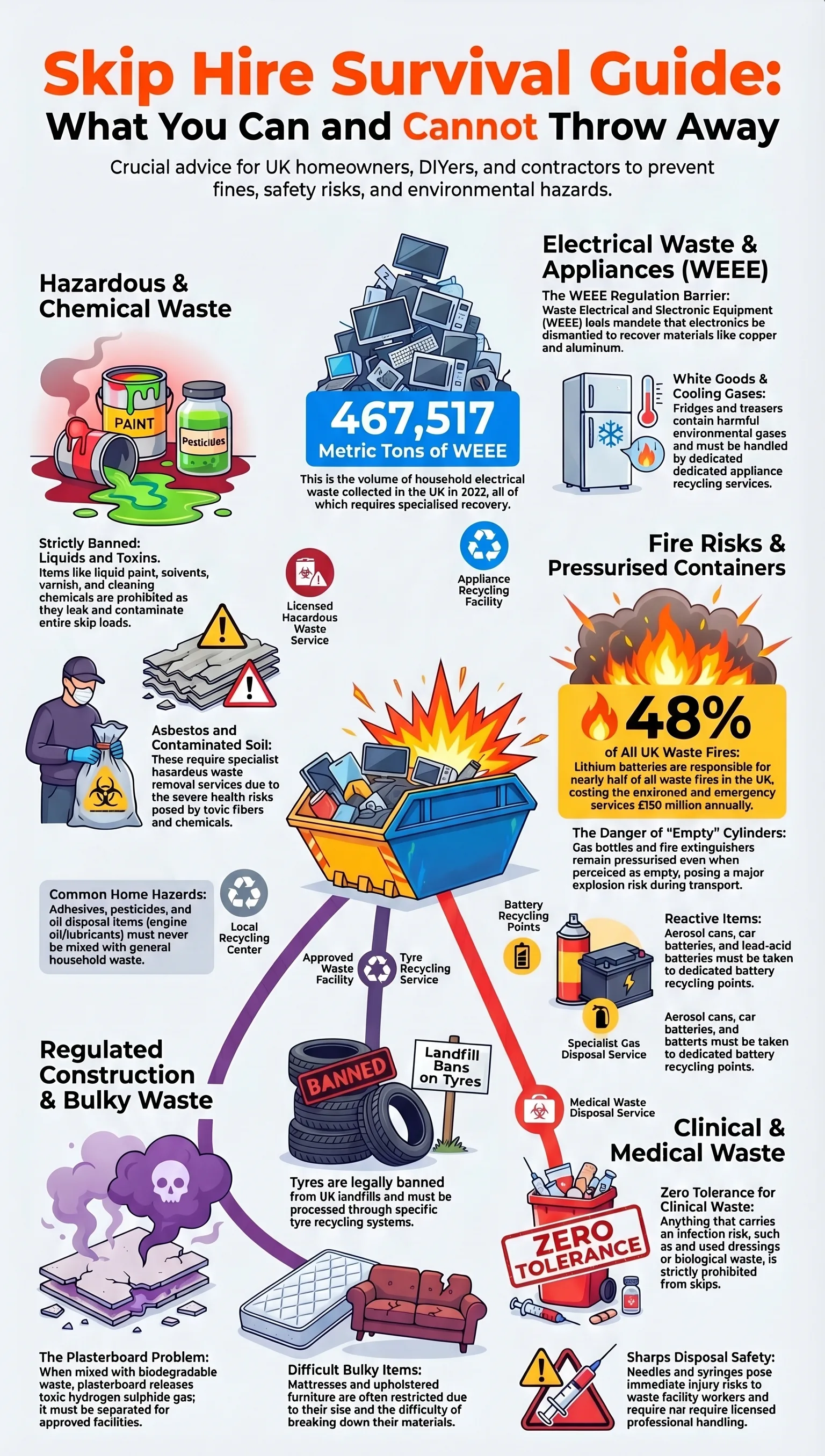
Skip contamination occurs when prohibited items are placed in a skip, making the entire load unsafe and non-compliant with waste regulations.
Once a skip is contaminated, it may be rejected at the waste facility. This means additional sorting, transport, or disposal costs.
Skip hire companies may apply a skip hire surcharge to cover the cost of handling restricted waste. This can increase the overall cost significantly.
Contaminated loads also disrupt recycling processes. Mixed waste becomes harder to separate, reducing recycling rates and increasing landfill use.
To avoid these issues, we must follow skip loading restrictions carefully:
Do not mix hazardous waste with general waste
Check prohibited skip items before loading
Separate recyclable and restricted materials
Use specialist disposal where required
Following these steps helps keep waste management simple and compliant.
How to Dispose of Prohibited Items Safely
Prohibited skip items must be disposed of through approved methods such as recycling centres or licensed waste carriers under UK disposal regulations.
Local recycling centres accept many restricted items, including batteries, electrical waste, and paint. These facilities are designed to handle hazardous materials safely.
Licensed waste carriers provide specialist disposal services for items like asbestos, chemicals, and clinical waste. They issue a waste transfer note as proof of compliance.
Whether we are handling domestic waste or commercial waste, proper disposal protects both safety and the environment.
The table below outlines common prohibited items and their correct disposal methods:
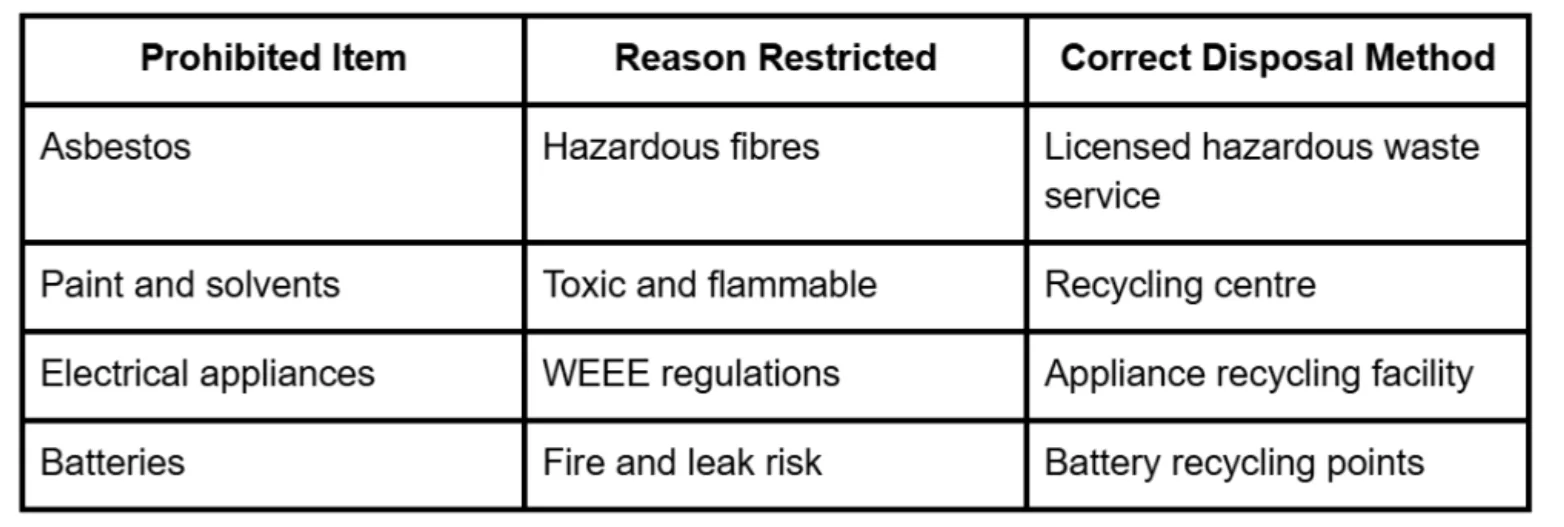
Using the correct disposal route keeps us compliant with UK waste management laws.
Items Prohibited in Skip Hire: Final Thoughts and Next Steps
Items prohibited in skip hire include hazardous materials, electrical waste, pressurised containers, and regulated construction waste, all of which require specialist disposal under UK law.
Understanding these rules helps us avoid delays, extra costs, and safety risks. Whether we are clearing a home, managing renovation waste, or handling commercial waste, proper waste segregation is essential.
In areas like Greater London, regulations may be stricter due to higher waste volumes and tighter environmental controls. In regions such as West Midlands or Greater Manchester, local recycling centres play a key role in handling restricted waste safely.
We should always check skip hire rules before loading waste. This keeps the process smooth and avoids unnecessary complications.
If we are ready to arrange skip hire or need guidance on waste disposal, we can explore options Search Skip Hire.
FAQ
If we place banned items in a skip, the waste may be rejected at the recycling centre or landfill site. This can lead to delays, extra charges, or a skip hire surcharge. In some cases, we may also face legal issues under UK waste disposal regulations.
No, electrical waste is not allowed in skips due to WEEE recycling rules. Items like fridges, TVs, and washing machines must go to approved recycling centres or be collected through appliance recycling services.
Even small amounts of paint, solvents, or cleaning chemicals are not allowed in skips. These are classed as hazardous waste and can contaminate the entire load. We should take them to a local recycling centre instead.
Yes, skip hire rules can vary slightly depending on local council regulations. In areas like Greater London or Kent, there may be stricter controls on waste disposal and permits. However, hazardous and prohibited items remain consistent across the UK.
We should use approved recycling centres or licensed waste carriers for restricted waste. These services handle hazardous materials safely and provide documentation like a waste transfer note to confirm proper disposal.
References
Related Articles
Filed under:
Skip Waste Types