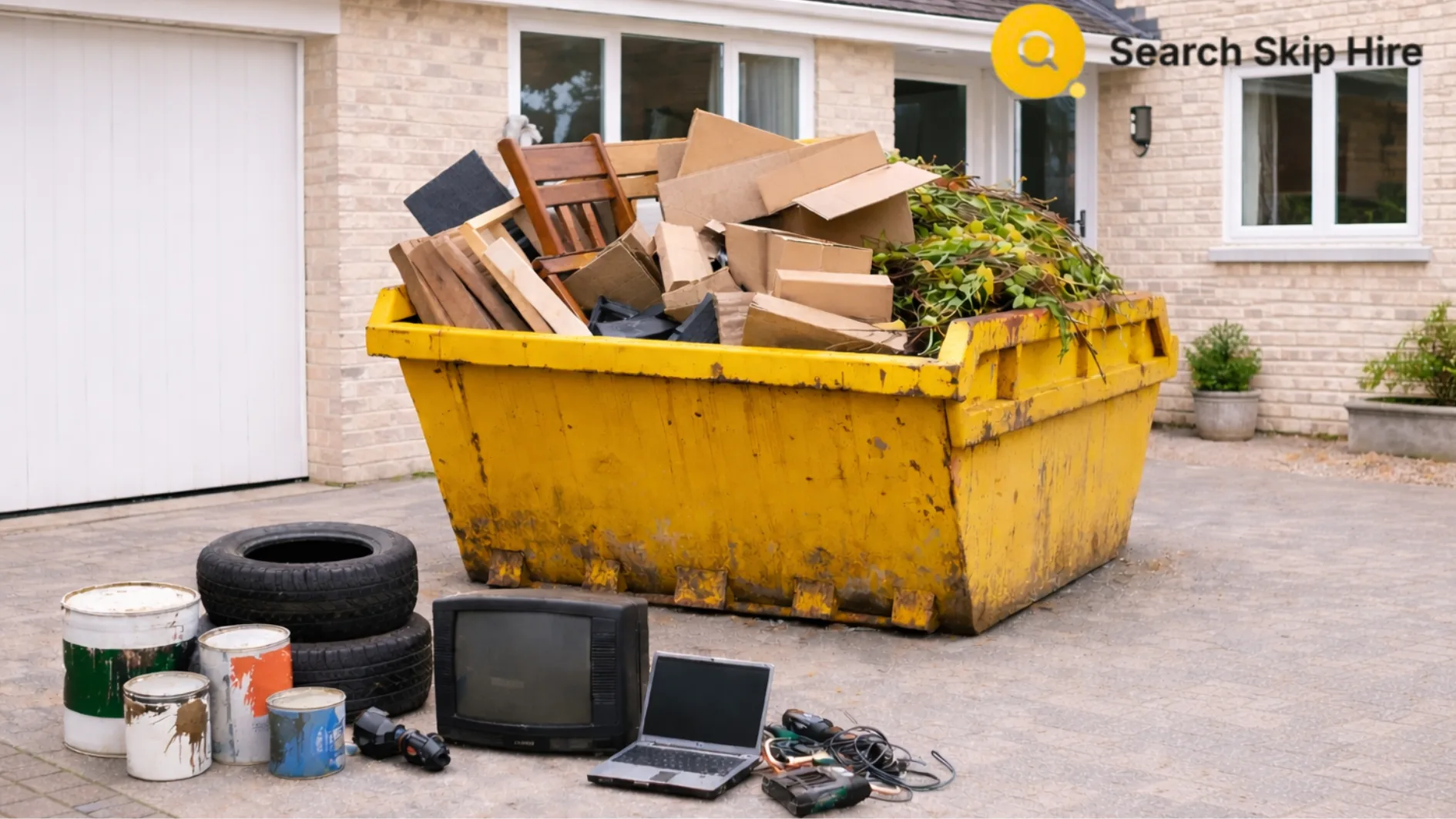
You can put most non-hazardous household, garden, and construction waste in a skip in the UK, including furniture, soil, rubble, and general waste, but certain restricted items must stay out.
The rules are set to keep waste disposal safe and compliant across the country, including areas like Greater London and the West Midlands, where local guidelines can vary slightly.
Understanding these rules helps avoid extra costs or delays during your project. Keep reading to learn exactly what can go in a skip, what cannot, and how to load it properly.
Skip Hire UK: Quick Waste Rules
These quick points summarise what you need to know to use a skip correctly and avoid common waste disposal issues.
Most household waste, garden waste, and builders waste are allowed in a skip if they are non-hazardous
Certain items like chemicals, asbestos, and electricals fall under strict skip restrictions
Proper skip loading and sorting improves waste recycling and keeps your skip hire cost under control
What Can Go in a Skip UK
Most everyday waste types from homes, gardens, and construction sites can go into a skip, as long as they are classified as non-hazardous waste under UK regulations.
Much of the waste placed in skips can be recycled when it is properly separated and handled in line with UK waste rules.
We focus on clear waste management practices that follow UK-wide guidance while supporting safe and efficient waste disposal.
Household and construction materials make up the majority of skip contents. These materials are widely accepted across domestic skip hire and commercial skip hire services.
Before listing items, it helps to know that skips are designed for mixed waste, but certain categories must still be separated where possible.
This helps improve recycling rates and avoids contamination of recyclable materials.
This list covers the most common waste types you can safely place in a skip:
Household waste such as old furniture, chairs, tables, sofas, and wardrobes
General waste including cardboard, packaging, and non-recyclable rubbish
Garden waste like branches, leaves, grass cuttings, and fence panels
Builders waste such as bricks, concrete, tiles, ceramics, and rubble
Renovation waste including kitchen waste, bathroom waste, and plasterboard (limited quantities)
DIY waste like timber, wood, and small amounts of metal
These materials are commonly accepted across the UK, whether you are arranging services in Greater Manchester or other regions.
Household and General Waste Explained
Household waste forms the largest portion of skip hire UK usage, covering everyday items removed during clear-outs, moves, and renovations.
WRAP and GOV.UK report that UK households generated 25.9 million tonnes of waste in 2023, much of which can be managed through proper sorting and disposal routes depending on the material type.
Research from WRAP indicates
"The largest survey of its kind in the UK, 79% of UK citizens report disposing of recyclable materials in general rubbish, while 81% put non-recyclable items in recycling bins" - The Waste & Resources Action Programme
We handle household waste through structured waste collection systems designed to separate recyclable and non-recyclable materials efficiently.
Furniture removal is a common reason people hire a skip, especially when dealing with bulky waste items that are difficult to transport.
Many of these items fall under general waste but can still be recycled or processed depending on materials.
House clearance projects often include mixed waste, which makes skip bins a practical solution for managing different materials in one place.
Before breaking down specific categories, it is useful to group common household items that are accepted in skips.
Here are typical household waste items you can include:
Non-electrical furniture such as sofas, armchairs, and tables
Carpet disposal items including underlay and flooring materials
Cardboard and packaging from deliveries or house moves
Old furniture during garage clearance, loft clearance, or full house clearance
These items are widely accepted, whether you are booking a mini skip for a small job or a builder’s skip for larger projects.
Garden Waste and Green Waste
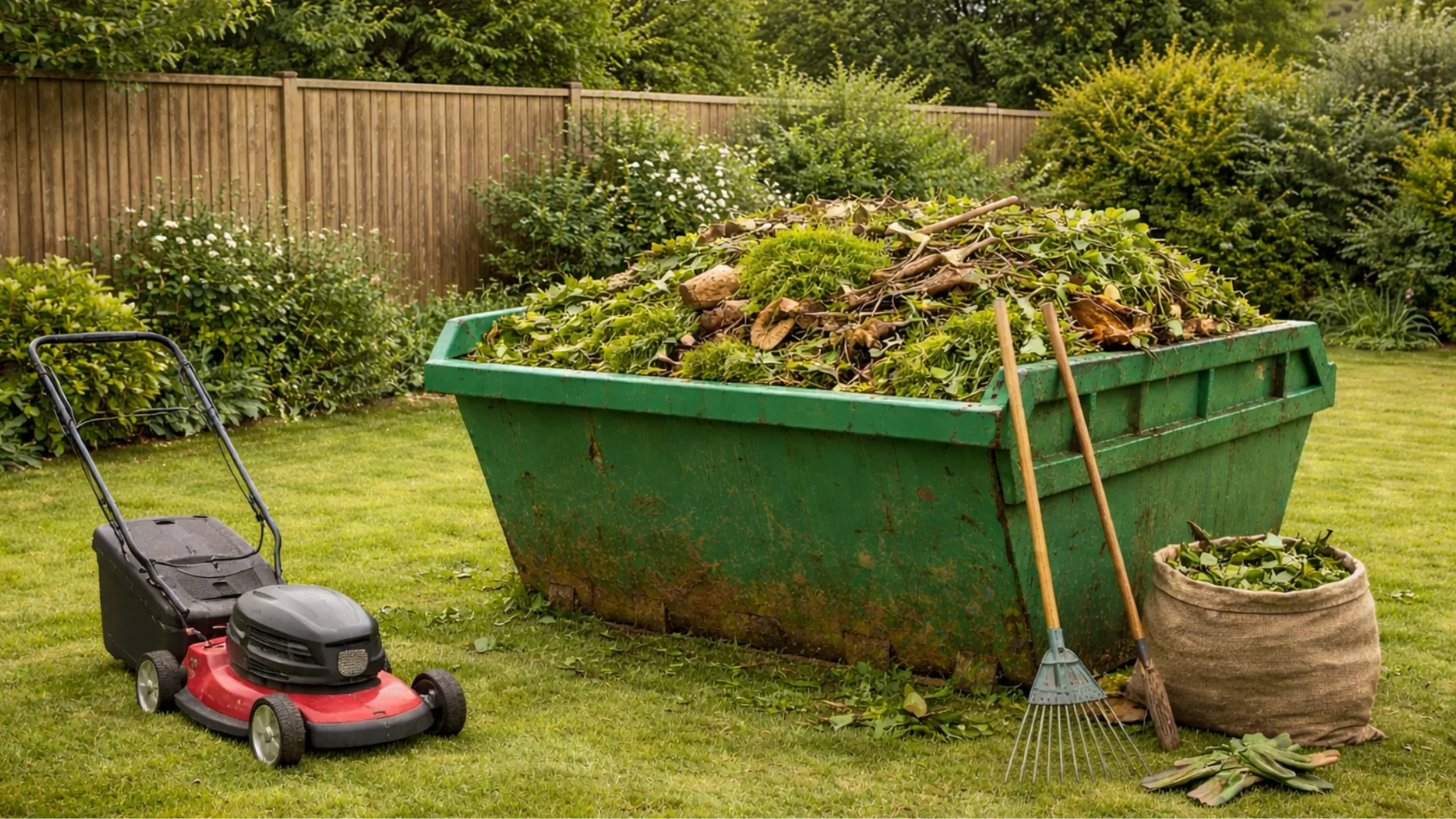
Garden waste is fully accepted in skip hire and includes organic materials from routine maintenance or full garden clearance projects.
RHS guidance explains that green garden waste such as grass cuttings, leaves, and pruning clippings can be composted, while brown waste such as woody prunings and cardboard can also be recycled through composting systems.
We treat garden waste separately when possible because it improves recycling rates and reduces landfill use.
Garden clearance jobs often involve bulky and heavy materials, which makes using a skip bin more practical than standard waste disposal methods.
Organic waste breaks down differently from general waste, so keeping it grouped can help with processing.
This becomes important during larger landscaping or renovation projects involving soil and turf removal.
Common types of garden waste that can go in a skip include:
Branches, leaves, and grass cuttings
Soil removal and turf (within weight limits)
Fence panels and shed removal materials
Green waste from pruning and landscaping
These materials are accepted across most UK regions, although weight limits can affect how much soil or rubble you can load.
Builders, Construction, and DIY Waste
Construction and DIY waste can go in a skip, including heavy materials like rubble and bricks, as long as they are non-hazardous and within weight limits.
According to Defra waste statistics cited by the Environment Agency, construction and demolition waste made up 62% of total UK waste in 2016, underlining the importance of proper waste management.
We support construction waste disposal by offering skips designed to handle dense and heavy materials safely.
Builder’s skips and maxi skips are commonly used for renovation waste, demolition waste, and site clearance projects.
These skips allow for mixed waste loading but still require awareness of prohibited items.
Construction waste often includes inert materials, which are easier to recycle when separated.
Here are common builders waste types that can go in a skip:
Rubble, hardcore, bricks, and concrete
Tiles, ceramics, and plasterboard (limited quantities)
Timber, wood, and untreated materials
Scrap metal and small metal items
Insulation (non-hazardous types only)
These materials are accepted whether you are working on a home project or a commercial build in areas like Kent or across the UK.
Skip Restrictions: What Cannot Go in a Skip
Certain items are not allowed in skips due to environmental and safety regulations, and placing them inside can lead to extra charges or collection refusal.
The Environment Agency enforces strict rules on hazardous waste, which includes materials that pose risks to health or the environment.
We follow these guidelines to ensure safe waste disposal and compliance with UK regulations.
Hazardous materials require specialist waste collection and cannot be mixed with general skip waste.
This protects both waste handlers and recycling systems from contamination or harm.
Understanding these restrictions helps avoid delays and unexpected costs during your project.
Here are common items that cannot go in a skip:
Asbestos and hazardous construction materials
Chemicals, paints, and solvents
Electrical items such as TVs, fridges, and appliances
Tyres, batteries, and gas cylinders
Medical waste and hazardous substances
These restrictions apply nationwide, including in regions like Greater London, where enforcement is particularly strict.
Skip Sizes and Waste Types
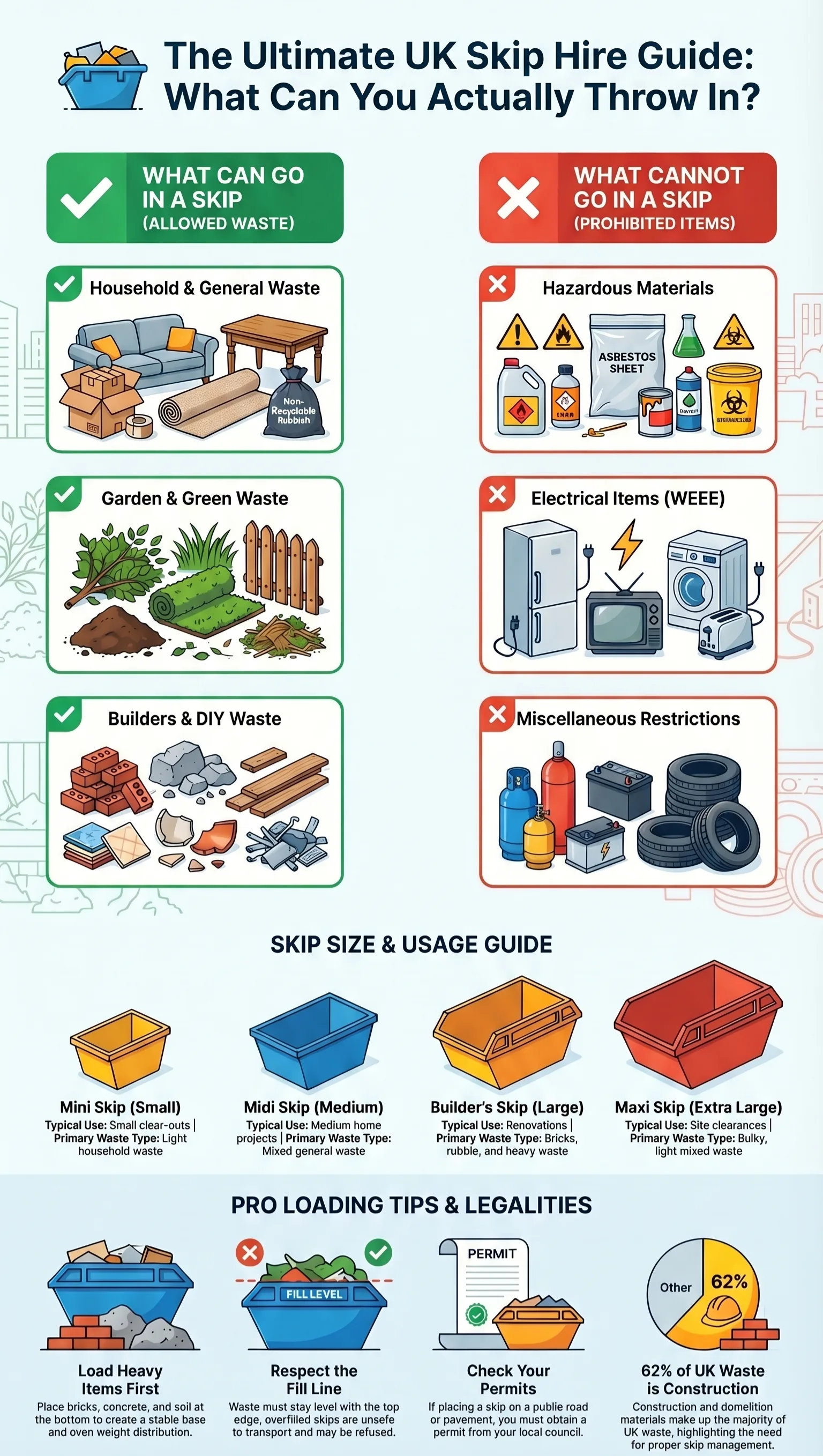
Choosing the right skip size depends on the type and volume of waste you need to dispose of, as well as weight restrictions for different materials.
Skip sizes in the UK typically range from 2-yard mini skips to 16-yard maxi skips, each designed for specific waste loads and project types.
We match skip sizes to waste types to help manage both cost and efficiency.
Smaller skips are suitable for light household waste, while larger skips handle bulky and heavy construction waste.
Weight limits are especially important for materials like soil, concrete, and rubble.
Using the wrong skip size can lead to overloading issues or additional charges.
Below is a simple comparison of skip sizes and their common uses:
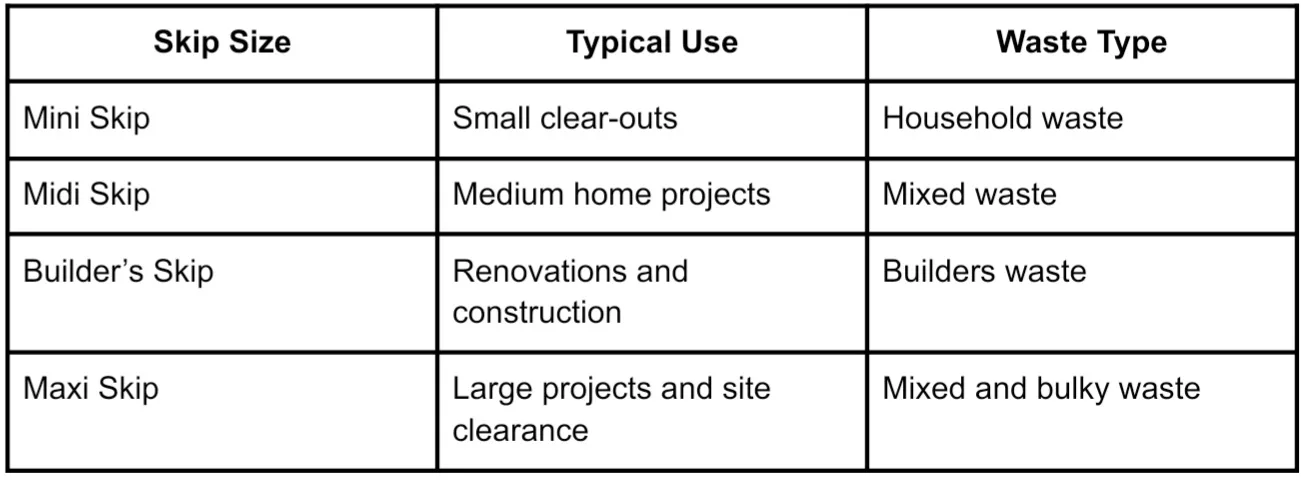
Selecting the correct skip size improves waste management and keeps your skip hire cost predictable.
Skip Loading Guidelines
Proper skip loading ensures safety, compliance, and efficient waste collection while helping avoid additional fees or delays.
The Health and Safety Executive (HSE) highlights that improper loading contributes to workplace accidents, particularly in construction environments.
Insights from the Health and Safety Executive (HSE) indicate
"The waste and recycling sector has the second highest rate of fatal injury per 100,000 workers of all main industry sectors in Great Britain" - Health and Safety Executive
We follow practical loading methods to reduce risk and improve waste handling.
Even weight distribution is important when placing heavy materials like rubble or soil.
Overfilling a skip is not allowed, as waste must stay level with the top edge.
Careful loading also helps maximise available space and reduce the number of skips needed.
Follow these simple skip loading guidelines:
Place heavy items like bricks and concrete at the bottom
Break down bulky items such as furniture and wood
Keep waste below the skip’s fill line
Avoid mixing prohibited items with general waste
These steps help keep your project running smoothly while meeting UK waste disposal standards.
Skip Permits and Local Regulations
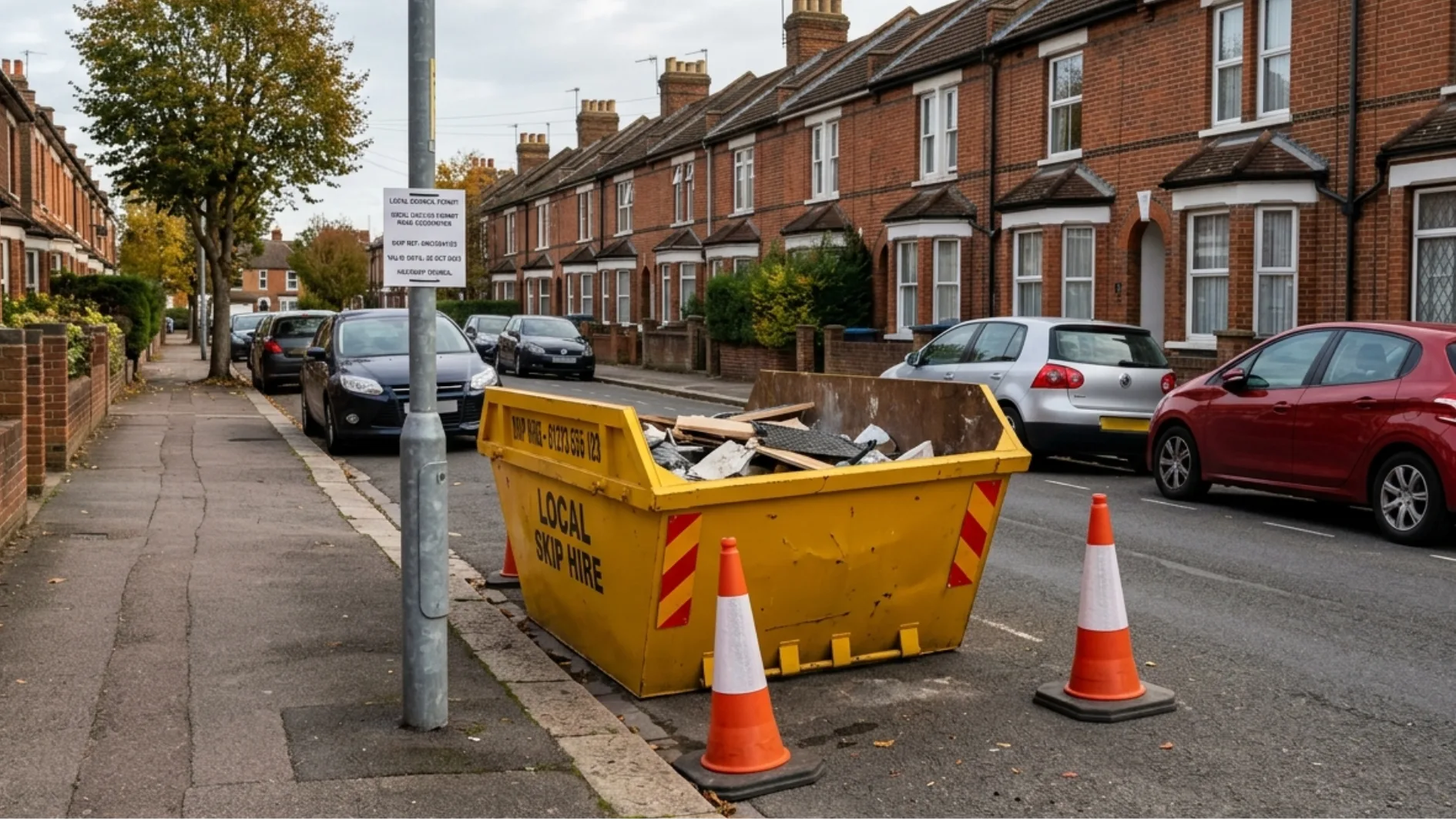
Skip permits are required when placing a skip on public land, such as roads or pavements, and rules vary by local councils across the UK.
Local authorities issue skip licences to control placement and ensure public safety, especially in busy areas.
We arrange permits when needed, but requirements can differ depending on location.
In areas like Greater London, permits are often stricter and may include additional safety measures like lighting and signage.
Other regions, such as the West Midlands or Greater Manchester, may have different processing times and costs.
Understanding these variations helps avoid delays when planning your skip hire.
Here are key points about skip permits:
Required for skips placed on public roads
Issued by local councils
May include conditions like lights and markings
Costs and approval times vary by location
Checking permit requirements early helps keep your waste disposal process on track.
What Can Go in a Skip UK: Final Thoughts
Understanding what can go in a skip in the UK helps keep waste disposal safe, efficient, and compliant with regulations across all regions. Most non-hazardous waste, including household, garden, and construction materials, is accepted, while restricted items require separate handling.
Choosing the right skip size, following loading guidelines, and knowing local permit rules all play a part in a smooth process.
We make skip hire simple by helping you understand your options and manage waste without confusion. Whether you are handling a home project or a larger site clearance, clear guidance makes the process easier from start to finish.
To find the right skip for your needs anywhere in the UK, visit Skip Hire.
FAQ
Yes, we can place mixed waste in a skip as long as it is non-hazardous. This includes a combination of household waste, garden waste, and builders waste. However, separating materials where possible helps improve recycling and may reduce overall skip hire cost.
No, we cannot place electrical items such as fridges, TVs, or washing machines in a standard skip. These items fall under WEEE regulations and require specialist waste disposal through approved collection services.
We can include soil, rubble, and hardcore in a skip, but only up to the weight limits. Heavy materials fill space quickly, so a smaller load is usually required to avoid overloading, especially in a builder’s skip.
We need a skip permit if the skip is placed on public land, such as a road or pavement. Rules vary by location, and in areas like Greater London, permits often include safety requirements like lights and markings.
If prohibited items are found, the skip may not be collected, or extra charges may apply. In some cases, we may need to arrange separate waste removal for those materials to meet UK regulations.
References
Related Articles
Filed under:
Skip Waste Types