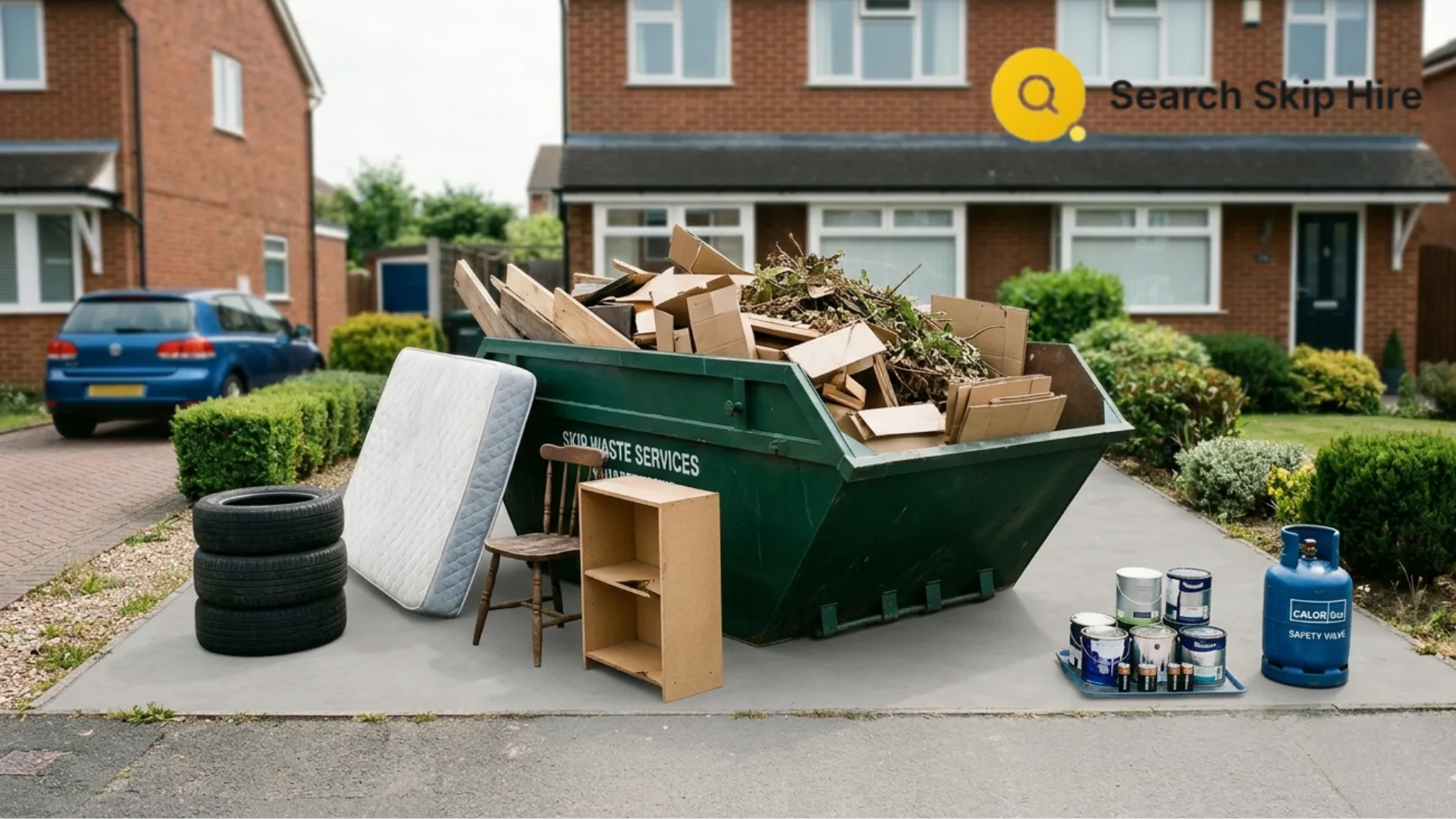
Waste types, items, and restrictions define how we sort, handle, and dispose of materials safely, ensuring legal compliance and reducing environmental harm across households and businesses.
Understanding this helps us avoid fines, protect landfill capacity, and improve recycling outcomes. Keep reading to learn how to classify waste, what items are restricted, and how to manage disposal correctly with a skip.
Waste Types Quick Guide
This section gives us a clear snapshot of how waste types, items, and restrictions work together in everyday skip hire and disposal.
Waste classification helps us separate hazardous, nonhazardous, and recyclable materials to meet legal disposal rules and improve recycling rates.
Certain items like batteries, chemicals, and asbestos require special handling and cannot go in standard skips.
Proper waste segregation and source separation reduce landfill use, methane emissions, and overall environmental harm.
Understanding Waste Types and Classification
Waste classification divides materials into clear groups based on risk level, composition, and disposal method, helping us manage waste safely and efficiently.
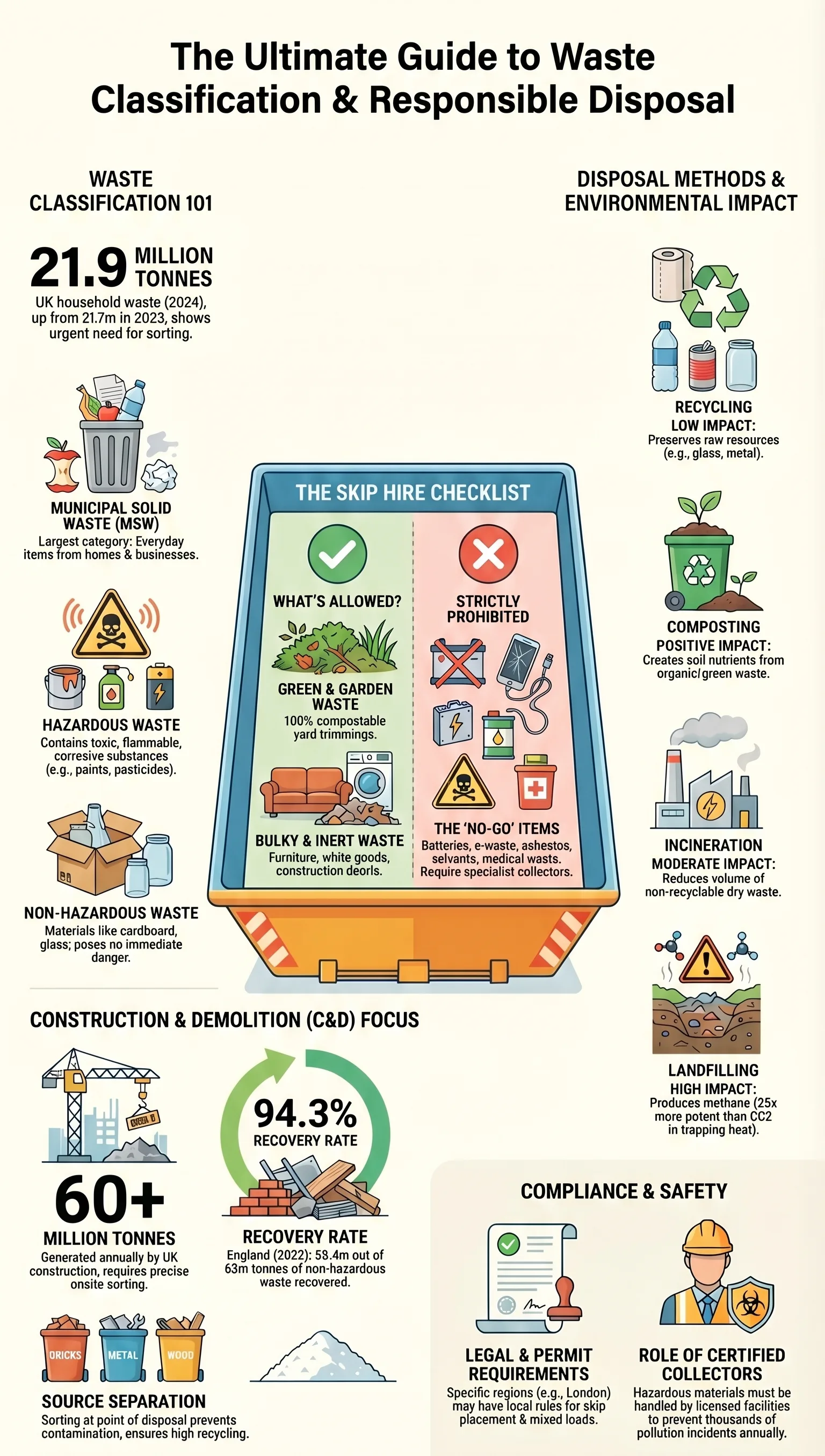
Municipal solid waste forms the largest category in the UK, covering everyday household trash such as food scraps, paper products, and plastic bottles. According to UK government data, In 2024, total waste from households increased to 21.9 million tonnes from 2023 when it was 21.7 million tonnes, showing how important correct sorting is.
Hazardous waste includes materials that contain toxic substances, flammable materials, or corrosive waste. Items like paints, pesticides, and chemicals fall into this category and require certified collectors for safe disposal.
Nonhazardous waste includes general household and commercial waste that does not pose immediate danger. This includes cardboard boxes, metal cans, and glass jars, which often qualify as recyclable materials.
Before breaking down specific categories, we need to understand how waste is typically grouped:
Municipal solid waste from homes and businesses
Hazardous waste such as chemicals, batteries, and medical waste
Nonhazardous waste including recyclable and compostable materials
Industrial and construction waste like demolition waste and debris
Each category links directly to how we handle, transport, and process waste across the UK.
Common Waste Items Found in Skips
Most skips are used for everyday waste items, but knowing what belongs helps us avoid contamination and extra charges.
Household waste includes a mix of dry waste and wet waste. Dry waste covers items like cardboard boxes, paper products, and plastic bottles, while wet waste includes food scraps and other organic waste.
Green waste, also called yard trimmings, includes grass, leaves, and branches. These materials are often compostable waste and can break down naturally through biodegradation.
Bulky waste refers to larger items such as furniture and white goods like washing machines or fridges. These items often require special handling due to size and materials.
Understanding typical skip contents helps us prepare properly:
Furniture and bulky waste from home clear-outs
Garden waste like yard trimmings and green waste
Construction debris such as bricks and rubble
Household trash including non-recyclable items
In areas like Greater Manchester, local guidelines may affect what can go into a skip, especially for mixed waste loads.
Hazardous Waste and Restricted Items
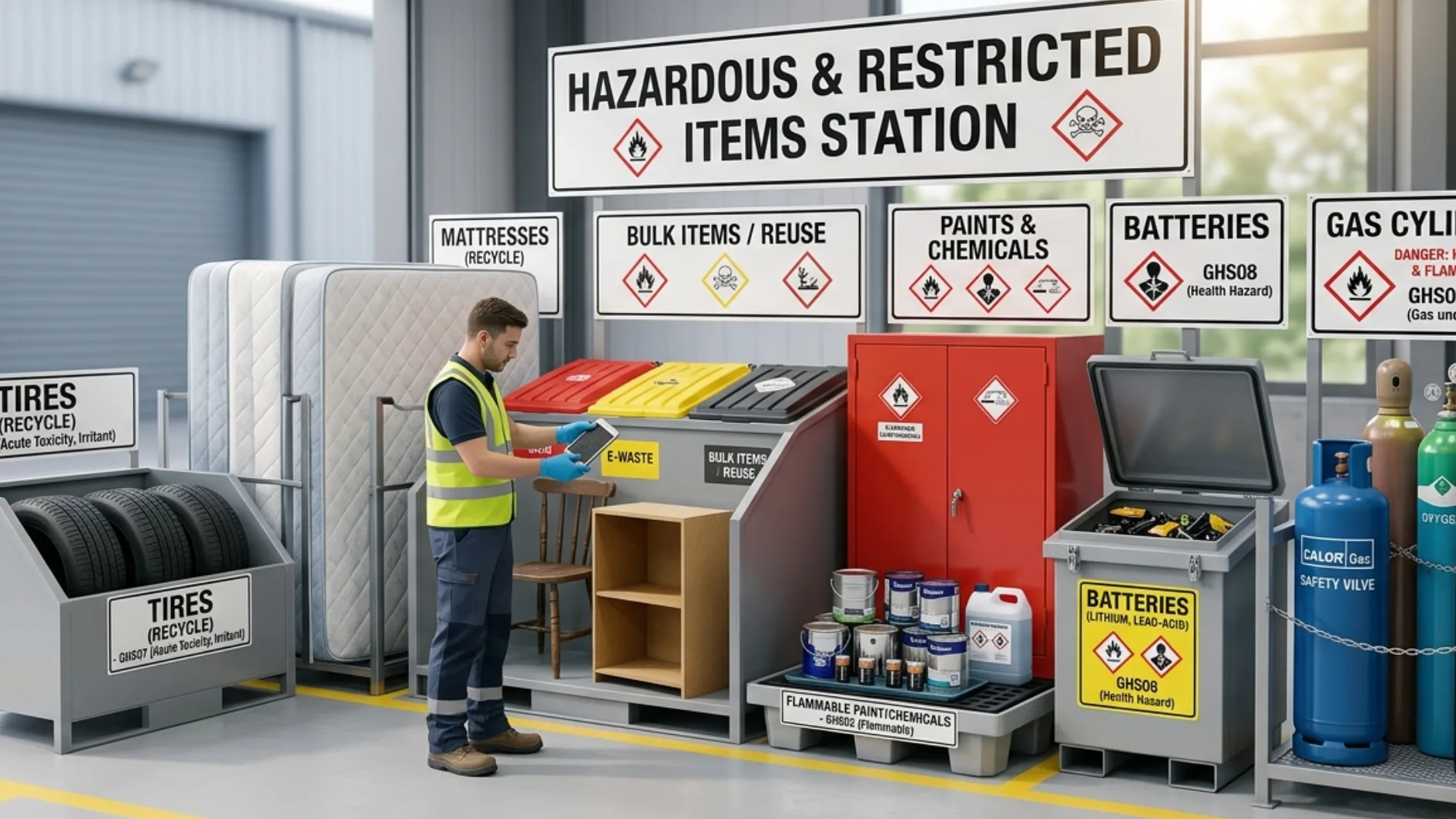
Hazardous waste must never be placed in a standard skip because it poses risks to health, safety, and the environment.
Items like batteries, paints, and chemicals contain toxic substances that can cause pollution or fire hazards. According to the UK Environment Agency, improper disposal of hazardous waste contributes to thousands of pollution incidents each year.
Other restricted materials include asbestos, fluorescent bulbs, and pesticides. These items require special handling and must be processed at licensed facilities.
Certain waste types are also classified as household B3 or specific waste, meaning they need controlled disposal processes to prevent environmental harm.
Before listing restricted items, it helps to recognise why they are controlled:
They can release harmful gases or leachate
They may be flammable or reactive waste
They often require certified collectors for transport
Common restricted items include:
Batteries and electronic waste (e-waste)
Paints, solvents, and chemicals
Asbestos and contaminated soil
Medical waste and infectious waste
Whether we are working in Greater London or smaller regions, disposal restrictions remain strict across the UK to protect public health.
Construction and Demolition Waste Explained
Construction debris and demolition waste require careful sorting due to volume, weight, and material type.
Building projects generate large amounts of waste, including bricks, concrete, and building demolition debris. The UK construction sector produces over 60 million tonnes of waste annually, according to government reports.
Data from the UK Government demonstrates
"In 2022, England generated 63.0 million tonnes of non-hazardous C&D waste, of which 59.4 million tonnes was recovered. This represents a recovery rate of 94.3%." - Waste Management Solutions
This waste is often classified as nonhazardous but may include hazardous elements like asbestos or contaminated soil. Proper sorting onsite is essential to separate recyclable materials from unprocessable waste.
Construction waste can also include semi-solid waste such as sludge or liquid waste from site operations, which require different handling methods.
Understanding the main types of construction waste helps us manage projects efficiently:
Concrete, bricks, and rubble from demolition
Wood, metal, and recyclable materials
Hazardous materials like asbestos
Soil and aggregates, including contaminated soil
In regions like the West Midlands, regulations may require permits or specific waste processing steps for construction projects.
Waste Segregation and Source Separation
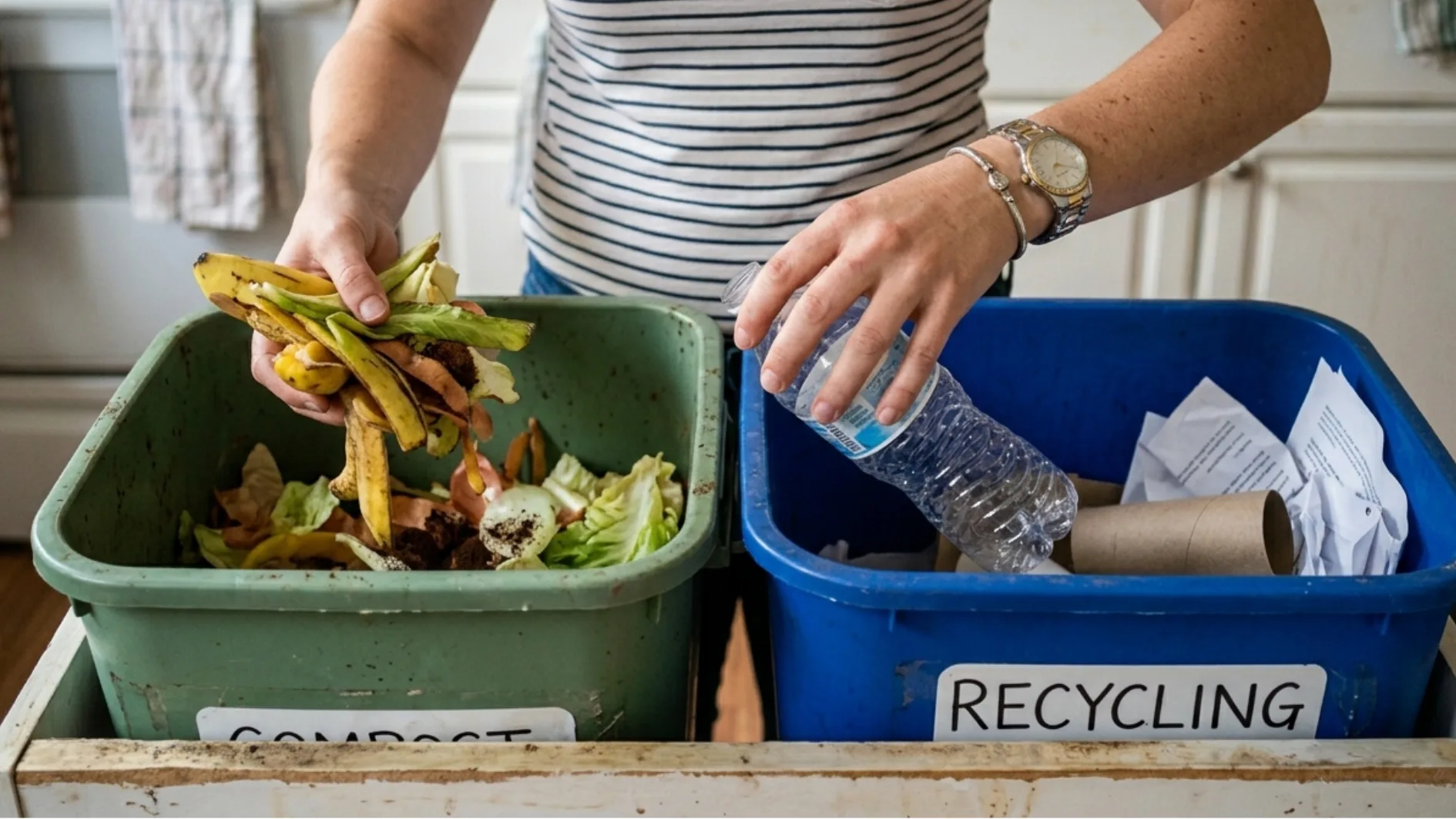
Waste segregation separates materials at the point of disposal, improving recycling rates and reducing landfill use.
Source separation means sorting waste before it is collected. This step increases efficiency and ensures recyclable materials are not contaminated.
Separating wet waste from dry waste also supports composting and reduces methane emissions from landfills. Organic waste like food scraps and green waste can break down naturally when handled correctly.
Waste segregation plays a major role in modern waste management systems:
Separating recyclable materials like glass, metal, and paper
Isolating hazardous waste for safe disposal
Dividing organic waste for composting
Reducing contamination in mixed waste streams
This approach helps us reduce environmental harm and improve overall waste processing outcomes.
Disposal Methods and Environmental Impact
Waste disposal methods determine how materials are treated after collection, affecting landfill capacity and pollution levels.
Landfilling remains a common method, but it produces methane emissions as putrescible waste breaks down. Methane is over 25 times more potent than carbon dioxide, according to the US Environmental Protection Agency.
Research from the UK Government shows
"Landfill is the second most used waste treatment in the UK, with 24.2% (45 million tonnes) of waste disposed of at landfill in 2020." - Waste Management Solutions
Recycling converts materials like plastic bottles, metal cans, and glass jars into new products, reducing the need for raw resources. Composting processes organic waste into nutrient-rich material for soil use.
Incineration is another method used for volume reduction, particularly for non-recyclable waste. However, it requires strict controls to limit air pollution.
To better understand disposal options, here is a simple comparison:
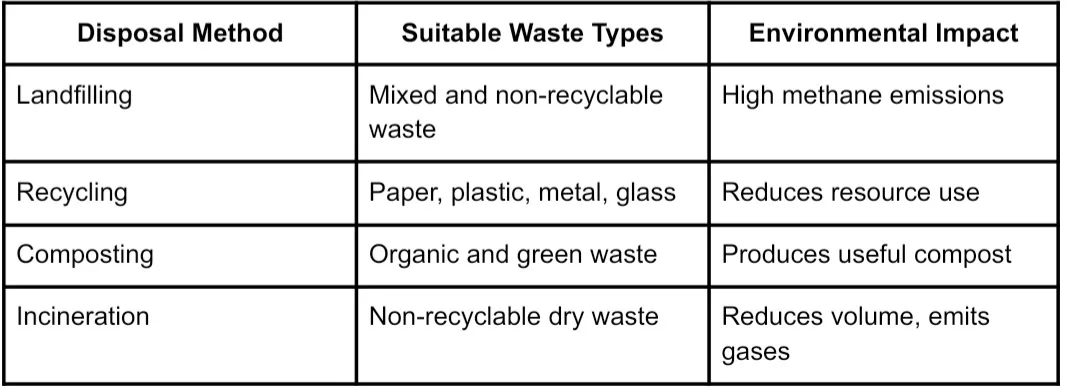
Each method plays a role, but waste segregation improves results across all options.
Legal Restrictions and Compliance in the UK
Waste disposal restrictions exist to protect public health and ensure proper waste processing across all regions.
Landfill bans apply to certain materials, especially hazardous waste and specific waste streams like untreated electronic waste. These restrictions aim to reduce pollution and improve recycling rates.
Regulations also require proper documentation and use of certified collectors for transporting hazardous waste. Failure to comply can result in fines or legal action.
Local rules may vary slightly depending on the region, especially for permits and skip placement.
Understanding compliance requirements helps us avoid problems:
Do not dispose of hazardous waste in general skips
Use licensed facilities for restricted materials
Follow local permit rules for skip placement
Ensure proper sorting onsite before collection
Whether we are arranging skip hire in Kent or other parts of the UK, these rules apply consistently nationwide.
Managing Bulky, Liquid, and Special Waste
Special waste types require extra care due to size, composition, or environmental risk.
Bulky waste includes large appliances and furniture that may contain recyclable components or hazardous materials. White goods often require removal of refrigerants before disposal.
Liquid waste and wastewater must be handled separately, as they cannot go into standard skips. Semi-solid waste like sludge also requires specialist treatment.
Agricultural waste, including animal manure and crop residues, falls into another category and may be processed through composting or other methods.
To manage these waste types effectively, we follow structured steps:
Identify the waste type and classification
Separate hazardous and nonhazardous materials
Use appropriate containers or services
Arrange collection with certified handlers
This approach reduces risks and supports proper waste processing.
Waste Types, Items & Restrictions in Practice
Applying waste rules in real situations helps us avoid confusion and manage skip hire more effectively.
A home renovation project may produce construction debris, bulky waste, and recyclable materials all at once. Sorting these materials onsite improves efficiency and reduces costs.
A garden clearance will mostly involve green waste and organic waste, which can often be composted instead of landfilled.
Commercial projects may involve industrial waste or larger volumes, requiring stricter compliance and documentation.
These everyday examples show how waste classification works in practice:
Home clear-outs with mixed household waste
Building projects with demolition waste
Garden work producing compostable waste
Office clearances involving electronic waste
Understanding these scenarios helps us plan better and avoid restricted items in skips.
Waste Types, Items & Restrictions Conclusion
Waste types, items, and restrictions shape how we handle everything from household trash to hazardous materials, helping us stay compliant while reducing environmental harm. Clear waste classification, proper segregation, and awareness of restricted items all contribute to safer and more efficient waste management.
By following these guidelines, we reduce landfill use, improve recycling rates, and avoid costly mistakes during skip hire. Whether we are clearing a home, managing a construction site, or handling bulky waste, the right approach makes the process smoother and more responsible.
If we are ready to manage waste properly and book a skip with confidence, we can get started with Skip Hire.
FAQ
What types of waste can we put in a skip?
We can place most nonhazardous waste in a skip, including household trash, furniture, garden waste, and construction debris. Items like cardboard boxes, metal cans, and soil are usually accepted. However, hazardous waste such as chemicals, paints, and batteries must be handled separately through approved services.
What items are not allowed in a skip?
Certain items are restricted due to safety and environmental risks. These include asbestos, fluorescent bulbs, medical waste, pesticides, and electronic waste. These materials require special handling and cannot be mixed with general waste in a standard skip.
Do we need to separate waste before putting it in a skip?
Yes, separating waste improves recycling and helps avoid contamination. We should sort recyclable materials, organic waste, and general waste where possible. This process, known as waste segregation, supports higher recycling rates and reduces landfill use.
Can we dispose of large appliances and furniture in a skip?
Yes, bulky waste like furniture and some white goods can go into a skip. However, certain appliances may need special handling due to components like refrigerants. It is always best to check in advance to avoid issues during collection.
Do skip hire rules change depending on location?
Some rules can vary slightly depending on local councils, especially for permits and placement. For example, in areas like Greater London or Kent, regulations around skip permits may differ. However, restrictions on hazardous waste remain consistent across the UK.
Reference
Related Articles
Filed under:
Skip Waste Types