Skip hire East Sussex gives us a simple way to manage household, garden, renovation, and building waste when our regular bins are not enough.
We can choose a suitable skip, fill it with accepted materials, and arrange a collection when our project is complete. The total cost depends on the skip size, waste type, location, hire period, and whether a permit is required.
Private property usually does not require a permit, while placing a skip on a public road, pavement, or parking area normally does. In this guide, we explain the key costs, permit rules, accepted waste, and practical tips for booking.
Quick Reads for Skip Hire East Sussex
These three points give us a simple overview of what matters most when arranging skip hire for our project.
Check the waste first. We should know what we need to throw away because some materials are prohibited or may need separate handling.
Check where the skip will go. A skip on private property normally does not need a permit, while public placement normally does.
Choose enough capacity. We should estimate the amount of waste carefully so we do not need another skip later.
What Is Skip Hire East Sussex?
Skip hire gives us a container for collecting larger amounts of waste from a home, garden, renovation, or building project. For a clearer understanding of skip hire UK fundamentals, we can also consider how skip services work before arranging delivery. Instead of relying on household bins, we can keep project waste in one place until collection.
We can use skip hire for many common projects across East Sussex.
Home clearances where we need to remove furniture, cardboard, packaging, and general household waste.
Garden clearances where we have branches, plants, leaves, soil, turf, or grass cuttings.
DIY projects where we produce waste from flooring, tiles, timber, and other materials.
Kitchen renovations where old fittings and building materials need to be removed.
Bathroom renovations where tiles, ceramics, timber, and other suitable waste need disposal.
Building work where bricks, concrete, timber, and other construction materials are produced.
Commercial clearances where a business needs to remove a larger amount of suitable waste.
The service is available across many towns and areas in East Sussex. The published directory includes Bexhill, Brighton, Crowborough, Eastbourne, Hailsham, Hastings, Lewes, Newhaven, Rye, Seaford, and Uckfield.
When Can We Use Skip Hire?
We can consider skip hire when our project produces more waste than our normal household collection can reasonably handle. It can also help us keep the work area cleaner and easier to manage.
Skip hire can be suitable for several situations.
Moving home when we need to clear unwanted furniture and household items.
Decluttering when a large clear-out creates more waste than our household bins can hold.
Garden work when pruning, landscaping, or clearing produces a large volume of waste.
Home improvements when flooring, tiles, timber, and other materials need to be removed.
Renovation work when several rooms are being changed at the same time.
Building work when we have bricks, concrete, wood, and other suitable construction waste.
Property maintenance when repairs create more waste than our usual collection can manage.
Before booking, we should check that the waste from our project is suitable for the skip we plan to use. We can also see how requirements differ through skip hire East Riding of Yorkshire when comparing local skip hire information.
How Much Does Skip Hire Cost in East Sussex?
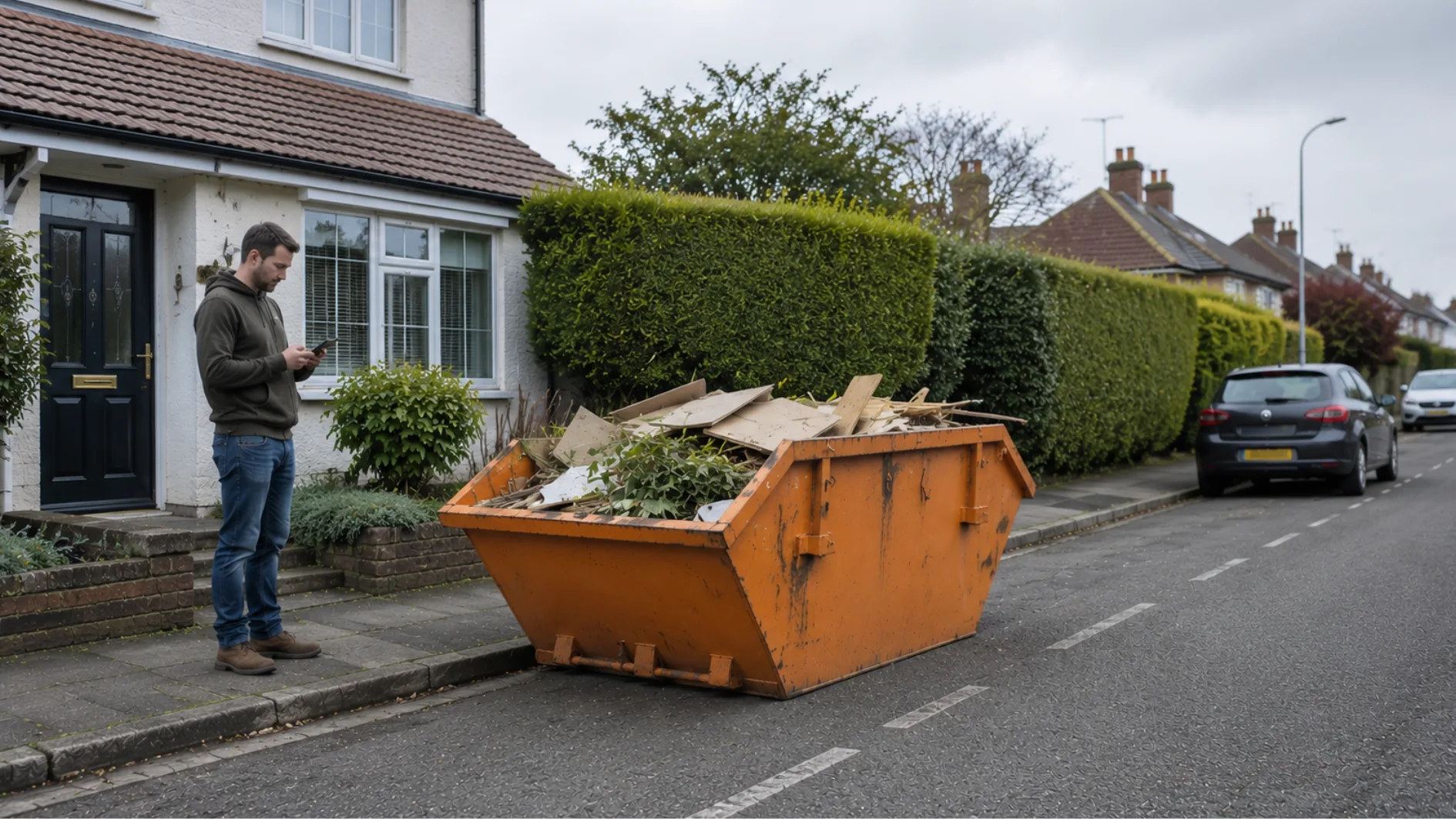
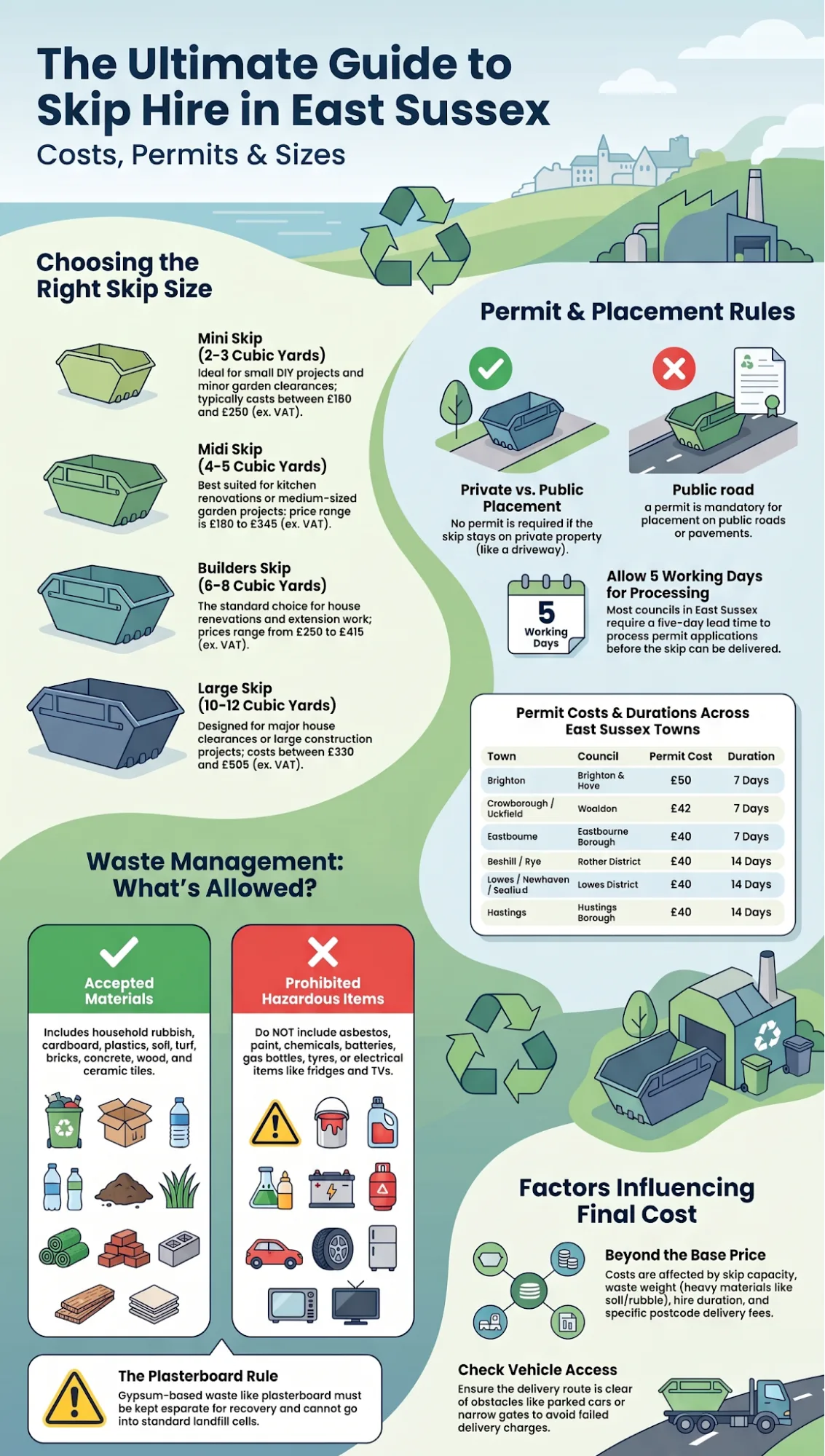
Published East Sussex pricing gives us a useful starting point, although the final amount can change depending on the company, waste type, location, and hire length. All listed prices exclude VAT.
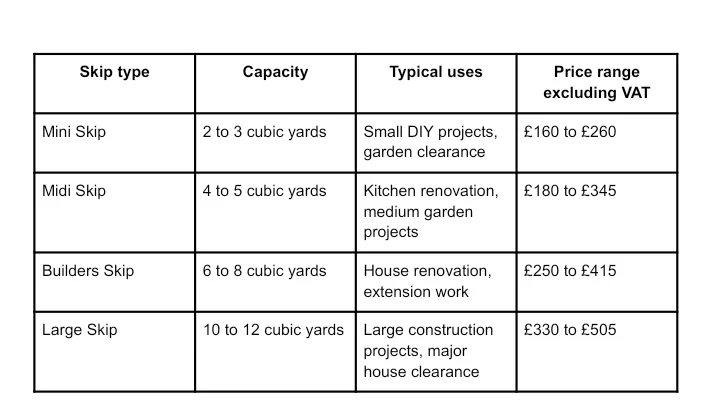
These are typical published ranges rather than fixed prices. The exact amount can vary according to the waste we have, our location, and the length of the hire.
What Affects Our Skip Hire Cost?
The price we pay can depend on several parts of our project, so we should check these before arranging delivery.
Skip capacity affects the starting price. Larger skips generally cost more because they hold more waste.
Waste type can affect disposal costs. Heavy materials such as soil, rubble, concrete, bricks, and plasterboard may have additional charges.
Hire duration can affect the price when we keep the skip beyond the agreed period. Some arrangements are flexible, while others have a set hire period.
Location can affect delivery costs. Prices may vary between different postcode areas within East Sussex.
Access matters when our property is difficult to reach. Narrow roads or restricted access can make delivery more difficult.
Permit requirements can add another cost when we place the skip on a public road, pavement, verge, or parking space.
Time of year can affect availability because demand is often higher during busy periods such as spring and summer.
Checking these points before booking gives us a clearer idea of the total cost rather than looking only at the basic skip price.
Do We Need a Skip Permit in East Sussex?
We normally need a permit when our skip is placed on a public road, pavement, verge, or parking space. The exact cost and duration depend on the council covering our location.
We normally do not need a permit when the skip remains completely within our private property.
The East Sussex page lists the following permit information for several towns.
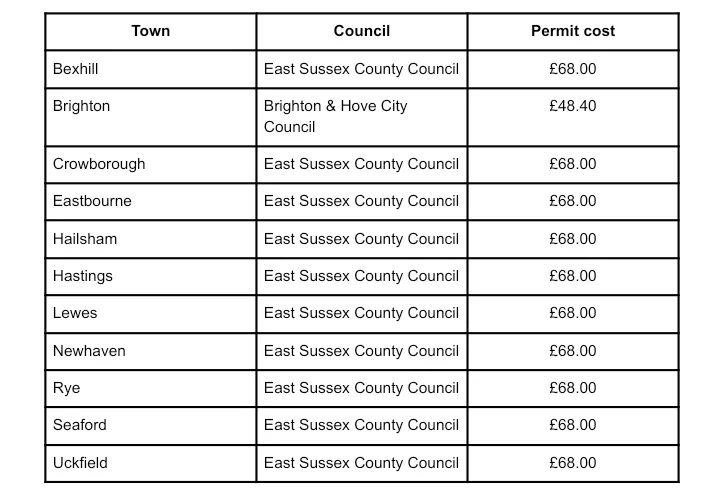
The published page states that permit processing generally takes five working days. We should therefore allow enough time before the skip is needed.
Where Can We Place Our Skip?
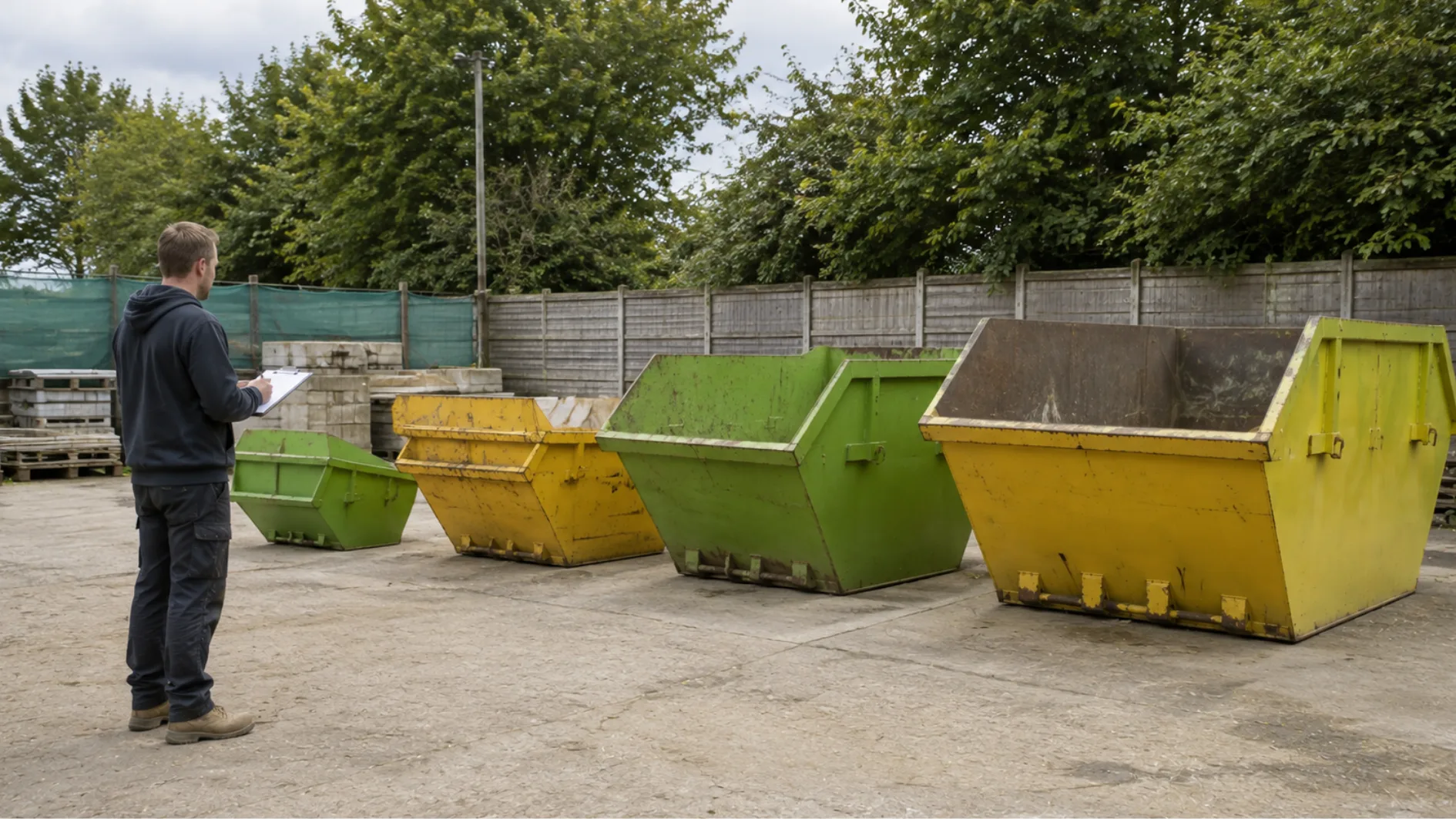
The position of our skip affects whether we need a permit and whether delivery can take place safely. We should check the space before arranging delivery.
Suitable placement depends on our property and local requirements.
Private driveway where the skip can fit fully inside our property boundary.
Private front garden where there is suitable access and enough stable space.
Public road where a permit is normally required.
Public pavement where permission is normally required before placing the skip.
Parking space where a permit may be required if the skip takes up public parking space.
As noted by East Sussex Highways:
"Each skip shall be designated in the licensed position and shall be placed so that its longest sides are parallel to the edge of the carriageway and as near to the edge of the carriageway as is reasonably practicable, and so that it does not impede the surface water drainage of the highway nor obstruct access to any manhole or the apparatus of any Undertaker as defined by the New Roads and Street Works Act 1991 or the East Sussex County Council." - East Sussex Highways
We should also check that the delivery vehicle can reach the planned location. Narrow roads and restricted access can make delivery difficult or impossible.
What Can We Put in a Skip?
Most common household, garden, and building waste can be placed in a suitable skip, although individual waste rules can vary.
Common accepted materials include the following.
Household waste such as general rubbish.
Cardboard and paper from household clearances and projects.
Plastics from suitable household and renovation waste.
Textiles from clearances.
Soil and turf from garden projects.
Branches and logs from garden maintenance.
Plants and leaves from garden clearances.
Grass cuttings from lawn work.
Bricks and concrete from suitable building projects.
Wood and timber from renovation and construction work.
Tiles and ceramics from kitchens and bathrooms.
Plasterboard where separate handling is arranged.
Some materials, particularly heavy waste, bulky items, and plasterboard, may have additional requirements or charges. We should check this before loading the skip.
What Cannot We Put in a Skip?
Some materials cannot be placed in a standard skip because they can create safety, environmental, or disposal problems. Knowing the items prohibited in skip hire can help us keep restricted materials separate. We should keep these items separate from normal skip waste.
The East Sussex page lists several prohibited materials.
Asbestos
Paint and solvents
Chemicals and oils
Car and household batteries
Fluorescent tubes
Fridges and freezers
Televisions and monitors
Tyres
Gas bottles
Medical waste
Plasterboard therefore needs special attention. We should keep gypsum-based waste separate and check that it is sent to a suitable facility when disposal is required. The Environment Agency guidance confirms that gypsum-based waste must not go into a landfill cell that accepts biodegradable waste.
As noted by GOV.UK:
"You must not send gypsum-based waste (for example, plasterboard) to a landfill cell that accepts biodegradable waste. You must separate it for re-use or recovery to comply with the waste hierarchy. Where you must send gypsum-based waste to a landfill, you must confirm with the landfill operator that their landfill has a separate cell that does not accept biodegradable waste." - GOV.UK
We should always check the accepted waste list before putting an unusual item into our skip.
How Do We Choose the Right Skip?
Choosing the right skip starts with estimating how much waste our project will produce. We should also think about the type of waste and the space available at our property.
These points can help us make a practical choice.
Small DIY or garden clearance may suit a Mini Skip.
Kitchen renovation or medium garden work may need a Midi Skip.
House renovation or extension work may require a Builders Skip.
Major house clearance or larger construction work may need a Large Skip.
Heavy waste should be checked before booking because it may have separate requirements.
Limited driveway space should be considered before choosing a larger container.
Choosing too small a skip can create a problem if our waste does not fit. We should estimate the volume carefully rather than choosing based only on the name of our project.
How Can We Prepare for Skip Delivery?
Preparing the delivery area before the skip arrives can help prevent access problems and delays. We should check the space and delivery route in advance.
We can prepare by following these practical steps.
Measure the available space to make sure the skip will fit.
Check vehicle access so the delivery vehicle can reach the planned position.
Remove obstacles such as parked cars, tools, or other objects.
Check the ground to make sure the location is suitable.
Arrange a permit if the skip will be placed on public space.
Check accepted waste before we start filling the container.
Keep prohibited materials separate so they do not end up in the skip.
Avoid overfilling because waste should remain safely contained.
Difficult access can prevent delivery to the exact location or may result in additional costs in some circumstances.
How Does Skip Collection Work?
Once our project is finished, the skip can be collected according to the arrangement we made when booking. We should make sure the container can be accessed by the collection vehicle.
Before collection, we should check a few simple points.
Keep the skip accessible so the collection vehicle can reach it.
Do not leave waste beside the skip unless this has been specifically agreed.
Keep waste within the container rather than loading above the permitted level.
Check the agreed hire period so we know whether additional time needs to be arranged.
Remove personal items from the skip before collection because anything inside may be taken away.
If our project takes longer than expected, we should check the hire terms before assuming that the skip can remain in place indefinitely. Published guidance states that some arrangements are flexible while others can have a one to two week limit.
FAQ
We can arrange skip hire in many East Sussex locations, including Bexhill, Brighton, Crowborough, Eastbourne, Hailsham, Hastings, Lewes, Newhaven, Rye, Seaford, and Uckfield. Availability depends on the exact location and current service coverage.
The hire period depends on the arrangement. Some skip hire companies are flexible and allow collection once the skip is full, while others specify a period of around one to two weeks. We should check the terms before booking.
We cannot normally put asbestos, paint and solvents, chemicals and oils, batteries, fluorescent tubes, fridges, freezers, televisions, monitors, tyres, gas bottles, or medical waste into a standard skip. Plasterboard also requires separate handling.
The right size depends on the amount and type of waste we produce. Smaller DIY and garden projects may need a Mini or Midi Skip, while larger renovations and construction projects may require a Builders or Large Skip.
We normally need a permit when our skip is placed on a public road, pavement, verge, or parking space. We normally do not need one when the skip remains completely inside our private property boundary.
Choosing Skip Hire East Sussex for Our Project
Skip hire can make waste removal easier when we plan the basic details before delivery. We need to consider how much waste we have, what materials we need to remove, where the skip will stand, and whether a permit is required.
The published East Sussex information shows typical skip prices from £160 to £505 before VAT, depending on the skip type and capacity. Public-road permits listed for the area range from £40 to £50, with durations of seven to fourteen days.
When we are ready to arrange skip hire for our project, we can check the available Skip Hire East Sussex options.
References
Related Articles
Filed under:
Skip Hire