Skip hire East Riding of Yorkshire gives us a practical way to manage household, garden, renovation, and building waste. The final cost depends on the skip size, waste type, hire period, location, and whether a permit is needed.
In this guide, we explain the available skip sizes, permit rules, accepted waste, and the key things to know before arranging a skip in East Riding of Yorkshire.
Quick Reads for Skip Hire in East Riding of Yorkshire
This summary brings together the main costs, permit rules, skip sizes, and waste restrictions we need before booking.
Mini skips hold 2 to 3 cubic yards and typically cost £105 to £205 excluding VAT.
A permit is normally needed when we place a skip on a public road, pavement, or parking space.
Common household, garden, and building waste is generally accepted, but hazardous materials and several electrical items are prohibited.
How Much Does Skip Hire Cost in East Riding of Yorkshire?
The typical prices below give us a useful starting point, although exact costs depend on several project details.
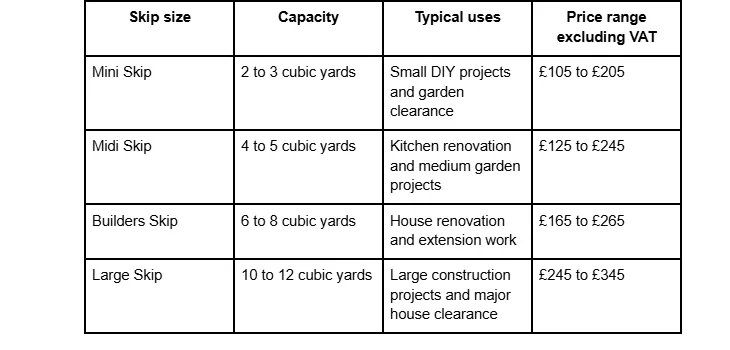
These price ranges come from the current East Riding location information and exclude VAT from the quoted amounts.
We should treat these figures as typical price ranges rather than fixed quotes.
Waste type can affect the final amount, particularly when heavy or specialist materials are involved.
Location can affect delivery costs because providers may use different postcode zones.
Longer hire periods may create extra charges when they go beyond the agreed hire period.
Which Skip Size Should We Choose?
Choosing the right size helps us avoid paying for unnecessary space while reducing the chance of needing another skip.
A mini skip provides 2 to 3 cubic yards and suits small DIY jobs and garden clearance.
A midi skip provides 4 to 5 cubic yards and suits kitchen renovations and medium sized garden projects.
A builders skip provides 6 to 8 cubic yards and works well for house renovations and extension work.
A large skip provides 10 to 12 cubic yards and suits major house clearances and larger construction projects.
The dimensions also matter because the skip needs enough space for safe delivery and suitable access around our property.
What Affects Our Skip Hire Price?
Several practical details can change the amount we pay, so checking these points early can help us avoid unexpected costs.
Skip size affects the starting price, with larger skips costing more but offering greater capacity.
Hire duration can affect the cost when we keep a skip beyond the agreed period.
Waste type can change disposal costs, especially for soil, rubble, concrete, bricks, and plasterboard.
Location can affect delivery costs because prices may vary between postcode areas.
Difficult access can create problems if delivery vehicles cannot safely reach the planned position.
Permit costs can be added when the skip needs to sit on public land.
Seasonal demand can affect availability and may also influence pricing during busier periods.
The location page states that spring and summer tend to be busier, while December and January are usually quieter periods.
How Much Does a Skip Permit Cost?
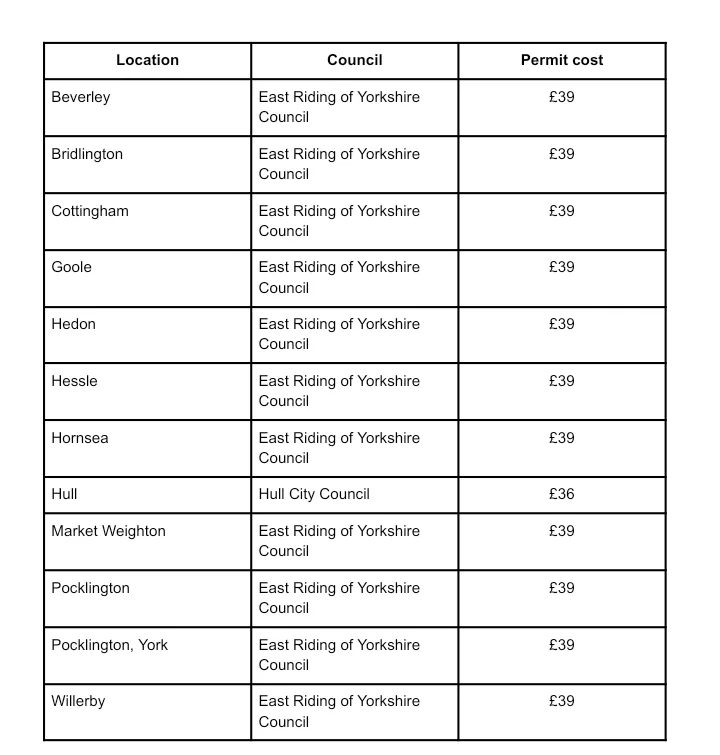
Permit costs listed for the main locations are generally around £39, with most East Riding locations showing £39.
The listed permit information shows at least three full working days' notice with East Riding of Yorkshire Council and up to three working days to process with Hull City Council, while the permit period varies between seven and fourteen days.
Most listed East Riding locations have a £39 permit cost.
Hull is listed with a £36 permit cost and a seven day duration.
Most other listed locations have a fourteen day permit duration.
We should allow at least three working days for processing based on the location information.
Do We Need a Skip Permit in East Riding of Yorkshire?
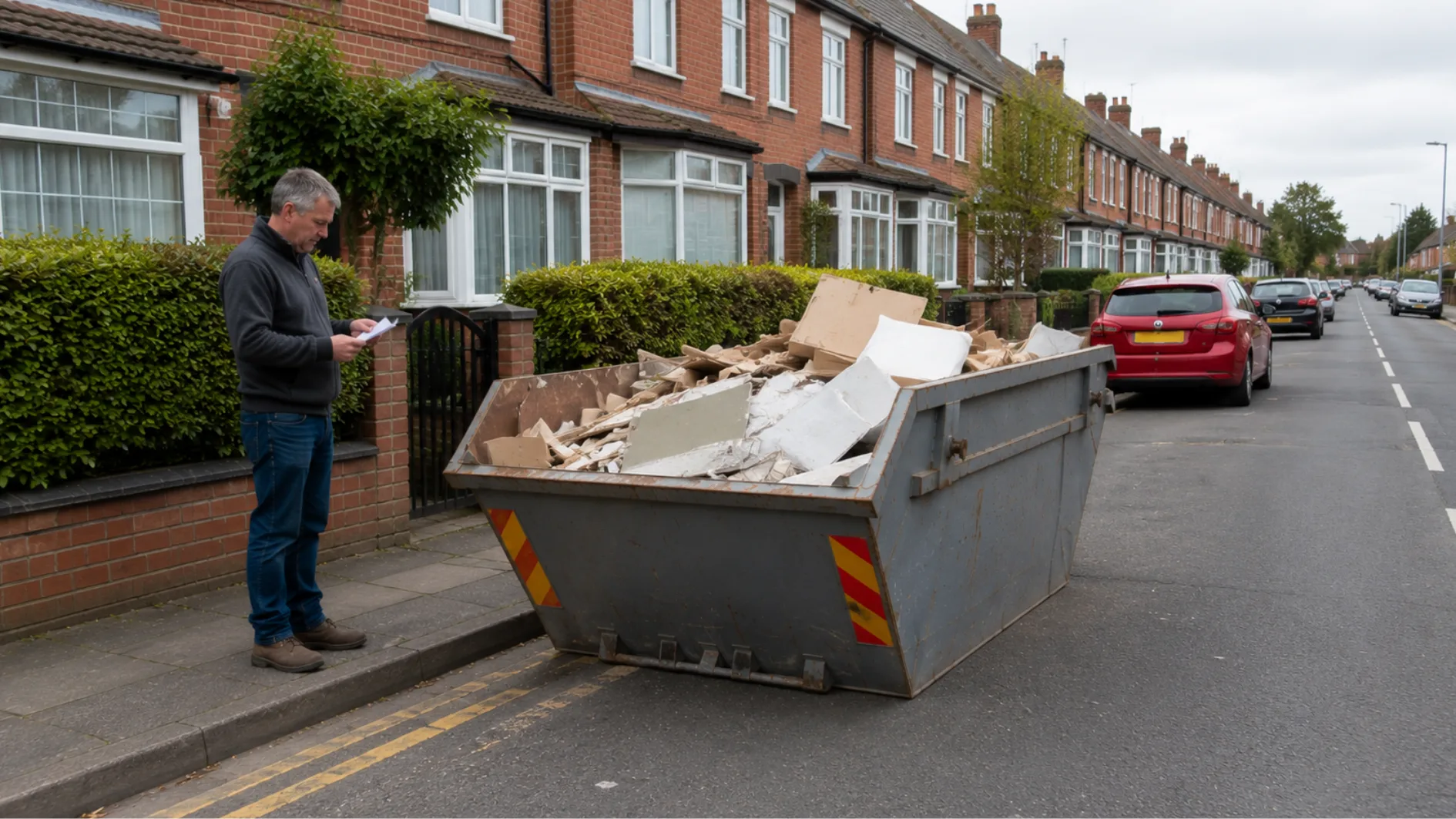
We normally need a permit when our skip is placed on a public road, pavement, or parking space.
We need a permit when the skip is placed on a public road.
We need a permit when the skip is placed on a pavement.
We need a permit when the skip blocks any part of the road.
We need a permit when the skip occupies an on street parking space.
We do not normally need a permit when the skip stays completely on private property.
We do not normally need a permit when the skip remains entirely within our property boundary.
As noted by East Riding of Yorkshire Council:
"Skips should only be placed on unadopted highway with the permission of the developer or land owner." - East Riding of Yorkshire Council
The permit requirement depends on where the skip is positioned and which council covers that location.
What Waste Can We Put in a Skip?
Most ordinary household, garden, and building waste can go into a standard skip, but we should check the provider's waste rules before loading it. This is especially important when our project involves a mix of household rubbish, garden waste, and renovation materials.
As noted by GOV.UK:
"You must identify and classify your waste before you send it for recycling or disposal. This makes sure you or anyone handling your waste deals with it properly." - GOV.UK
Household rubbish
Cardboard and paper
Plastics
Textiles
Soil and turf
Branches and logs
Plants and leaves
Grass cuttings
Bricks and concrete
Wood and timber
Tiles and ceramics
Plasterboard
These materials are common examples of waste that can usually go into a skip. However, some types of waste may have separate disposal requirements or additional charges. Heavy materials such as soil, concrete, and bricks can also affect how much waste we can safely place in the skip.
Before filling the skip, we should separate any waste that may have special disposal rules. We should also avoid mixing prohibited materials with general waste because they may need to be removed before the skip can be collected.
What Waste Cannot We Put in a Skip?
Some materials require specialist handling and should not be placed inside a standard skip. These items prohibited in skip hire can create safety risks or require different disposal methods, so we should keep them separate from our general project waste.
Asbestos
Paint and solvents
Chemicals and oils
Car and household batteries
Fluorescent tubes
Fridges and freezers
TVs and monitors
Tyres
Gas bottles
Medical waste
Electrical items such as fridges, freezers, televisions, and monitors should not be treated as ordinary skip waste. The same applies to hazardous materials such as asbestos, chemicals, oils, and medical waste.
We should also check the rules for plasterboard, heavy materials, and bulky items before putting them into the skip. These materials may have additional charges or require separate collection depending on the waste rules.
If we are unsure about a particular item, we should ask about it before loading the skip. This gives us a clear idea of what can be accepted and helps prevent problems when the skip is collected.
How Do We Prepare for Skip Delivery?
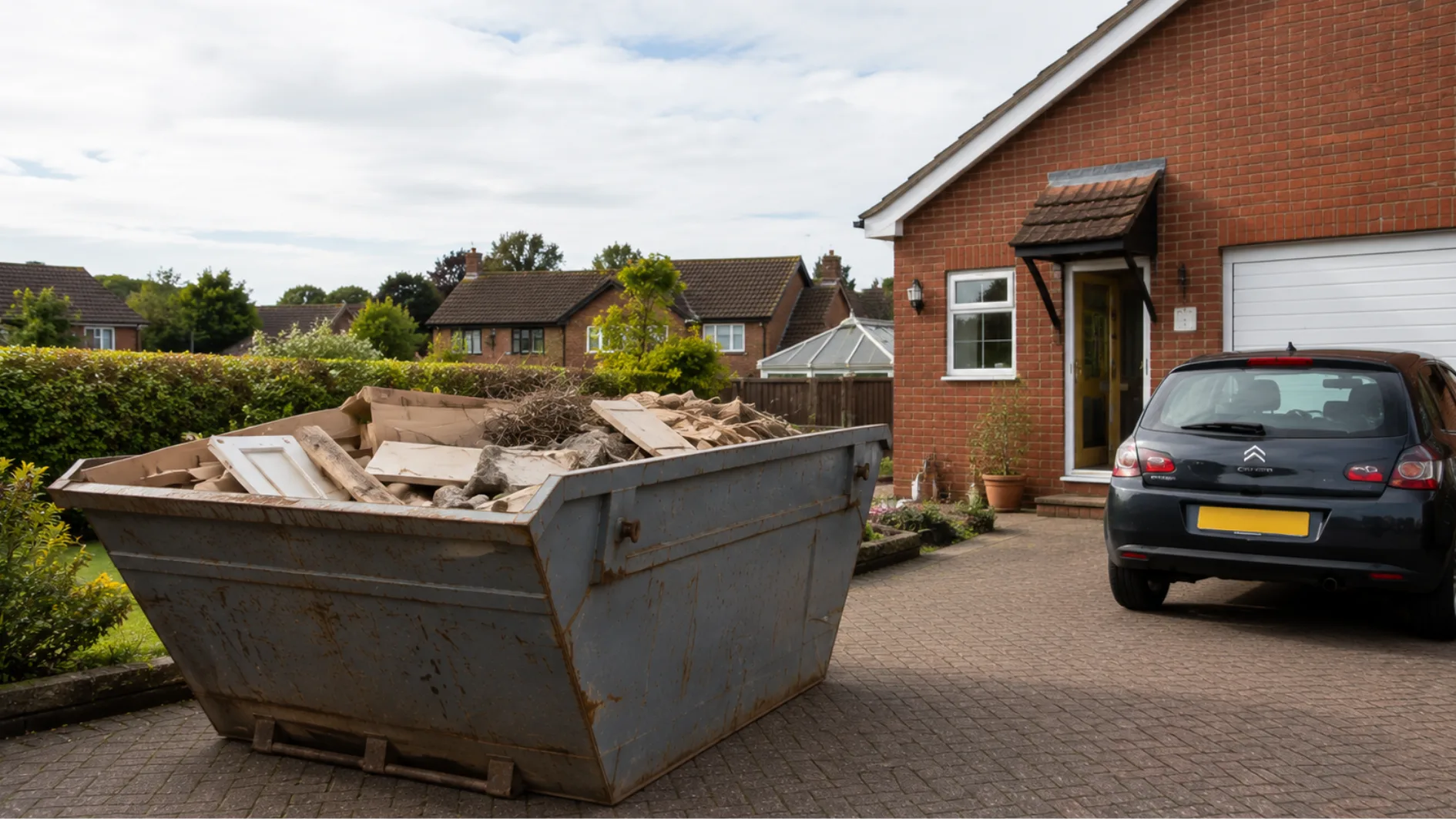
Good preparation gives us enough space for the skip and helps prevent problems when the delivery vehicle arrives. We should check the location, access, permit needs, and skip hire UK details before the delivery date.
We should choose a stable location with enough space for the selected skip and delivery vehicle.
We should check the delivery route for narrow roads, restricted access, or other possible obstacles.
We should confirm whether a permit is needed before placing the skip on public land.
We should check the agreed hire period and ask about charges for keeping the skip longer.
We should confirm accepted waste and any additional charges for heavy, bulky, or specialist materials.
Restricted access can prevent delivery to the planned position. In some cases, this may also result in a wasted journey charge, so we should explain access problems before booking.
How Long Can We Keep a Skip?
The exact hire period depends on the provider and the needs of our project. We should agree on the expected collection period before the skip arrives so our renovation, clearance, or garden work has enough time.
We should confirm the agreed hire period before booking.
We should ask whether extra charges apply if we need the skip for longer.
We should check whether collection is arranged when the skip becomes full.
We should allow enough time for our planned work and waste removal.
We should make sure the permit period covers the time the skip will remain on public land.
The location guide notes that many providers can be flexible, although some may set a typical one to two week hire period. We should confirm the exact terms for our booking.
How Do We Choose to Skip Hire in East Riding of Yorkshire?
We can make the process simpler by checking the location, skip options, waste rules, delivery terms, and expected costs before making a booking. The same checks can also help when arranging skip hire East Ayrshire, although local requirements can differ between areas.
We should select the town or area where the skip will be delivered.
We should check which local options are available for our location and project.
We should confirm that the provider accepts the type of waste we plan to dispose of.
We should check delivery availability, hire periods, and possible additional charges.
We should confirm permit arrangements if the skip will be placed on public land.
We can also contact two or three companies to compare availability and prices for our specific project. This gives us more information before deciding which option fits our requirements.
Is Skip Hire Suitable for Home Renovation and Clearances?
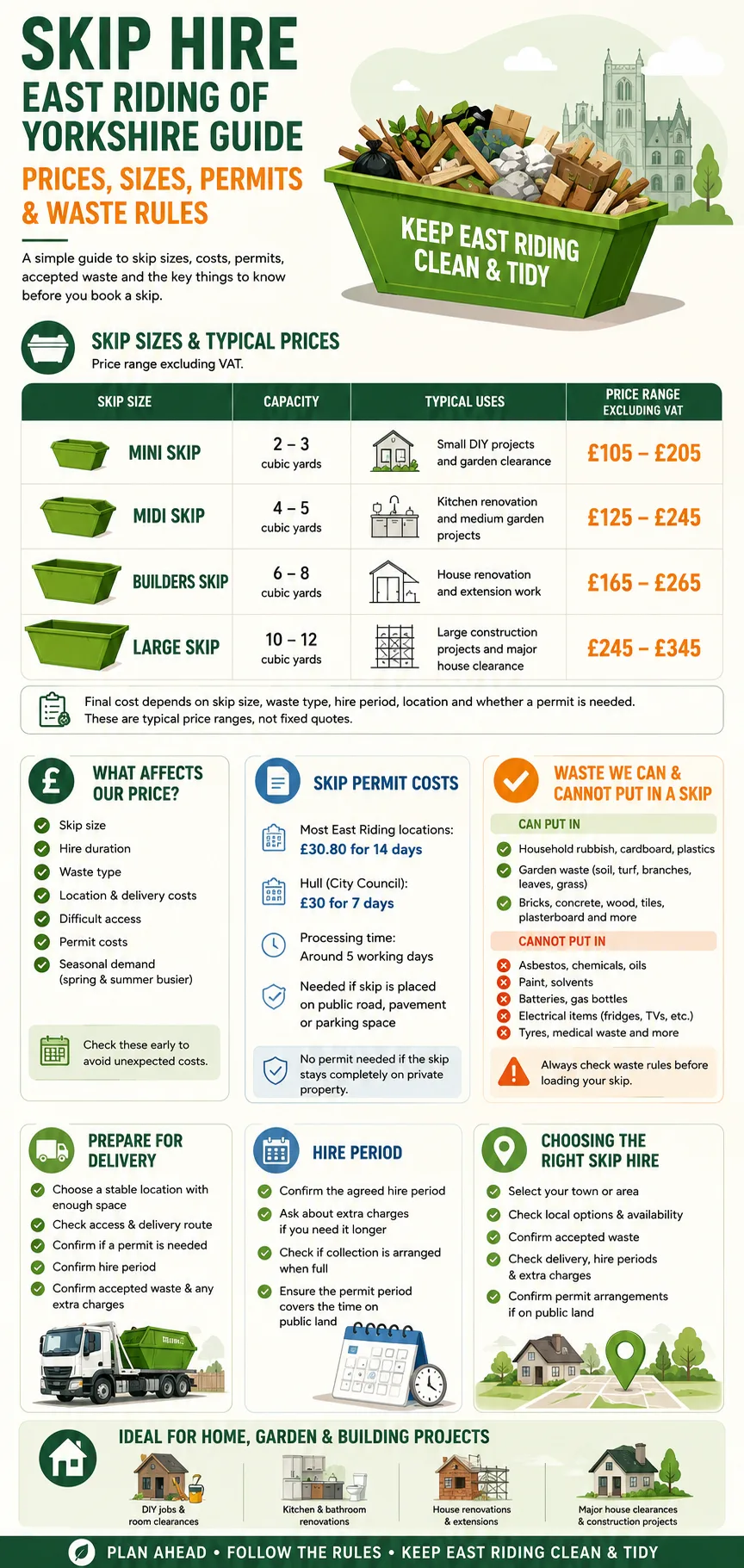
Yes, skip hire can suit many home renovation, garden clearance, DIY, and house clearance projects. We can choose from different skip sizes depending on how much waste our project is expected to produce, making it easier to manage waste without leaving loose materials around the property.
A mini skip can suit smaller DIY jobs, room clearances, and garden tidy-ups.
A midi skip can suit kitchen renovations, bathroom work, and medium garden projects.
A builders skip can suit larger house renovations, extensions, and building work.
A large skip can suit major house clearances and larger construction projects.
Garden work can produce soil, turf, branches, logs, plants, leaves, and grass cuttings.
Renovation work can produce bricks, concrete, timber, tiles, ceramics, and plasterboard.
House clearances can produce household rubbish, cardboard, plastics, textiles, and other general waste.
Choosing the right size is important because we need enough room for all the waste without overfilling the skip. We should also consider the type of waste our project will produce, as heavy materials can have different disposal requirements from general household waste.
FAQ
We can find skip hire options across locations including Beverley, Bridlington, Cottingham, Goole, Hedon, Hessle, Hornsea, Hull, Market Weighton, Pocklington, and Willerby. We can select the location that matches our project and check the available skip hire options for that area.
The hire period depends on the provider and the booking terms. Many providers offer flexible collection arrangements, while some may set a typical one to two week limit. We should confirm the agreed hire period before booking because additional charges may apply if we keep the skip beyond the agreed period.
We cannot put certain hazardous, electrical, and specialist waste into a standard skip. This includes asbestos, chemicals, oils, paint, solvents, batteries, gas bottles, medical waste, fridges, freezers, televisions, monitors, and tyres. We should confirm the waste rules before loading the skip if our project produces any unusual materials.
The right skip size depends on how much waste our project will produce. A mini skip can suit smaller DIY projects and garden clearance, while a midi skip can handle medium projects. A builders skip is suitable for larger renovation work, and a large skip can handle major house clearances and larger construction projects.
Same day availability depends on the provider, current capacity, delivery location, and time of the request. We should contact the provider directly and give our postcode, preferred delivery date, expected waste type, and required skip size. We should also confirm whether a permit is needed before arranging delivery.
Our Final Guide to Skip Hire East Riding of Yorkshire
For skip hire East Riding of Yorkshire, we should check the skip size, waste type, access, hire period, and permit requirements before booking. This helps us choose a suitable skip and avoid problems during delivery or collection.
We should also confirm which waste materials we can place inside the skip and whether our planned location requires a permit. Checking these details early makes the whole process easier to manage.
We can check the local Skip Hire East Riding of Yorkshire options for availability and booking details.
References
Related Articles
Filed under:
Skip Hire