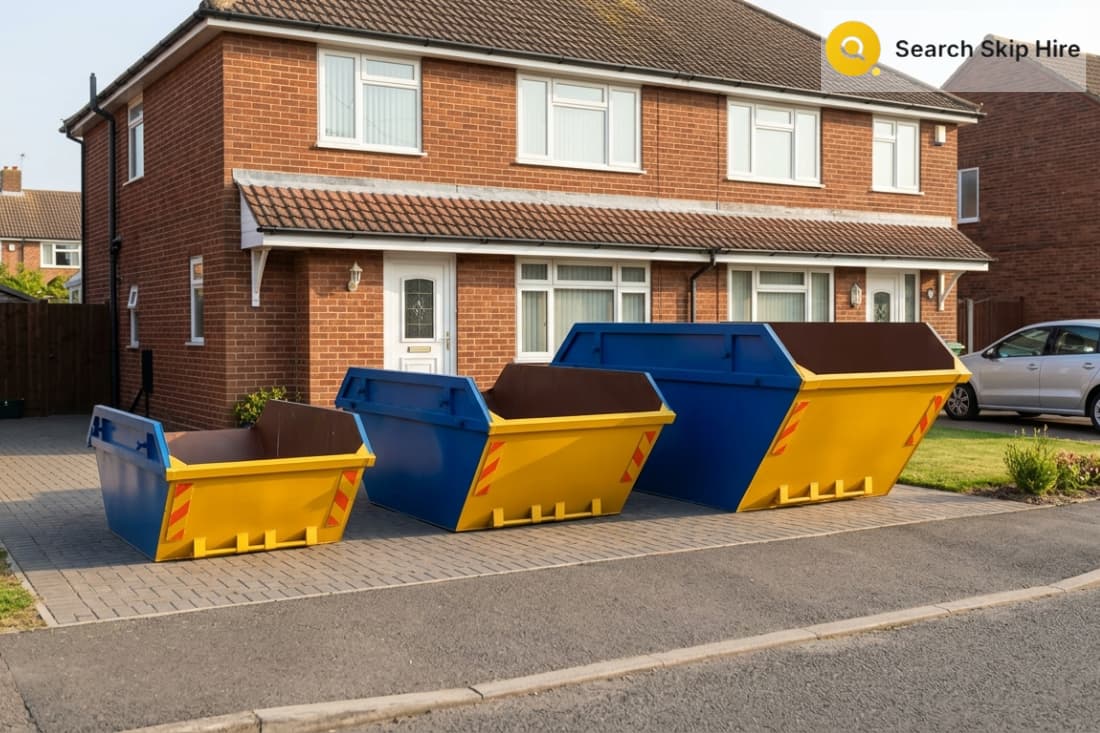
The most common skip sizes for UK homes are four to eight cubic yards. For many household projects, a four-yard midi skip is the go-to option.
If your job is bigger, an eight-yard builder’s skip is the largest size you can usually use at home, due to space and weight restrictions.
The right size for you depends on what you’re throwing away, the type of work, and how much room you have outside.
To get the best value and avoid problems, keep reading for our straightforward guide.
Choosing the Right Skip Size: What Matters Most
These key points highlight how skip size, waste type, and placement rules work together to ensure you choose the right option for your project.
Skip sizes are measured in cubic yards, with 4-yard and 8-yard skips covering most household jobs.
Heavy waste like soil and rubble requires a smaller skip than light, bulky waste like furniture.
Your available space and local permit rules are often the deciding factor for maximum skip size.
Understanding UK Skip Size Measurements

In the UK, we measure skips by cubic yards. That's just the space inside the container, not how long or heavy it is, which helps clarify how skip sizes in cubic yards relate directly to usable capacity.
To make sense of it, think about bin bags. A small two-yard skip can take around twenty to twenty-five standard black bags. A four-yard skip holds roughly double that. But that’s for light household waste; dense stuff like soil takes up less space.
Insights from Wokingham Borough Council indicate
"Most households have a fortnightly collection from a 180L black-wheeled bin. Some households are on a weekly blue bin bag collection... Check which type of collection your property has been allocated." - Wokingham Borough Council
There’s another limit to know: weight. Every skip has a maximum load, usually between four and eight tonnes. You could have a half-full skip and already be at the limit if you’re throwing away heavy rubble. Check the weight limit when you book, as companies like Atlantic Recycling will list it.
Matching Skip Size to Your Household Project
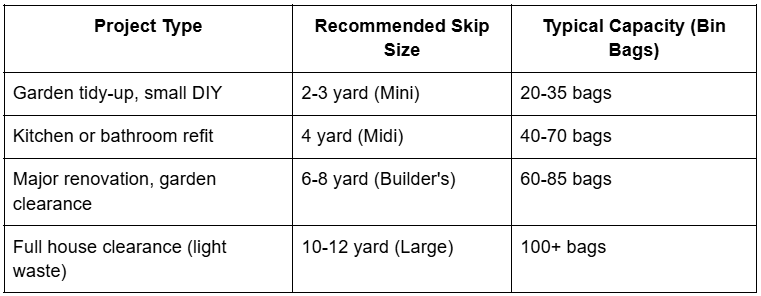
Picking a skip means matching it to the job. For a small garden tidy or clearing one room, a two or three-yard mini skip usually works.
It's small enough for most driveways. A kitchen or bathroom refit often needs a four-yard midi skip to handle old units, tiles, and all the packaging that comes with it.
Bigger projects are different. A house extension or clearing a whole garden, especially with soil, typically requires a six or eight-yard builder's skip.
If you're doing a full house clearance with bulky but light items like furniture, you might look at a ten or twelve-yard skip. Just be sure you have the space for it, and remember, these larger sizes are really for lighter waste.
Here’s a quick guide based on common jobs:
As noted by North Yorkshire Council
"Less than 100 litres of DIY waste items, capable of being fitted into two 50 litre bags (we do not supply these bags - an example of the correct size of bag to use is located at our centres for reference purposes only)." - North Yorkshire Council
This matches what most skip hire companies recommend. For a lot of homeowners, the four-yard skip ends up being the most practical choice.
How Waste Types Influence Skip Size Choice
What you're throwing away matters just as much as how much of it you have. Heavy waste like soil, bricks, or concrete is dense. A skip can hit its four to eight tonne weight limit long before it looks full, so for these materials, you'd usually pick a smaller skip, like a four or six-yard one.
Light, bulky waste is different. This includes old furniture, cardboard boxes, and garden clippings. These items fill space but don't weigh much. For this type, you can safely choose a larger skip, say eight or twelve yards, and fill it right up.
Most jobs involve mixed waste, though, some rubble from a patio and an old sofa, for example. The trick is to balance the two.
Think about how much is heavy versus light, and pick a skip that has enough room for the bulky stuff without being overloaded by the weight of the dense materials, especially when estimating waste volume across mixed materials.
The UK Environment Agency has guidelines on waste density that many companies use for this.
Heavy waste (soil, rubble): opt for a 4-6 yard skip.
Light, bulky waste (furniture): an 8-12 yard skip is efficient.
Mixed waste means you need to estimate both weight and space.
Soil can reach the weight limit when the skip is only half full.
The Impact of Space and Access on Skip Selection

The space you have can be the final deciding factor for skip size. Here’s how it breaks down.
Limited space: For terraced houses or homes with narrow driveways, a large skip often won't fit. The delivery truck needs space to move, and the skip can't block the pavement or a neighbor's access. In these situations, a two or four-yard skip is usually the largest practical option.
Good access: If you have a wide, straight driveway on a detached property, you can accommodate larger skips. An eight-yard builder's skip might be possible.
The key is having clear access for the lorry to drop off and later collect the heavy container. The driver will check this on the day.
Road placement: Placing a skip on the public road requires a permit from your local council. This permit process itself can limit the allowed skip size.
Councils in areas like Greater London or the West Midlands have specific rules about dimensions and placement for safety and traffic flow. The skip will also need proper lights and signs. You must factor in the time and cost for this permit when planning your hire.
Common Mistakes in Choosing Skip Size
Here are the common mistakes people make when hiring a skip.
Underestimating volume. You book a small skip for what seems like a small job, only to find you have far more rubbish. An overfilled skip can't be collected legally, which means extra charges for a second hire, often adding thirty to fifty percent to your original cost.
Ignoring weight limits. You might hire a large eight-yard skip for a garden full of soil. Soil is heavy, and the skip can hit its tonne limit long before it looks full. The driver may refuse to collect it, or you could face a large overweight surcharge, turning a good deal into an expensive problem.
Overfilling the skip. Even if the weight is fine, filling a skip above the top of its walls is a safety issue. It's hazardous on the road. Companies like Reliable Skip Hire will charge for this, as it requires extra work to make the skip safe for transport. It also breaks the hire terms and can affect insurance.
The Strategy of Choosing a Larger Skip

Choosing the next size up from your first guess is often a smart move. It lowers the chance you’ll need a second skip.
If you’re dealing with mixed waste or you’re just not sure how much you have, that extra space acts as a buffer. It usually costs less than paying for two separate hires, saving you between fifty and one hundred fifty pounds.
This works well for light or mixed projects, where the extra room is useful and you won’t hit a weight limit.
For instance, moving from a four-yard to a six-yard skip for a kitchen refit that also includes some old garden waste is a sensible choice. The price increase is normally smaller than the cost of a whole extra skip.
But this rule doesn’t work for heavy waste. If you’re clearing pure soil or concrete, a larger skip is a bad idea. You’ll reach the weight limit long before it’s full, and you’ll have paid for space you can’t use.
For these jobs, stick to the appropriately sized skip for heavy materials, which is often a four or six-yard model. Advice from sources like Checkatrade supports this more careful approach.
UK Regulations Governing Skip Hire

UK skip hire has a few clear rules to follow. The main ones cover what you can put in, how you fill it, and where you place it.
Prohibited waste. You cannot put hazardous materials in a standard skip. This includes asbestos, batteries, clinical waste, tyres, and liquids like paint or oil.
Disposing of these requires a specialist service. Putting them in a skip is illegal and can lead to serious fines from bodies like the Health and Safety Executive (HSE).
The fill line. Waste must not be stacked above the top of the skip's walls. Overfilling isn't just against company policy; it's a safety hazard for transport. The driver may refuse to collect it.
Road placement rules. If the skip goes on a public road, you need a council permit. Councils in areas like Kent or Essex have their own application systems and fees. The permit states the allowed size and duration.
Operating without one can mean fines over a thousand pounds. The skip must also have proper safety markings, like lights and cones, especially at night. While your hire company can often help with the permit, the final responsibility is yours.
A Practical Strategy for Selecting Skip Size
Here’s a simple, four-step way to choose the right skip size.
Step 1: Identify your waste type. Is it heavy (soil, rubble), light (furniture, cardboard), or mixed? This gives you your basic direction for size.
Step 2: Estimate the volume. Think about how many bin bags your waste would fill, which is essential for estimating waste volume accurately before choosing a skip size.
Step 3: Check space and permits. Will a large skip fit on your driveway? If you need it on the road, have you checked the permit process with your council? These practical limits often decide the maximum size you can use.
Step 4: Size up if you're unsure. If you’re stuck between two sizes and your waste isn't heavy, choose the larger one. It’s better to have a little extra space than not enough.
Following these steps helps you book with confidence. Industry data from firms like W&S Waste Management shows that four-yard skips are the most commonly hired size in the UK, offering a good balance for many household jobs.
FAQ
You should choose a skip size based on your project type and total waste volume. A Mini Skip suits small DIY projects and garden tidy-ups. A Midi Skip works well for kitchen refits and garden clearances. Builders Skip and Large Skips are better for home renovations and house clearances. Always follow a clear Skip Size Guide using cubic yards and expected waste types.
You can estimate waste by counting bin bags and identifying bulky waste such as furniture or construction debris. Use a cubic yard formula to understand cubic volume and standard measurements. Check black bag capacity and include heavy waste like soil or building waste. This method helps you select suitable skip hire sizes and avoid an overfilled skip.
You can place general waste, garden waste, and building waste in most skips hired for domestic projects. Builders Skip options handle heavy materials such as construction and rubble or soil/inert waste. You must avoid hazardous waste types and persistent Organic Pollutants. Always confirm accepted waste streams to ensure safe, legal, and efficient waste disposal.
You may need a permit application if you place the skip on a public road. Local authorities regulate skip hire and waste management rules. If you keep the skip on private property, you usually do not need a permit. You should always check requirements before you book a skip to avoid delays, fines, or unexpected costs.
You can reduce the cost of skip hire by selecting the correct skip size and avoiding unused space. Sharing a skip with neighbors can lower expenses. Sort waste material for recycling facilities and follow eco-friendly waste disposal practices. Booking online with next day delivery can also improve customer service and increase overall efficiency.
Choose the Right Skip with Confidence
Skip sizing does not need to be guesswork. When you match volume, weight, and placement to your project, everything runs smoother. For many homes, a four to eight yard skip works well, with a four yard midi often being the most practical starting point.
Getting it wrong leads to extra costs, delays, and frustration. Getting it right keeps your project simple, efficient, and on track.
Start your Skip Hire Search to compare verified local providers and find the perfect skip for your job.
References
Related Articles
Filed under:
Skip Sizes