TL;DR
Builder's skips are large containers ideally suited for substantial construction projects like house extensions, renovations, and demolition work, with 6 to 8 cubic yard capacity making them the practical choice for handling heavy materials such as concrete, bricks, and mixed debris. Proper planning for placement and obtaining necessary council permits when using public roads ensures you hire the right size skip for your project's waste management needs.
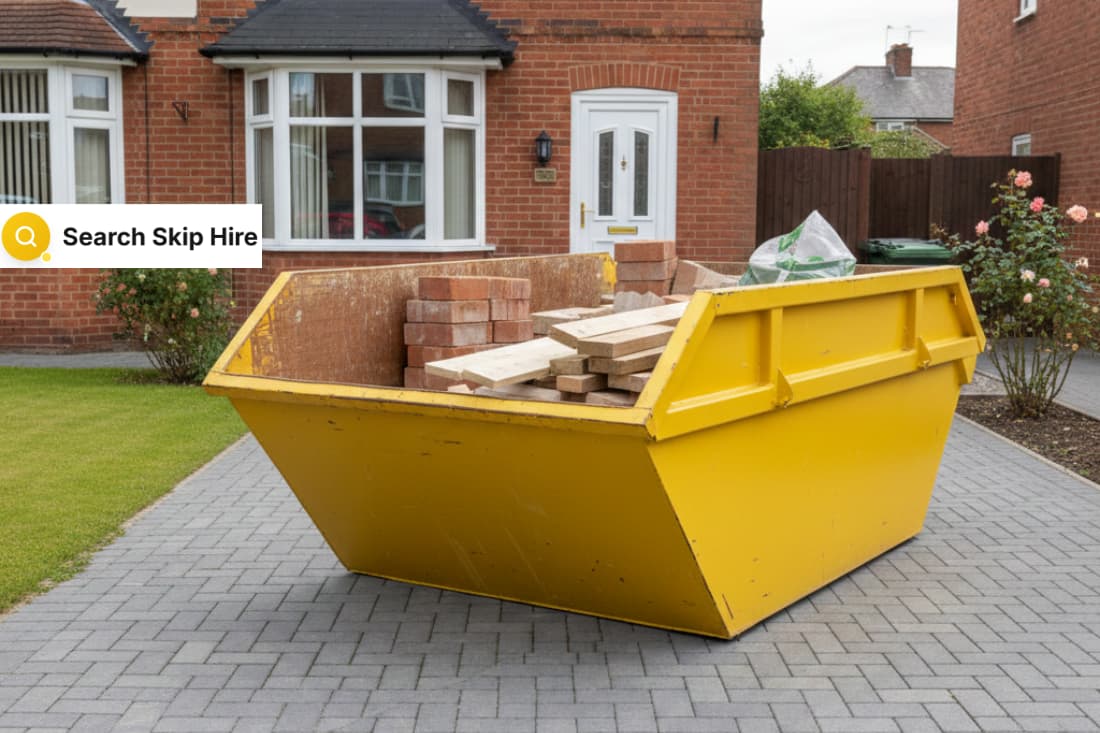
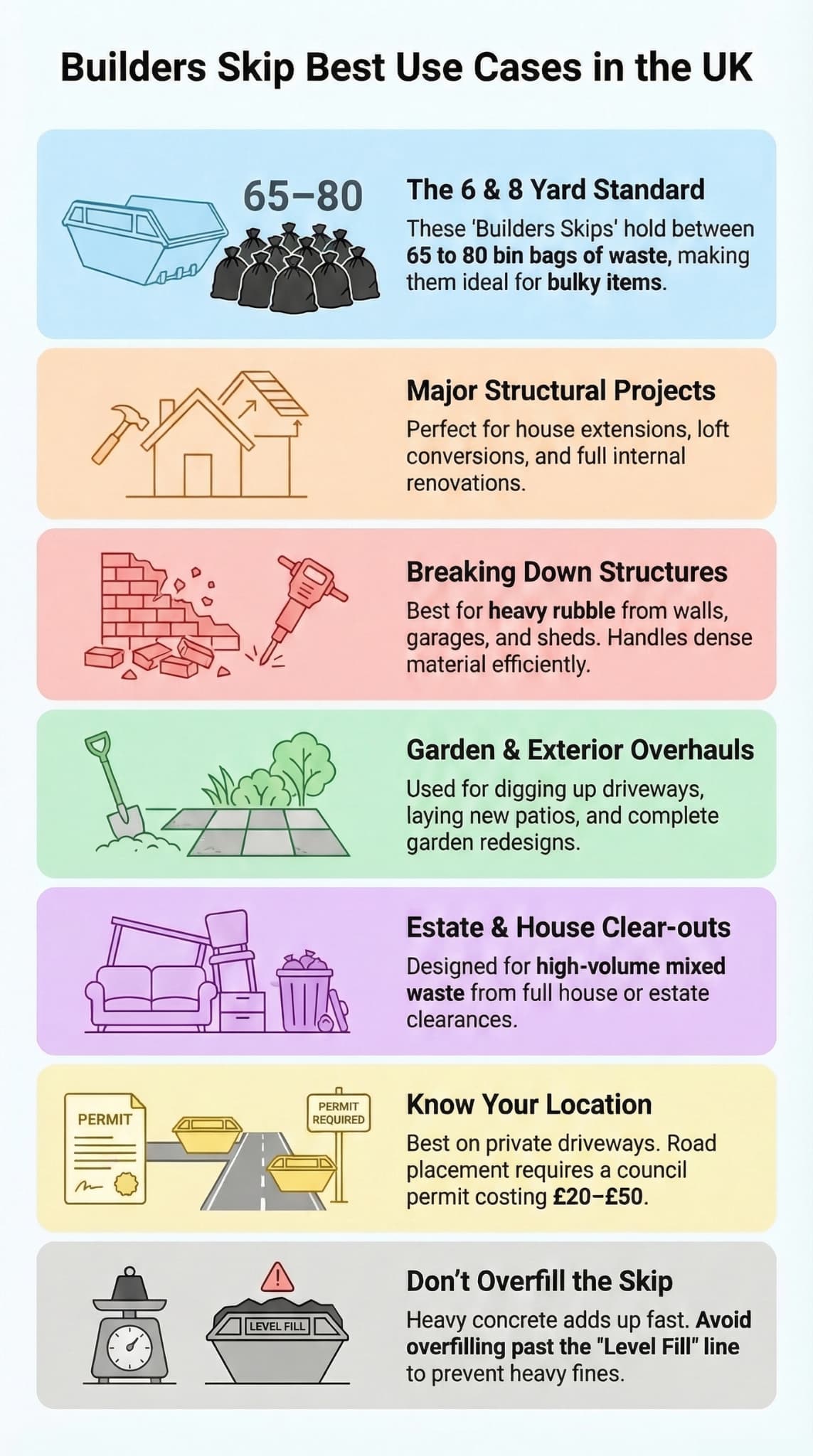
A builders skip is a large, open-top container for heavy construction waste. It's best for major projects like house extensions, full renovations, demolition, and big landscaping jobs. Typically 6 to 8 cubic yards, it holds about 65 to 80 bin bags of waste.
This makes it the most practical choice for significant amounts of rubble, soil, timber, and mixed debris. It strikes the right balance of size and capacity for most home and small commercial sites.
Knowing these core uses ensures you hire correctly. Read on for specific scenarios where a builder's skip is the ideal solution.
Builder’s Skip Basics: What to Know Before You Hire
These quick points capture why builder’s skips are the go-to choice for large construction waste and how to plan for them properly.
Ideal for substantial projects: The standard choice for house extensions, major renovations, and demolition due to its large capacity.
Built for heavy waste: Designed to safely carry dense materials like concrete, bricks, and soil that smaller skips can't handle.
Plan for placement and permits: Fitting on a driveway is best, but using a public road will require a council permit and following safety rules.
Builders Skip Overview and Capacity
A builders skip is a strong container made for waste from building and renovation work. It's one of the most popular skip sizes in the UK. The standard sizes are 6 cubic yards and 8 cubic yards.
This gives you a lot of space for project waste, without being as huge as the largest industrial containers, especially when compared with other skip types commonly used for household and construction waste removal.
It's a simple open-top metal box that's easy to load from the ground, which is why many projects choose it when comparing open skip options with enclosed containers for construction debris.
A special lorry with a hydraulic arm delivers and collects it, placing it carefully in your driveway or on a building site.
Understanding its capacity in practical terms helps with planning. While the measurement is in cubic yards, it is often easier to visualise how much it can hold by comparing it to everyday items. This helps you judge if your project’s waste will fit.

Builders Skip for Construction and Renovation Projects
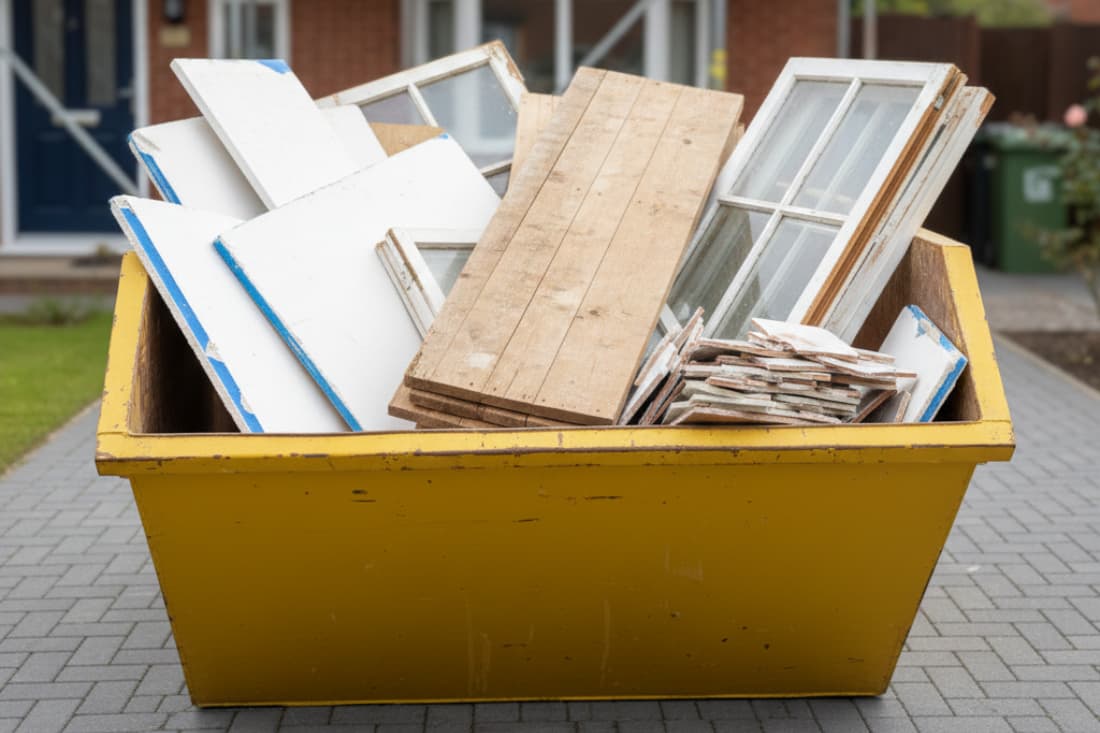
This is the most common use for a builder's skip. When a home is having major work done, waste builds up fast. A builders skip gives you one secure place to put all the debris, keeping the site tidier and safer. It's the top choice for builders and experienced DIYers.
Research from ResearchGate shows
"Within C&D wastes is a subset of waste more commonly known by its origin, builders skip waste (BSW), the arisings from the construction or re-furbishment of domestic/commercial buildings. [...] On average, 35% of the waste stream comprised hard material, 29% was soil, 2% asphalt and 10% was composed of metals, timber, paper/card." - ResearchGate
For example, building an extension or converting a loft creates waste over many days. This includes wood off-cuts, plasterboard, old insulation, and packaging. Having a skip on-site lets you clear this away as you work, stopping dangerous piles from forming.
A full house renovation is another perfect fit. Ripping out old kitchens, bathrooms, and flooring creates a huge amount of mixed, heavy waste, which is why many contractors first compare different skip types before deciding on the right container size.
A builders skip has the space to handle it in one go, which is often easier and cheaper than getting several smaller skips.
Ideal for a house extension: Waste like foundation rubble, brick off-cuts, and packaging.
Ideal for a loft conversion: Waste like old roof tiles, insulation, timber, and plasterboard.
Ideal for a full renovation: Waste like old kitchen units, bathroom suites, tiles, and flooring.
Builders Skip for Demolition and Structural Work
When a project involves taking things apart, the waste is usually heavy. Demolition work, even on a small scale, creates materials like bricks, concrete, and rubble that need a strong skip. A builders skip is made to handle this kind of load.
As noted by Epsom and Ewell Borough Council
"If a skip is being placed on a public highway the largest skip that can be left on a road is an 8 Yard Skip. This is the councils restriction to ensure that large containers that cause danger to other road users are not left on the road. [...] Heavy waste streams must go in skip sizes of 8 Yard or less. 12 Yard skips are only intended for light bulky waste." - Epsom and Ewell Borough Council
A common home project is knocking down a non-load-bearing wall to make an open-plan room. The waste, plaster, bricks, and blocks, is perfect for a builder's skip.
The same goes for removing an old garage, shed, or conservatory, which creates a lot of heavy waste that needs to be cleared away.
The most important thing here is the skip's weight limit. Rubble and concrete are very heavy. An 8-yard skip might only be filled halfway to stay within the legal limit for the lorry. It's important to know this to avoid extra fines.
Removing an internal wall: Produces plaster, bricks, and possibly concrete blocks.
Demolishing a garage or shed: Creates timber, roofing felt, concrete slabs, and bricks.
Stripping back to brickwork: Generates large amounts of old plaster and mortar.
Builders Skip for Groundworks and Landscaping
Outdoor projects that change a garden or driveway create heavy waste perfect for a builder's skip. These jobs often involve digging up soil, breaking old hard surfaces, and removing heavy materials. The waste is usually not harmful, but it's very weighty.
Putting in a new patio, path, or driveway means taking the old one out first. Broken slabs, concrete, and gravel sub-base are all right for a builder's skip. Big garden landscaping, like digging a pond or removing soil and tree stumps, also creates waste that fills a large skip quickly.
The skip acts as a handy central point. It lets you gather all the heavy waste in one spot as you work, instead of making piles you have to move later. Whether you're in Greater Manchester redoing a backyard or in Kent landscaping a garden, the needs are similar.
Driveway replacement: Waste like broken tarmac, concrete, old paving, and gravel.
Patio installation: Waste like old slabs, brick edging, and dug-up soil.
Garden overhaul: Waste like soil, turf, rocks, and old concrete bases from sheds.
Builders Skip for Large House Clearances and Mixed Waste

While made for building waste, a builders skip is also a great choice for big clearance jobs. These are situations where you have a high volume of waste, mixing household items with light debris. It offers one large-capacity solution.
A full house clearance, like when moving from a long-term home, can create a huge amount of waste. This includes old furniture, carpets, appliances, and years of clutter. If you're also doing light work like removing old cupboards, a builders skip can take it all.
Clearing a large rental property or an inherited home are other good examples. The skip gives you a simple way to remove everything at once, which is often faster and less hassle than many trips to the tip.
Remember to check with the hire company about any items they don't accept, like fridges or mattresses, which have special rules.
Full house clearance: For removing all the contents of a home, including bulky furniture.
Estate property clearance: Useful for clearing larger, unused homes.
Major decluttering: When clearing a garage, attic, and several rooms together.
FAQ
Builders skips are commonly used on construction projects where large amounts of construction waste and building materials require removal. Their strong design can handle heavy construction debris, paving slabs, and demolition waste. Construction professionals often choose these waste containers for building sites because they support efficient waste management and reliable waste disposal throughout the project.
Builders skips usually accept general waste, construction debris, scrap metal, and household waste from renovation work. They are suitable for construction materials such as bricks, tiles, and broken paving slabs. However, hazardous materials such as fluorescent tubes, gas canisters, and hazardous waste require specialized waste disposal services to ensure safe handling and legal compliance.
If a builders skip is placed on public land, local councils usually require a skip license or council permits. These permits ensure safe placement and compliance with local regulations. Skip hire providers often assist with the permit process and confirm suitable site access. When the waste skip is placed on private property, permits are usually not required.
Builders skips support waste segregation on construction sites. Materials such as scrap metal, wood, and other recyclable materials can move through recycling operations and transfer stations. This process improves the recycling process and reduces the environmental impact of construction waste. Effective waste management also supports waste minimisation and responsible disposal practices.
Builders skips are widely used on demolition sites and construction sites because they are built from heavy-duty steel and designed for demanding conditions. Their large capacity allows efficient collection of construction and demolition wastes. These skips help maintain site safety, organise waste disposal, and improve overall project efficiency during building and demolition work.
Builders Skip Placement, Permits, and Smart Planning
Where you place your skip can save time, money, and stress. The safest option is private land like a driveway, where permits are rarely required. But if it must sit on a public road, plan ahead. In places like the West Midlands, council permits usually cost £20 to £50 and delays can slow your project.
Small mistakes create bigger problems. Overfilled skips are unsafe and illegal to transport, and prohibited items can lead to fines or refused collection.
Start your builders skip hire search to compare verified local providers and keep your project running smoothly.
References
Related Articles
Filed under:
Skip Types