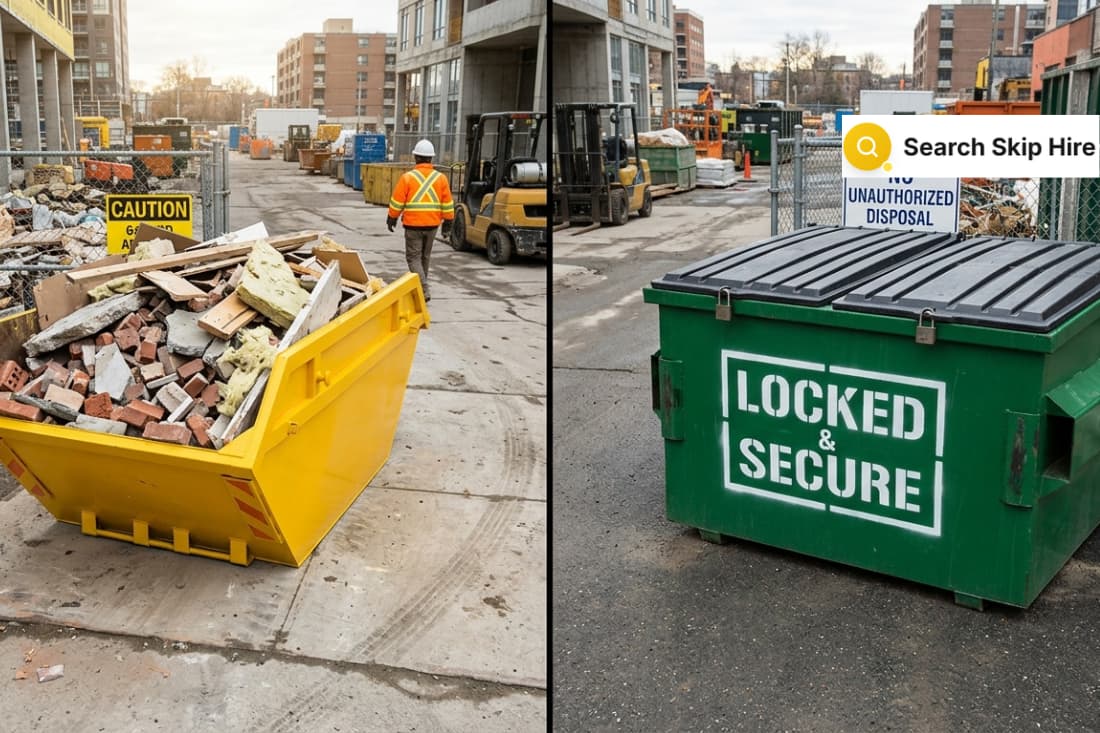
TL;DR
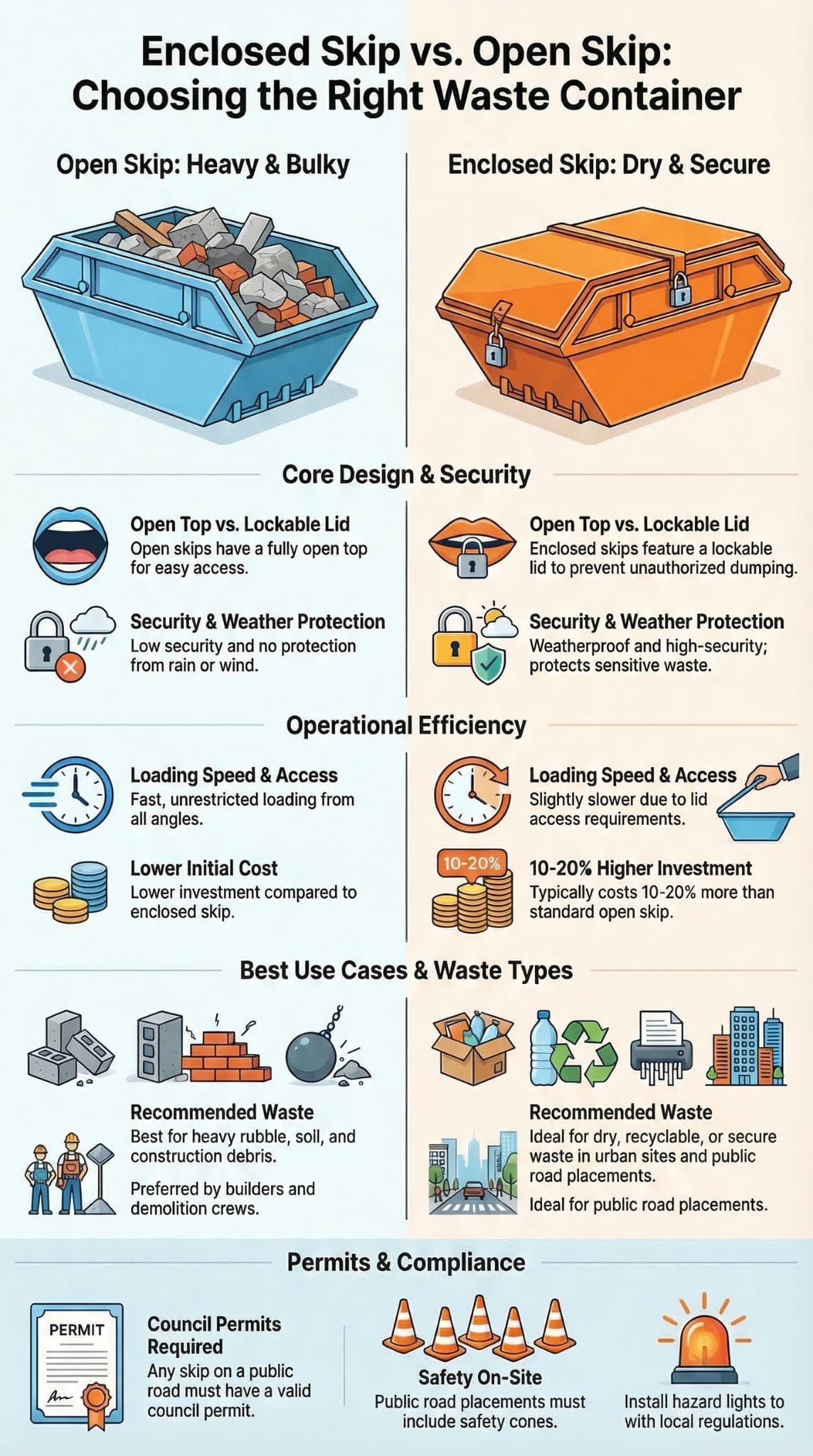
Enclosed skips feature lockable lids for security and weather protection, making them ideal for recyclables and urban locations, while open skips allow faster loading of heavy materials like rubble and are better suited for private construction sites. Your choice should depend on your project's waste type, location, and security requirements.
An enclosed skip has a lockable lid for security and weather protection. An open skip has a completely open top for easy loading of bulky materials.
The right choice depends on your project's waste type, location, and security needs. Understanding these differences helps you choose the right container and manage waste efficiently.
We will break down the designs, best uses, costs, and rules for each type. Keep reading to make an informed decision for your job.
Open vs Enclosed Skips: The Quick Choice Guide
These essentials explain how the right skip type depends on access, security, and where the skip will be placed.
Open skips are for easy access. They are ideal for quick loading of heavy construction waste like rubble and soil on private land.
Enclosed skips are for security. Their lockable lid prevents unauthorized dumping and protects light, dry, or recyclable waste.
Location dictates the rules. Placing any skip on a public road usually requires a council permit and specific safety markings.
Open Skip Design and Typical Use

An open skip is a container with a fully open top. This design allows bulky or heavy waste to be loaded quickly.
It is the most common skip hire option across the UK for domestic and trade projects. The open top means you can throw items in from any angle or use machinery like a mini-digger to fill it.
These skips come in a range of standard sizes, forming part of the wider category of skip types commonly used across UK construction and household waste projects.
Common options include the 4-yard, 6-yard, and the very popular 8-yard builders skip. They are built from heavy-duty steel to withstand rough materials. The sides are high, and the container has no top covering.
Open skips are perfectly suited for typical construction and renovation waste. They handle heavy mixed materials.
Common waste types for an open skip include:
Rubble, bricks, and concrete
Soil and hardcore
Timber and plasterboard
General mixed renovation waste
The 8-yard builders skip is one of the most widely hired sizes, especially when considering common builder skip use cases for renovation, demolition, and landscaping waste.
It offers a practical balance of capacity and manageable dimensions for a driveway. Open skips dominate domestic skip hire because they allow for the fastest disposal during active building work.
Enclosed Skip Design and Security Features
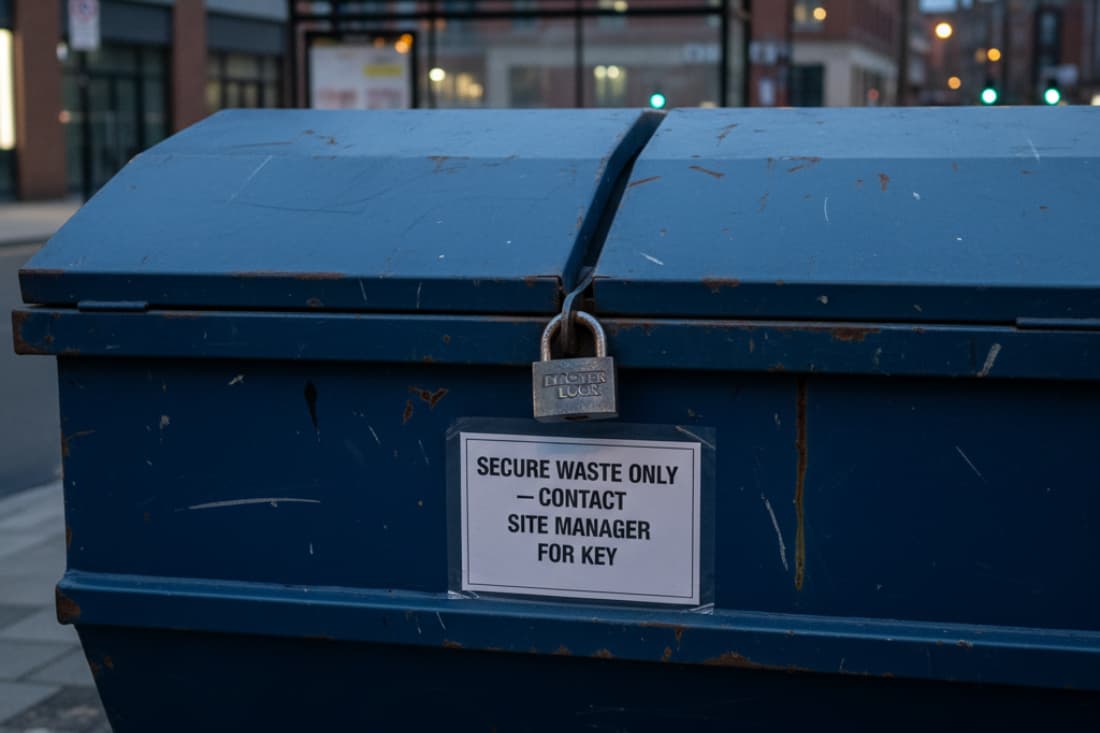
An enclosed skip is a container with a solid, lockable lid. It's also called a lockable skip. The lid is usually hinged and you can secure it with your own padlock.
The main purpose of the lid is to control access. It stops other people from dumping their rubbish in your skip, which is called fly-tipping. It also keeps the contents dry, which is important for recyclable materials like cardboard. The container is made from heavy-duty steel, just like an open skip, but with the added lid.
These skips are needed for projects where security, cleanliness, or following rules are important. They help sites meet their legal Duty of Care for waste by ensuring only the right waste goes in.
Common uses include:
Secure skip hire on public roads or pavements.
Storing dry mixed recyclables like cardboard and plastic.
Commercial projects in busy urban areas like Bristol City or Manchester
Any situation where stopping unauthorized dumping is critical.
The lockable design has other benefits. It helps keep recycling materials clean and dry, improves overall site tidiness, and can help businesses comply with data protection rules when disposing of confidential paperwork.
Insights from Sunderland City Council indicate
"Skips provided in or around shopping centres shall be removed overnight or provided with lockable covers." - Sunderland City Council
Fly-tipping is a major problem in the UK, which makes secure skips a popular choice to avoid extra costs and legal issues.
Key Differences Between Enclosed and Open Skips
The core difference between these skips is access and security. Open skips provide fast, unrestricted loading.
Enclosed skips provide controlled access and protection through a lockable lid. This fundamental distinction guides which one you should choose for your project.
Loading an open skip is generally faster because there are no obstacles. You can approach it from any side.
Loading an enclosed skip requires opening the lid, which can slow down the process slightly, especially with large or awkward items.
The security level is the most contrasting feature. An open skip offers low security, while an enclosed skip with a good padlock offers high security against casual dumping.
These practical differences affect daily site operations. Builders and demolition crews often prefer open skips for speed when handling heavy rubble. Property managers or contractors on a busy high street will prefer an enclosed skip to prevent the container from being filled with strangers' waste overnight.

Standard skip sizes for both types typically range from 4 to 16 cubic yards. The choice between them is less about size and more about the nature of your waste and your site's location.
Best Use Cases for Open Skips
Open skips work best for construction and renovation waste. They are ideal where heavy, bulky materials need to be loaded quickly and a lid would be a hindrance. Their design supports the workflow of active building sites perfectly.
These skips are synonymous with builders' work. You will see them outside houses having extensions built, gardens being landscaped, or during full property renovations.
The easy access allows workers to shovel soil, toss broken bricks, or lower old kitchen units into the container without fuss.
Common open skip uses include:
A builders skip for a house extension or loft conversion
Demolition skip hire for stripping out an old garage
Renovation skip projects for internal refurbishment
Garden landscaping waste removal like soil and turf
The typical materials handled are heavy and mixed. This includes broken concrete, bricks, roof tiles, soil, hardcore, timber, and plasterboard. The container is designed to take the impact and weight of these materials.
Builders prefer open skips for clear reasons. They allow easy loading with wheelbarrows and shovels. They are compatible with grab lorry loading for quick exchange on tight sites.
They enable faster waste disposal during messy demolition work, keeping the site clearer and safer.
Construction and demolition waste accounts for a significant portion of UK waste. The right open skip helps manage this waste legally and efficiently.
Best Use Cases for Enclosed Skips
Enclosed skips are the ideal solution for secure waste storage. They are particularly valuable in public areas or on sites where preventing fly-tipping or protecting specific materials is a priority. The lockable lid makes the skip secure.
These skips work best for lighter, dry waste. They are perfect for dry mixed recyclables, where keeping paper and cardboard dry is essential for recycling processors. Commercial operations often use them for general office waste to ensure security and cleanliness.
Situations where an enclosed skip provides a clear advantage include:
Urban construction areas with high foot traffic
Sites located on public highways in counties like Dorset or the West Midlands
Locations with a known history of skip theft or unauthorized dumping
Projects that require careful waste segregation, such as separating recyclables
Beyond security, the enclosed design offers practical advantages. It protects waste from rain, preventing skips from becoming waterlogged and overweight. It stops wind from blowing light materials like packaging out of the skip.
It also helps maintain a tidier site appearance, which is important for businesses or projects in sensitive areas.
In a recent analysis by Huntingdonshire District Council
"The ash is augured from the boiler into an enclosed skip where it will be disposed of appropriately." - Huntingdonshire District Council
The UK has set ambitious recycling targets for the coming years. Using an enclosed skip for recyclable materials supports these goals by ensuring the waste is kept clean and uncontaminated, giving it the best chance of being successfully recycled.
Skip Placement, Permits, and Compliance Rules
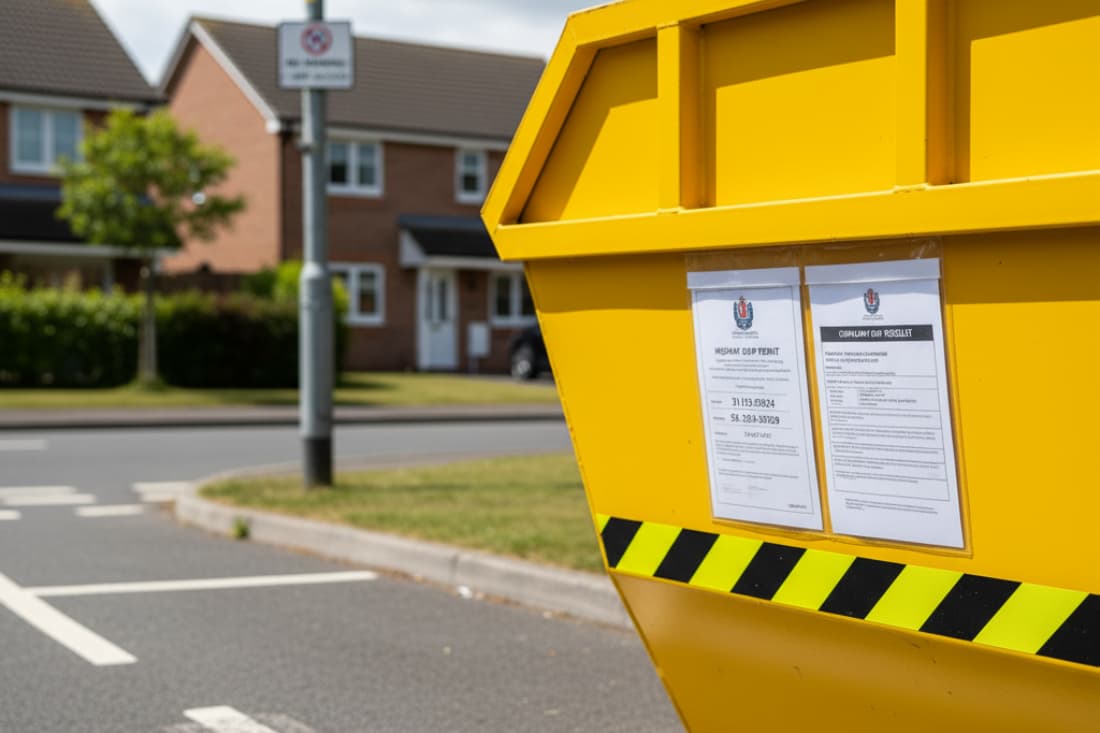
Both enclosed and open skips must follow the same UK rules. These regulations focus on safety and the environment. The most common requirement is a council permit.
You'll need one if the skip will sit on a public road or pavement, which is why many contractors choose lockable skips for public locations to control access and prevent illegal dumping. Your skip hire company usually handles this for you. Permit costs are often between £20 and £50.
Safety rules for road placements are important. They require amber warning lights at night, reflective markings on the skip, and traffic cones to guide people around it.
You also have responsibilities for your waste. Make sure you only hire a licensed waste carrier, which a good company will be.
Don't overfill the skip above the rim, as this is unsafe and can lead to fines. You cannot put prohibited items like tyres, chemicals, or asbestos in a standard skip.
FAQ
An enclosed skip is useful when waste security and protection are important. Lockable lids prevent unauthorized dumping and reduce the risk of waste spillage. Enclosed skip hire is often used for confidential waste, dry non-hazardous waste, or trade waste at commercial premises. It also protects recycling materials from heavy rainfall and typical British weather conditions.
Open skips are suitable for general waste, construction and demolition waste, and heavy materials such as bricks, rubble, and excavated soils. These skips are widely used on construction sites and building projects because workers can load waste materials quickly from the top. Open skips are also useful for garden waste, inert waste, and domestic waste.
If a skip bin is placed on public land, the Local Council usually requires a Skip Permit. The permit process normally involves a Permit Application and compliance with local safety rules. These measures protect public safety and regulate trade placement. When the skip is placed on private property with proper vehicle access, permits are usually unnecessary.
Both options are available in different skip sizes depending on the waste volume. A common option is the 12 Yard Enclosed Skip, which is used for dry non-hazardous waste and trade waste. Open skips include sizes such as the 8 Cubic Yard Skip or the 12 Cubic Yard Open Skip for building projects and waste disposal tasks.
Closed skips with lockable lids help control waste types and prevent contamination from outside waste materials. They also protect recycling materials from heavy winds and rainfall. This protection supports proper waste disposal and helps follow contamination policy requirements. Enclosed containers are commonly used on construction sites and commercial premises to improve waste management control.
Choose the Right Skip, Protect Your Project
The difference between an open and enclosed skip can shape how smoothly your project runs. Heavy rubble on a private driveway often suits an open skip, while lighter waste on a public street may need an enclosed one for security and compliance. The right choice keeps your site organized and protected.
A wrong choice invites weather damage, unauthorized dumping, and costly disruptions. A smart choice keeps waste contained and your project moving without setbacks.
Start your Skip Hire Search to compare verified local providers and find the right skip for your job.
References
Related Articles
Filed under:
Skip Types