TL;DR
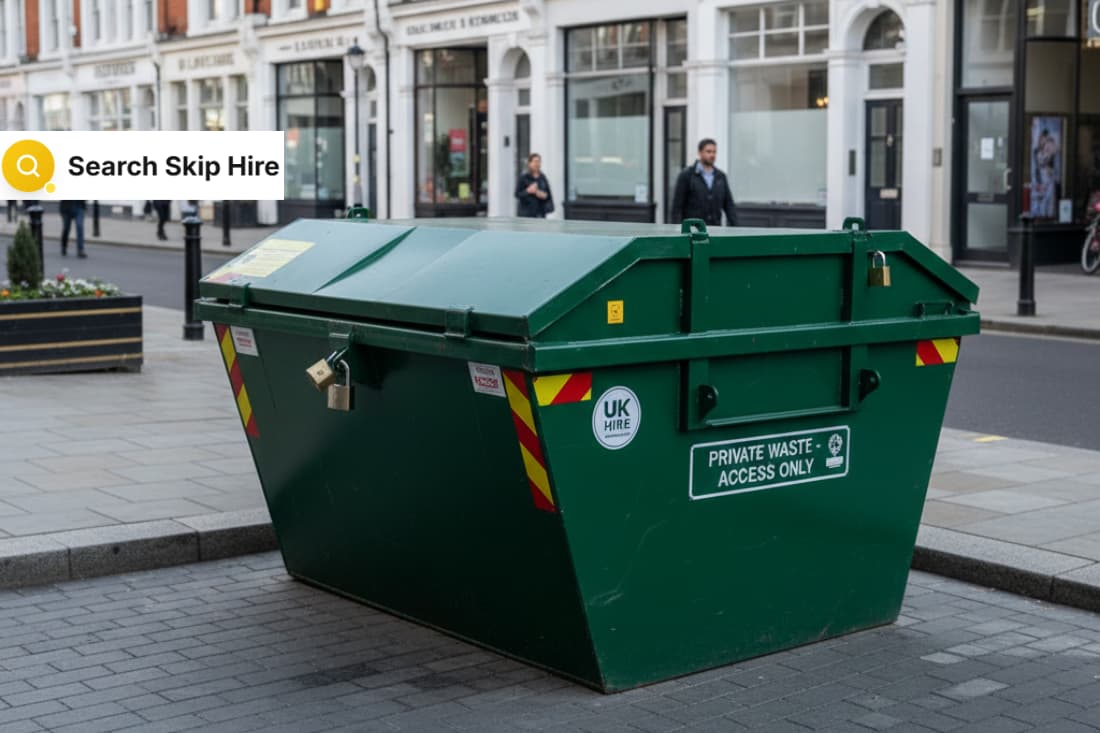
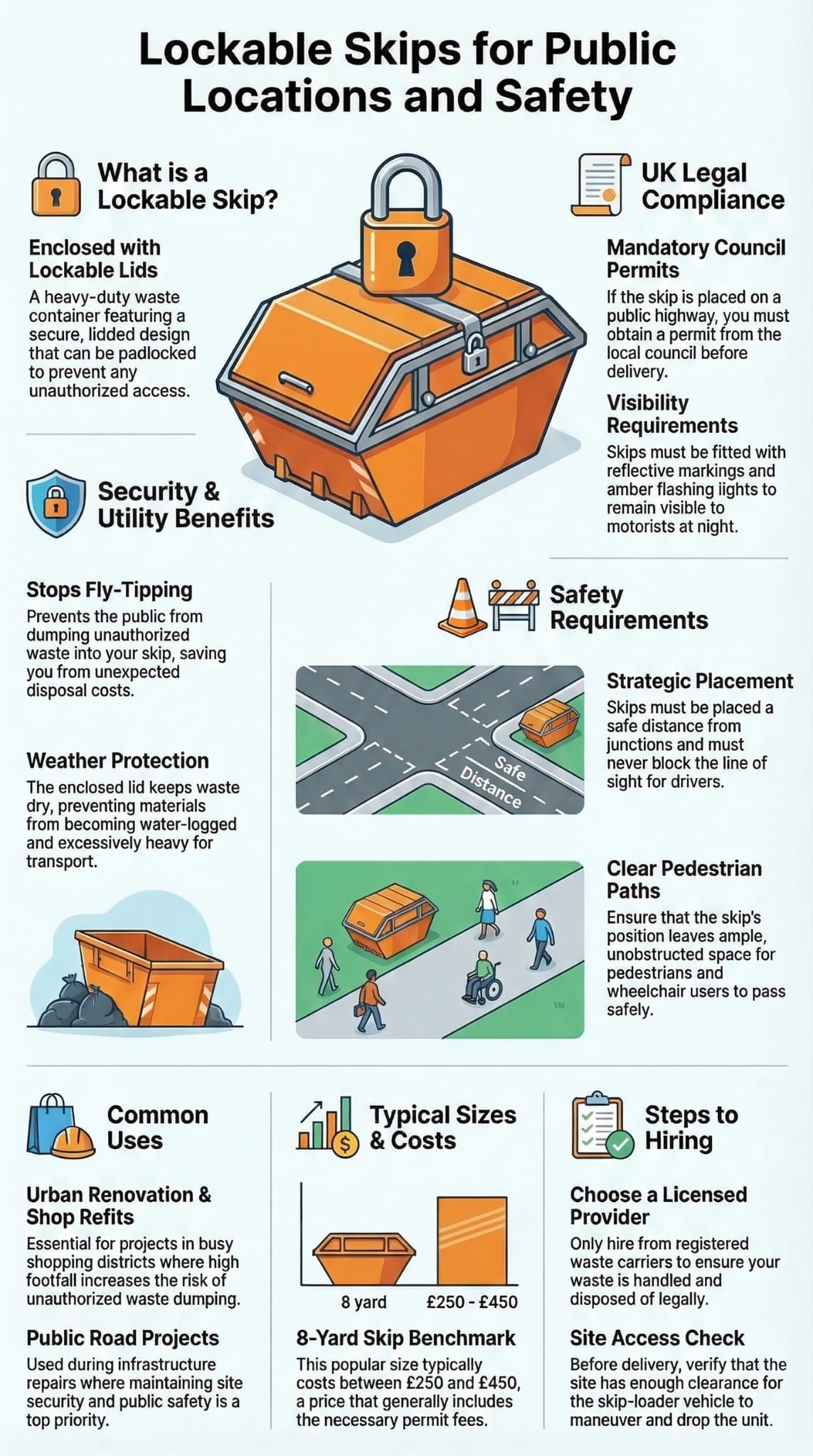
Lockable skips are secure waste containers with padlocked lids used in public areas to prevent unauthorized dumping and comply with local council regulations, requiring a permit (typically £20-£60) and safety features like reflective markings and warning lights. These containers protect your waste from fly-tipping, keep contents dry for recycling, and deter scavengers while helping you avoid potential fines from local authorities.
A lockable skip is an enclosed steel waste container with a hinged lid that can be secured using a padlock or locking bar to control access. Lockable skips are commonly used on public roads, pavements, and street-facing construction sites where waste security and public safety are important.
These skips stop other people from adding their rubbish to your container, a problem called fly-tipping. Using one helps you follow council rules and avoid potential fines.
We'll explain the regulations, the benefits, and how to hire one. Keep reading to make sure your public skip hire is safe and legal.
Lockable Skip Rules: What You Must Know
These essentials highlight how lockable skips protect your waste and why permits and safety rules matter when placing one on public roads.
Lockable skips prevent fly-tipping by restricting access to the container with a secure lid and padlock system.
You must have a permit from your local council to place any skip, lockable or not, on a public road or pavement.
Skips on public highways must have reflective markings, amber warning lamps, and traffic cones for visibility and safety.
What Are Lockable Skips and Why Are They Used in Public Areas
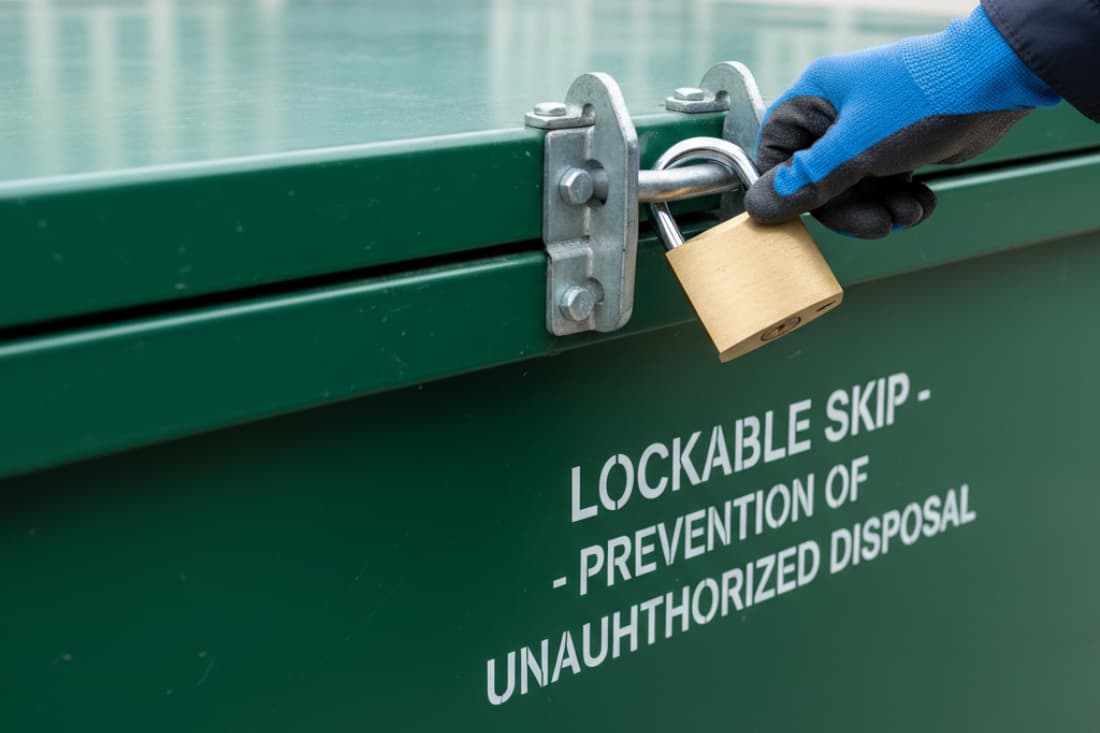
A lockable skip is an enclosed container with a steel lid you can lock.The lid normally closes onto a locking bar or chain attachment where a standard padlock secures the container.
This design prevents unauthorized dumping. It stops other people from dumping their rubbish in your skip overnight, which is a common problem called fly-tipping.
The lock means only you or your team can add waste. This keeps the rubbish contained and dry, which is helpful for recycling. The skip body is typically fabricated from heavy-duty steel plates designed to handle construction waste loads of several tonnes.
Research from Health and Safety Executive (HSE) shows
"There are no nationally established standards (eg British Standards) for the manufacture of this type of skip which are generally fabricated from steel plate. Often the base plate extends beyond the end plates producing a lip." - Health and Safety Executive (HSE)
Lockable skips are commonly available in 8-yard and 12-yard sizes, with capacities of roughly 60–120 standard bin bags depending on the container dimensions.
Common waste types include construction debris, timber, plasterboard, cardboard, packaging materials, and general non-hazardous waste from renovation projects.
UK Regulations for Skips on Public Roads
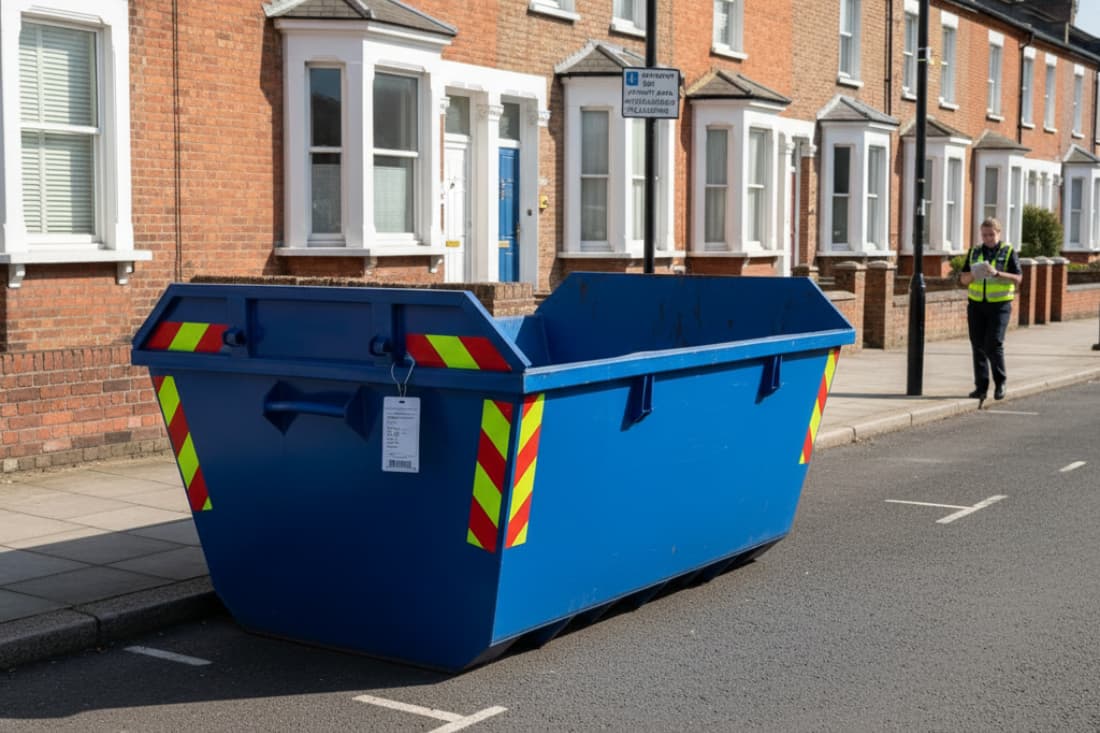
If you need to place a skip on a public road or pavement, you must get official permission, especially when choosing between common skip types that are suitable for roadside placement.
You need a council permit, often called a skip licence, which local authorities issue under the Highways Act 1980 to regulate skips placed on public highways. Your skip hire company will usually handle this application for you.
The permit makes sure the skip is placed safely. There is a fee, which changes depending on your local council.
Permit fees typically range between £20 and £60 depending on the local council and permit duration. A standard permit lets the skip stay for up to two weeks, and you can often extend it if your project takes longer.
The law also has rules for safety and visibility to protect everyone using the road.
Key requirements include:
Reflective markings on the skip's corners and sides.
Amber warning lights on or near the skip after dark.
Traffic cones are placed around the skip to guide people safely.
A notice with the skip hire company's contact details.
There are strict rules about where the skip can go. It cannot be placed near a road junction. It must not block pedestrian crossings, bus stops, or access points.
The skip must leave enough room on the pavement for people to walk past safely. Councils attach these conditions to the permit, and not following them can lead to fines.
Security Benefits of Lockable Skips in Urban Locations
The main benefit of a lockable skip in a public area is security, particularly when comparing different skip types designed for domestic, commercial, or street-based waste disposal.
An open skip on a street is an easy target. People might see it as a free way to get rid of their own rubbish, which is illegal fly-tipping.
A lockable skip with a strong padlock acts as a clear deterrent, particularly when comparing enclosed skip vs open skip designs for projects located on busy streets.
This greatly lowers the chance of someone adding their household bags, old appliances, or hazardous items like paint or tyres to your skip. In busy areas like Highland or Norfolk, this protection reduces fly-tipping risk.
The security helps in other ways. A locked lid stops scavengers from rummaging through the waste, keeping your site tidier and preventing litter. It also keeps rain out, which is important if you're recycling clean cardboard, as wet paper can't be recycled.
Common problems a lockable skip prevents include:
Household furniture or bags dumped overnight.
Illegal addition of tyres or chemicals.
The skip filling up too fast with someone else's waste.
Loose rubbish blowing out and littering the street.
By stopping these issues, a lockable skip protects you from extra costs. You won't pay to remove waste you didn't create. More importantly, you avoid the legal trouble that comes with illegal waste found in your skip. Fines for fly-tipping can be very high.
Best Use Cases for Lockable Skips on Public Streets
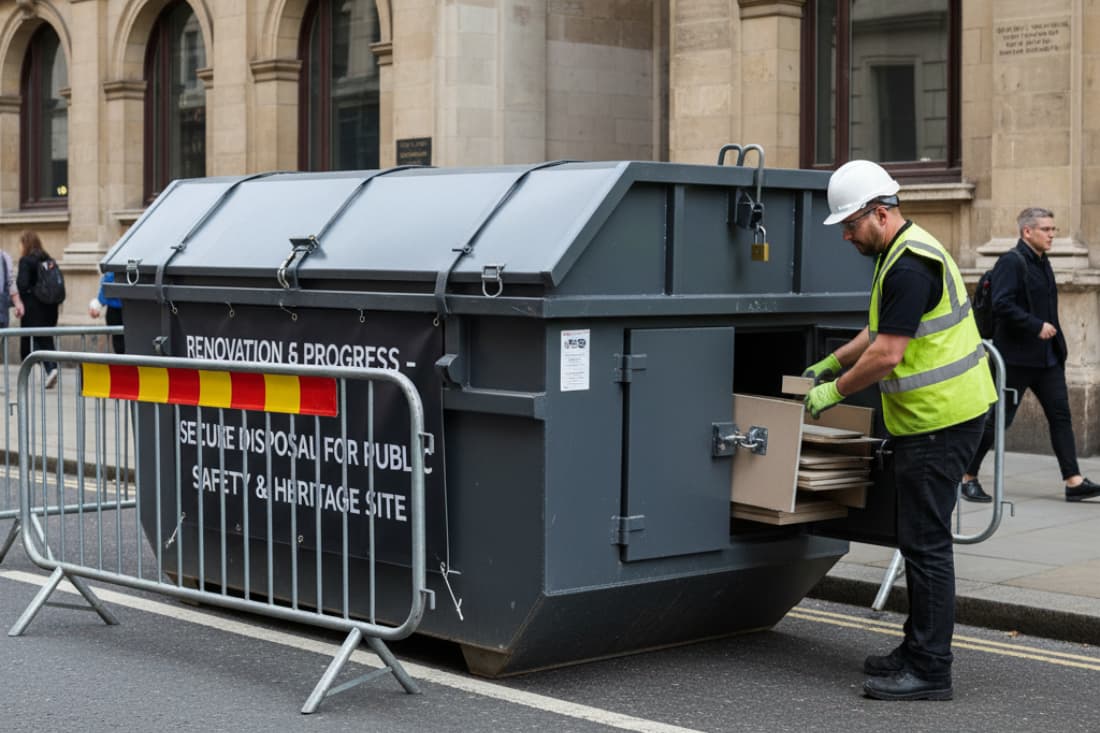
Lockable skips are the best choice if your skip has to go on a public road or pavement. If you don't have a private driveway or yard, a lockable model is the most secure option available.
They are ideal for projects in towns and cities where people are always passing by. This protects homeowners and contractors from unauthorized dumping. Many professional builders use them as a standard for jobs on street-facing properties.
As highlighted by St Helens Borough Council
"Skips within Town Centre locations should be lockable or not left over night, picked up at the end of the working day." - St Helens Borough Council
Typical projects that need a lockable skip include:
Renovations on terraced houses with no front drive.
Shop refits where the skip sits on the high street.
Home extensions where the only space is on the public road.
Construction sites in towns with no private land for storage.
The waste from these jobs is often mixed, like old timber, plasterboard, packaging, and general debris. For commercial work, they are also useful for keeping dry recyclables like cardboard secure until collection.
These skips are important wherever you can't control who accesses the area overnight. Whether you're in a busy county like Moray or a quieter spot, a lockable skip is the best way to make sure only your project's waste goes into the container you're paying for. The 8-yard size is a common choice for this reason.
Placement Rules and Safety Requirements for Public Skips
Putting a skip on a public road has strict safety rules to prevent accidents. Both the skip hire company and the person hiring it share this responsibility.
The skip must have yellow and red reflective strips on its corners and sides for visibility. Amber flashing lights are required on the skip after dark. Traffic cones must surround the skip to guide vehicles safely around it.
There are important rules about where it can be placed:
Most councils require skips to be placed at least 10-15 meters away from road junctions to avoid obstructing driver visibility.
It cannot block pedestrian crossings, bus stops, or utility access points.
It must leave at least one meter of clear pavement for people to walk past.
Before delivery, the site is checked. The lorry needs space to maneuver and operate its crane. The driver checks for overhead obstructions like cables.
The road needs to be wide enough, and the skip is placed parallel and close to the curb. These steps ensure the skip causes minimal disruption and keeps everyone safe.

Hiring a Lockable Skip for Public Locations
Hiring a lockable skip for a public road is a simple process with a good company. The key is to give them clear information so they can handle the permissions and logistics.
First, contact a licensed skip hire company in your area. Tell them you need a lockable skip for a public road placement. They will guide you through their process and usually apply for the council permit for you, adding the fee to your final bill.
It is important to confirm the skip hire company holds a valid waste carrier licence issued by the Environment Agency. This protects you in case of an accident.
Steps to hire:
Find a licensed local provider.
Apply for the council road permit (they usually do this).
Confirm the exact placement spot and check for access.
Schedule the delivery and collection dates.
When you get a quote, the price will include the skip hire and the permit cost. For an 8-yard lockable skip, the total is often between £250 and £450, depending on your location and how long you need it.
The standard hire period matches the typical 14-day permit, but you can usually extend it for an extra fee.
FAQ
Lockable skips provide secure waste storage when a skip hire container is placed on a public road or Public Highway. The enclosed skip design with lockable lids prevents access by unauthorised persons and reduces the risk of illegal dumping. These containers are commonly used near construction sites, building sites, and commercial areas where controlled waste disposal and public safety are essential.
Yes, most local authorities require council permits when a skip is placed on a public road or Public Highway. The Local Council usually reviews applications under the Highways Act 1980 and other permit rules. The process may include statutory fees and approval from the Highway Authority to ensure safe placement and compliance.
Lockable skips usually accept general waste, dry non-hazardous waste, and construction or demolition waste from building sites. They can also hold heavy materials such as bricks, rubble, and construction debris. Hazardous waste or hazardous substances must not be placed in these containers because they require specialist disposal approved by the Environment Agency.
Lockable skips can be placed on private land, industrial units, and controlled site boundaries where secure waste management is necessary. They are useful for landscaping projects, full property clearance projects, and construction waste removal. Secure lids prevent unauthorized persons from adding outside waste and help protect recyclable materials during waste recycling.
When a skip operator places a container on a public road, several safety measures must be followed. Builders skips or enclosed skips should include protective features such as brick guards and clear visibility markings. Delivery vehicles must position the skip safely, often near a drop kerb if required, to maintain safe access for pedestrians and traffic.
Secure Your Skip Hire, Protect Your Project
Placing a skip on a public road requires more than convenience, it demands security and compliance. A lockable skip helps prevent fly tipping and keeps your site aligned with UK highways and waste rules. With the right hire company, permits and safety checks become far simpler.
Ignoring these details can lead to fines, delays, and unwanted waste in your skip. Choosing the secure option protects your project and your peace of mind.
Start your Skip Hire Search to compare licensed local providers and secure the right skip for your job.
References
Related Articles
Filed under:
Skip Types