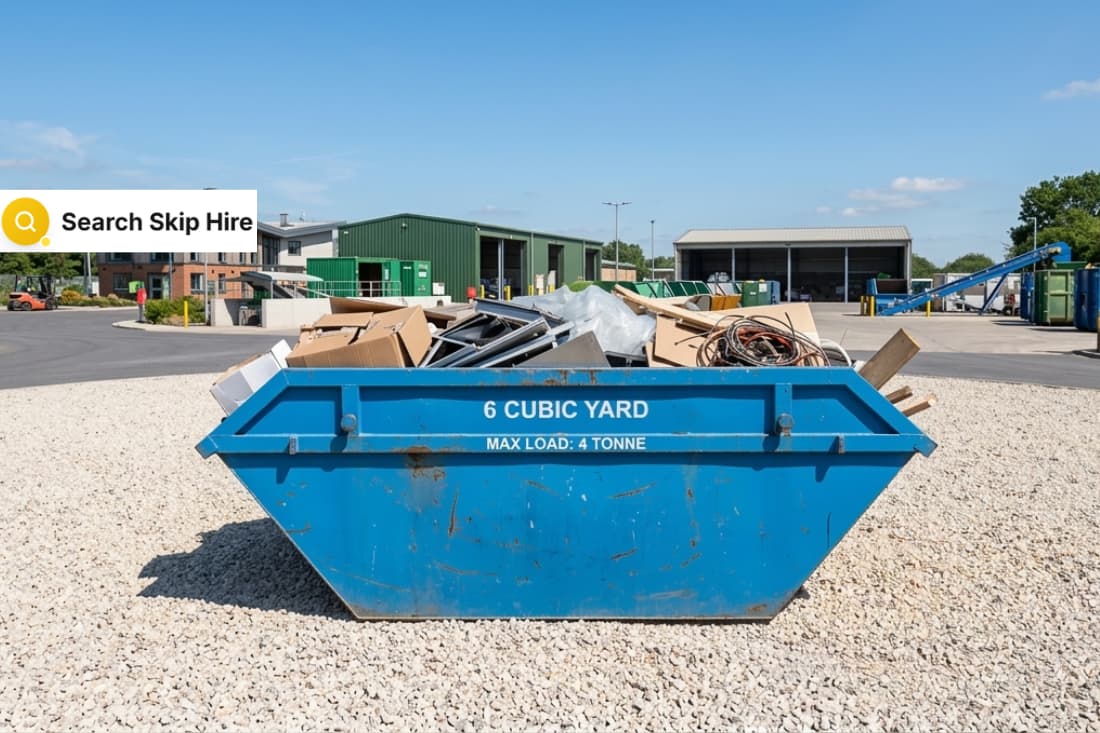
TL;DR
Different skip sizes serve different purposes, so choosing the right container depends on your project's scale and waste type—mini skips work for small household tasks, builders skips handle heavy construction debris, and larger options suit commercial sites. Using a secure skip on public roads and following local permit rules are essential to avoid extra fees and ensure your project runs smoothly.
Skip hire offers different containers for different jobs. The main types are mini skips, midi skips, builders skips, enclosed skips, and lockable skips.
A mini skip is for light household waste. A builders skip handles heavy construction rubble. An enclosed skip has a lid for security and weather protection, which is key for public areas.
Choosing the right type depends on your waste amount, material, and where the skip will go. This guide explains each option simply, helping you pick the best one. Read on to compare sizes, common uses, and important rules.
Smart Skip Hire: Quick Rules for Choosing and Using One
These essentials highlight how to choose the right skip, protect your waste, and follow local rules so your project runs smoothly.
Pick the right size for your job: Use mini or midi skips for home clearances, builders skips for construction, and larger containers for industrial sites.
Use a secure skip for public roads: Choose an enclosed or lockable skip to prevent others from dumping in it and to protect waste from the weather.
Always follow local rules: You'll need a council permit to place a skip on a public road, and avoid overloading it to prevent extra charges.
Different Skip Types Explained Simply
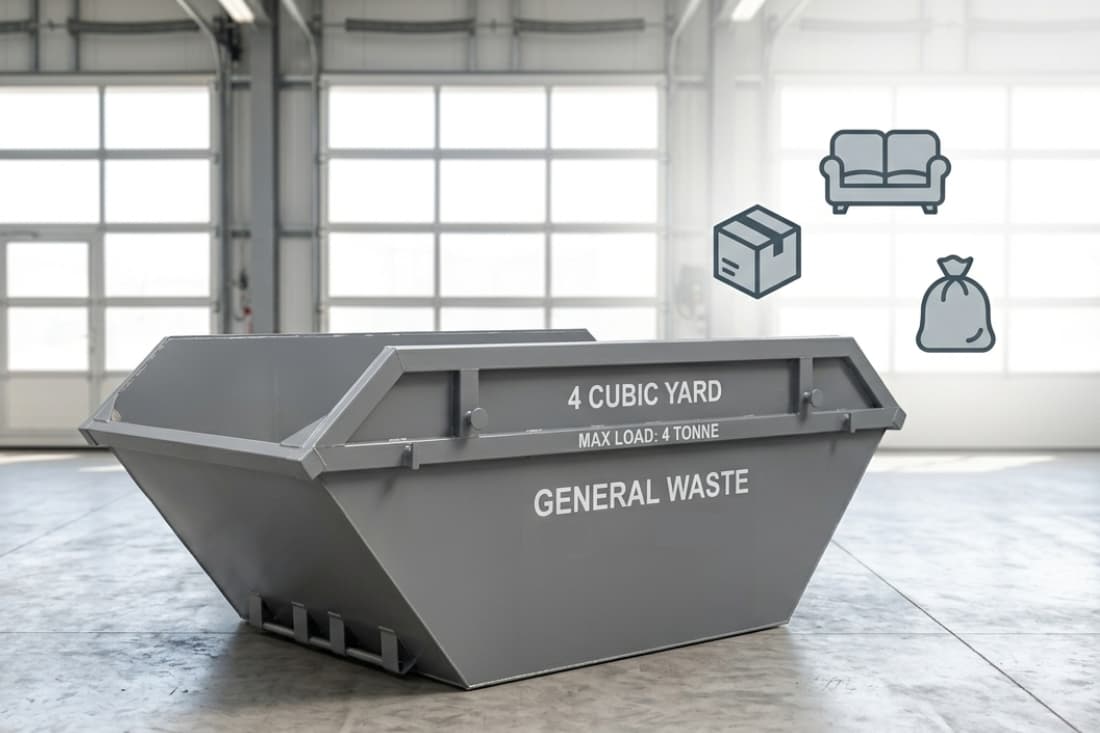
The UK skip hire industry uses a standard set of container sizes. These types are defined by their capacity, measured in cubic yards, and their features.
Knowing these categories is the first step to hiring the right skip, especially when comparing the main different skip types available for domestic and commercial waste. They range from small units for home clear-outs to huge containers for commercial sites.
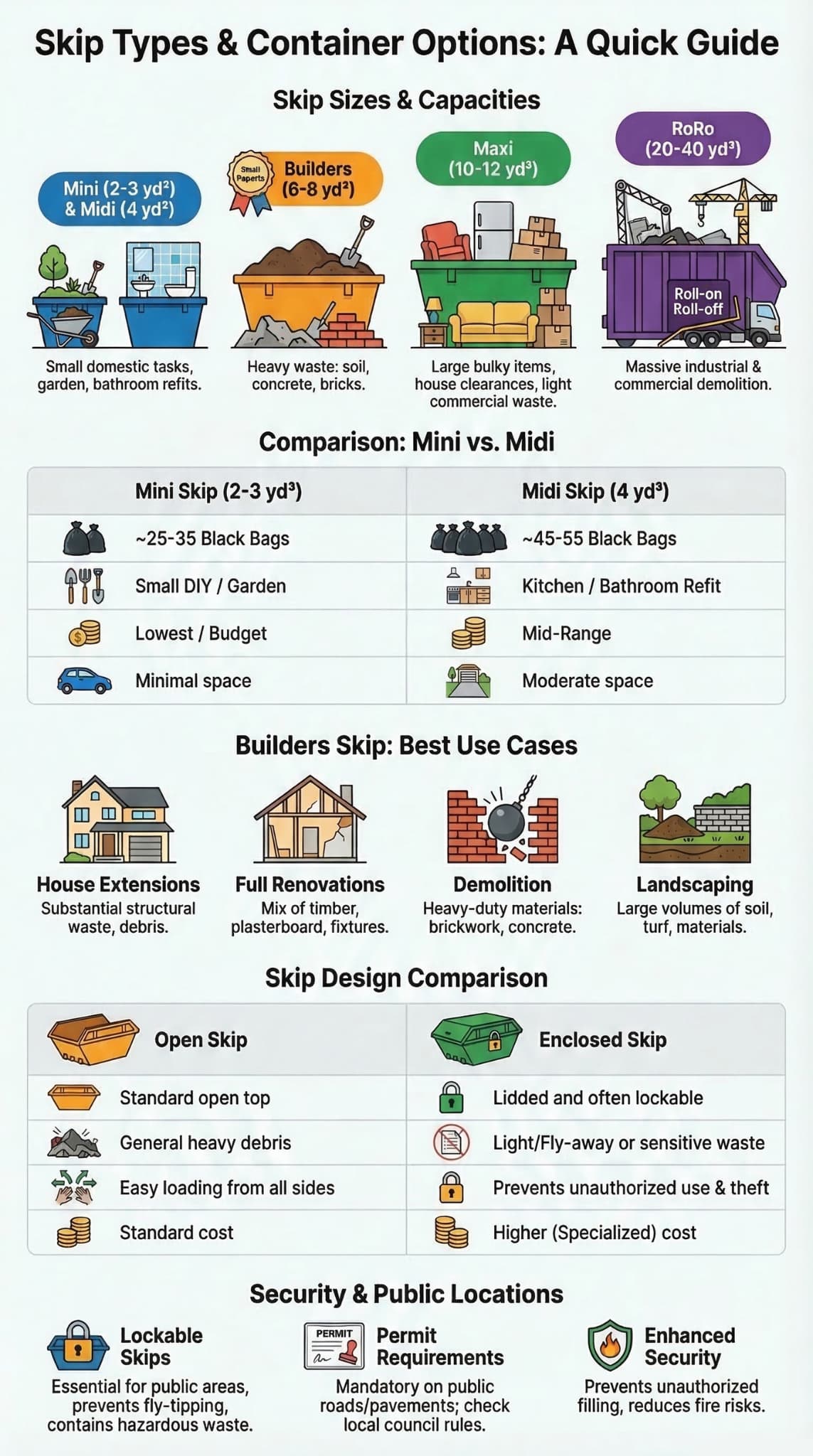
A mini skip is the smallest, usually holding 2 to 3 cubic yards. A midi skip is a bit bigger at around 4 cubic yards. The builders skip, normally 6 or 8 cubic yards, is the most popular for renovation work.
Research from Health and Safety Executive (HSE) shows
"There are no nationally established standards (e.g. British Standards) for the manufacture of this type of skip which are generally fabricated from steel plates. Often the base plate extends beyond the end plates producing a lip." - Health and Safety Executive (HSE)
For the biggest jobs, there are maxi skips (10-12 yards) and large Roll-on Roll-off (RoRo) containers (20-40 yards). Each type fits a different scale of project, so you only pay for the space you need.
The right skip makes waste management simple. It keeps your site tidy, ensures safe disposal, and helps you follow the rules. Here’s a breakdown of the main skip types by their typical use:
Mini Skip (2-3 yd³): For small household or garden jobs.
Midi Skip (4 yd³): For medium DIY projects like a kitchen refit.
Builders Skip (6-8 yd³): For construction, extensions, and renovations.
Maxi Skip (10-12 yd³): For large house clearances and commercial waste.
RoRo Skip (20-40 yd³): For major industrial and demolition sites.
Mini Skip vs Midi Skip Differences
Choosing between a mini and a midi skip depends on your project's size, and understanding the mini skip vs midi skip differences helps homeowners pick the right container for their waste.
Both are made for home use and usually fit on a driveway, but they hold different amounts. This affects the cost, how convenient it is, and whether it's right for your job.
A mini skip holds about 20 to 30 bin bags. It's perfect for small, contained tasks like clearing a garage, a garden tidy-up, or a small bathroom strip-out. Its compact size, often about 1.5 metres long, fits in tight spots.
A midi skip holds roughly 40 to 50 bags. This makes it better for bigger projects like a full kitchen renovation, a large garden project, or clearing a flat. The extra space can stop you from needing a second skip.
The main point is to match the skip to your waste. If you guess too low, you'll fill it too fast and face the hassle and extra cost of another hire. This table gives a direct comparison.

Builders Skip Best Use Cases
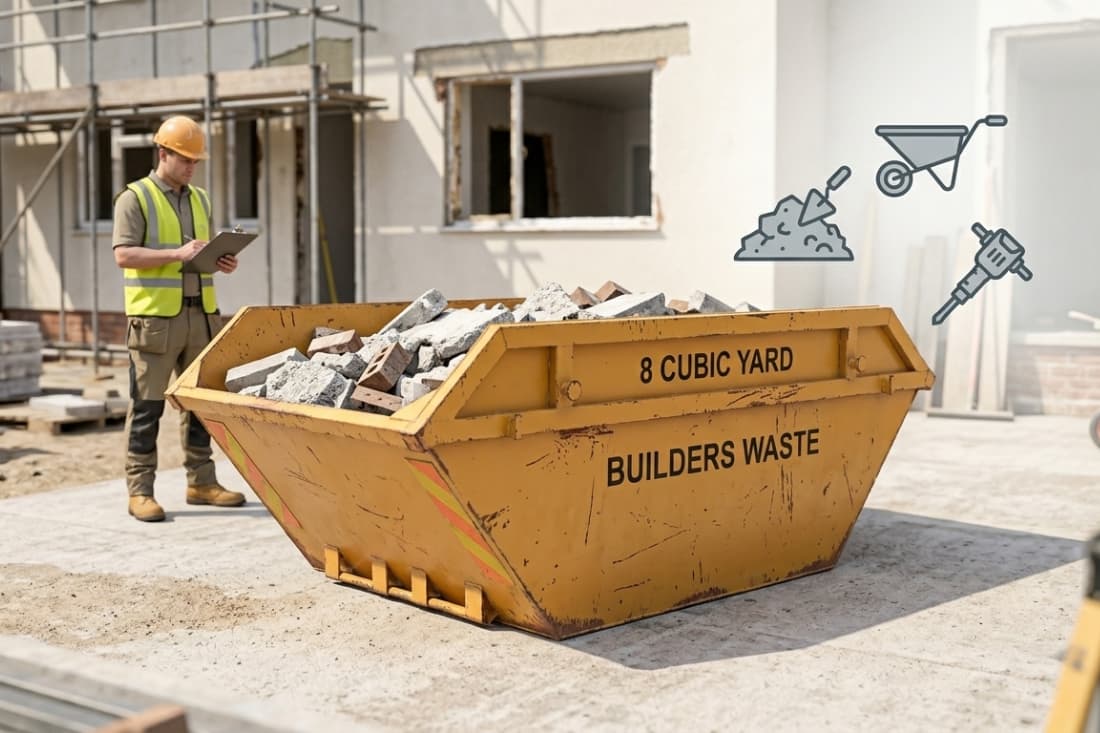
The builders skip is the reliable choice for construction and major home renovations, especially when considering common builder skip use cases for heavy construction and refurbishment waste.
Its strong build and good capacity make it the go-to for projects that create heavy, mixed waste. It's large enough for big jobs but not as huge as a maxi skip.
The best use for a builders skip is any project that involves building, rebuilding, or taking structures apart. This includes building an extension, doing a loft conversion, or a full home refurbishment.
These jobs create waste like broken bricks, concrete, soil, wood, plasterboard, and old fittings, all things a builders skip can take. It's also great for groundworks, like digging foundations or replacing a driveway, where you remove heavy soil and rubble.
Data from Shetland Islands Council demonstrates
"8 cubic yard... Height - 4ft. Length - 12ft. Width - 5ft 6in. 60 - 80 bin bags." - Shetland Islands Council
Using a builders skip for these jobs puts all the waste in one place. It makes the site safer by reducing trip hazards and keeps everything organised. For builders and homeowners in Greater London or Manchester, it's a practical way to handle the mess that comes with making something new.
House Extensions: Waste like dug-up soil, concrete, bricks, and packaging.
Full Renovations: Waste like old kitchens, bathrooms, plaster, and flooring.
Demolition Work: Waste like broken concrete, bricks, tiles, and timber.
Landscaping & Groundworks: Waste like soil, rubble, and old paving materials.
Enclosed Skip vs Open Skip
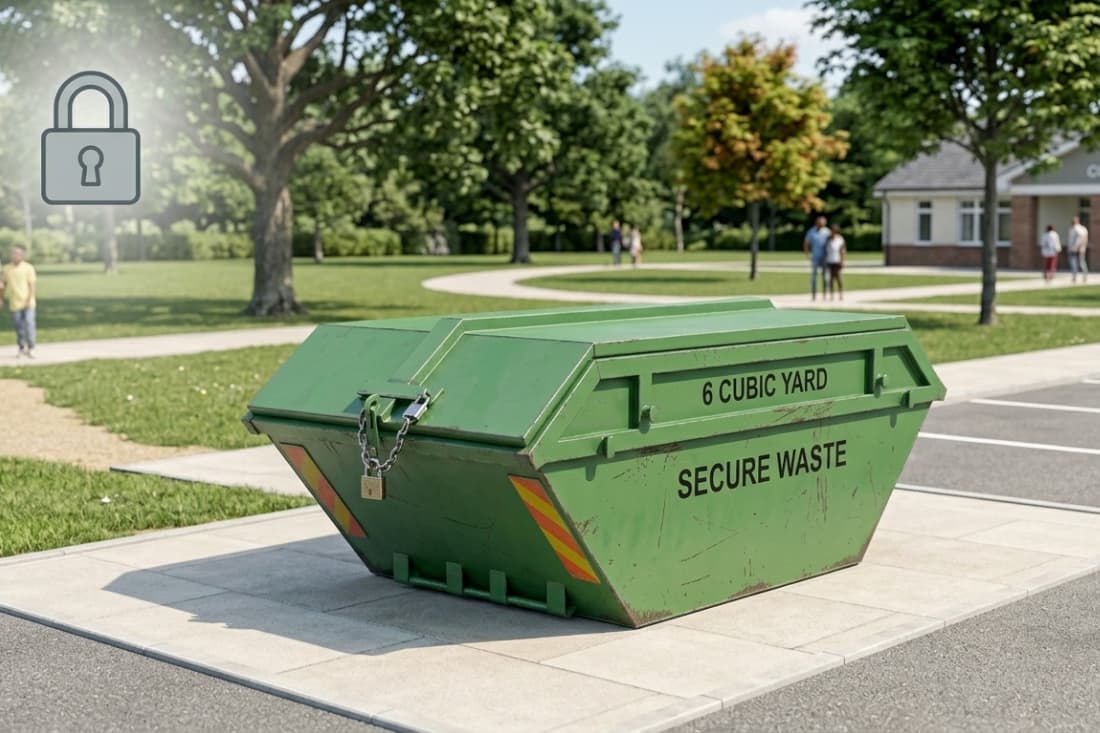
Beyond size, skips come in two main designs: open and enclosed, and understanding the enclosed skip vs open skip choice helps determine which design suits the waste and location best.
An open skip is the classic type with high sides and no lid. An enclosed skip has a lockable lid on top. The right choice depends on your waste and where the skip will be.
An open skip is best for heavy, bulky waste like construction rubble, soil, and wood. The open top makes it easy to load large items, even with machinery. It's also usually cheaper to hire.
An enclosed skip is for lighter, drier materials or where security matters. The lid keeps rain out, which is important for recyclables like cardboard. It also stops other people from adding their rubbish to your skip.
The enclosed design is very useful in towns or on busy streets. It helps stop "skip piracy," where others dump their waste into your container. While an enclosed skip might cost about 20% more, it can save you money by avoiding overfill charges from unexpected extra waste.

Lockable Skips for Public Locations
When a skip needs to go on a public road or in an open area, a lockable skip isn't just helpful, it's often required by law, which is why lockable skips for public locations are commonly used to control access and prevent illegal dumping.
These are enclosed skips with a strong lock. They are vital for controlling what goes in and for public safety.
The main reason to use a lockable skip in a public spot is security. An unlocked skip is an open invite for others to dump their rubbish, which can fill it up fast.
You are responsible for everything in your hired skip, so this unauthorized dumping can lead to extra weight charges or fines for wrong items. A lock prevents this.
Putting a skip on the road needs a permit from your local council, usually costing between £20 and £60. The permit rules often say the skip must have safety lights at night and be marked with cones. Using a lockable skip helps you follow these rules and your responsibility for the waste.
FAQ
Different projects require different skip sizes depending on the volume and type of waste materials. Mini skips are suitable for garden projects and small house cleaning jobs. Midi skips, including common 6-yard skips, are often used for renovation work and moderate construction waste. Larger construction projects may require builders' skips or Maxi Skips with greater container sizes.
Roll-on roll-off skips, also called RORO skips or RORO containers, are designed for large construction sites and industrial projects. These containers manage high volumes of construction waste and waste materials from major building activities. Roll-on/Roll-off Skips, such as 20-yard skips, are delivered using specialised vehicles and support efficient waste collection for large-scale waste removal.
Waste types are regulated to ensure safe waste disposal and proper waste management. Most skips accept general waste, construction waste, and recyclable waste. However, hazardous waste such as hazardous chemicals, car batteries, and pressurized containers cannot be placed in standard skips. These hazardous materials require specialised waste disposal through approved recycling requirements and facilities.
If a skip is placed on a public highway, the local council usually requires a waste permit and may charge permit fees. Local council regulations ensure that the skip does not block roads or create safety risks. When the skip is placed on private land, a permit is usually unnecessary, but the skip hire company should still confirm compliance.
Before arranging skip hire, review the waste types, weight limits, and container sizes required for the project. Confirm whether the service offers same-day delivery or same and next day availability. Reliable private waste removal companies provide clear disposal costs, delivery tracking, and responsive customer service to support efficient waste collection and waste management.
Make the Right Skip Choice for a Smoother Project
The skip you choose shapes the entire job. Mini, midi, builders, or enclosed, each serves a purpose. Match the size and features to your waste and location to avoid overloading, permit issues, or unwanted dumping. Whether clearing a garden in Bristol or managing a renovation in Birmingham, the right choice keeps everything moving.
A poor choice costs time and money. A smart one protects your schedule, your space, and your budget.
Start your Skip Hire Search to compare verified local providers and secure the right skip for your project.
References
Related Articles
https://www.searchskiphire.co.uk/blog/skip-types/different-skip-types-explained-simply/
https://www.searchskiphire.co.uk/blog/skip-types/mini-skip-vs-midi-skip-differences/
https://www.searchskiphire.co.uk/blog/skip-types/builders-skip-best-use-cases/
https://www.searchskiphire.co.uk/blog/skip-types/enclosed-skip-vs-open-skip/
https://www.searchskiphire.co.uk/blog/skip-types/lockable-skips-for-public-locations/
Filed under:
Skip Types