
Builders skip hire in the UK typically costs between £200 and £340 excluding VAT, depending on skip size, location, and hire duration. If you are planning a building project and need a clear idea of what to budget for waste removal, Search Skip Hire can help you understand the available options and costs in your area.
We will walk you through everything that affects the price so you can plan ahead with confidence. Keep reading to discover how to avoid unexpected costs, compare your options, and get the most value from your skip hire.
Builders Skip Hire Cost Planning at a Glance
Understanding the main cost factors before you book can help you avoid unexpected expenses and make smarter decisions throughout your project.
Skip size is the biggest driver of cost. Choosing the right size from the start saves you money and extra trips.
Permits add to your total if the skip needs to go on a public road. Costs vary by council area across the UK.
Hire duration matters. Going over your agreed period often results in extra daily charges, so plan your timeline carefully.
What Affects Builders Skip Hire Costs

When you are budgeting for a building project, skip hire is one of those costs that can catch people off guard if they do not plan ahead. The final price is not just a flat rate. Several factors work together to shape what you end up paying, and understanding them helps you avoid overspending.
The main things that affect builders skip hire costs include the following.
Skip size. Larger skips cost more to hire. Builder projects usually need a 6-yard or 8-yard skip at minimum. This is especially important when planning contractor skip hire requirements across projects with varying waste volumes.
Your location. Prices vary across different parts of the UK. Urban areas or regions with high demand tend to be pricier.
Hire duration. Most providers offer a standard hire period of around 7 to 14 days. Extending beyond that usually comes with extra daily fees.
Type of waste. General builders' waste is usually fine for a standard skip. Hazardous materials like asbestos or plasterboard in large quantities need special handling and cost more.
Permit requirements. If the skip must be placed on a public road or pavement rather than private land, a permit from the local council is needed and adds to the overall cost.
Each of these factors stacks up, so it is worth going through them one by one before you book.
Skip Size Guide for Builders
Choosing the right skip size is one of the most practical decisions you will make during cost planning. Going too small means you will need a second skip.
Going too large means paying for space you do not use. Here is a breakdown of the sizes most commonly used on building projects and what they typically cost.
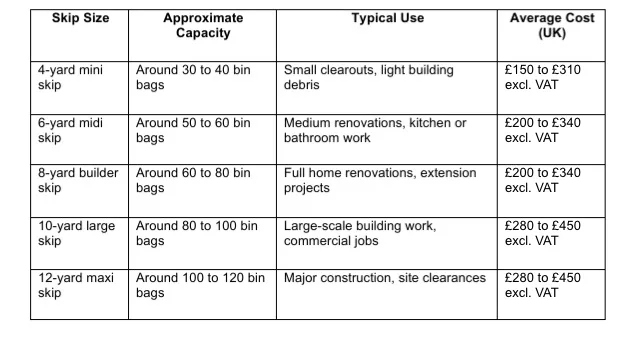
These figures are general estimates for the UK market and can shift based on your area and the provider you use. For larger contractors managing multiple projects, choosing the correct skip size from the outset can help keep waste management costs under control.
How Permits Work and What They Cost

Many builders do not account for permits until it is too late, which can delay a project or result in fines. If you place a skip on a public road, pavement, or any land that is not privately owned, you legally need a permit from your local council. We always recommend checking this early in the planning process.
As noted by GOV.UK
"Contact your local council for a skip licence if you want to put a skip on a public road. You don't need a skip licence if you're putting the skip entirely on private land." - GOV.UK
Permit costs in the UK are set by each council. Across the 197 UK highway authorities we have checked, half charge between £40 and £90, with a typical figure of about £62, though they run from £12.40 to £260. The exact fee depends on your council and how long the skip will be there. In areas like Greater London, where road space is tightly managed, councils tend to enforce permit rules more strictly.
We also see stricter oversight in Greater Manchester, where urban density makes road use a priority. By contrast, in more rural parts of the UK, like parts of Kent, skips on private driveways are more common, which means permits are less frequently needed.
Here are the key things to remember about skip permits.
You need a permit any time the skip goes on a public road or pavement.
Your skip hire provider can often apply for the permit on your behalf.
Permit applications can take time, so factor that into your project timeline.
Placing a skip without a permit can result in a fine from your local council.
Permits are tied to specific locations, so moving the skip to a different spot means applying again.
What Builders Waste Can Go in a Skip
Not all building waste is the same, and knowing what you can and cannot put in a standard skip helps you avoid removal refusals or extra charges. Most standard builders skips accept the majority of materials you will generate on site.
Data from GOV.UK demonstrates just how much waste the building sector produces.
"Construction, demolition and excavation (CD&E; including dredging) generated around three-fifths (61%) of total UK waste in 2020." - GOV.UK
There are clear guidelines on what is and is not acceptable, and being aware of them from the start avoids nasty surprises at the end of a project.
These materials are generally accepted in a standard builders skip.
Concrete and bricks
Timber and wood offcuts
General building rubble
Metal pipes and fittings (small quantities)
Tiles, plaster, and flooring
Cardboard and packaging
The following materials are typically not allowed.
Asbestos of any kind
Plasterboard in large quantities (it must go in a segregated skip due to landfill regulations)
Electrical items and appliances
Tyres
Paint, solvents, and chemicals
Gas canisters
If your project involves any of these restricted items, speak to your skip hire provider before booking. We can help you understand the right disposal route so you stay compliant with UK waste regulations.
How to Plan Your Skip Hire Budget
Getting your budget right from the start means fewer surprises once the project is underway. A little upfront thinking goes a long way when it comes to managing skip hire costs on a build.
There are a few practical steps that make cost planning much easier on building projects of any size. Many builders across the UK use this approach to estimate waste volumes and avoid unnecessary skip hire expenses.
Estimate your waste volume before booking. Think about the scale of your project and list the types of materials you expect to clear. This helps you pick the right skip size rather than guessing.
Factor in permit costs from the start. If there is no private driveway available, add the permit fee into your total budget. This is especially relevant in densely built areas like parts of the West Midlands, where residential streets leave little room for off-road skip placement.
Agree on a hire period that suits your project timeline. Rushing a job to get the skip cleared on time adds stress. Equally, sitting on an oversized skip for three weeks costs more than needed. Match your hire duration to your schedule.
Check what is included in the price. Some quotes include delivery, collection, and disposal. Others may charge separately for each. Always ask for a full breakdown before confirming.
Ask about weight limits. Heavy materials like concrete and bricks add up fast. Some skips have weight limits, and going over can lead to surcharges. If you are clearing a lot of rubble, mention this when you enquire.
Common Mistakes That Push Up Costs

We see the same avoidable mistakes come up again and again when it comes to builders skip hire cost planning. These are the ones worth knowing about before you book.
Builders and homeowners alike can fall into these traps, and each one tends to add cost or delay to a project.
Booking a skip that is too small. This is probably the most common issue. When the skip fills up faster than expected, you either need a second hire or a swap-out, both of which cost more than getting the right size from the start.
Not checking whether a permit is needed. Finding out last minute that the skip cannot legally be placed where you planned causes delays. Always confirm permit requirements before the skip is delivered.
Putting restricted materials in the skip. If the driver spots prohibited waste on collection, the load may be rejected or you may face additional disposal charges.
Underestimating the hire period. If your project runs long and you need to extend, daily extension fees can add up quickly.
Not comparing quotes. Prices do vary, and getting a clear quote upfront means you know exactly what you are paying for.
Your Builders Skip Hire Cost Planning Checklist
Before you book, it pays to go through a simple checklist so nothing gets missed. We find that builders who plan this step properly tend to have far smoother projects overall.
Working through these points before you place your order can save time, money, and stress on site.
Estimate the volume and type of waste your project will generate
Choose the right skip size based on that estimate
Check whether a permit is needed for your chosen placement location
Confirm the hire period matches your project timeline
Ask for a full price breakdown including delivery, collection, and disposal
Check the weight limits and confirm your waste type is acceptable
Book in advance, especially during busy spring and summer months
FAQ
For a standard 8-yard builders skip, you can expect to pay between £200 and £340 excluding VAT in most parts of the UK. Prices are higher in cities and lower in more rural areas. Permit fees, if needed, are on top of this.
No. You only need a permit if the skip is placed on a public road, pavement, or council-owned land. If it sits entirely on your private driveway, no permit is required. Always check with your local council if you are unsure.
Most hire periods are 7 to 14 days. We can often arrange longer periods if your project needs it, though this will add to the cost. It is better to agree on the right duration upfront than to extend the last minute.
If prohibited waste is found in the skip, the collection may be refused or an additional removal fee may be charged. In some cases, you may also be liable for illegal waste disposal. Always check what is allowed before loading the skip.
No. Once a skip is in position, it should stay there. Moving it to a different location on the road would require a new permit. Moving it on private land is possible but always check with us first to avoid any damage to the skip or your property.
Tying It All Together on Builders Skip Hire Cost Planning
Getting your builders skip hire cost planning right is not complicated, but it does require a bit of thought before you book. The size of the skip, the location of your project, the hire period, and permit requirements all play a role in shaping the final cost.
Whether you are working in Greater Manchester, Greater London, or the West Midlands, the same principles apply, even if the exact figures differ slightly by area.
We built our platform to make this process as simple as possible for builders, contractors, and homeowners across the UK. When you know what to expect upfront, there are no nasty surprises once the project gets going.
If you are ready to get a quote or want to find skip hire availability near you, visit us at Search Skip Hire and see what is available in your area today.
References
Related Articles
Filed under:
Commercial Skip Hire