
For contractors in the UK, skip hire is an essential tool for managing waste on construction sites. It keeps the site clean and safe.
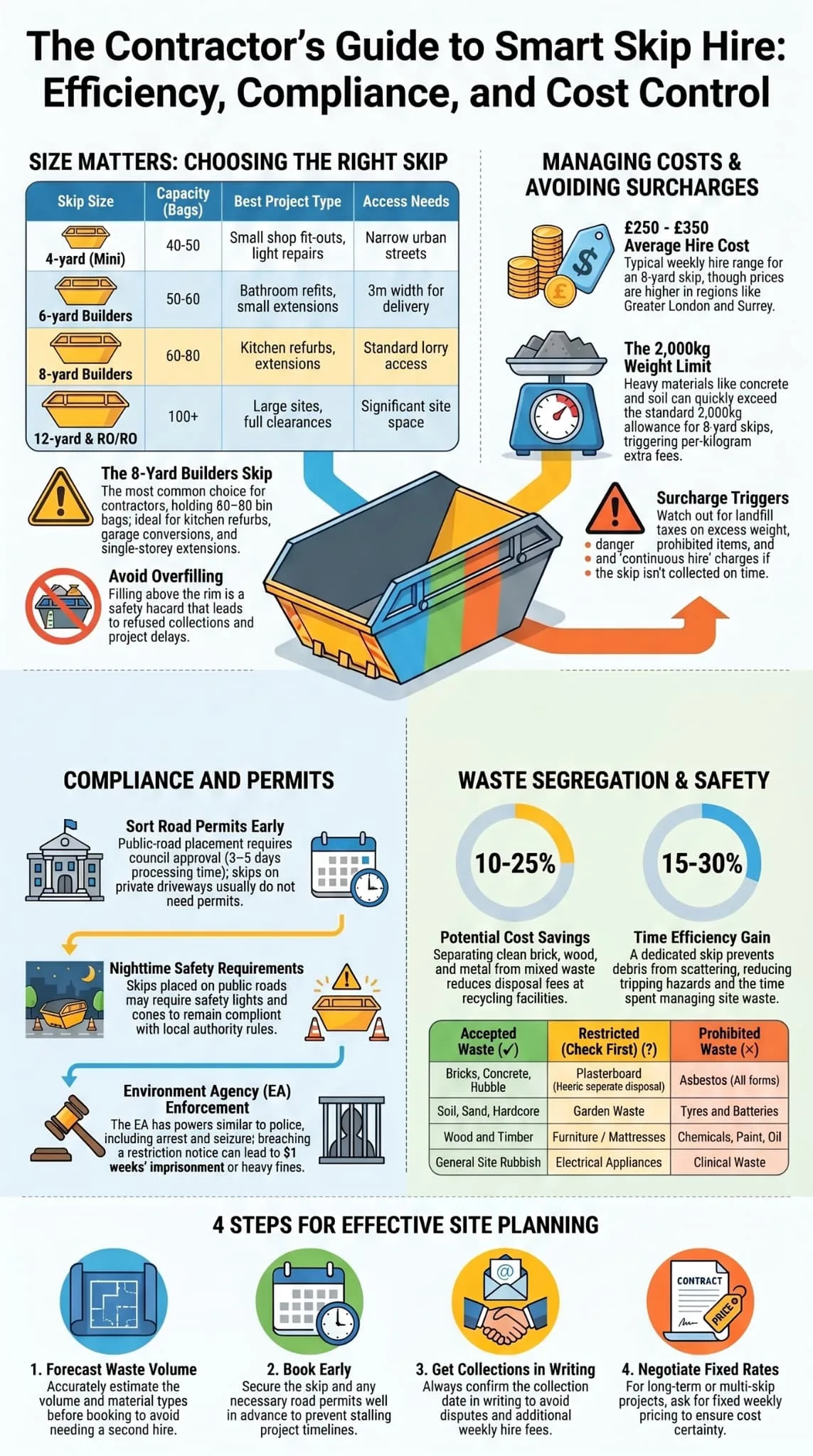
The most common choice is an 8-yard builders skip, which offers enough space for mixed waste from projects like kitchen refurbs or extensions.
The cost for 1 to 2 weeks' hire typically ranges from £200 to £340 excluding VAT, but this can vary based on your location and waste type.
To avoid unexpected fees and delays, you need to understand weight limits, permit rules, and proper waste segregation. Keep reading to learn how to plan your skip hire effectively.
Contractor Skip Hire Rules: Plan Smarter, Spend Less
These key points cover the most important skip hire decisions contractors need to make to keep projects efficient, compliant, and on budget.
Match the skip to the project: Choosing the right size prevents overflows and unnecessary collections, with the 8-yard builders skip handling most refurbishments well.
Sort permits early: Public-road placement often requires council approval, and delays in arranging permits can stall project timelines.
Control waste properly: Avoid overfilling and separate materials like brick and plasterboard to reduce landfill charges and added fees.
Most Common Skip Sizes for Contractors
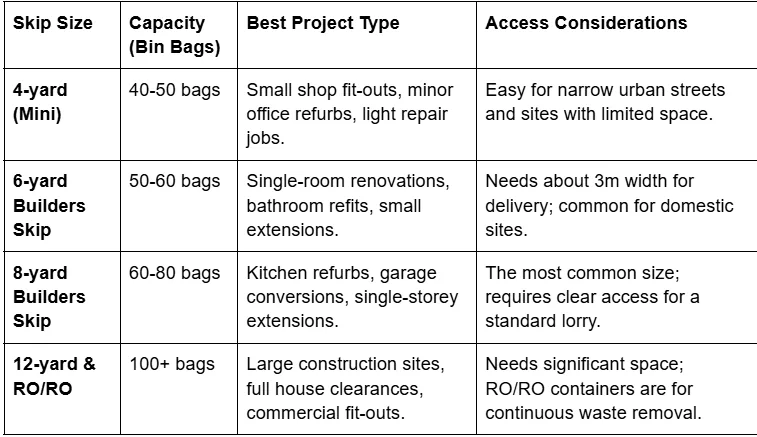
Contractors choose skip sizes based on the project's size, the type of waste, and the space available on site. The size is measured in cubic yards, which tells you how much it can hold.
Picking the right size is important for controlling costs and keeping the site running well. An 8-yard skip is often the best choice because it has good capacity and fits on many driveways or work sites.
The table below shows the skip sizes contractors use most often, what they hold, and the types of projects they work for.
Skip Hire Costs for Contractors
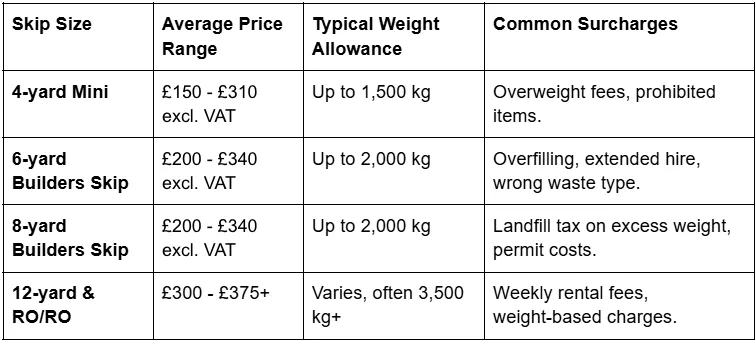
Commercial contractor skip hire costs in the UK usually range from £110 to £450 excluding VAT for a standard hire period. The final price is influenced by several key factors.
The main ones are the skip size, your geographical location, whether a road permit is needed, and the weight of the waste. Prices in areas like Greater London or Surrey are typically higher than in more rural counties such as Shropshire or Lincolnshire.
The table below gives a rough guide to average prices, but you should always get a local quote for your specific project.
Why Do Contractor Skip Costs Increase So Quickly?
Extra charges on a skip hire bill can quickly impact your project's margin. These fees usually arise from a few common contractor mistakes.
Exceeding Weight Limits: The skip hire company will weigh the skip. If it exceeds the agreed limit, they charge an extra fee per kilogram.
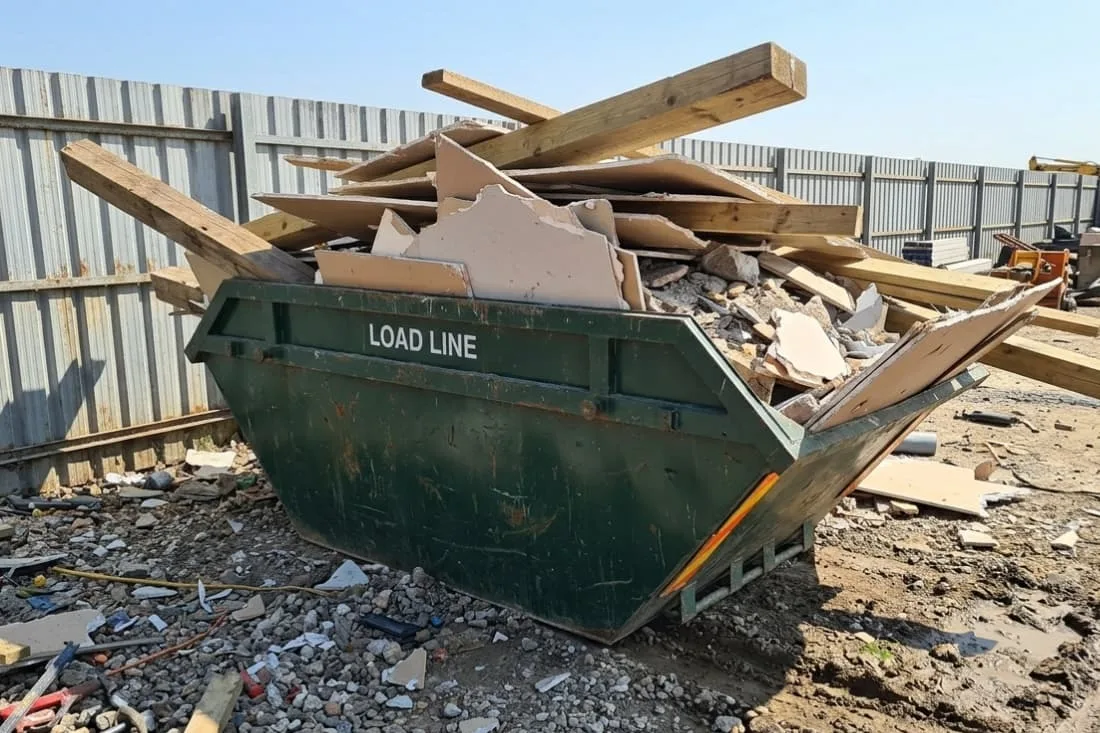
Overfilling: Filling the skip above the rim is a safety issue and leads to refused collection.
Prohibited or Hazardous Waste: Mixing items like asbestos or tyres with general waste triggers special disposal fees.
Continuous Hire Charges: These apply if the skip is not collected on the agreed date and remains on site for extra weeks, which is why many firms look for long term skip hire solutions on extended projects.
Skip Permit Requirements for Construction Projects
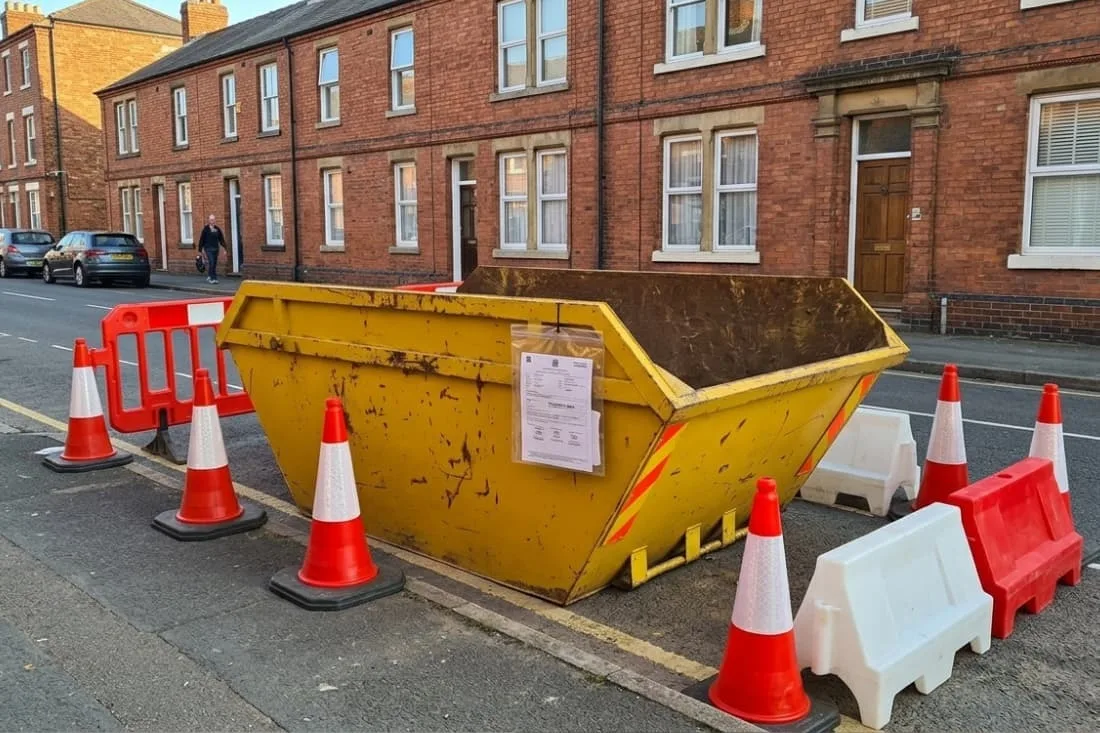
Contractors need a permit from the local council when a skip is placed on a public highway, which includes the road or pavement. If the skip sits entirely on private land, like a client's driveway or the construction site itself, you usually do not need a permit.
The rules, costs, and processing times for permits vary by local authority. In areas like Buckinghamshire or Oxfordshire, the process can take time, so you must factor this into your project schedule.
Failing to get a required permit can lead to fines from the council and force you to move the skip, causing project delays.
They may also require you to place safety lights and cones around the skip if it is on the road at night. It is a vital part of site planning that needs attention before the skip is delivered.
What Happens if a Skip Company Misses Collection?
A missed collection can cause significant disruption on a construction site. It blocks access, leaves waste sitting around, and can trigger additional weekly hire fees from the skip company.
In a recent analysis by Addleshaw Goddard
"The Government is considering granting EA officers powers normally associated with the police, including arrest, warrantless search of premises and seizure of assets... The EA is set to expand its use of restriction notices, which require operators to cease activity immediately in cases of serious environmental harm. Breach of a restriction notice can lead to 51 weeks’ imprisonment, a fine, or both." - Addleshaw Goddard
First Step: Contact the company directly to rearrange the collection.
If Unresponsive: Remind them of their duty of care as a licensed waste carrier.
Serious Cases: Report the issue to the Environment Agency, which regulates waste companies.
To avoid this, always get the agreed collection date confirmed in writing when you book the skip.
Acceptable Waste for Contractor Skips
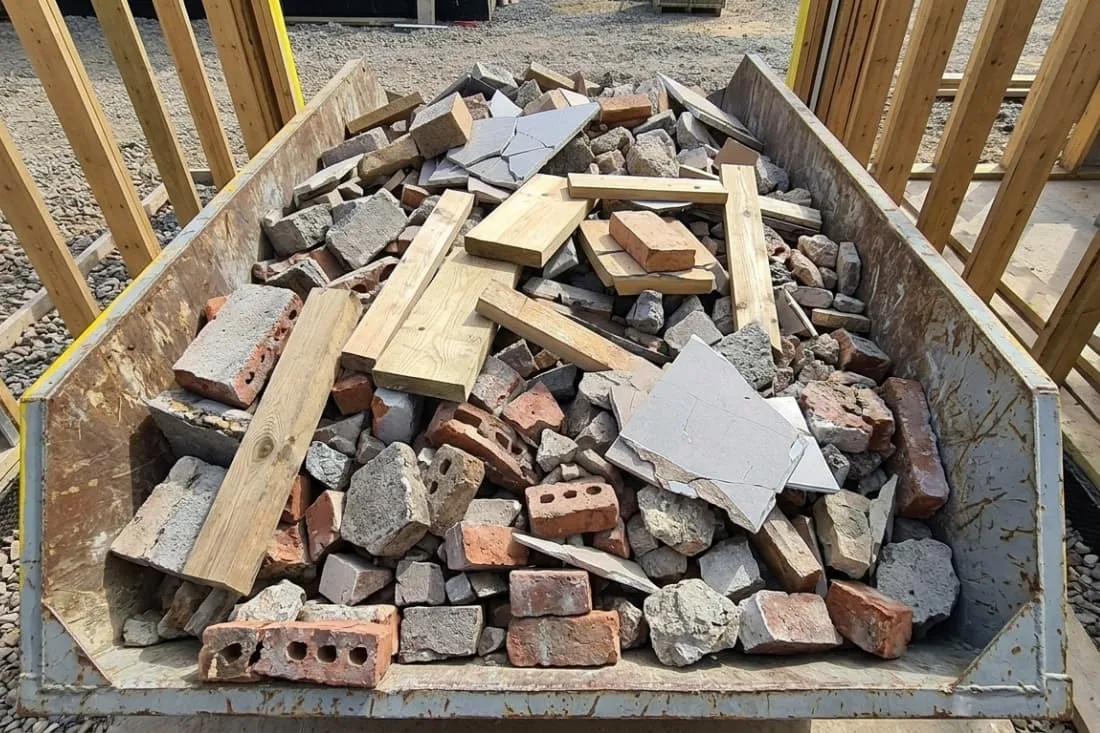
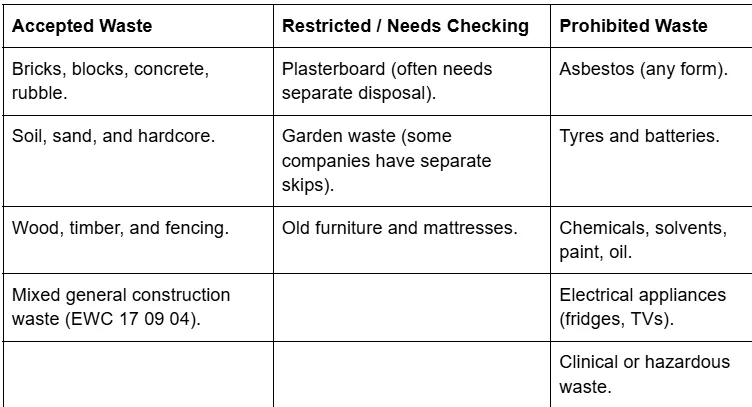
Contractors can place most non-hazardous construction and demolition waste into standard skips. This includes materials like brick, concrete, tiles, wood, soil, and rubble. You can also put in non-hazardous packaging and general site rubbish.
However, there is a strict list of items that are not allowed in a standard skip because they are hazardous or need special processing. Putting these in can lead to refused collection or large extra fees.
Why Do Contractors Separate Waste Streams?
On larger projects, it makes financial and environmental sense to use separate skips for different waste types. This is called waste segregation.
While it might seem easier to throw everything into one mixed waste skip, separating materials like clean brick, wood, and metal can lower disposal costs.
Recycling facilities charge less for clean, sorted materials than for mixed loads that need sorting. Some contractors report savings of 10-25% on their waste costs by doing this.
It also helps you follow site waste management plans and improves your project's environmental responsibility.
How Skip Hire Improves Contractor Site Safety
A well-placed skip is a key tool for maintaining a safe and efficient construction site. By providing a dedicated place for all waste, it prevents debris from being scattered across walkways and work areas.
This directly reduces tripping hazards for your team and anyone else on site. It also helps control dust and keeps the site more organized, which allows work to continue smoothly.
Many contractors find that using a skip can save 15-30% of the time usually spent on managing and moving waste, letting them focus on the construction work itself.
Comparing One Large Skip to Multiple Smaller Skips
The choice between one large skip or several smaller ones depends on your specific project logistics. A single large skip, like a 12-yard or a roll-on/roll-off (RO/RO) container, can be more cost-effective for a big, single-phase job where waste is generated quickly.
It means one delivery and one collection. However, multiple skips for large projects offer flexibility. They can be placed in different zones on a large site, reducing the distance workers need to carry waste.
They also allow for waste segregation, which can lower costs. For a phased project or a site with limited access for large vehicles, multiple smaller skips are often the better choice.
Common Skip Hire Mistakes for Contractors
Even experienced contractors can run into problems with skip hire if they overlook a few key details. The most common mistakes are easy to avoid with a bit of planning.
Underestimating the amount of waste is a big one, leading to overfilled skips or the need for a second hire. Ignoring weight limits is another, as heavy materials like concrete can easily exceed the 2,000 kg allowance on an 8-yard skip.
Contractors also sometimes forget to apply for a road permit in time, causing delays. Finally, not getting the collection date in writing can lead to disputes and extra hire fees if the skip is not taken away on time.
How Contractors Should Plan Skip Hire for Large Projects
Good planning turns skip hire from a potential problem into a smooth part of your project management.
As highlighted by The Net Zero Teesside Order 2024
"A site waste management plan... must be submitted to and, after consultation with STDC, approved by the relevant planning authority. The plan must be implemented as approved." - The Net Zero Teesside Order 2024
Steps for Effective Skip Hire Planning
Forecast Waste: Accurately estimate the volume and type of waste your job will create.
Book Early: Book the skip and any necessary permits well in advance, especially during busy periods.
Ask About Rates: For long-term projects or multiple jobs, ask the hire company about fixed weekly pricing for long term or multi-skip contracts.
This can lock in a better rate and provide cost certainty. By treating skip hire as a planned logistics item, you control costs and maintain a cleaner, safer, and more professional site.
FAQ
Different skip sizes are suitable for different construction projects depending on the amount of construction waste and waste removal required. A builders skip is often suitable for bathroom renovation, kitchen renovation, and garden clearances. Heavy-duty skip options and roll-on roll-off skips are more suitable for demolition projects, industrial facility cleanups, and larger commercial projects that produce heavy demolition debris and large amounts of trade waste.
Waste Management Plans and Site Waste Management Plans help construction contractors organize waste disposal and improve recycling practices on active construction sites. These plans also support environmental responsibility by reducing landfill waste and improving recyclable aggregate recovery. Many contractors use Recycling Facilities, a Materials Recovery Facility, or a Construction Materials Recovery Facility to improve waste classification and support environmentally responsible disposal methods.
Most skip hire service providers restrict hazardous materials such as asbestos, chemicals, batteries, and certain hazardous wastes from standard construction skip containers. Some industrial waste disposal processes also require an environmental permit and properly completed waste transfer notes. Contractors may also need a waste carrier registration number, weighbridge tickets, and accurate material categorization records to meet Environmental Protection Act 1990 requirements and safety and compliance standards.
Construction contractors can improve safety by checking site access, ground strength, and weight limit restrictions before the delivery lorry arrives on site. Overloaded construction bins may create safety issues, manual handling risks, and transport problems during waste collection. Many skip hire companies also provide Heavy Waste Warning guidance to help workers manage bin bags, Black Bags, rubble, and demolition works more safely during site clearance activities.
Contractors often reduce Waste Disposal costs by separating food waste, recyclable materials, and general construction waste before collection begins. Using recycling services, trade collections, and van collection services can improve recycling station efficiency and support cost-effective waste solutions. Many companies also follow the waste hierarchy by sending recyclable materials to Energy from Waste facilities instead of relying completely on landfill disposal.
Plan Your Skip Hire with Fewer Surprises
Contractor skip hire plays a bigger role than most projects realize. The right skip size, proper permit planning, and awareness of weight limits all protect your timeline, budget, and site safety. A well managed skip strategy keeps work efficient and avoids costly disruptions.
Choosing based only on the cheapest quote often creates problems later. Reliable providers and clear communication deliver better long term value for busy projects.
Start your Search Skip Hire to compare verified local companies across the UK and find the right fit for your project.
References
Related Articles
Filed under:
Commercial Skip Hire