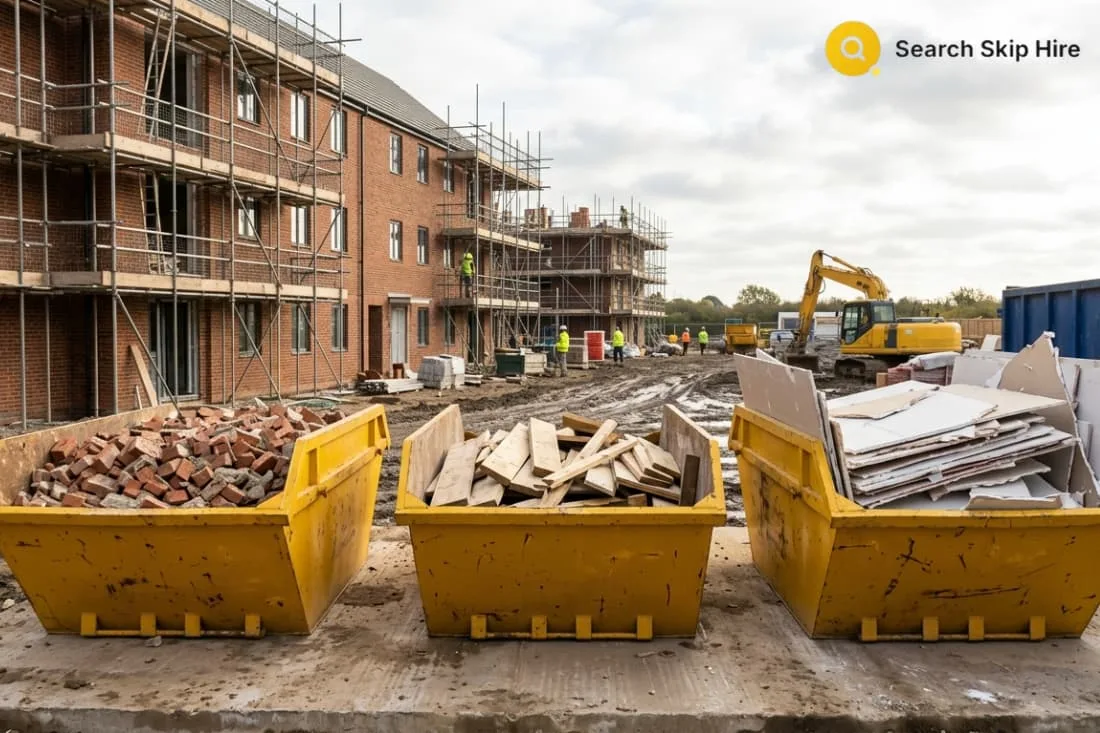
Multiple skips help large UK projects manage mixed waste, reduce downtime, and improve recycling efficiency. The best setup depends on waste volume, site access, and collection frequency.
For projects like major extensions, demolition, or commercial fit-outs, using several skips at once keeps different waste streams separate and work flowing smoothly.
While a single large roll-on roll-off container might seem simpler, multiple smaller skips often provide more flexibility on cramped sites.
Keep reading to learn how to choose the right approach for your large site.
Large Project Waste Planning: Keep Sites Moving Efficiently
These key points show how the right skip strategy helps large projects stay organised, compliant, and free from costly delays.
Multiple skips improve workflow: Separate skips work best when different trades generate different waste streams at the same time.
Choose the right collection setup: Static skips suit fast-moving sites, while skip exchange services often work better for phased or slower projects.
Planning prevents expensive problems: Site access, council permits, and weight limits all need careful coordination before work begins.
Situations Where Multiple Skips Are Better Than One Large Skip
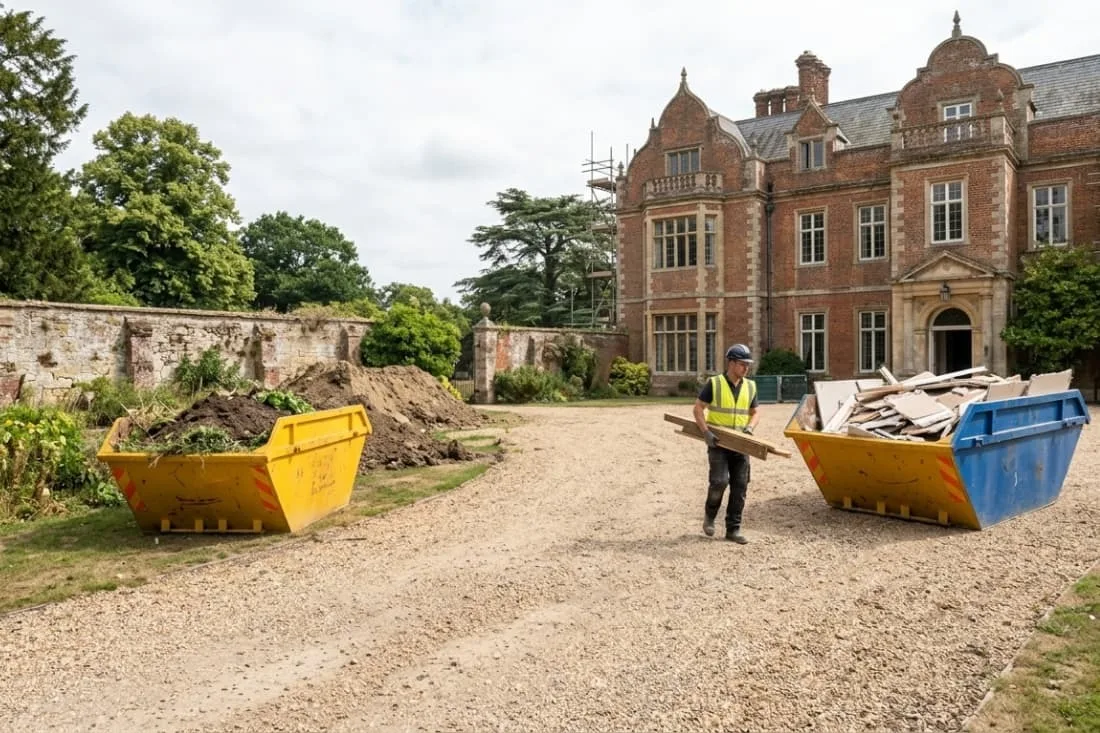
Multiple skips work best when several trades make different waste at the same time, or when waiting for collections would stop the project.
A single large container can become a bottleneck, forcing workers to stop and wait. Using separate skips for different materials, like one for rubble and another for timber, keeps the site tidy and can lower disposal costs.
The decision depends on workflow and waste type. If your project makes a lot of mixed waste quickly, multiple skips prevent pile-ups and make recycling easier.
If your site is tight or waste is made slowly over weeks, a skip exchange service, swapping a full container for an empty one on a schedule, might be more practical for long term skip hire solutions where waste builds up gradually.
Common Large-Project Scenarios
These projects often need multiple skips due to the variety and volume of waste.
Demolition projects generating brick, concrete, and timber.
Multi-trade refurbishments with plumbers, electricians, and carpenters.
Major landscaping produces soil, green waste, and hardcore.
Commercial office or shop fit-outs with strip-out, fixtures, and packaging often depend on commercial & contractor skip hire setups to manage different waste streams efficiently across busy sites.
Best Skip Sizes for Large UK Projects
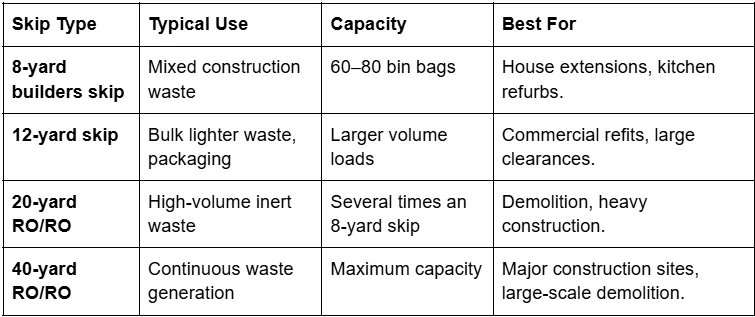
Most large UK projects combine 8-yard, 12-yard, and 20–40-yard RO/RO containers depending on the type of waste and the space available on site. The 8-yard builders skip is a common choice for general mixed construction waste on many sites.
For bigger volumes of lighter waste, a 12-yard skip might be used. For the largest projects like demolition or major construction, roll-on roll-off (RO/RO) skips are the standard solution, with some units reaching 40-yard capacity.
The table below shows which skip types are typically used for different large-scale tasks.
Comparing Costs: Multiple Skips vs Skip Exchange
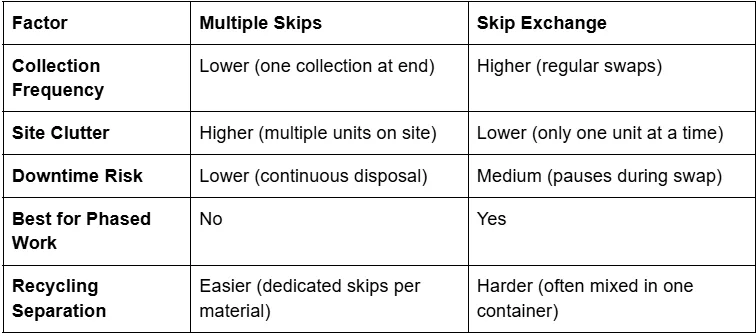
Skip exchange is often cheaper for slower, phased projects, while multiple skips reduce labour delays and waste bottlenecks on fast-moving sites.
The cost difference is not just about the price per skip. It involves balancing hire fees against potential project downtime, which makes accurate builders skip hire cost planning important on large construction projects.
Having several skips on site means waste can be disposed of continuously without stopping work. A skip exchange service involves periodic collections, which might be cheaper if waste accumulates slowly, but it can cause short delays each time a swap is made.
The table below compares the two approaches across several key factors.
Efficient Waste Separation for Contractors
Contractors can lower costs by using separate skips for different waste, like rubble, timber, and mixed materials. This is called waste segregation.
Disposal facilities charge less for clean, sorted loads because they are easier to recycle. Mixed waste can cost 20-40% more.
Research from East Ayrshire Council shows
"Development proposals that are likely to generate waste... should include provision as an integral part of the original design to maximise waste reduction and waste separation at source, and minimise the cross-contamination of materials, through appropriate segregation and storage of waste." - East Ayrshire Council
A clear waste plan helps everyone on site. Label skips or gives simple instructions so workers know where to put different materials. This stops prohibited items from going in the wrong container, which can lead to refused collections or extra fees.
Recommended Waste Split
For efficient and cost-effective waste management on a large project, consider separating materials into these common streams.
Brick, block, and hardcore (clean inert waste).
Timber and pallets (untreated wood).
Plasterboard (often needs separate, dedicated disposal).
Mixed builders waste (general construction debris).
Recyclable metals (can sometimes be collected separately for scrap value).
Site Constraints That Cause Multi-Skip Problems
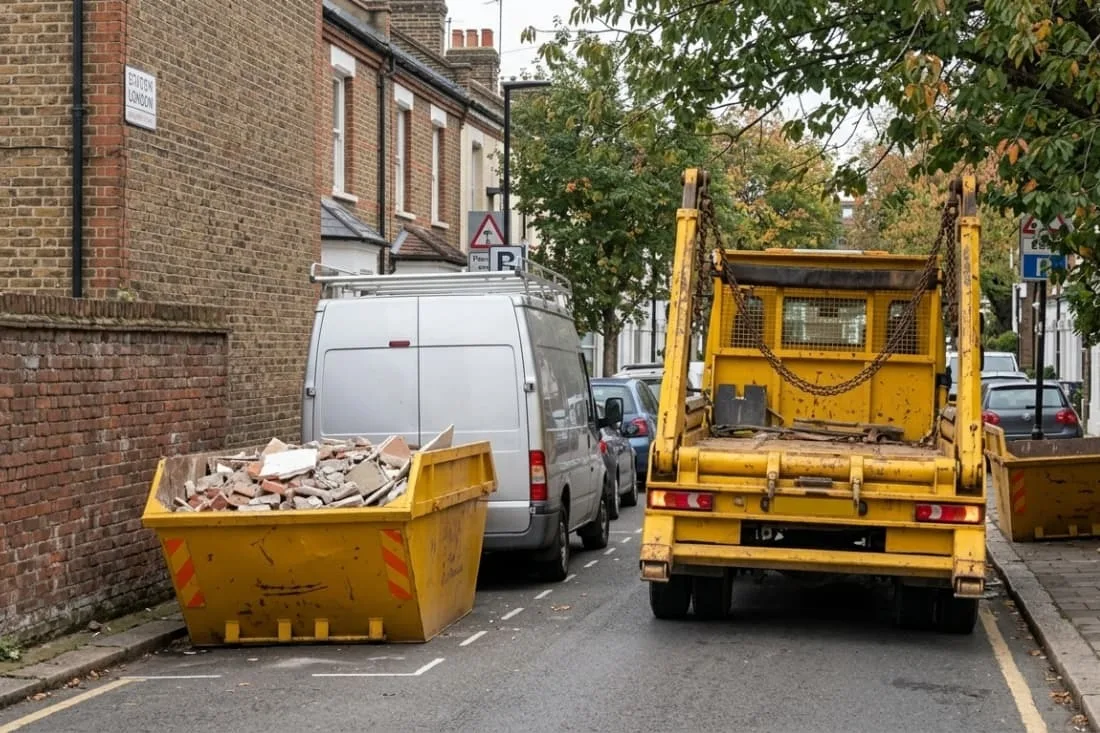
Access limitations, permit delays, and poor skip placement create the biggest operational issues on large UK construction projects. Even with a perfect waste plan, the physical realities of the site can cause problems. A delivery lorry needs clear access to drop and collect skips safely.
In areas like Greater London or Bristol City, narrow streets and tight turns can limit the size and number of skips you can use. Overhead cables or low-hanging trees can also prevent delivery.
If skips need to be placed on a public highway, you will likely need a permit from the local council. The application process can add time to your schedule.
Planning this early is crucial to avoid delaying your project start. Poor placement, like blocking a driveway or emergency access, can lead to complaints and even fines.
Mistakes That Increase Multi-Skip Costs
Overfilling, poor waste separation, and hiring the wrong skip combination can quickly increase transport and landfill charges.
As highlighted by The Waste and Contaminated Land (Northern Ireland) Order 1997
"Any person who imports, produces, carries, keeps, treats or disposes of controlled waste... shall take all such measures applicable to him in that capacity as are reasonable in the circumstances to prevent any contravention... and to prevent the escape of the waste from his control." - The Waste and Contaminated Land (Northern Ireland) Order 1997
Common Mistakes That Increase Costs
Overfilling: Filling a skip above the rim is a safety hazard and means it cannot be legally transported. The hire company will refuse collection until it is levelled off, causing delays. If collected, you face excess weight charges.
Poor Waste Separation: Mixing restricted waste, like plasterboard or soil, into a general mixed waste skip leads to contamination fees because the entire load may need to be treated as hazardous.
Wrong Skip Combination: Hiring skips that are too large too early means you are paying for unused capacity. Hiring skips that are too small leads to constant, expensive collections and more lorry movements on and off your site.
Comparing RO/RO Containers to Multiple Standard Skips
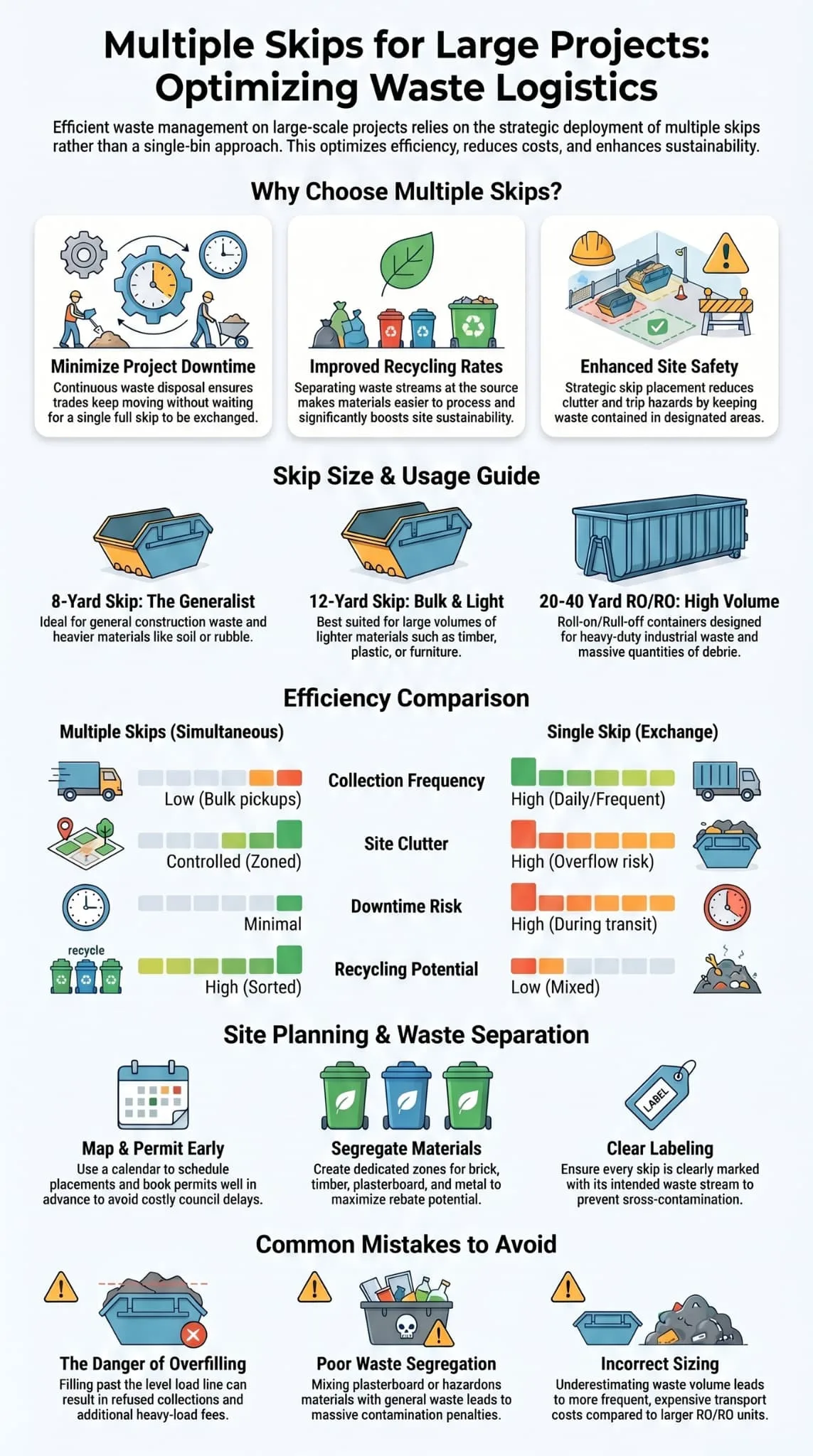
RO/RO containers are more efficient for very high-volume projects, but they require more access space and are less flexible on smaller sites.
RO/RO Container Pros and Cons
Pros: A single unit can hold several times the waste of a standard 8-yard skip. This means fewer collections, less lorry traffic, and less disruption to your site work.
Cons: Their size is their main limitation. They need a large, firm, and level area for placement and a suitable access route for a large lorry. They are often not suitable for standard domestic driveways or dense urban sites.
For many large refurbishment projects, a combination of several 8-yard or 12-yard builders skips offers more flexibility in placement and can be tailored to different waste streams around the site.
Multiple Skip Planning Strategies for Large Projects
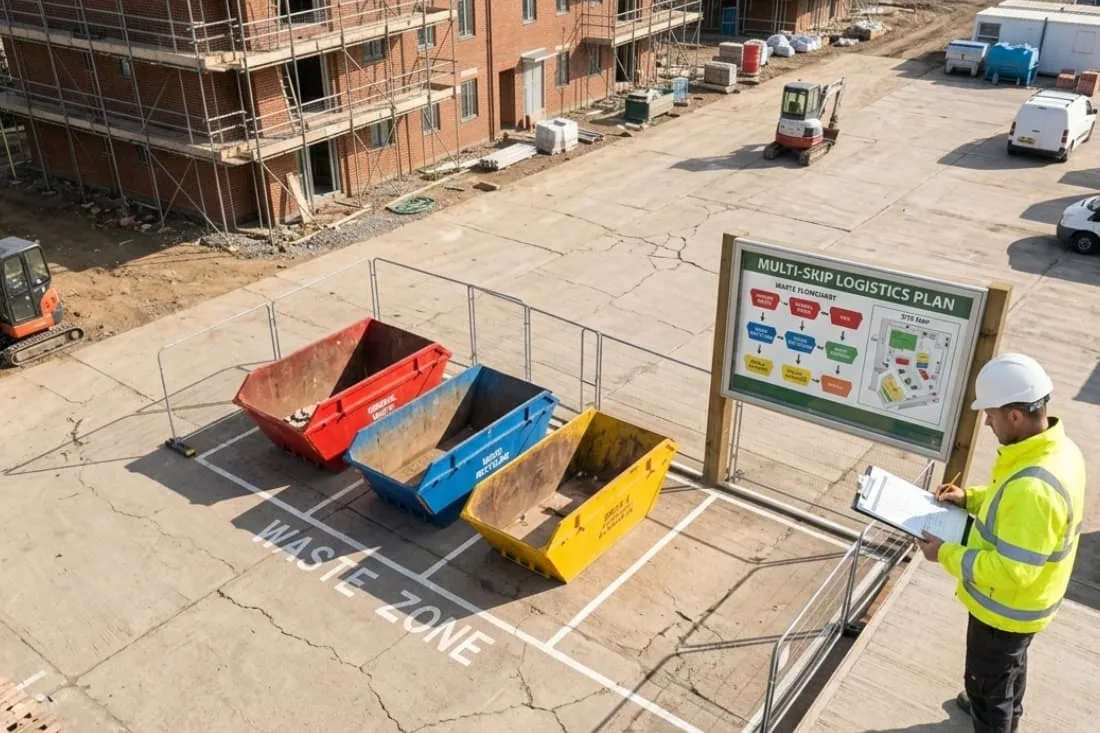
The most effective strategy is mapping waste streams first, then matching skip size, placement, and exchange timing to the project workflow.
Steps for Planning Multiple Skips
Estimate Waste: Calculate the total volume and type of waste each phase of the project will produce.
Communicate Early: Share your plan with your skip hire provider for advice on the best skip combination and collection schedule.
Plan Site Layout: Identify where each skip will be placed for easy access without blocking other activities.
Book Permits: Apply for any necessary road permits as soon as possible to avoid delays.
Build Contingency: Plan for an extra skip or a slightly longer hire period if the project timeline slips.
FAQ
Multiple skips are useful when large project waste includes different waste types that require separate handling. Construction waste, hardcore waste, timber waste, metal waste, and green waste are often easier to manage with separate skip containers. This setup improves waste segregation, supports waste recycling, and reduces delays during site clearance, debris removal, and bulky waste removal on active construction sites.
The best skip sizes depend on the amount of large volume waste and the type of material disposal required. A builder’s skip may suit bathroom renovation waste, kitchen renovation waste, or smaller contractor waste loads. Large skip, roll on roll off skip, and RoRo skip options are usually better for demolition waste, concrete waste, brick waste, and industrial waste from larger commercial clearance projects.
Large projects may require a skip permit or road permit when a skip bin is placed on public roads instead of private land. Restricted access areas may also affect skip delivery and skip collection schedules. Many skip hire companies help arrange skip permits, driveway skip placement, and waste transfer planning before skip booking begins to prevent delays during construction site waste removal projects.
Using multiple skips can improve site waste management by separating mixed waste before collection begins. This process helps recycling centres recover recyclable materials from plasterboard disposal, soil removal, fence removal, and construction debris. Proper waste segregation also supports eco-friendly disposal, landfill diversion, and more reliable skip hire operations for both long term hire and short term hire projects.
Businesses often reduce waste disposal costs by choosing the correct skip capacity for each waste stream. Separating trade waste, contractor waste, garden waste, and property clearance materials can reduce unnecessary skip replacement and improve skip availability. Many companies also lower waste haulage expenses by using affordable skip hire, fast delivery services, and scheduled skip collection plans for large project waste management.
Manage Large Projects with a Smarter Waste Strategy
Multiple skips can transform waste management on large construction and renovation projects. When different trades create heavy or mixed waste at the same time, a planned multi skip setup improves efficiency, site safety, and overall project flow.
Without coordination, waste quickly becomes a source of delays and extra costs. But with clear planning around layout, collection timing, and waste separation, your site stays cleaner, safer, and easier to manage.
Find the right setup with Search Skip Hire. Start your search to compare verified UK providers for multi skip solutions and tailored project support.
References
Related Articles
Filed under:
Commercial Skip Hire