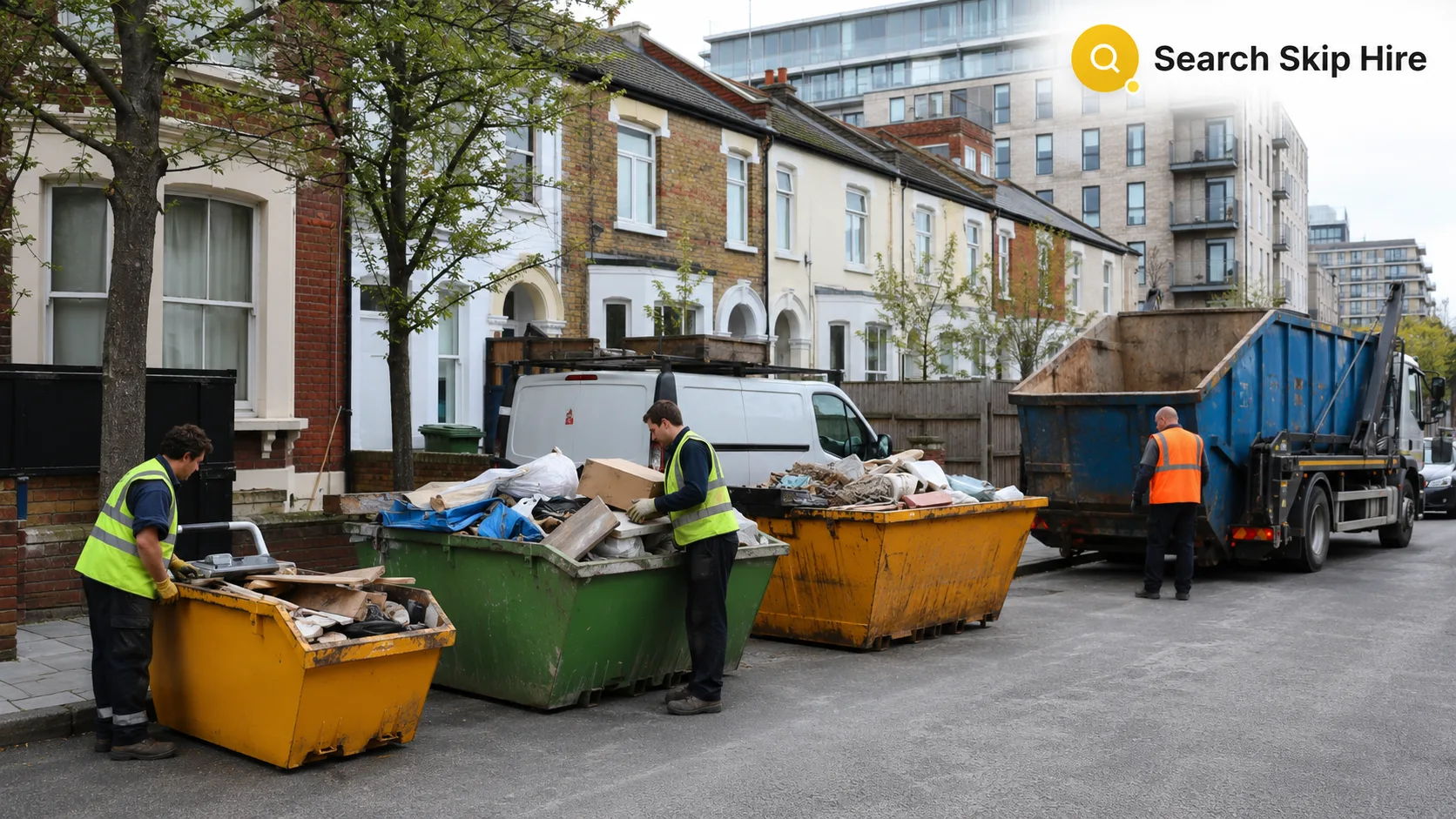
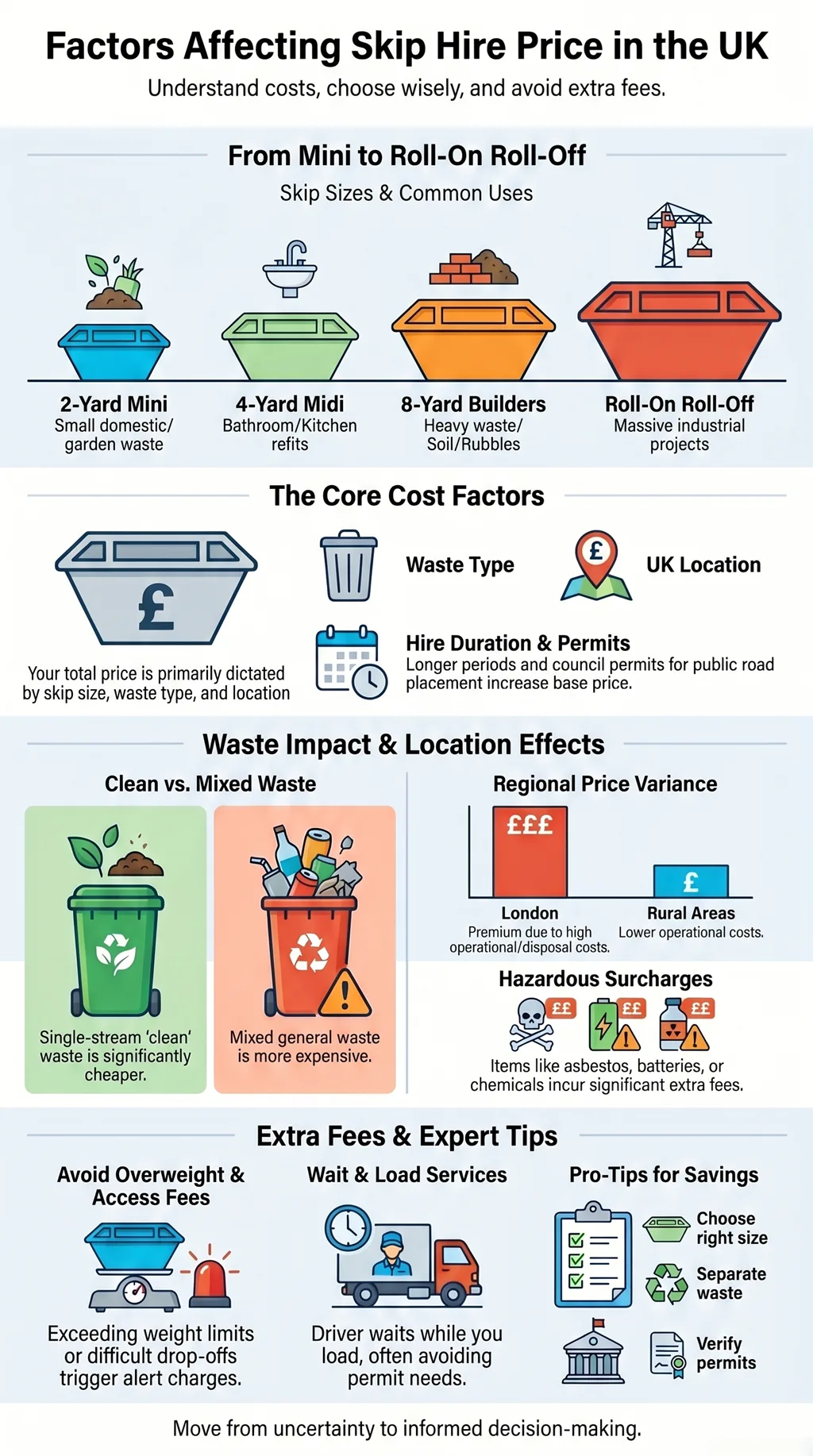
Skip hire prices in the UK are mainly affected by skip size, waste type, location, permit requirements, and hire length. Larger skips usually cost more because they carry heavier loads and higher disposal charges.
Prices can also change depending on where we live, the type of waste we throw away, and how long we need the skip. Many people only compare the starting price and miss extra costs like permits or overweight charges later.
Understanding these factors helps us plan better, avoid surprises, and choose the right option for our project. Keep reading as we explain the main factors affecting skip hire price in a simple and practical way.
Important Factors That Affect Skip Hire Prices
Before we look at the details, these are the most important things to remember when comparing skip hire prices in the UK.
Skip size, waste type, and location are the main factors that affect skip hire pricing.
Extra charges often come from permits, overweight skips, longer hire periods, and restricted waste materials.
Choosing the correct skip size and separating waste properly can help us avoid unnecessary costs.
What Factors Affect Skip Hire Prices in the UK?
Skip hire prices depend on more than the size of the skip itself. Waste type, delivery distance, local council rules, and disposal costs all affect the final price we pay. A simple household clear-out may cost far less than a construction project with heavy waste and longer hire periods. Prices can also change depending on where we live and how easy it is to place the skip safely.
Why Skip Hire Costs Vary Between Providers
Skip hire companies often price services differently because their operating costs, service areas, and disposal methods are not exactly the same.
Some quotes include delivery, collection, and waste disposal in one clear price, while others separate these costs. Labour, fuel, landfill charges, and local demand can also affect pricing across different parts of the UK.
In areas such as Greater London, transport and disposal costs are often higher than in counties like Cumbria or Herefordshire.
National skip hire services may also price jobs differently from smaller regional operators because fleet size, travel distance, and coverage areas all affect daily running costs. Whether we are looking for services in Kent or elsewhere in the UK, local demand and availability can influence the final quote.
Understanding Basic Skip Hire Pricing Components
Most skip hire quotes include several standard costs that cover the full process from delivery to waste disposal and collection.
Skip delivery and collection
Waste sorting and recycling
Landfill disposal charges
Driver and labour costs
Vehicle fuel and maintenance
VAT where applicable
Understanding these parts of a quote makes it easier for us to compare prices properly instead of only looking at the lowest number.
Skip Size and Capacity Impact on Price
Skip size is one of the biggest factors affecting price because larger skips hold more waste and usually cost more to transport and empty.
How Skip Size Influences Overall Cost
The size of a skip affects the amount of waste it can carry, the type of vehicle needed for transport, and the disposal costs after collection.
Many people researching Skip Hire cost by size comparison often focus only on capacity, but weight limits, waste type, and disposal regulations also affect the total price.
Smaller skips are usually cheaper because they hold less waste and are easier to place on smaller properties, while larger skips often require bigger vehicles, higher weight allowances, and more complex waste handling processes.
Disposal costs also increase as waste volume rises, especially when mixed or heavy materials require additional sorting and processing.
Waste compliance standards are also becoming a more important part of skip hire pricing across the UK.
Choosing the correct skip size from the beginning can help reduce unnecessary collections, avoid excess waste charges, and support more efficient waste handling overall.
Skip Size Comparison Table
The table below gives a simple overview of common skip sizes and the types of projects they are often used for.
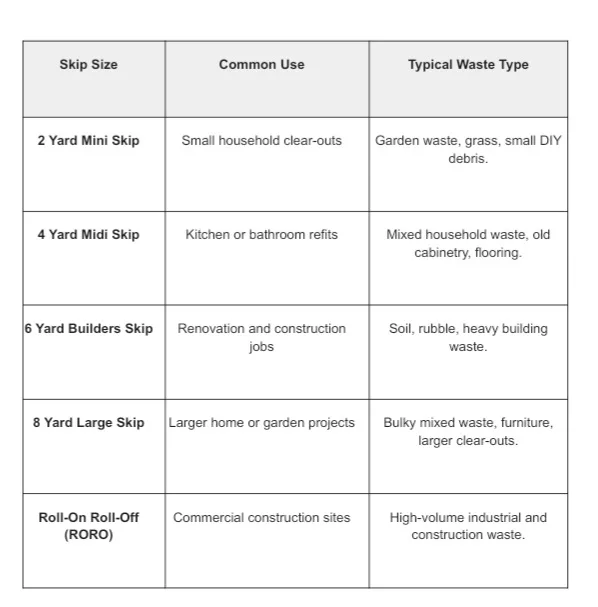
Mini Skip 2 Yard Price Factors
Mini skips are commonly used for small household jobs where waste levels are manageable and space may be limited.
These skips are often suitable for garden clearances, bathroom refits, or smaller home projects. Because they are compact, they are generally cheaper to deliver and collect. However, heavy waste such as soil, bricks, or rubble can still increase costs because weight limits still apply.
Mini skips are also useful in tighter areas where larger skips may not fit comfortably.
Builders Skip 6 Yard Cost Drivers
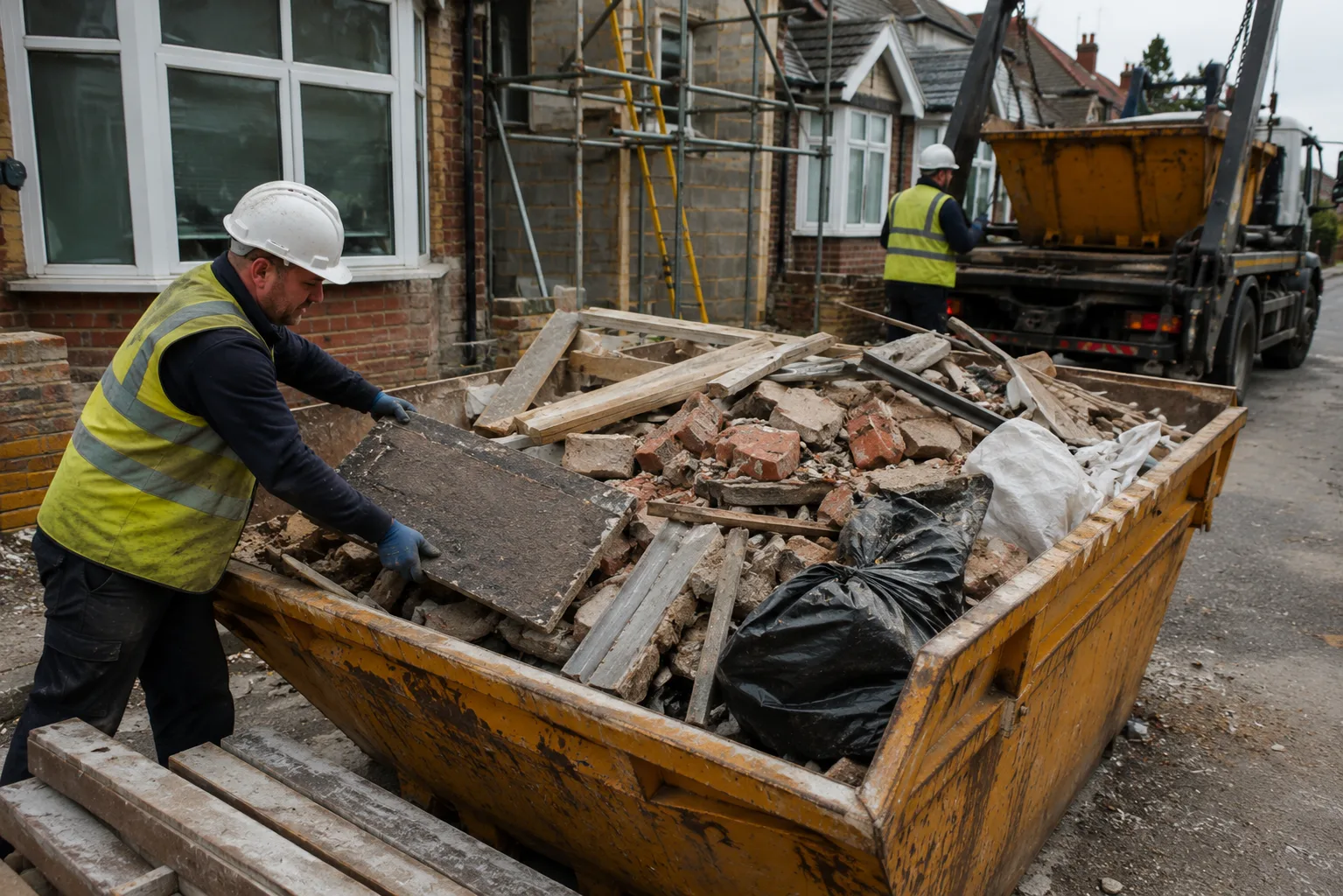
Builders skips are one of the most common choices for renovation work because they provide a good balance between size and practicality.
A 6 yard skip is often used for kitchen renovations, building work, or larger household clearances. Pricing usually depends on the type of waste being removed, the overall weight, and local disposal charges. Heavy materials such as concrete and rubble can increase landfill costs because they weigh much more than standard household waste.
In areas such as West Midlands or Greater Manchester, higher demand during busy building periods can also affect pricing and availability.
Roll-On Roll-Off Skip Pricing for Large Projects
Large commercial projects often use roll-on roll-off skips because they can handle much higher volumes of waste than standard skips.
These larger skips require specialist vehicles and more space for safe delivery and collection. Construction sites may also need regular exchanges during long projects, which can increase transport and labour costs. Disposal fees are often higher because these skips can contain large amounts of mixed construction waste.
Planning access and placement carefully is important for larger skip types because restricted sites can increase delivery complexity.
Wrong Skip Size and Double-Charge Risks
Choosing the wrong skip size can increase costs quickly because extra collections or overloaded skips often lead to additional charges. This is one of the most common Hidden charges to watch out for when arranging skip hire for home or commercial projects.
Extra waste may require another skip
Overfilled skips may not be collected
Weight limits can be exceeded easily
Additional labour costs may apply
Delays can affect project schedules
Using a skip size guide before booking helps us avoid paying for unnecessary collections or replacement skips later.
Location-Based Skip Hire Costs Across the UK
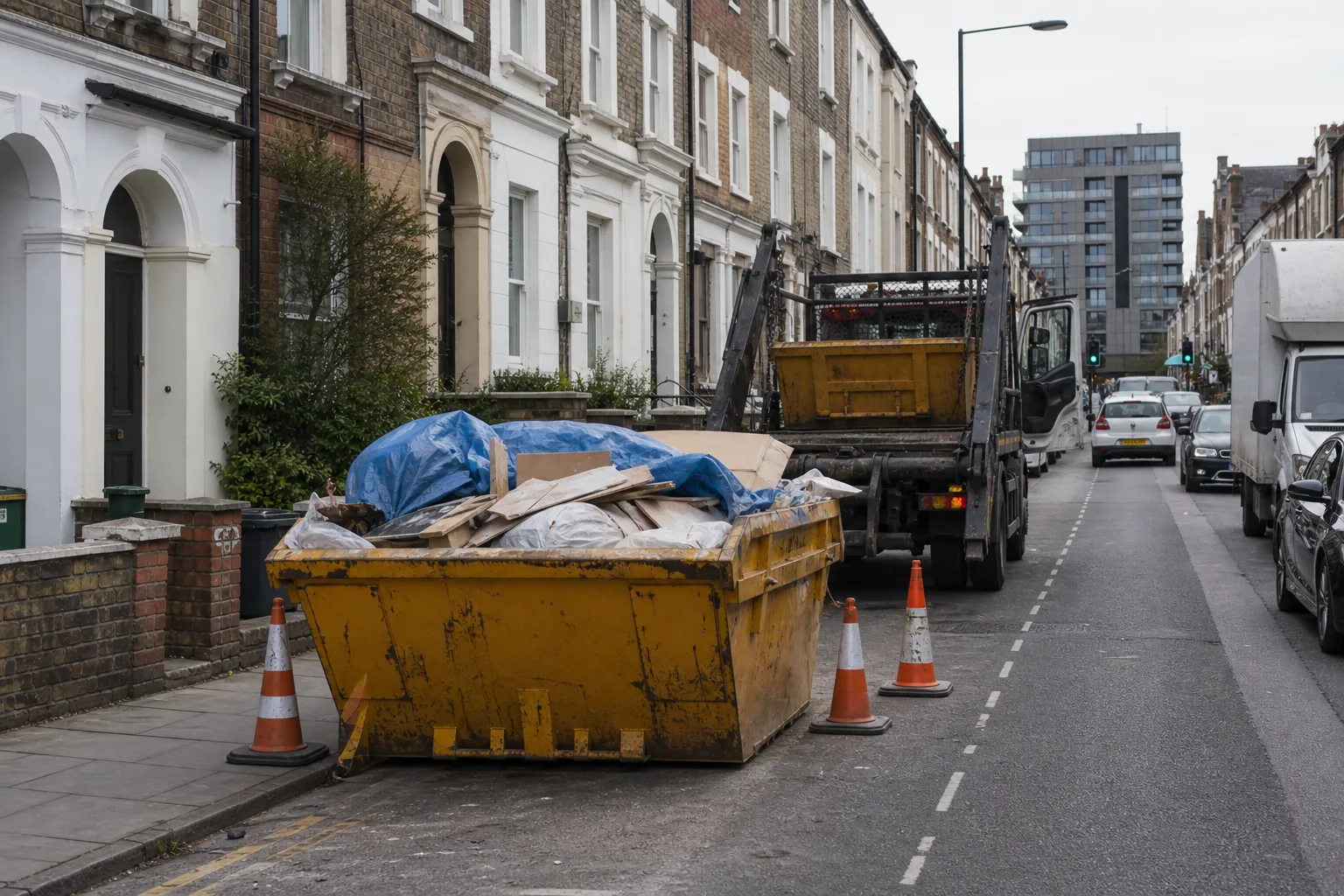
Location plays a major role in skip hire pricing because disposal fees, fuel costs, and council rules vary across the country.
Why London Skip Hire Is More Expensive
Skip hire prices in London are often higher because operating conditions are more demanding than in many other areas of the UK.
Traffic congestion, ULEZ-related costs, and parking restrictions all increase transport expenses for skip hire operators working across Greater London. Delivery delays can also increase labour and fuel usage throughout the day. Limited space on busy roads can make skip placement more difficult as well.
Permit costs in London boroughs may also be higher compared to smaller councils in rural locations.
Regional Pricing Differences in the UK
Skip hire prices can vary between regions because waste facilities, transport distances, and local demand are not the same everywhere.
Northern areas of England sometimes have lower pricing compared to southern regions because disposal and operating costs may be lower. Counties such as Lancashire or County Durham may offer different pricing levels compared to Surrey or Berkshire.
In Scotland and Wales, pricing can also depend on local council rules and travel distances. Whether we are looking for services in Fife or other parts of the UK, regional demand may affect both pricing and skip availability.
Rural vs Urban Skip Hire Pricing
Urban and rural locations create different operating challenges that can affect skip hire pricing in several ways. Rural areas may involve longer travel distances and higher fuel usage, while urban locations often face traffic delays, restricted parking, and limited space for safe skip placement.
These operational differences can influence delivery times, labour costs, and waste transport efficiency across different parts of the UK.
Long-term waste management planning is also becoming more important as disposal pressures continue to grow nationwide.
Postcode-Specific Pricing Factors
Local postcode areas often influence pricing because councils and disposal facilities operate under different conditions and charges.
Local landfill fees may vary
Permit rules differ between councils
Fuel usage depends on travel distance
Waste transfer costs change by region
Local demand can affect availability
In areas like Bedfordshire, regulations might differ from those found in Cornwall or North Yorkshire, which can influence overall pricing.
Waste Type and Disposal Fees
The type of waste we place into a skip has a major effect on price because some materials cost more to process and dispose of safely.
How Waste Material Affects Skip Hire Pricing
Different waste materials require different handling methods, which changes disposal costs and recycling processes for skip operators. When we look at How much skip hire costs UK, waste type is often one of the biggest pricing differences between quotes.
Mixed household waste often costs more because it must be sorted carefully before recycling. Heavy construction materials can also increase costs because disposal fees are commonly based on weight. Hazardous materials usually require specialist treatment and separate handling.
Understanding accepted waste types before booking can help avoid unnecessary extra charges.
Mixed Waste and Higher Disposal Charges
Mixed waste usually costs more because recycling facilities must separate different materials before they can process them properly.
This sorting process increases labour costs and reduces recycling efficiency. Waste that cannot be recycled often goes to landfill, where additional taxes and disposal fees apply. Mixed loads also increase the risk of contamination if restricted items are included accidentally.
Separating recyclable waste can help reduce overall disposal costs.
Clean Loads and Recycling Discounts
Certain waste types are easier to recycle and process, which can sometimes reduce disposal costs for skip hire projects.
Soil and rubble may cost less to process
Green waste can go to composting facilities
Wood may be recycled separately
Scrap metal can reduce disposal costs
Clean loads require less sorting time
Keeping waste organised and separated helps make recycling more efficient and can lower overall charges.
Restricted and Hazardous Waste Surcharges
Some materials carry additional fees because they require specialist disposal methods that follow environmental and safety regulations.
Items such as asbestos, tyres, batteries, paint, and fridges usually cannot go into standard skips without approval. These materials often need licensed treatment facilities and controlled disposal processes.
As noted by GOV.UK:
"Textiles and foam from waste upholstered domestic seating are likely to contain persistent organic pollutants and other hazardous chemicals. You must not send these for disposal in any class of landfill." – GOV.UK
Hazardous waste charges are normally higher because handling requirements are much stricter.
Skip Contamination Charges Explained
Contaminated skips can create problems because prohibited materials may prevent safe disposal or increase sorting costs at waste facilities.
If restricted items are found, additional charges may apply for re-sorting or specialist disposal. In some cases, collection may even be delayed until the waste is removed safely.
Checking accepted waste guidelines before loading a skip helps us avoid these unnecessary costs.
Permit, Placement, and Accessibility Costs
Skip placement rules and site access conditions can also affect pricing because operators must follow safety and local council requirements.
Council Skip Permit Additional Fees
Permits are usually required when skips are placed on public roads instead of private driveways or private land.
"You or the skip hire company need a skip licence/permit if you want to put a skip on a public road." – GOV.UK
Each local council sets its own permit costs and application process. In areas such as Essex or Bristol City, permit rules and waiting times may differ from those in Angus or Powys.
If projects take longer than expected, permit extensions can also add to the final cost.
Accessibility Issues That Increase Skip Hire Costs
Difficult access conditions can increase delivery costs because drivers may need more time or specialist support during placement. These extra delivery issues are another example of Hidden charges to watch out for when comparing skip hire quotes.
Steep driveways, narrow roads, and restricted loading spaces all make delivery more complicated. Some properties may also require additional labour to position the skip safely.
These conditions can increase operating time, fuel use, and overall delivery costs.
Crane-Assisted and Specialist Placement Charges
Some locations require specialist placement methods because standard skip vehicles cannot safely reach the delivery point.
Crane-assisted delivery may be needed
Restricted sites require more planning
Safety controls increase labour time
Extra equipment may be necessary
Insurance costs can be higher
Specialist placement services usually cost more because they involve additional equipment and trained operators.
Wait and Load Service Pricing
Wait and load services are useful in areas where a skip cannot remain on-site because of parking restrictions or limited space.
The driver stays while waste is loaded into the skip before removing it immediately after completion. This service is common in busy urban areas where permits or long-term placement are difficult.
Because the vehicle and driver remain on-site, labour costs are often higher than standard skip hire services.
Duration and Timing Factors Affecting Skip Costs
The timing of a booking and the length of the hire period can both affect overall skip hire pricing.
Standard Hire Duration and Weekly Extension Fees
Most skip hire bookings include a standard hire period before extra weekly charges begin to apply.
Short-term household projects usually fit within normal hire periods, while larger renovations may require longer bookings. If we keep a skip beyond the agreed period, additional weekly charges are often added.
Planning waste removal carefully can help us avoid unnecessary extension fees.
Same-Day and Emergency Skip Delivery Surcharges
Urgent skip bookings may cost more because operators need to adjust schedules quickly to provide immediate delivery.
Same-day services may require route changes, additional staffing, or last-minute vehicle availability. During busy periods, emergency bookings can also be harder to arrange.
Booking in advance is usually the simplest way to keep costs more manageable.
Seasonal Demand and Price Fluctuations
Skip hire demand changes throughout the year because household projects and construction work often follow seasonal patterns.
Spring and summer are usually busier because many people complete garden clearances and home improvements during warmer weather. Around Christmas, household clear-outs can also increase demand in some areas.
Winter periods may sometimes offer lower pricing because demand tends to slow down slightly.
Weight Limits, Overage Fees, and Landfill Taxes
Weight restrictions are important because skip pricing often depends on the amount and type of waste being transported.
Weight Restrictions in Skip Hire Pricing
Heavy waste materials increase disposal and transport costs because many landfill charges are based on weight rather than volume. Understanding this helps us make better Skip Hire Costs & Pricing Decisions before booking a skip for construction or household projects.
Materials such as bricks, concrete, and soil can quickly exceed skip weight allowances even when the skip does not appear full. Operators monitor these limits closely because overloaded vehicles may break transport regulations.
Understanding weight allowances helps us avoid unexpected extra charges later.
Skip Overload Penalties and Fines
Overloaded skips create safety concerns and may result in collection delays or additional charges from the hire company.
Waste must stay below the skip edge
Excess weight can break transport rules
Unsafe skips may not be collected
Additional labour charges may apply
Waste may need to be removed manually
Loading waste evenly and avoiding overfilling helps keep collections simple and safe.
Landfill Tax and Disposal Cost Increases
Landfill tax affects skip hire prices because operators must pay environmental charges for waste that cannot be recycled properly.
These taxes have increased over time to encourage recycling and reduce landfill use across the UK. Mixed waste often carries higher disposal costs because fewer materials can be recovered and reused.
Separating recyclable waste wherever possible can help reduce landfill-related charges.
FAQ
Prices vary depending on skip size, waste type, location, and hire length. Smaller skips generally cost less, while larger skips with heavy waste usually cost more.
Some common additional charges include permits, overweight skips, hazardous waste fees, extended hire periods, and restricted access delivery costs.
Yes. Larger skips normally cost more because they hold more waste and often include higher disposal and transport costs.
There are several Ways to reduce skip hire costs, including choosing the right skip size, separating recyclable waste, and avoiding overloading the skip.
No. Permits are usually only required when a skip is placed on a public road. Skips kept on private driveways often do not require council permits.
Factors Affecting Skip Hire Price and Finding the Right Service
Understanding the factors affecting skip hire price makes it easier for us to compare quotes and avoid unexpected costs during home clearances, renovations, or construction work. Skip size, waste type, permit requirements, location, and hire length all play a part in the final price.
Taking time to choose the right skip and separate waste properly can help keep projects organised and reduce extra charges later. Whether we are looking for services in Devon, South Yorkshire, or other parts of the UK, local rules and disposal costs may also affect pricing and availability.
Finding the right skip hire service becomes much simpler when we understand what is included in the quote and what additional costs may apply.
A clear understanding of pricing helps us plan waste removal more confidently and avoid delays during a project. To explore UK-wide skip hire options, compare local availability, and find practical solutions for domestic or commercial waste removal, we can visit Skip Hire
References
Related Articles
Filed under:
Skip Hire Prices