
Skip hire costs in the UK usually range from £100 to £400 for standard sizes, depending on the skip size, location, waste type, and any extra services. That is the short answer most people are looking for.
However, the final price can change once permits, delivery conditions, or special waste handling are included.
We often see people caught off guard by these extra details. When we understand how pricing works, it becomes much easier to plan and stay within budget.
Keep reading to see how each cost factor works in practice and how we can make better choices.
Skip Hire Cost Essentials at a Glance
Before we go deeper into pricing, these are the main points that help us understand skip hire costs clearly and avoid confusion.
Skip size and waste type are the biggest cost drivers
Location and permits can significantly increase total price
Extra services and hidden fees often add more than expected
Average Skip Hire Prices in the UK (2026 Guide)
Understanding average skip hire prices helps us feel more prepared before booking. While prices do vary, most follow a similar pattern across the UK depending on size, waste type, and location.
Average Skip Hire Cost by Size
Skip size is usually the first thing that affects price. Bigger skips cost more because they hold more waste and take more effort to transport and process. This section helps answer How much skip hire costs UK by breaking down typical ranges.
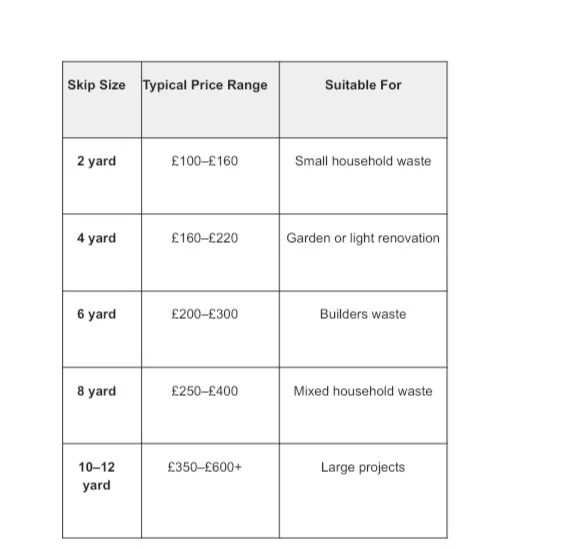
Whether we are looking for services in Kent, Greater Manchester, or elsewhere, size will always be the main factor that shapes pricing.
Skip Hire Price Per Week vs Per Hire Period
Most skip hire bookings come with a standard hire period. This is usually enough time for common jobs like home clear-outs or small renovations.
Standard hire period: 7 days
Extra day charges: £5–£15 per day
Weekly extension fees apply after the first week
When we plan ahead and finish within the hire period, we can avoid paying extra.
Skip Hire Prices by Waste Type
Household waste disposal in the UK must follow clear safety and environmental guidelines to prevent harm and ensure proper processing of materials.
According to GOV.UK, local authorities provide structured systems for disposing of different types of household waste, including recycling and hazardous materials handling.
As GOV.UK states,
“You must dispose of your household waste responsibly, using council services or authorised waste carriers.”
Household waste: standard pricing
Garden waste: often slightly lower cost
Builders rubble: can cost more due to weight
Mixed waste: higher cost due to sorting
In areas like Surrey, local rules may also affect how certain waste types are handled, which can slightly change pricing.
Key Factors That Affect Skip Hire Costs
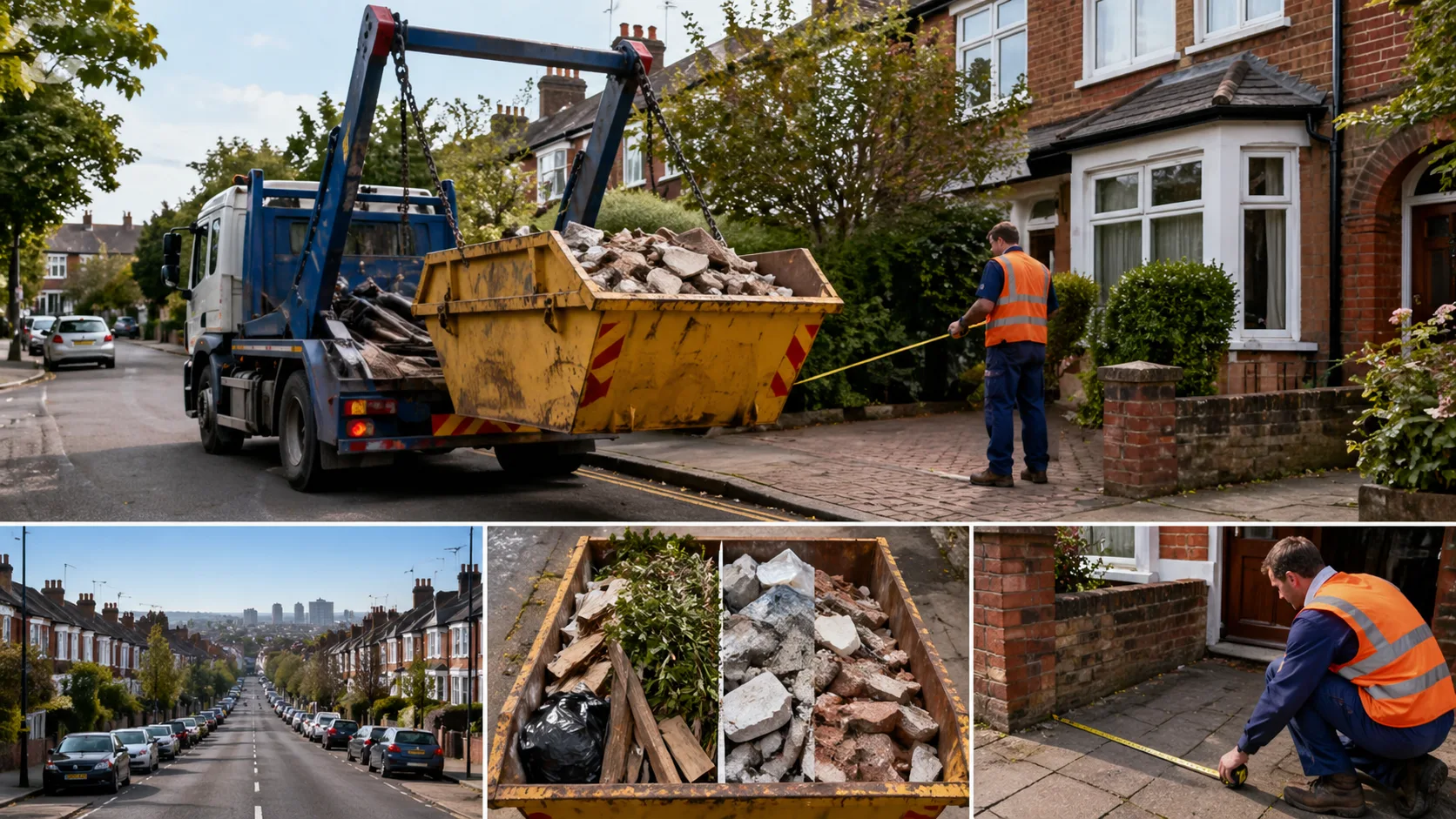
Skip hire prices are not fixed. Several factors work together to decide the final cost, which clearly shows the Factors affecting skip hire price in real situations.
Location-Based Pricing Differences
Where we are located has a clear impact on pricing. This is mainly due to demand, travel distance, and local regulations.
London areas usually have higher prices
Northern regions can be more affordable
Urban areas often cost more than rural ones
For example, in Greater London, higher demand and traffic restrictions often increase costs compared to areas like Lancashire.
Skip Size and Capacity Impact
Choosing the right size is important. It helps us avoid paying too much or needing to hire another skip later. This also supports a better Skip hire cost by size comparison when planning.
Larger skips cost more upfront
Smaller skips may not be enough
Bigger skips offer better value per cubic yard
Taking a moment to estimate our waste properly can save money.
Waste Disposal and Landfill Costs
A large part of the price comes from what happens after the skip is collected. Waste disposal is a real cost that affects pricing.
Landfill tax increases each year
Recycling can reduce costs
Sorted waste is cheaper to process
Waste transfer station fees are also part of this, even if we do not see them directly.
Fuel, Transport, and Operational Costs
Running skip hire services involves more than just the skip itself. Transport and logistics are key parts of the service.
Fuel surcharges may apply
Longer travel distances increase cost
Insurance and operations are included in pricing
These factors are often more noticeable in remote areas where travel takes longer.
Hidden Fees and Additional Charges
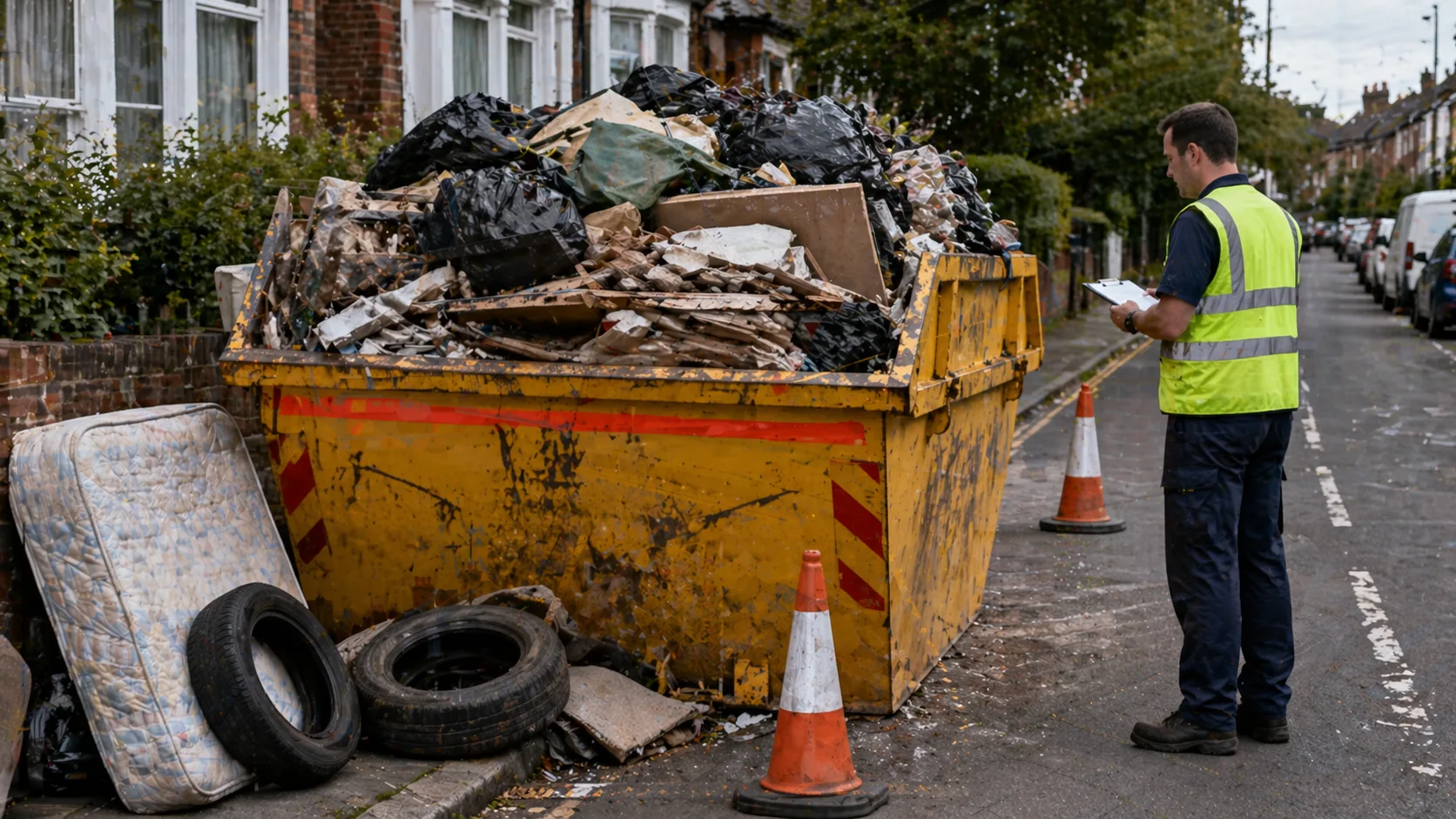
The base price is only part of the total cost. Extra charges can appear depending on how we use the skip. These are common Hidden charges to watch out for.
Permit and Legal Fees
If we place a skip on a public road, we usually need a permit from the local council. This adds to the total cost.
Local councils manage skip placement permits to ensure safety and compliance. According to the Local Government Association, councils operate within structured frameworks that support safe and consistent waste management across regions.
As reported,
“councils play a central role in managing local services, including waste and environmental regulation.”
Permits can cost £30–£100 or more
Needed for roads and pavements
Not required on private land
In areas like Bristol City, even short-term placement may require a permit.
Overload and Weight Limit Charges
Each skip has a weight limit. Going over that limit can lead to additional charges.
Limits depend on skip size
Heavy waste can reach limits quickly
Overloading may lead to fines
Keeping within limits helps us avoid extra costs.
Waste Type Surcharges
Some types of waste are more expensive to handle. These are often charged separately.
Plasterboard must be separated
Hazardous waste costs more
Mixed waste may increase charges
Knowing this in advance helps us plan what goes into the skip.
Specialist Disposal Fees
Certain items need special handling, which increases the cost.
Mattresses have extra fees
Tyres and batteries cost more to process
Fridges and freezers need specialist disposal
Asbestos requires specialist handling
These charges can add up if we are not aware of them early.
Optional Services That Increase Skip Hire Price
Some services are optional but can be helpful depending on our situation. These usually come with extra costs.
Delivery & Collection Upgrades
Faster or more flexible options are available, but they often cost more than standard service.
Same-day delivery adds a fee
Skip swap services cost extra
Wait-and-load services are premium options
Booking in advance usually keeps costs lower.
Accessibility and Placement Costs
Not all locations are easy to access. If placing the skip is difficult, extra work may be needed.
Narrow access can increase cost
Crane-assisted placement adds charges
Congestion charges may apply in London
ULEZ rules may affect pricing
In areas like West Midlands, property layout can affect how easy it is to deliver a skip.
Skip Type Upgrades
Some skips come with extra features for specific needs.
Lockable skips cost more
Enclosed skips are used for safety or special waste
Heavy-duty skips are used for construction
We only need these if our project requires them.
Comparing Skip Hire Pricing Options
There are different ways to approach skip hire. Understanding the options helps us choose what works best.
Domestic vs Commercial Pricing
Prices can differ depending on whether we are hiring for home use or business use.
Domestic hire uses standard pricing
Trade accounts may offer discounts
Large projects may reduce cost per skip
Commercial use often benefits from bulk pricing.
Local vs National Skip Hire Providers
Different providers may have different pricing structures depending on their coverage.
Local services may be flexible
National services offer wider availability
Pricing can vary depending on demand
We should focus on what suits our needs rather than just the price.
Alternative Waste Removal Costs
Skip hire is not always the only option. Other methods may work for smaller jobs.
Man and van services for small loads
Council tips for self-disposal
Skip hire is better for larger volumes
Choosing the right option depends on how much waste we have.
Regional Price Comparison Across the UK
Prices can change depending on where we are in the UK. This is normal and expected.
London vs Manchester Skip Hire Costs
Large cities often show clear price differences because of demand and restrictions.
London usually has higher prices
Manchester is often more affordable
Transport and permits affect both
These differences are consistent across many major cities.
Regional Pricing Trends
Each region has its own pricing pattern based on demand and access.
Northern areas are often cheaper
Southern areas can be more expensive
Rural areas may include delivery charges
Whether we are in Devon or West Yorkshire, location will always play a role.
Seasonal and Demand-Based Pricing
Prices can change depending on the time of year. Demand has a strong effect on availability and cost.
Peak vs Off-Peak Pricing
Some times of the year are busier than others, which affects pricing.
Summer is usually the busiest
Winter can be quieter and cheaper
Demand affects availability
Booking early during busy periods helps avoid higher prices.
Holiday Pricing Trends
Holidays can also affect pricing and scheduling.
Christmas periods may be more expensive
Bank holidays can delay service
Limited availability can increase cost
Planning around these times helps keep things simple.
How to Save Money on Skip Hire
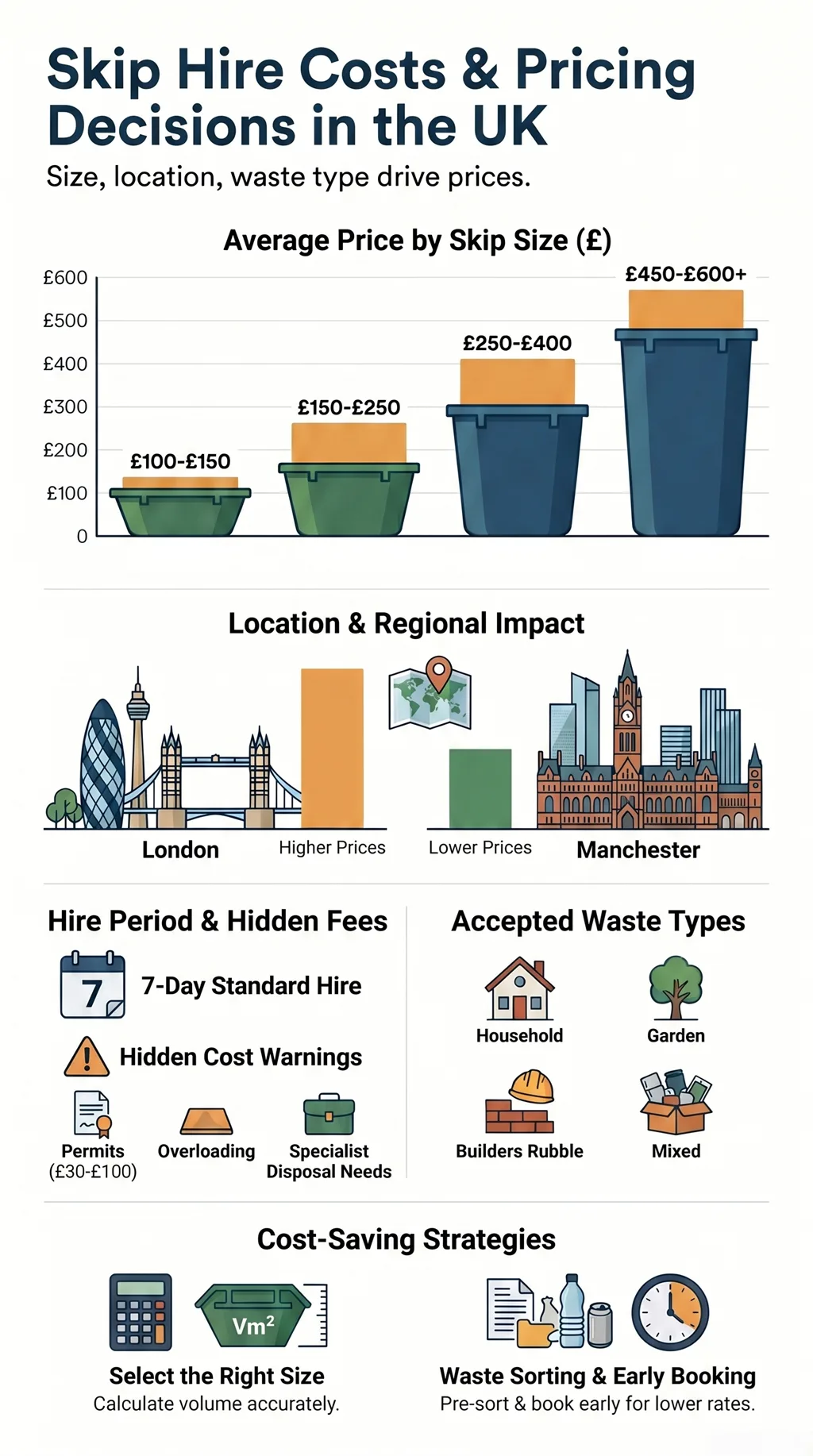
There are simple ways to keep costs down without making things complicated. These are practical Ways to reduce skip hire costs that we can apply right away.
Choosing the Right Skip Size
Picking the right size is one of the easiest ways to avoid wasting money.
Avoid choosing a skip that is too large
Make sure the skip is not too small
Match the size to the job
A quick estimate can prevent extra costs later.
Waste Sorting for Cost Reduction
Sorting waste before loading the skip can reduce costs.
Clean loads are cheaper
Soil and rubble may cost less
Recycling can reduce fees
Separating materials helps keep pricing lower.
Booking Strategy Tips
Small decisions during booking can make a difference.
Online booking may offer better value
Comparing options helps
Booking early avoids peak pricing
Planning ahead is always helpful.
How Skip Hire Pricing is Calculated
Understanding how pricing is worked out helps us avoid confusion and feel more confident when booking.
Cost Per Yard vs Per Tonne
Skip hire can be priced based on size or weight depending on the situation.
Smaller skips are priced by size
Larger skips may include weight limits
Heavy waste increases cost
Both factors matter when calculating the total price.
VAT and Pricing Transparency
VAT is not always included in quoted prices, so it is important to check.
Some quotes exclude VAT
VAT adds 20 percent
Always confirm the final price
This simple check helps avoid surprises.
What Not to Put in a Skip (Cost Implications)
Not everything can go into a skip. Knowing the rules helps us avoid extra charges or problems.
Prohibited Items List
There are clear rules about what cannot be placed in a skip.
Hazardous waste is not allowed
Electrical items may be restricted
Chemicals need special handling
Following these rules keeps everything straightforward.
Additional Charges for Restricted Waste
Some items are allowed but come with extra charges.
Paints and chemicals cost more
Batteries need special disposal
Electronics may include added fees
Understanding this early helps us plan better and avoid unexpected costs.
FAQ
Most skip hire costs range from £100 to £400 for standard sizes. Larger skips or extra services can increase this price.
Mini skips (2 yard) are usually the cheapest option. They are ideal for small household jobs or light waste.
We only need a permit if the skip is placed on a public road. Private driveways usually do not require one.
Overloading can lead to extra charges or refusal of collection. It is important to stay within weight limits.
We can save money by choosing the right size, sorting waste, and avoiding extra services unless needed.
Skip Hire Costs Summary and Next Steps
Skip hire costs in the UK come down to a few clear factors. Size, location, waste type, and any extra services all affect the final price. When we understand how these work together, it becomes easier to plan ahead and avoid unexpected charges.
Taking time to choose the right skip and checking what is included helps us stay within budget and keeps the whole process simple and manageable.
When we are ready to move forward, the next step is to check options that match our needs and location. We can do that through Skip Hire, where we can view availability, compare pricing, and arrange a service that fits our project without unnecessary stress.
References
https://www.gov.uk/dispose-household-waste
Related Articles
https://www.searchskiphire.co.uk/blog/skip-hire-prices/how-much-skip-hire-costs-uk
https://www.searchskiphire.co.uk/blog/skip-hire-prices/factors-affecting-skip-hire-price
https://www.searchskiphire.co.uk/blog/skip-hire-prices/skip-hire-cost-by-size-comparison
https://www.searchskiphire.co.uk/blog/skip-hire-prices/hidden-charges-to-watch-out-for
Filed under:
Skip Hire Prices