
If you need skip hire in Clwyd, you can expect to pay between £125 (excluding VAT) and £600 depending on the skip size you choose and how long you need it for.
Prices also change based on where you live and what type of waste you are getting rid of. Keep reading to find out exactly what affects your price, whether you need a permit, and how to pick the right company for your project.
Quick Reads Skip Hire Made Simple
This section pulls together the most useful facts from the guide so you can get a quick overview before diving into the details.
Skip prices range from £125 (excluding VAT) for a mini skip to £600 for a roll on roll off skip
The right size depends on your project, so it pays to compare before you book
A permit may be needed if the skip sits on a road or pavement
Certain items such as asbestos, chemicals, and electrical goods cannot go into a skip
How Much Does Skip Hire Cost ?
Skip hire prices depend mainly on the size of skip you choose and the length of your project. If this is your first time booking a skip, understanding the skip hire fundamentals can make it easier to compare your options before looking at typical costs. We have put together a simple breakdown below so you know what to expect before you call anyone.
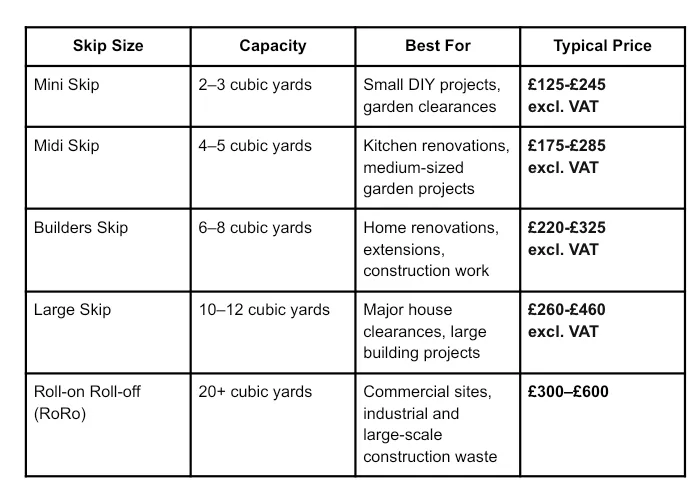
A mini skip works well for small clear outs, while a builders skip suits bigger renovation jobs. Choosing the right size the first time can save you from paying for a second skip later, which usually costs more overall than booking one larger skip from the start.
It also helps to think about how your waste will actually fill the skip. Bulky items like old furniture or broken fencing take up more space than their weight suggests, so a project that seems small can still need a midi or builders skip.
Loose materials such as soil or rubble are heavier and denser, so they fill a skip faster even though the volume looks less. If you are not sure which size fits your project, it is worth describing your job to the company you contact so they can recommend the right option rather than guessing yourself.
Getting the size right the first time keeps your costs predictable and avoids the hassle of arranging a second collection partway through your project.
What Affects Skip Hire Prices ?
Several factors change how much you pay for skip hire, and knowing them helps you plan your budget properly. The same pricing principles also apply to skip hire London services, although local charges and permit fees may differ. Below are the main things that affect your final price.
Skip size, since larger skips cost more but often give better value per cubic yard
Hire duration, as the standard hire period in Clwyd is 2 weeks
Type of waste, because heavier materials like soil and rubble can add extra charges
Location, since delivery distance from the depot can affect pricing
Permit costs, which apply if the skip needs to sit on a public road
Time of year, as spring and summer tend to be busier and pricier
Booking during quieter months such as December or January can sometimes get you a better price. If your project has flexible timing, this is worth keeping in mind.
Do You Need a Permit

Whether you need a permit depends on where you plan to place your skip and which council covers your area. Similar permit considerations also apply to skip hire Edinburgh, although each local authority sets its own requirements and fees. This region includes several different local authorities, each with its own permit costs and rules.
Abergele and Colwyn Bay fall under Conwy County Borough Council, with permits costing £71.90
Buckley, Holywell, and Mold fall under Flintshire County Council, with permits costing £60.00 for the first week
Denbigh, Prestatyn, and Rhyl fall under Denbighshire County Council, with permits costing £38.18
Permits generally last one week, although a Conwy licence lasts 28 days
You generally need a permit if the skip sits on a road, blocks part of a road, or takes up a parking space. There are a few clear situations that decide whether a permit applies to your booking.
You need a permit if the skip is placed on a public road or pavement
You need a permit if the skip blocks any part of the road
You do not need a permit if the skip stays entirely on your own property
You do not need a permit if the skip sits on your driveway or front garden
As highlighted by Flintshire County Council:
"Permits are required to ensure the skip is placed so it does not endanger the safety of the highway users, block access to property or apparatus within the highway, reduce highway widths to an unacceptable extent or to restrict visibility at junctions, accesses and crossing points." - Flintshire County Council
We always recommend applying for your permit early so your project is not delayed while you wait for approval.
What Can You Put in a Skip ?
Most household and building waste is fine to put in a skip, but some items are restricted for safety and environmental reasons. Understanding the rules ahead of time saves you from unexpected charges or a rejected collection.
General waste such as household rubbish, cardboard, paper, plastics, and textiles
Garden waste including soil, turf, branches, logs, plants, and grass cuttings
Building materials like bricks, concrete, wood, timber, tiles, and plasterboard
Some items are not allowed in a standard skip at all. These items need a separate, specialist collection instead.
Asbestos and other hazardous building materials
Paint, solvents, chemicals, and oils
Batteries, both car and household types
Fridges, freezers, and other electrical items
Gas bottles and medical waste
Plasterboard needs to go in its own separate skip. This is because it produces a harmful gas called hydrogen sulphide when it mixes with other biodegradable waste in landfill.
Research from GOV.UK shows:
"You must not send gypsum-based waste (for example, plasterboard) to a landfill cell that accepts biodegradable waste. You must separate it for re-use or recovery to comply with the waste hierarchy” – GOV.UK
How Skip Delivery and Collection Works
Understanding the delivery and collection process helps you plan your project without any surprises on the day. Most bookings follow a similar pattern from start to finish.
You choose your skip size and confirm your delivery date with the company
The skip is delivered on a lorry and placed on your chosen spot
You fill the skip over your hire period at your own pace
You call the company once the skip is full and ready for collection
The company collects the skip and takes the waste to a licensed facility
Most deliveries happen within a set time window on the day, so it helps to keep your driveway or spot clear beforehand.
If access is difficult, such as narrow lanes or tight corners, it is worth mentioning this when you book so the driver can plan accordingly.
Preparing Your Property Before the Skip Arrives
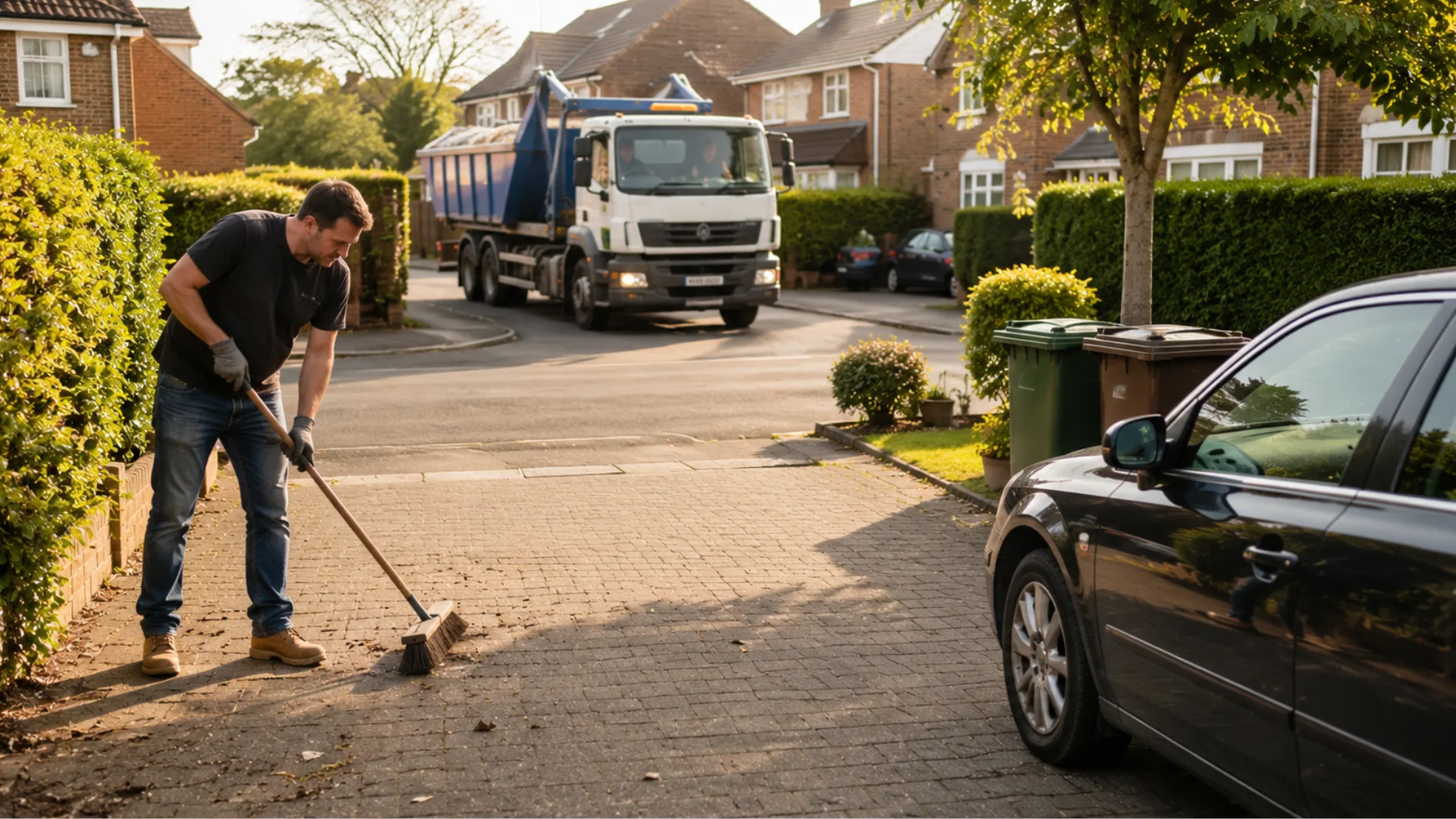
A little preparation before delivery day makes the whole process much smoother and avoids delays. Taking a few simple steps beforehand can make a real difference.
Clear the area where the skip will sit, including any cars or obstacles
Check for low branches or overhead wires that might block the delivery lorry
Lay down boards or protection if the skip will sit on a driveway
Let neighbours know if the skip might affect shared access or parking
If you are placing the skip on a road or pavement, make sure your permit is confirmed before delivery day. This avoids any issues with your local council and keeps your project on schedule.
Loading a Skip Safely and Efficiently
Loading your skip properly helps you fit more in and keeps everyone safe during the process. A few good habits go a long way here.
Break down large items such as furniture or wood where possible
Load flat items first to create a solid, even base
Fill gaps with smaller waste rather than leaving empty pockets of space
Keep heavier items low and spread the weight evenly across the skip
Avoid overfilling the skip above its rim, since this is not permitted
Overloaded skips can be refused for collection, so it is worth keeping an eye on the level as you fill it. Spreading your waste out over a few days rather than one big session can also help you use the space more efficiently.
Skip Hire for Different Types of Projects
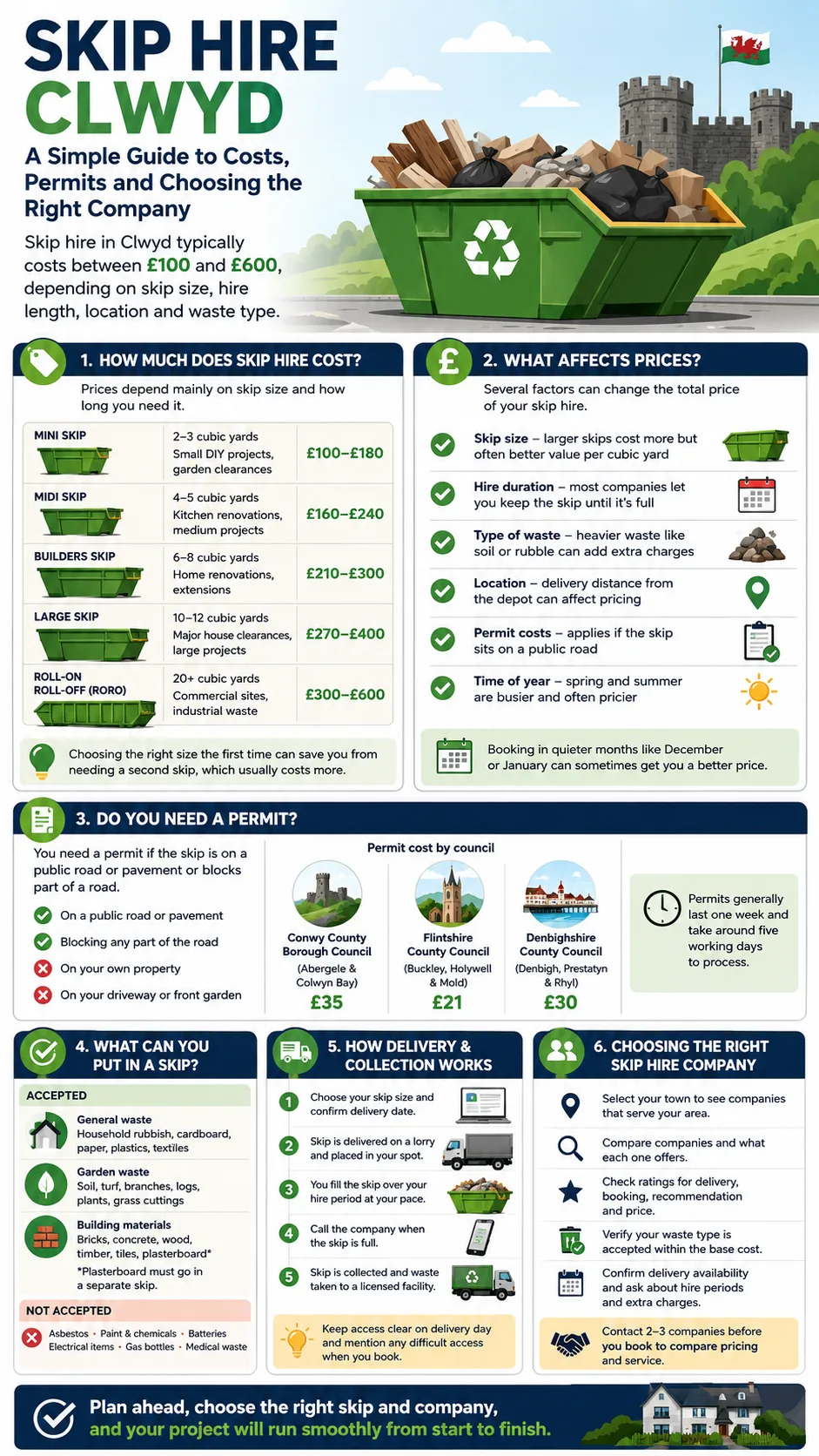
The right skip size and hire period often depends on the type of project you are working on. Different jobs tend to produce different amounts and types of waste.
Home renovations usually need a builders or large skip due to mixed material waste
Garden clearances often suit a mini or midi skip for soil, branches, and plants
Kitchen or bathroom refits typically need a midi or builders skip for fittings and tiles
Commercial projects or building sites often require a large skip or roll on roll off
General house clearances usually suit a midi or large skip depending on how much is being cleared
Matching your skip to your project type from the start helps you avoid paying for extra collections. If your project changes scope partway through, it is worth contacting your provider to discuss upgrading your skip size.
How to Choose the Right Skip Hire Company
Picking a skip hire company in Clwyd does not need to be complicated if you follow a clear process. We have broken this down into simple steps below to make the decision easier.
Select your town so you only see companies that actually serve your area
Browse the available companies and compare what each one offers
Check company ratings across delivery, booking, recommendation, and price
Verify that your specific waste type is accepted within the base cost
Confirm delivery availability and ask about hire periods and extra charges
Contacting two or three companies before you book gives you a better sense of pricing and service. The cheapest option is not always the best one, so it helps to weigh up reviews and reliability alongside cost.
FAQ
You can find skip hire providers across towns including Abergele, Buckley, Colwyn Bay, Denbigh, Holywell, Llandudno, Mold, Prestatyn, and Rhyl. Each town has local companies that serve the surrounding area.
The standard hire period in Clwyd is 2 weeks, and you call the company to arrange a collection when the skip is full. Some companies set a different hire period, so it helps to confirm this before booking.
You cannot put hazardous items such as asbestos, chemicals, batteries, gas bottles, or electrical goods like fridges and TVs into a standard skip. These items need separate collection through specialist services.
This depends on your project. A mini skip suits small clear outs and garden waste, while a builders skip or large skip suits renovation work and bigger clearances. Comparing your waste volume against the skip capacities in our table above can help you decide.
This depends on the company and their current availability. It is best to contact local providers directly and ask, since same day delivery is not guaranteed and can depend on demand at the time.
Getting Started with Skip Hire in Clwyd
Skip hire is straightforward once you know your skip size, your permit requirements, and what waste you are getting rid of.
Prices typically range from £125 (excluding VAT) for a small mini skip up to £600 for a large roll on roll off skip, and permit costs across Clwyd range from £38.18 to £71.90 depending on your council.
Taking a few minutes to compare local providers and confirm what is included in your price helps your project run smoothly from start to finish.
We make it easy to compare local skip hire companies across every town in Clwyd in one place. Visit Skip Hire Clwyd to browse providers near you and get your project moving today.
References
Related Articles
Filed under:
Skip Hire