
Skip hire in London UK offers a simple way to manage waste from home renovations, garden clearances, house clearances, commercial work, and construction projects, especially when costs and skip sizes can feel confusing at first.
Comparing local skip hire companies helps make these decisions easier by showing available skip sizes, typical prices, and delivery options in one place. This makes it simpler to plan waste removal without unnecessary delays or overspending.
This guide covers skip sizes, pricing, permit rules, accepted waste types, and the booking process in clear, straightforward language. To get started, explore Search Skip Hire and compare local companies across London before booking.
What Should Be Known About Skip Hire
The following points summarise the most important information covered in this guide before exploring each topic in more detail.
Local skip hire companies across London offer skip sizes suitable for domestic, commercial, and construction projects.
Selecting the correct skip size helps improve waste management while reducing the chance of paying for unnecessary capacity.
Skip hire prices vary based on skip size, waste type, hire duration, delivery location, and permit requirements.
What Is Skip Hire London UK?
Skip hire provides a simple way to manage waste from home renovations, garden clearances, commercial work, and construction projects. Understanding When skip hire is the best solution can help you choose the right waste disposal method for your specific project and avoid unnecessary costs or delays.
Search Skip Hire brings together local skip hire companies in one directory, making it easier to compare services, available skip sizes, and pricing before making a booking.
The listed providers support a wide range of domestic and commercial projects, helping visitors find suitable waste removal options without searching multiple websites.
The listed companies provide skip hire for projects such as:
House renovations
Garden clearances
Commercial construction projects
Trade jobs
Domestic waste removal
Commercial waste removal
Some providers also offer same-day or next-day delivery, subject to availability.
As highlighted in UK government guidance on household waste disposal:
"You can use a registered private business that provides a waste collection service - for example, a skip company or household clearance service" - GOV.UK Dispose of household waste
This reinforces that skip hire services operate within regulated waste management systems and are recognised as a legitimate option for household and commercial waste disposal.
How Can Local Skip Hire Companies Be Compared?
Comparing different local providers helps us identify the most suitable option based on project size, delivery requirements, and service availability. Whether we are clearing a garage, renovating a property, or removing construction waste, reviewing different companies can make the decision process easier.
When looking outside major cities, users may compare options such as skip hire Kent to find providers that offer suitable coverage, skip sizes, pricing options, and delivery availability in their area.
Search Skip Hire includes businesses across the city and nearby service areas, giving us access to a wider range of providers when local options are limited. This makes it easier to explore available services and choose a company that matches our project requirements.
The directory allows us to:
Compare local skip hire companies
Find nearby service providers
Review available skip sizes
Request quotes
Contact companies directly
Why Use Search Skip Hire?
Comparing local skip hire companies provides a clearer view of the services available before arranging a booking. Company profiles include practical details such as business locations, opening hours, customer reviews, and available skip sizes, making it easier to compare options.
Search Skip Hire also provides:
Local skip hire companies
Direct contact with providers
No brokers
No extra fees
Domestic skip hire services
Commercial skip hire services
Multiple skip sizes, depending on the provider
Each listing presents key information in a clear format, helping readers compare local services and choose a company that matches the needs of the project.
What Skip Sizes Are Available?

Choosing the right skip size helps make waste removal more efficient. A skip that is too small may fill up quickly, while one that is too large could leave unused space. Search Skip Hire lists local companies offering a range of skip sizes, although the options available may vary between providers.
What Is a Mini Skip Best For?
Mini skips are a practical choice for smaller jobs that produce lighter amounts of waste. They are commonly used for quick home projects and routine clear-outs.
Typical uses include:
Small DIY projects
Garden clearances
Household decluttering
Minor repairs
Small furniture disposal
Mini skips typically hold 2–3 cubic yards of waste. The pricing guide shows a typical cost of £230 to £250, excluding VAT, depending on the provider and project requirements.
When Is a Midi Skip a Better Choice?
Midi skips offer extra capacity for projects that create more waste than a small clear-out but do not need a builders skip.
Common uses include:
Kitchen renovations
Medium-sized garden projects
Bathroom improvements
Room refurbishments
Household clear-outs
Midi skips generally provide 4–5 cubic yards of capacity, with typical prices ranging from £230 to £290, excluding VAT.
What Can a Builders Skip Be Used For?
Builders skips are suitable for renovation and construction work where larger amounts of heavy waste need to be collected.
Typical projects include:
House renovations
Property extensions
Building waste
Construction materials
Larger domestic projects
According to the pricing guide, builders skips usually hold 6–8 cubic yards and typically cost £270 to £295, excluding VAT.
When Is a Large Skip the Right Option?
Large skips are designed for projects that produce high volumes of waste over a longer period. They are commonly used for major clearances and larger construction work.
Typical uses include:
Major house clearances
Large construction projects
Commercial building work
Site waste removal
High-volume waste disposal
The pricing guide lists 10–12 cubic yard skips with a typical price range of £340 to £380 or more, excluding VAT, depending on the project. Some listed providers also offer larger skips ranging from 14-yard up to 40-yard capacities for suitable commercial and construction projects.
What Waste Can Go Into a Skip?
Understanding what can go in a skip UK is important before booking, as different providers may have restrictions depending on waste type and local regulations.
Different projects produce different types of waste, so it is important to know what is usually accepted before booking a skip. Most providers in the UK handle a wide range of non-hazardous materials, but rules can vary depending on the company and local regulations.
Commonly accepted waste includes:
Household items such as furniture, clothing, toys, and packaging
Garden waste like grass cuttings, branches, leaves, and soil
Building materials including bricks, rubble, timber, tiles, and concrete
Construction waste such as mixed demolition materials and site debris
Commercial waste from offices, refurbishments, and general business activity
Some materials may need special handling, so checking with the provider in advance is always recommended.
What Happens to Waste After Skip Collection?
Skip hire services in the UK are influenced by national waste regulations designed to reduce landfill use and improve recycling rates.
“Construction and demolition materials can often be recovered and recycled when they are properly managed through effective waste systems.” – WRAP
After collection, waste is taken to a licensed transfer station where it is sorted and processed. The goal is to recover as much material as possible and reduce landfill disposal.
Typical processing includes:
Sorting waste into recyclable and non-recyclable streams
Recycling materials such as metal, wood, concrete, and cardboard
Recovering reusable items where possible
Sending remaining waste to landfill or energy recovery
Following UK Waste Transfer Note (WTN) regulations
Which Types of Waste Are Commonly Disposed Of?
Skip hire is used across many different types of projects, and waste is usually grouped by source. This helps keep disposal simple and efficient.
Household waste often comes from home clear-outs, moving, or general decluttering. Garden projects produce organic materials like soil, branches, and leaves. Building and construction work tends to generate heavier materials such as bricks, rubble, and timber, while commercial jobs often include office furniture, packaging, and refurbishment waste.
Mixed non-hazardous waste is also common, especially in projects where different materials are produced at the same time.
What Projects Is Skip Hire Suitable For?

Different projects produce different amounts and types of waste. Choosing the right skip helps keep the work area organised while making waste collection more convenient throughout the project.
What Home Renovation Projects Benefit from Skip Hire?
Home improvements often create bulky waste that cannot fit into regular household bins. A skip provides a practical way to keep waste contained while work is underway.
Skip hire for home renovation waste helps ensure materials from renovation projects are managed efficiently, especially when dealing with large or mixed construction debris.
Common renovation projects include:
Kitchen renovations
Bathroom refurbishments
Flooring replacement
Interior decorating
Small structural changes
What Waste Comes from a House Clearance?
House clearances usually involve removing unwanted furniture, household items, and general rubbish from an entire property. Skip hire helps collect larger amounts of waste in one place.
Common house clearance waste includes:
Furniture
Mattresses
Boxes
Household rubbish
Old carpets
General clutter
Why Is Skip Hire Useful for Garage Clearances?
Garages often become home to items that are no longer needed. A skip makes it easier to dispose of unwanted belongings during a complete clear-out.
Typical garage clearance waste includes:
Old tools
Broken shelving
Cardboard boxes
Garden equipment
Furniture
General household waste
What Can Be Removed During a Garden Clearance?
Garden projects can produce more waste than standard bins can hold, especially after seasonal maintenance or landscaping work.
Garden clearance waste commonly includes:
Branches
Hedge cuttings
Grass
Plants
Leaves
Soil from light landscaping
How Can Skip Hire Help with Office Clearances?
Office refurbishments, relocations, and general upgrades often create bulky waste that requires a larger disposal solution.
Common office clearance waste includes:
Office furniture
Cabinets
Packaging
Shelving
Fixtures
General business waste
Why Is Skip Hire Commonly Used on Construction Sites?
Construction work often produces waste every day as the project progresses. Having a skip on-site helps keep materials contained and the work area organised.
Typical construction waste includes:
Concrete
Bricks
Timber
Rubble
Tiles
Mixed building materials
What Are Skip Hire Prices in London?
Skip hire prices in London usually vary based on skip size, waste type, and location. No single fixed rate applies across all projects, as costs change depending on requirements and local conditions.
A general price guide is shown below.
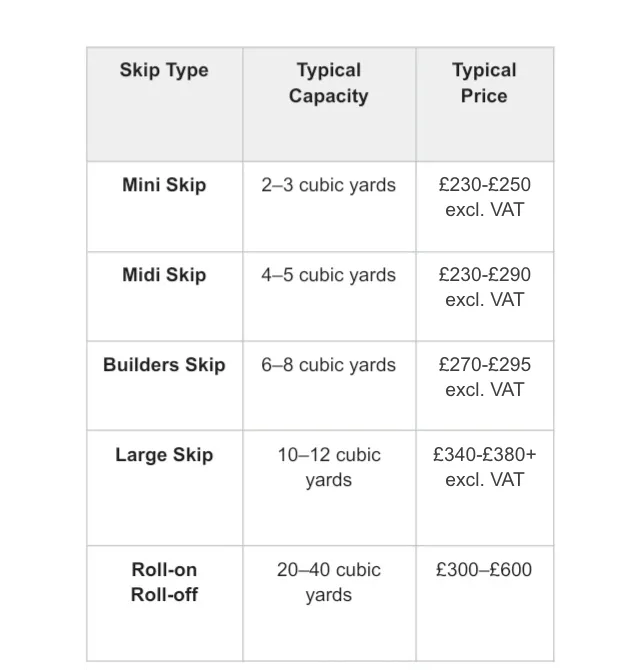
London pricing is often higher than the UK average. Common reasons include congestion charges, ULEZ fees, permit costs, limited street space, and higher demand across the city.
What Factors Affect Skip Hire Costs?
Skip hire costs depend on several practical factors linked to the project and delivery conditions. Each factor can influence the final quotation.
Key pricing factors include:
Skip size and type
Waste type and disposal requirements
Hire duration length
Delivery location within London
Site access conditions
Permit requirements for public placement
Local demand levels
Extra charges may apply in certain situations, such as restricted access areas, evening or weekend delivery slots, or extended hire periods.
How Do Skip Sizes Influence Pricing?
Skip size plays a major role in determining cost. Smaller skips generally suit light household waste and short projects, while larger skips are designed for bulky construction or commercial waste.
Mini and midi skips usually sit at the lower end of the price range. Builders skips fall into a mid-range bracket, while large and roll-on roll-off skips are priced higher due to capacity and transport requirements.
Where Can Skip Hire Quotes Be Compared?
Comparing multiple skip hire quotations helps identify suitable options for different project needs. Available services, sizes, and pricing structures may differ between providers.
Search platforms such as Skip Hire comparison services allow:
Local company comparisons
Skip size reviews
Direct provider contact
Quote requests
Service comparisons across providers
When Is a Skip Permit Required in London?
Skip permits in London depend mainly on where the skip is placed during the hire period. Rules are set to keep public spaces safe and traffic flowing, especially in busy residential and commercial areas.
A permit is typically required when a skip is placed on public land such as roads or pavements. Private land placements usually avoid this requirement.
Which Locations Require a Skip Permit?
Permit rules apply when a skip occupies shared or public areas. These locations are usually controlled by the local council.
A skip permit is generally needed for:
Public roads
Pavements
Grass verges
Other council-managed land
What Is the Difference Between Driveway and Road Placement?
Location choice plays a key role in whether a permit is needed. Private property offers a simpler setup, while public placement involves additional approval steps.
Key differences include:
Driveway placement usually does not require a permit
Road or pavement placement normally requires council approval
Private land use reduces waiting time and paperwork
What Happens When a Skip Permit Is Needed?
Some projects require skips to be placed on public roads due to limited space. In these cases, a permit becomes part of the planning stage. Permit rules and responsibilities are regulated by local councils to ensure waste is handled legally and safely.
As stated in UK government guidance:
"You can use a registered private business that provides a waste collection service - for example, a skip company or household clearance service" - GOV.UK Dispose of household waste
This reinforces that skip hire companies must be properly registered and legally authorised, and that residents remain responsible for ensuring their waste is handed over to legitimate carriers when arranging skip hire or waste collection services.
Typical permit details in London include:
Permit requirements vary by borough (not a single fixed authority)
Issued by the relevant London borough council or local authority
For example, Westminster City Council charges £91 for a permit that covers 1 month and can cover up to two skips
Processing times depend on the council
How Should Skip Permit Requirements Be Checked?
Permit rules can vary depending on the exact location and local authority. Confirming requirements early helps prevent delivery delays and unexpected costs.
How Does Skip Hire Coverage Work Across London?
Skip hire services in London operate across a wide and diverse area. Availability often depends on local providers, access conditions, and delivery routes within each district.
Search Skip Hire connects users with companies based in London as well as nearby providers that regularly serve the capital.
What Makes Central London Skip Hire More Complex?
Central London usually involves tighter streets, limited parking, and higher traffic levels. These conditions can affect delivery timing and skip placement options.
Projects in this area often require more careful coordination due to restricted access and space limitations.
What Skip Hire Options Are Available in North London?
North London is covered by a mix of local companies and surrounding-area providers. Service availability often includes a range of skip sizes suitable for both residential and commercial work.
Different districts within North London may have varying delivery schedules depending on demand and road access.
How Is Skip Hire Handled in South London?
South London is served by providers offering skip hire for household clear-outs, renovations, and construction projects.
Service coverage typically includes flexible skip sizes, depending on the type and scale of waste being removed.
What Services Are Available in East London?
East London benefits from a broad range of skip hire options due to ongoing residential and commercial development.
Providers in this area usually offer multiple skip sizes suitable for home improvement work, building sites, and business waste management.
What Skip Hire Choices Exist in West London?
West London coverage includes various local companies with different service levels and availability windows.
Skip options often depend on project size, delivery timing, and access conditions within specific neighbourhoods.
What Areas Fall Under Greater London Coverage?
Greater London coverage extends beyond central districts into surrounding boroughs and commuter zones.
This wider network allows access to more providers, making it easier to compare skip sizes, delivery options, and service availability across the region.
Should Skip Hire or Grab Lorry Be Used for Waste Removal?
Skip hire is often used for ongoing projects, while grab lorries are more suitable for large, one-off waste removal jobs.
Skip hire works better for:
Long renovation projects
Sites with limited space
Gradual waste production
Grab lorry works better for:
Large soil or rubble removal
Quick clearance jobs
Sites without storage space
What Is Domestic Skip Hire?
Domestic skip hire is designed for household projects that create general waste. This service is commonly used during home improvements, clear-outs, or small renovation work.
Typical domestic uses include:
House clearances
Garden waste removal
DIY projects
Renovations
General home improvements
This option usually fits smaller skips and shorter hire periods.
What Is Commercial Skip Hire?
Commercial skip hire supports larger projects that produce higher volumes of waste. It is often used by builders, contractors, and property managers.
Common commercial uses include:
Office clearances
Construction work
Building projects
Property maintenance
Trade waste removal
Commercial hire often involves larger skips and more frequent collections depending on project demands.
What Types of Waste Come From Business Activity?
Business waste can build up during everyday operations, refurbishments, or relocations. Proper disposal helps maintain a clean and organised working environment.
Typical business waste includes:
Office furniture
Packaging materials
Fixtures and fittings
General non-hazardous waste
Refurbishment debris
How Do Domestic and Commercial Skip Hire Differ?
Domestic and commercial services differ mainly in scale, waste volume, and collection frequency. Household projects usually generate lighter waste, while business or construction work tends to require larger capacity solutions.
Skip size, duration, and pickup schedules often vary depending on project requirements and overall waste output.
How Does the Skip Hire Process Work?
Skip hire follows a straightforward process that helps keep waste removal organised from start to finish. Each stage focuses on choosing the right option and planning delivery and collection properly.
How Is the Right Skip Size Selected?
Choosing the correct skip size helps avoid unused space or insufficient capacity during a project. A suitable size depends on the type and scale of waste involved.
Key considerations include:
Type of project
Estimated waste volume
Available space for placement
Overall budget
Why Compare Different Providers?
Comparing providers helps identify suitable services, pricing, and availability before making a booking. Options can vary depending on location and demand.
Useful comparison points include:
Available skip sizes
Customer feedback
Service hours
Coverage areas
Delivery schedules
How Is a Delivery Date Arranged?
Selecting a suitable delivery date helps align skip arrival with the project timeline. Proper timing ensures smoother waste management during the work.
Important factors to plan:
Project start date
Site access conditions
Permit requirements if needed
Expected duration of use
What Happens During Skip Collection?
Collection is arranged once the skip is full or the project is complete. Proper preparation helps avoid delays during pickup.
Before collection, attention is usually given to:
Keeping the skip accessible
Avoiding overfilled loads
Confirming pickup scheduling
Clearing access routes for removal
How Does Skip Hire Affect the Environment?
Modern waste management focuses on reducing landfill use and improving recycling rates across the UK. Many skip hire providers now follow stricter sorting systems to help recover more materials and limit unnecessary waste going to landfill.
This approach supports better resource use and lowers environmental impact over time.
Common environmental practices include:
Sorting waste at licensed facilities
Recycling materials like metal, wood, and concrete
Recovering reusable items where possible
Reducing the amount sent to landfill
Following UK waste regulations and compliance rules
How Can You Make Smarter Skip Hire Choices?
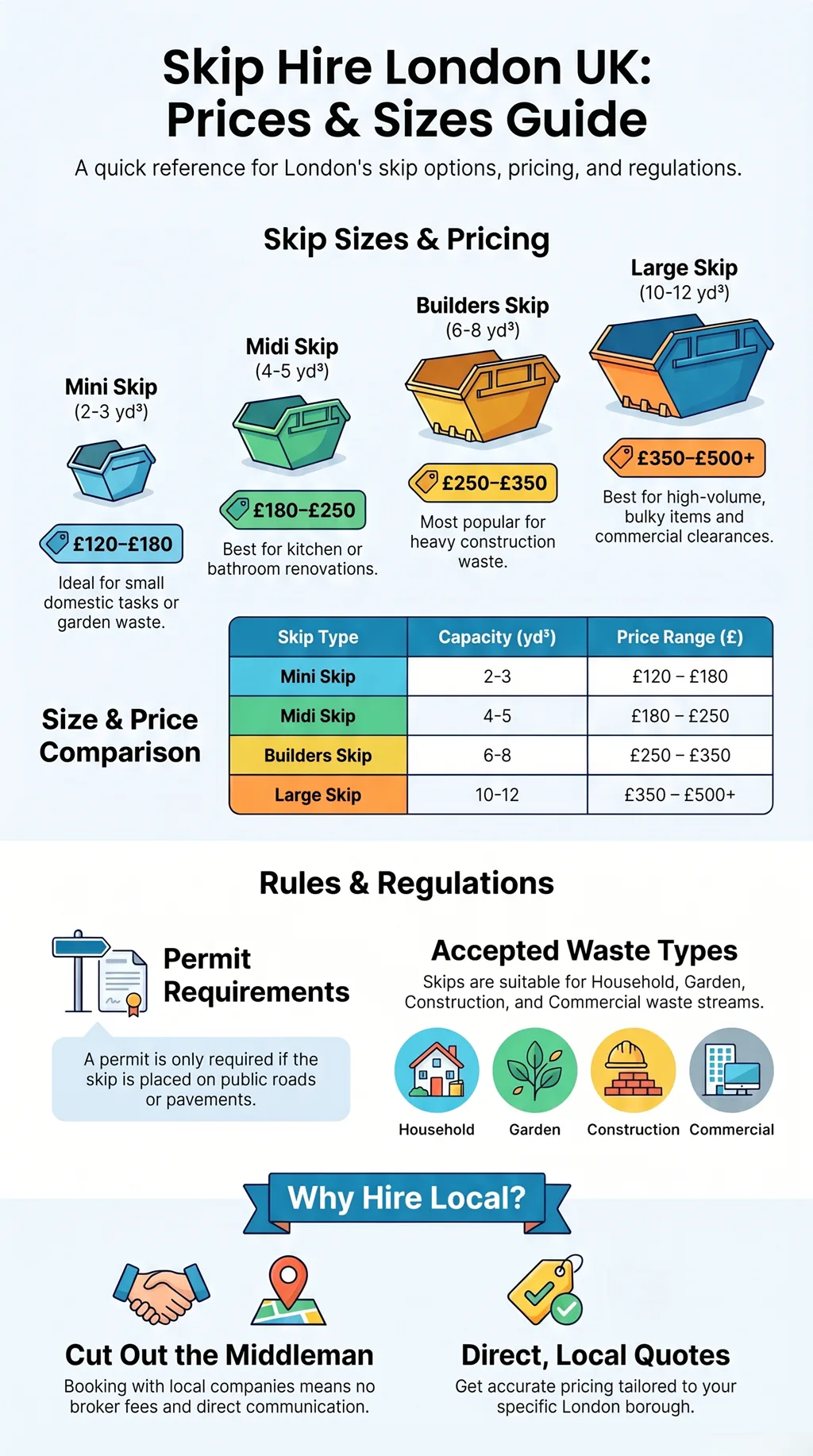
Before making a final decision on skip hire, it helps to understand a few practical checks that can prevent unnecessary costs and common booking errors. The points below highlight simple but important considerations that can make the hiring process more efficient and cost-effective.
How Can You Avoid Overpaying for Skip Hire?
Choosing the wrong setup can easily increase your costs. A few simple checks before booking can help you stay within budget.
To avoid overspending:
Choose the smallest suitable skip size for your waste
Avoid overestimating how much waste you’ll produce
Check whether a permit is required before booking
Compare at least 2–3 providers before deciding
Confirm weight limits, not just skip volume
What Are the Most Common Mistakes When Hiring a Skip?
Many extra costs and delays come from avoidable booking mistakes. These are the most common ones to watch out for:
Selecting a skip that is larger than needed
Ignoring permit requirements for road placement
Overfilling the skip (may lead to refusal of collection)
Not checking restricted or prohibited waste types
Booking without comparing prices or service terms
FAQ
Skip size depends on the amount and type of waste generated. Small home projects usually suit mini skips, while renovations or construction work often require larger builder skips.
Costs typically start from around £230, excluding VAT, for smaller skips. Prices increase based on size, waste type, hire duration, location, and any permit requirements.
A permit is needed when a skip is placed on public land such as roads, pavements, or verges. No permit is usually required for placement on private property like a driveway.
Hire periods vary by provider and project needs. Standard durations can often be extended, although longer hire times may include additional charges.
Most general waste from household and construction projects is accepted, but some restricted materials require specialist disposal. Comparison services also help review local providers, pricing, and coverage areas before booking.
How Can Skip Hire Be Arranged Easily?
Skip hire provides a simple way to manage waste from home projects, garden clear-outs, commercial work, and construction jobs. The process usually involves choosing the right skip size, checking basic costs, and making sure there is enough space for delivery. Planning ahead also helps when permits or road access may be required.
Comparing different providers makes it easier to find an option that suits both the project and budget. To explore local choices and available services, visit Search Skip Hire to compare local providers across London.
References
Related Articles
https://www.searchskiphire.co.uk/blog/skip-hire/when-skip-hire-is-the-best-solution/
https://www.searchskiphire.co.uk/blog/skip-waste-types/what-can-go-in-a-skip-uk/
https://www.searchskiphire.co.uk/blog/domestic-skip-hire/skip-hire-for-home-renovation-waste/
https://www.searchskiphire.co.uk/blog/skip-hire/skip-hire-kent/
Filed under:
Skip Hire