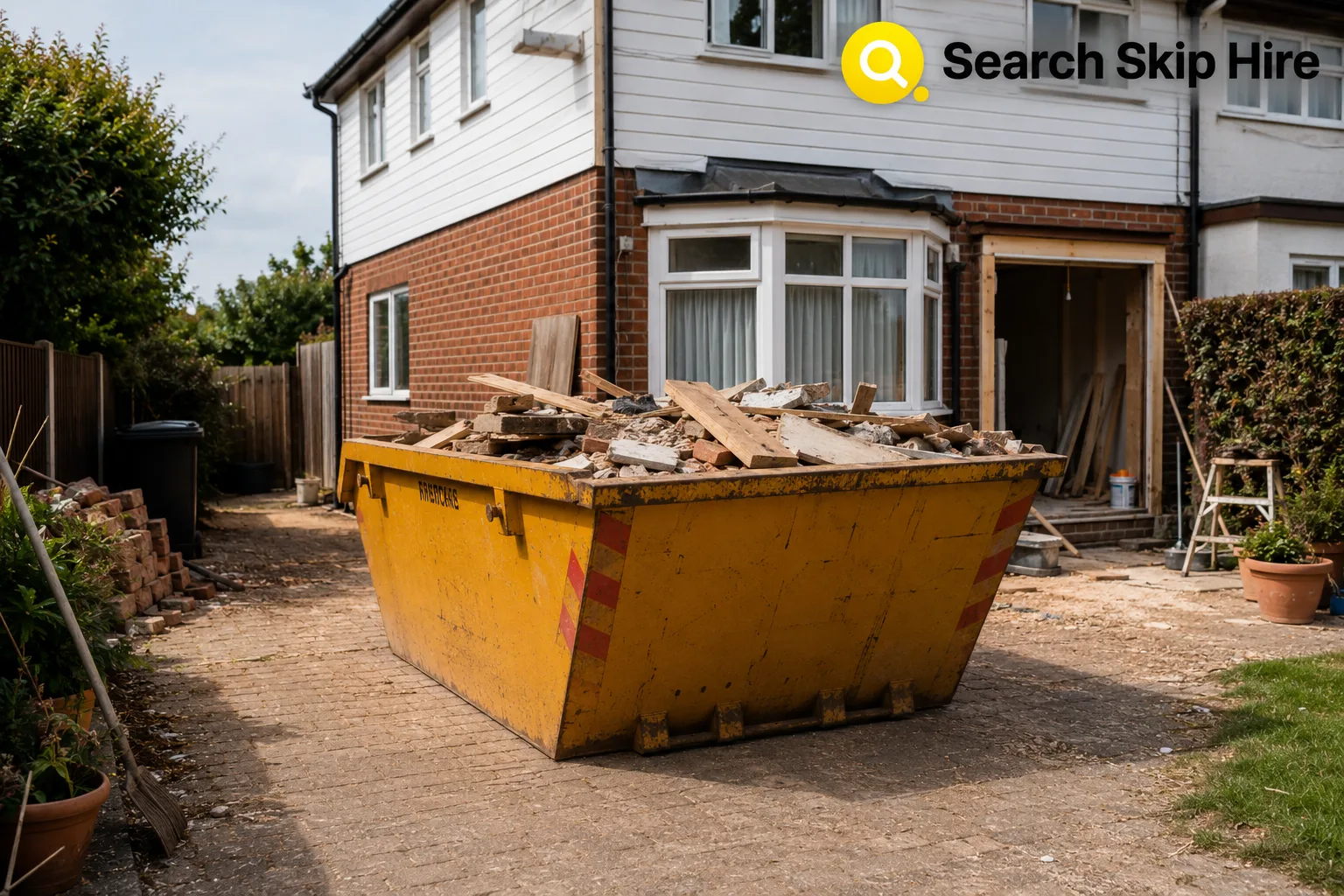
Skip hire in Kent is a practical way to manage waste from home improvements, garden projects, property clear-outs, and construction work. Choosing the right skip size helps keep waste organised, supports responsible disposal, and makes clean-up easier.
Understanding skip sizes, prices, and permit requirements before booking can also help the process run more smoothly. Keep reading to learn everything you need to know, or visit Search Skip Hire to compare skip options and find a suitable service across Kent.
What Are the Key Things to Know About Skip Hire in Kent?
Before arranging skip hire in Kent, it helps to understand a few important points that can make the process easier and more efficient.
Skip hire in Kent is available for household, commercial, and construction waste.
Choosing the right skip size helps avoid paying for space that is not needed.
A skip permit may be required if the skip will be placed on a public road instead of private land.
How Can Skip Hire Help with Waste Removal?
Skip hire provides a simple way to manage waste from projects of all sizes. Home renovations, garage clear-outs, garden improvements, and commercial work all become easier when waste is kept in one place. A range of skip sizes is available across the county, making it easier to choose an option that matches the amount of waste produced.
Planning ahead also helps with delivery arrangements, collection schedules, and permit requirements before work begins. Understanding the correct skip size is easier when you know How to estimate waste volume accurately, especially before deciding which container best fits your project needs.
Understanding environmental requirements is also an important part of planning waste removal. In some cases, certain activities may require additional checks or permissions depending on how and where waste is managed.
"Check if you need an environmental permit for your activity." - GOV.UK (Environment Agency & Department for Environment, Food & Rural Affairs)
This guidance reinforces the importance of confirming permit requirements early in the process. It helps ensure waste handling remains compliant with environmental rules while supporting smoother planning for skip hire, delivery, and disposal arrangements.
Why Choose a Local Skip Hire Company?
A local skip hire service can make waste removal more straightforward. Familiarity with the area helps support efficient deliveries, collections, and permit arrangements where required.
Several practical benefits include:
Straightforward delivery and collection planning.
Better understanding of local permit requirements.
A choice of skip sizes for different projects.
Coverage across many parts of the county.
Support for household, commercial, and construction waste.
Which Areas Are Covered by Skip Hire Services?
Skip hire services are available across the county, making it easier to arrange waste collection close to the project location. Residential properties, commercial premises, and construction sites can all access skip hire in many local areas.
Common service areas include:
North Kent
South Kent
East Kent
West Kent
Maidstone
Canterbury
Ashford
Dover
Folkestone
Tonbridge
Gravesend
Dartford
Sittingbourne
How Do Skip Hire Services Support Different Types of Projects?
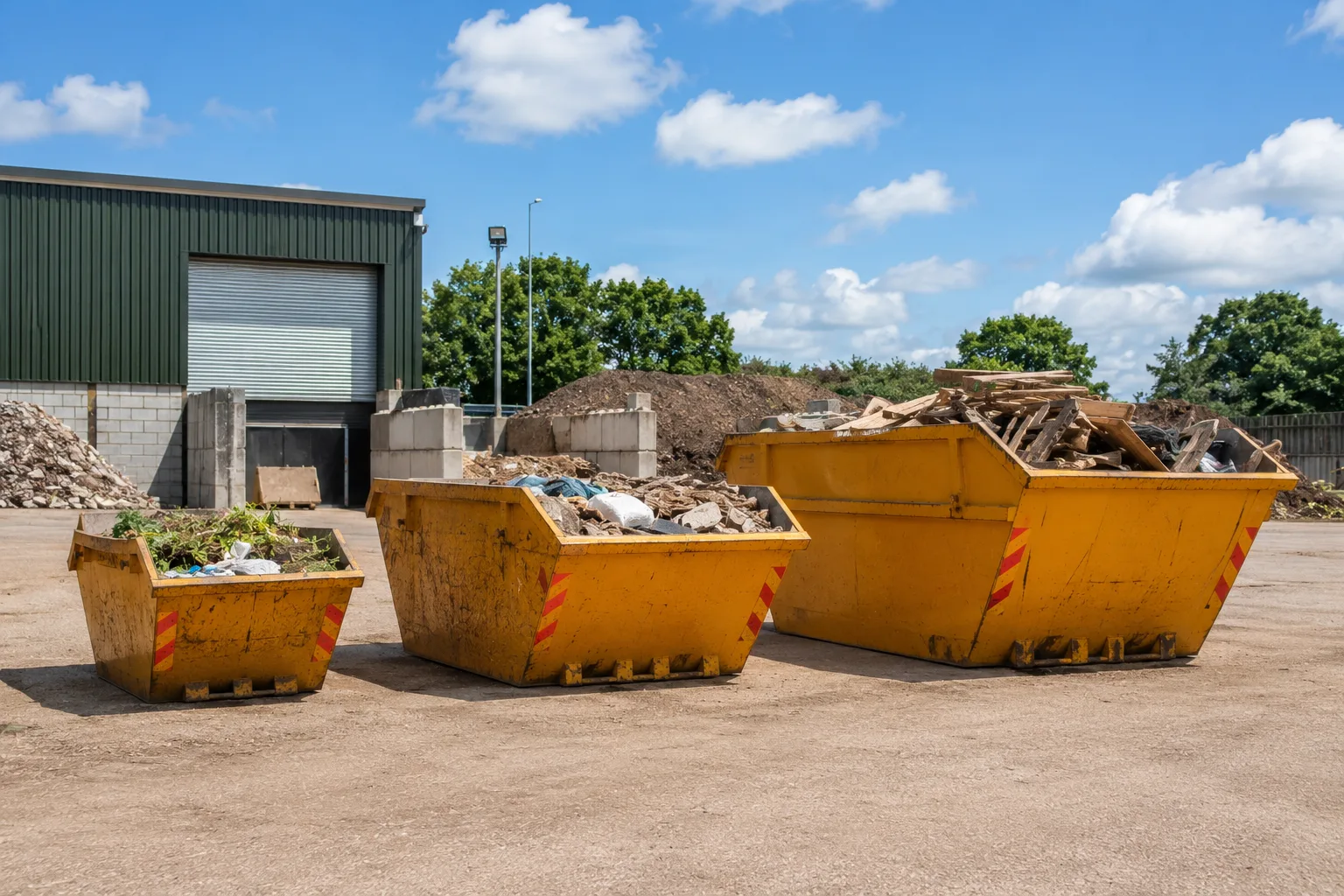
Skip hire services are designed to handle a wide range of waste needs, from small household jobs to larger commercial and industrial work. Each service type is structured to make waste removal more practical, depending on the scale and timing of the project.
What Skip Hire Services Are Available?
Different projects create different types of waste, so choosing the right skip hire service helps keep disposal simple and organised. Skip hire is suitable for everything from small household clear-outs to larger construction and industrial projects, making waste easier to manage from start to finish.
Skip hire is commonly used for a wide range of projects, including the following.
Home renovations
Garden clearances
House clear-outs
Office refurbishments
Construction projects
In other regions such as Cambridge, options like skip hire Cambridge uk are also commonly used to support residential, academic, and commercial waste management needs in the area.
What Is Domestic Skip Hire Suitable For?
Domestic skip hire is a practical choice for household projects where rubbish can build up quickly. Having a skip on-site helps keep the work area tidy while reducing trips to a local waste recycling centre.
Domestic skip hire is often used for these everyday projects. One common example is skip hire for home renovation waste, which helps manage materials from kitchen upgrades, bathroom refurbishments, and general property improvements more efficiently.
House clearances
Garage clearances
Kitchen renovations
Garden waste
General household rubbish
When Is Commercial Skip Hire a Good Choice?
Commercial skip hire supports businesses that need to manage waste during refurbishments, relocations, or day-to-day operations. A skip provides one central place to collect waste before it is removed for disposal.
Commercial skip hire is commonly used for these types of work.
Office clearances
Retail refurbishments
Business renovations
Packaging waste
Mixed commercial rubbish
How Does Industrial Skip Hire Support Larger Projects?
Industrial projects often generate larger amounts of waste than domestic jobs. Larger skips provide enough capacity for bulky materials while helping keep sites clean, organised, and safer throughout the project.
Industrial skip hire is commonly suitable for these activities.
Factory clearances
Construction sites
Warehouse projects
Demolition waste
Heavy material disposal
When Is a Wait and Load Service the Better Option?
Some locations do not have enough space to leave a skip for several days. A wait and load service allows waste to be loaded while the vehicle remains on-site before taking it away. This option can also help where long-term skip placement is not practical.
A wait and load service is often suitable in these situations.
Busy town centres
Limited parking areas
Short renovation projects
Commercial premises
Properties without private driveways
Is Same Day or Next Day Skip Hire Available?
Some projects need waste removed quickly to keep work moving. Subject to availability, same day or next day delivery may be available for suitable locations and skip sizes.
Delivery times can vary depending on skip availability, the delivery schedule, the project location, and whether a permit is required before placement. Skips placed on private land are often easier to arrange because no road permit is usually needed.
Fast delivery is often useful for projects such as the following.
Last-minute renovations
Unexpected waste build-up
Construction deadlines
House moves
Emergency clear-outs
What Are the Key Factors That Affect Skip Hire Prices and Options?
Understanding skip hire costs and available options helps make it easier to choose the right service for different types of projects. Each section below explains pricing factors, skip sizes, and important considerations in a simple way.
How Much Does Skip Hire Cost?
Skip hire prices vary depending on several factors such as skip size, hire duration, waste type, delivery location, and whether a permit is required. Smaller skips are generally more affordable, while larger skips for construction or commercial use cost significantly more. Understanding Factors affecting skip hire price can help you plan your budget more effectively and avoid unexpected costs.
Main factors that influence price include:
Skip size
Type of waste
Delivery location
Permit requirements
Length of hire
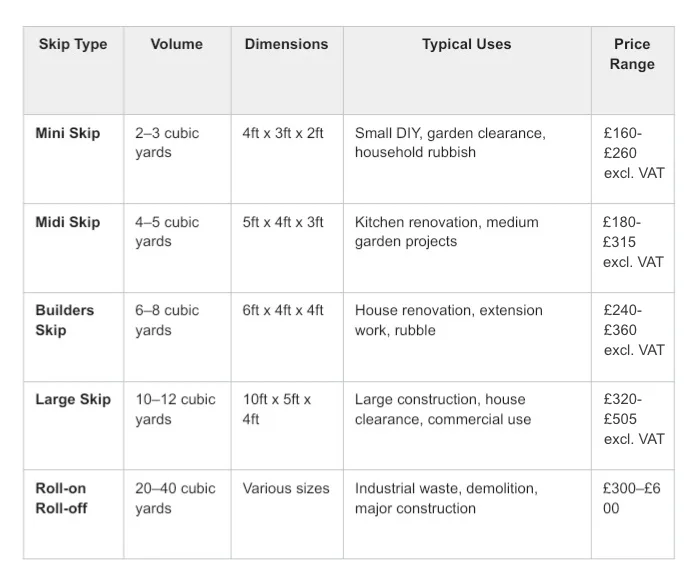
What Are the Different Skip Sizes, Capacities, and Prices?
Before choosing a skip, it is important to understand how different sizes compare in terms of capacity, dimensions, usage, and cost. The table below provides a clear overview of the most common skip types to help match the right option with the scale of a project.
When Is a Grab Lorry a Better Choice?
Grab lorries are more efficient for loose materials already piled on-site, as they eliminate manual loading.
Common materials include:
Soil
Hardcore
Rubble
Aggregates
Concrete
What Can Affect the Cost of Skip Hire?
Several factors can influence final pricing depending on project requirements:
Skip size
Hire duration
Waste type
Delivery location
Permit requirements
Seasonal demand
Why Do Licensed Waste Carriers Matter?
Licensed waste carriers ensure waste is handled legally and responsibly under UK environmental regulations, supporting proper recycling and disposal practices.
Responsible waste management includes:
Legal transportation
Approved disposal methods
Recycling compliance
Environmental protection
Proper documentation
"keep waste to a minimum by doing everything you reasonably can to prevent, reuse, recycle or recover waste (in that order)." - GOV.UK
How Do Different Skip Size Guides Help in Choosing the Right Option?
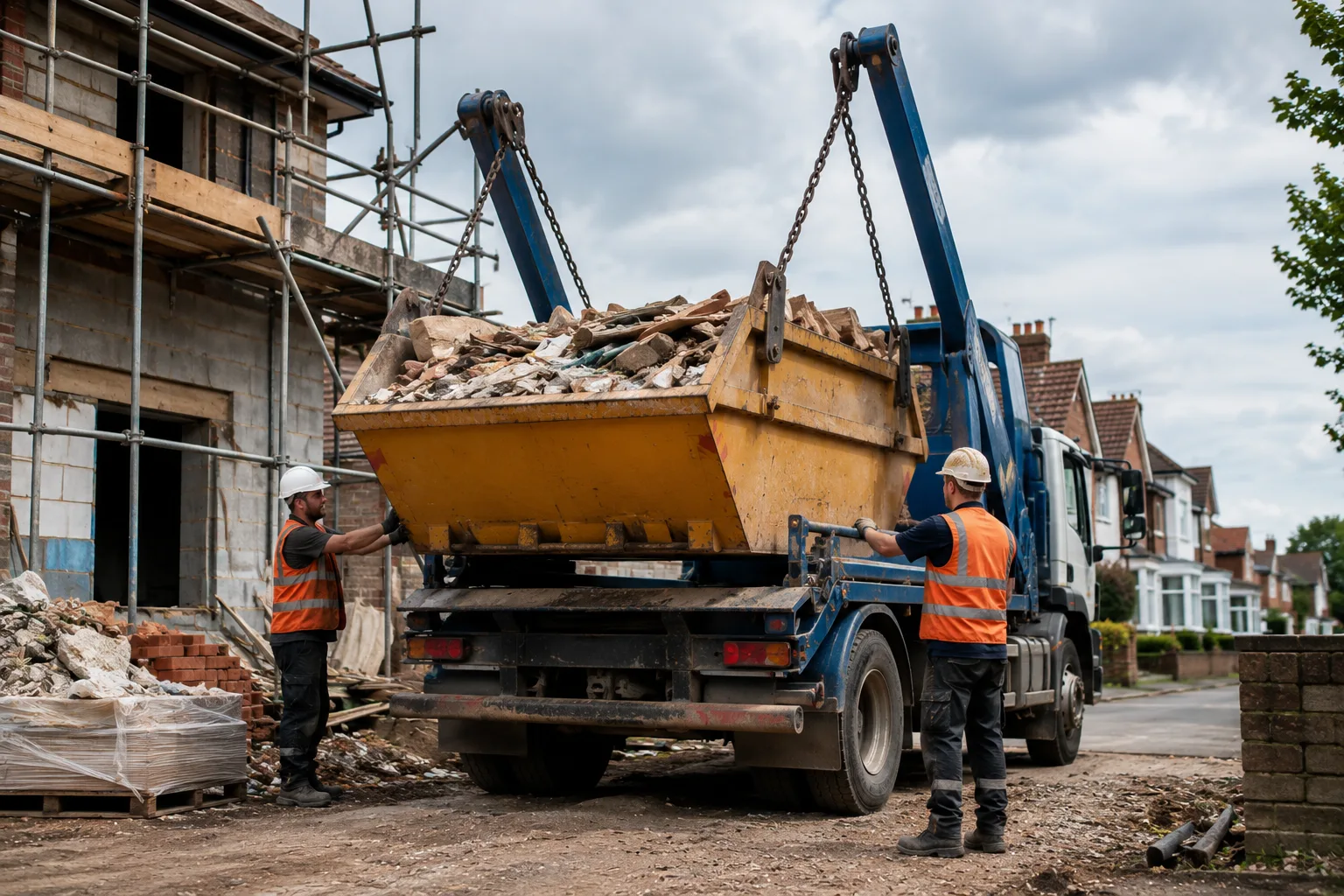
Understanding how skip sizes compare makes it easier to choose the right one for a project. Each category below explains a specific use case, from small home tasks to large-scale waste removal.
What Factors Should Be Considered When Choosing a Skip Size?
Choosing a skip size starts with understanding the basic needs of a project. The right choice helps avoid wasted space or unexpected extra costs later on.
Key points to consider include:
Waste volume
Waste weight
Available space for placement
Type of project
Length of the hire period
What Is Suitable for Small Waste and Light Projects?
Small projects usually produce limited waste and need a skip that fits easily into tighter spaces. A compact option is often enough for simple home tasks.
A typical small skip is used for:
Garden tidy-ups
Shed clear-outs
Bathroom upgrades
Small furniture disposal
What Skip Size Works for Medium Household Projects?
Medium projects often create more waste but still stay within a manageable level. A mid-sized skip offers a practical balance between space and capacity.
This type of skip is often used for:
Kitchen renovations
Garage clearances
Medium garden work
Household decluttering
What Skip Is Used for Heavy Building Waste?
Construction and renovation work usually generates heavier materials that need stronger capacity. A builder-sized skip is designed for this type of waste.
Common materials placed in this skip include:
Bricks
Concrete
Roofing materials
Timber
Rubble from building work
When Is an Enclosed Skip the Right Choice?
Some projects need extra protection for waste, especially when security or weather exposure becomes a concern. An enclosed skip helps keep contents covered and contained.
Enclosed skips are often used for:
Confidential business waste
Long-duration building work
Lightweight recyclable materials
Sites requiring added security
What Is Best for Large or High-Volume Waste Projects?
Large-scale projects produce waste in much bigger quantities, often beyond standard skip capacity. Larger containers or roll-on roll-off options are usually more suitable.
These skips are commonly used for:
Commercial refurbishment work
Industrial waste removal
Major demolition projects
Large construction sites
What Waste Can Be Put in a Skip?
A skip can handle many everyday waste types from home, garden, and building projects. However, some materials are restricted due to safety and environmental rules.
Common waste types suitable for skips include:
Household rubbish
Furniture
Timber
Bricks
Garden waste
What Can Go Into a Household Waste Skip?
Household skips are useful for general home clear-outs and small renovation work. They help keep everyday waste in one place until collection.
A short explanation helps show what usually fits in this type of skip.
Common household waste includes:
Cardboard
Furniture
Clothing
Plastic items
General rubbish
What Can Go Into a Garden Waste Skip?
Garden work often produces green waste that builds up quickly during maintenance or landscaping. A skip makes it easier to manage everything in one go.
Typical garden waste includes:
Grass cuttings
Hedge trimmings
Branches
Plants
Soil and turf
What Can Be Put Into a Construction Waste Skip?
Building and renovation projects usually create heavier materials that need a strong and suitable container. A larger skip is commonly used for this type of waste.
Construction waste often includes:
Bricks
Concrete
Timber
Rubble
Roofing materials
Tiles
"Skips are commonly used to hold open-topped loads of construction and demolition waste, garden waste or other waste and litter types. The construction debris may originate from a building, renovation, or demolition site; building supplies can be delivered to a site in a skip that is later used to remove waste." - Wikipedia
What Waste Cannot Be Put in a Skip?
Some items cannot be placed in a skip because they need special handling under waste regulations. These materials require separate disposal methods.
Items that should not go into a skip include:
Asbestos
Paints
Chemicals
Batteries
Gas cylinders
Fridges and freezers
Tyres
Medical waste
What Are Hazardous Waste Rules?
Hazardous waste needs careful handling to protect health and the environment. These materials are always treated separately from general skip waste.
Common hazardous materials include:
Asbestos
Solvents
Oil-based paints
Clinical waste
Fuel containers
How Do Skip Permit Rules Apply Based on Placement Location?
Understanding skip permit requirements helps ensure smooth delivery and correct placement, especially near public areas. Local rules are designed to keep roads safe and maintain clear access during waste collection work.
When Is a Skip Permit Required Based on Placement Area?
Skip permit requirements depend mainly on where the skip is placed. Public land usually requires approval from local authorities, while private land generally does not. Understanding the location early helps ensure smooth delivery and avoids delays.
Placement areas can be grouped into two main categories:
Private locations (usually no permit required):
Driveways
Front gardens
Private gardens
Business premises
Construction sites on private land
Public locations (permit usually required):
Public roads
Pavements
Council-controlled parking spaces
Areas where part of the skip may extend onto the highway
Street permits fall under public placement rules and are issued to maintain road safety and manage traffic flow. These rules ensure skips do not block access or create hazards in shared spaces.
How Do Council Rules Affect Skip Placement?
Council regulations can differ by area, so placement rules may vary depending on the location of the skip. These rules support safe positioning and help reduce disruption in public spaces.
"Any skip placed on the highway must be positioned so that it does not cause a danger to users of the highway." - Kent County Council (kent.gov.uk)
This statement reinforces the importance of complying with local council rules when placing a skip on public roads. It ensures that skip placement prioritises safety for pedestrians, cyclists, and drivers while maintaining safe access on highways.
Council regulations commonly cover:
Skip positioning
Safety lighting
Reflective markings
Permit duration
Public access
How Much Do Skip Permit Costs Vary by Area?
Permit fees are set by local councils, so costs can differ depending on location and duration. Longer placements on public land may also affect total charges.
Permit arrangements may differ across:
Maidstone
Canterbury
Dartford
Folkestone
Gravesend
Tonbridge
Tunbridge Wells
How Long Does a Skip Permit Usually Last?
Permit duration depends on the issuing council and the planned hire period. Most permits last for a limited period, with extensions available in some cases.
Several factors can affect permit duration:
Processing time
Planned hire period
Project schedule
Permit renewal requirements
How Does Skip Hire Work Across Different Towns?
Skip hire services are available in many areas, making it easier to manage waste close to where projects take place. Local availability helps support everything from small home improvements to larger construction work.
What Is Skip Hire Like in Maidstone?
Skip hire in Maidstone supports a wide range of projects, from home improvements to commercial refurbishments. It is commonly used for both small and large waste removal needs.
Common uses include:
Home improvements
Garden projects
Commercial refurbishments
General waste removal
What Projects Commonly Use Skip Hire in Canterbury?
Canterbury often uses skip hire for residential and property-related work. It helps manage waste from both renovation and maintenance tasks.
Typical projects include:
Household renovations
Property clearances
Garden maintenance
How Is Skip Hire Used in Ashford?
Ashford skip hire supports both domestic and commercial waste management needs. It helps keep renovation and construction sites organised and clear.
Common uses include:
Domestic rubbish removal
Renovation waste
Construction materials
What Is Skip Hire Used for in Dover?
Skip hire in Dover is commonly used for a mix of home, business, and building projects. It provides a simple way to handle different types of waste.
Typical uses include:
Home improvements
Business refurbishments
Building projects
How Do Folkestone Residents Use Skip Hire?
Folkestone projects often rely on skip hire during home upgrades and outdoor work. It helps manage waste from both small and medium projects.
Common uses include:
Landscaping work
Renovations
House clear-outs
What Is Skip Hire Used for in Tonbridge?
Skip hire in Tonbridge supports both residential and commercial waste removal. It is often used for structured projects that require ongoing waste collection.
Common uses include:
Household waste removal
Commercial projects
Construction work
How Is Skip Hire Used in Gravesend?
Gravesend skip hire is commonly used for property improvements and office-related work. It helps keep waste organised during different types of projects.
Typical uses include:
Property improvements
Office refurbishments
General waste disposal
What Projects Use Skip Hire in Dartford?
Skip hire in Dartford supports both home and business projects. It is often chosen for organised and efficient waste handling.
Common uses include:
Domestic projects
Commercial work
General waste management
How Is Skip Hire Used in Sittingbourne?
Sittingbourne residents often use skip hire for everyday home and garden projects. It helps manage waste from regular maintenance and renovation work.
Common uses include:
Home improvements
Garden clearances
Property renovations
How Can Skip Hire Services Be Compared and Booked Effectively?
Comparing skip hire services helps ensure the right balance between size, cost, and service quality. A clear understanding of the process also makes booking and waste handling more straightforward from start to finish.
How to Compare the Best Skip Hire Companies?
Comparing skip hire options helps us choose a service that matches our project size, delivery requirements, and waste management needs. Looking beyond price alone can provide a better understanding of overall service quality, reliability, and suitability for the job.
Before making a booking, it is useful to compare several important factors, including:
Available skip sizes
Delivery availability and coverage
Permit assistance
Hire duration
Accepted waste types
In larger UK cities, skip hire availability and service options can vary between locations.
For example, services such as skip hire Sheffield may be compared based on factors such as pricing, skip size availability, delivery times, and overall service reliability. Considering these details helps us choose a provider that best fits our project requirements.
What Questions Should Be Asked Before Hiring a Skip?
A few simple questions can help avoid confusion during the hire period. Clear answers make the process smoother and help set the right expectations.
Common questions include:
What waste can go inside the skip?
Is permit support available?
How long is the hire period?
Are there any extra charges?
When can delivery and collection take place?
How Does the Skip Booking Process Work?
Booking a skip is usually simple when each step is understood in advance. Planning ahead helps ensure the correct skip arrives at the right time.
The booking process generally includes:
Choosing the right skip size
Selecting a delivery date
Confirming waste type
Arranging permits if needed
Scheduling collection
What Are Waste Transfer Notes for Commercial Waste?
Commercial waste collections may require a waste transfer note as part of proper documentation. This record helps track how waste is handled from collection to disposal.
Waste transfer notes commonly include:
Waste description
Collection date
Carrier details
Transfer information
Business records
How Can Skip Hire Be Made More Affordable?
Keeping skip hire costs down usually depends on choosing the right setup for the job. Careful planning helps avoid paying for more space or time than needed.
Simple ways to manage costs include:
Choosing the correct skip size
Avoiding overfilling the skip
Placing the skip on private land where possible
Comparing available quotes
Booking only for the required hire period
How Does Recycling and Sustainability Work in Skip Hire?
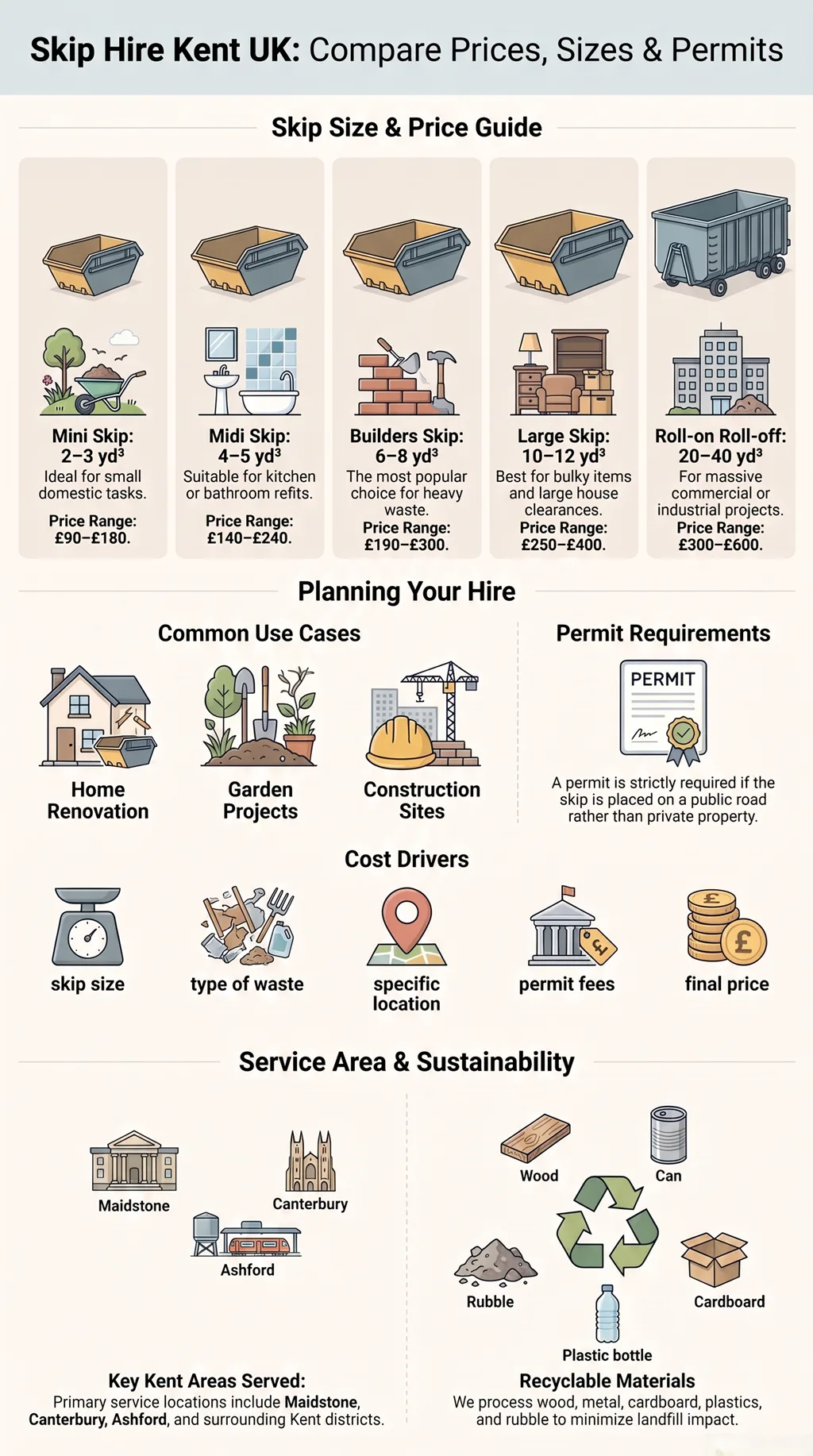
Responsible waste management continues even after a skip has been collected. Many materials can be sorted at recycling facilities, helping reduce the amount of waste sent to landfill and supporting more sustainable practices.
Sustainable waste handling is usually guided by a simple waste hierarchy:
Reduce waste
Reuse suitable materials
Recycle recyclable items
Recover useful resources
Dispose of remaining waste responsibly
Recycling facilities play an important role in this process. Once collected, waste is often separated so that suitable materials can be processed again instead of being disposed of.
Materials commonly sorted for recycling include:
Wood
Metal
Cardboard
Plastics
Rubble
Although recycling rates can vary depending on the type of waste collected, separating recyclable materials remains an important step. This approach helps support more efficient resource use and reduces overall environmental impact.
FAQ
Skip hire in Kent is a waste management service that provides large containers for disposing of waste from home improvements, garden projects, renovations, and construction work. It is typically required when waste volume exceeds standard household bin capacity.
A skip permit is generally required when a skip is placed on public land such as roads, pavements, or council-controlled areas. No permit is usually required when the skip is placed on private land such as a driveway or private property.
The appropriate skip size depends on the volume and type of waste generated. Smaller skips are suitable for minor household or garden projects, while larger skips are more appropriate for construction, renovation, or commercial waste.
Skip hire costs in Kent vary based on skip size, hire duration, waste type, delivery location, and permit requirements. Prices typically start from around £160 for small skips, excluding VAT, and can exceed £600 for larger industrial skips.
General waste such as household rubbish, wood, bricks, soil, furniture, and garden waste is typically accepted. However, hazardous materials including asbestos, chemicals, batteries, gas cylinders, and medical waste are strictly prohibited.
How Is the Right Skip Chosen for a Project?
Skip hire in Kent offers a simple way to manage waste from home, business, and construction work. The process becomes easier when the right skip size is chosen, permit needs are understood, and waste types are considered in advance. Planning these details early helps avoid delays and keeps the work area more organised throughout the project.
Good waste handling also includes thinking about delivery timing, basic regulations, and recycling where possible. With the right approach, skip hire can support smoother project work while reducing unnecessary complications.
If ready to compare skip hire options or arrange waste collection in Kent, more information is available at Search Skip Hire.
References
Related Articles
https://www.searchskiphire.co.uk/blog/skip-hire/who-should-use-skip-hire-services/
https://www.searchskiphire.co.uk/blog/skip-sizes/how-to-estimate-waste-volume-accurately/
https://www.searchskiphire.co.uk/blog/skip-hire-prices/factors-affecting-skip-hire-price/
https://www.searchskiphire.co.uk/blog/skip-hire/skip-hire-cambridge/
https://www.searchskiphire.co.uk/blog/skip-hire/skip-hire-sheffield/
Filed under:
Skip Hire