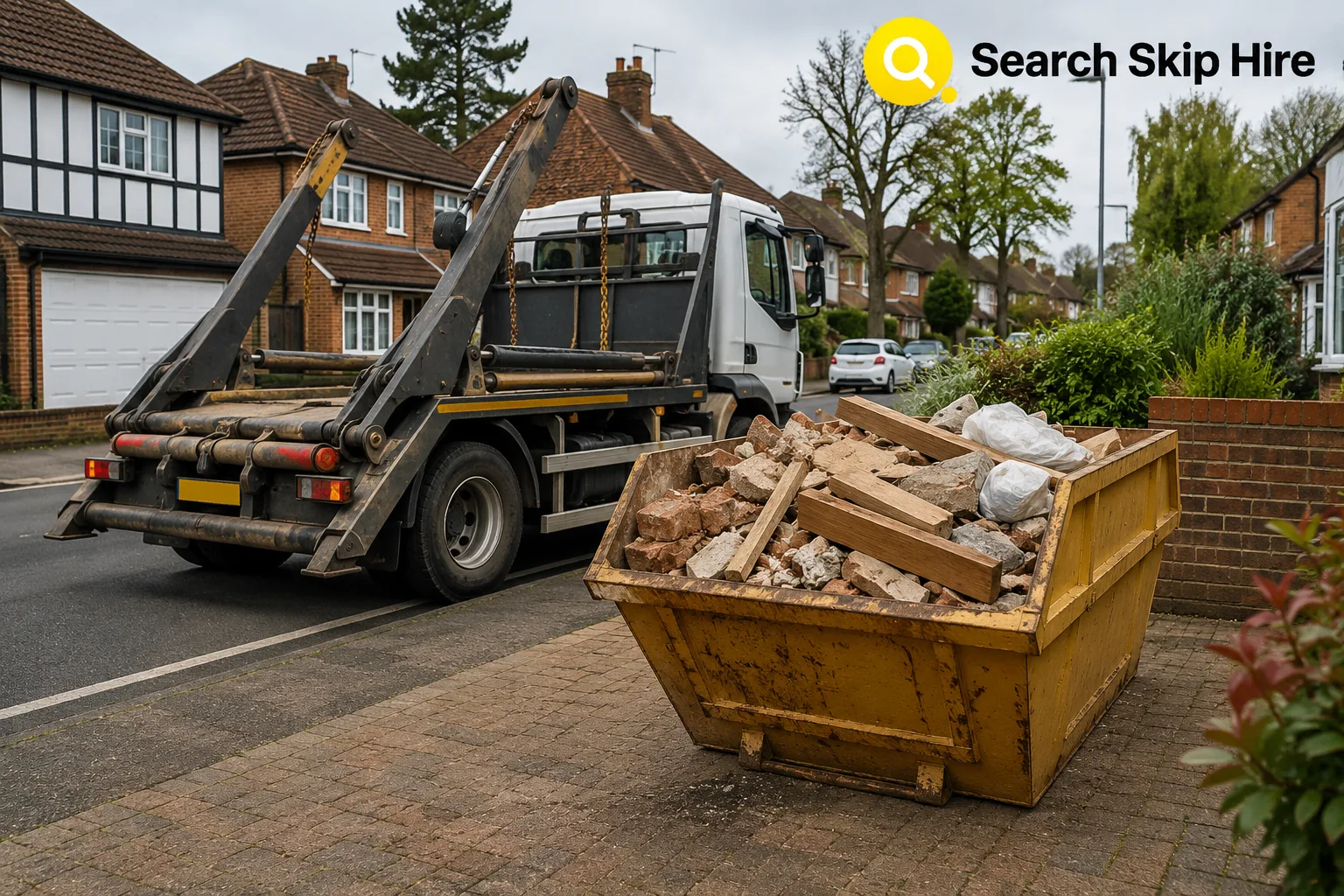
Skip hire in Cambridge UK offers a practical way to manage waste from home improvements, garden projects, property clearances, and construction work. Different skip sizes are available for domestic and commercial waste, making it easier to choose the right option for each project.
Understanding skip sizes, permit requirements, accepted waste types, and delivery arrangements can help make the hiring process straightforward.
Keep reading to learn more about skip hire in Cambridge and see how Search Skip Hire can help compare local skip hire options.
What Are the Most Important Things to Know Before Hiring a Skip?
Understanding the basics of skip hire can help make planning easier before booking a skip.
Different skip sizes are available for household, garden, renovation, and commercial waste.
A permit may be required when a skip is placed on a public road instead of private land.
Knowing waste rules, delivery arrangements, and collection timing can help the process run smoothly.
How Can Local Skip Hire Companies Be Found Quickly?
Finding the right skip starts with understanding the project. A small clear-out may only need a mini skip, while renovation or construction work often produces enough waste to require a larger size.
Choosing a suitable skip from the beginning can help keep waste organised and avoid unnecessary delays. When skip hire is the best solution is often determined by the type of waste, project scale, and available space, so planning ahead is important.
How Does Search Skip Hire Work?
Search Skip Hire brings together local skip hire options in one place, making it easier to compare available services for different project needs. Local listings help simplify the search process by showing providers that serve the area and offer a range of skip sizes.
Planning before booking can make the process much smoother.
Type of waste that needs to be removed
Skip size that matches the project
Whether the skip will be placed on private land or a public road
Expected hire period
Which Areas Are Covered?
Local skip hire services are available across Cambridge and surrounding parts of Cambridgeshire. Coverage across nearby locations helps support household projects, property clearances, renovations, landscaping work, and commercial jobs.
Service areas commonly include:
Cambridge
East Cambridgeshire
South Cambridgeshire
Nearby locations across Cambridgeshire
"We’re fully licensed and insured to lend skips for use on private land, and offer competitive prices. We can deliver to anywhere in Cambridge or South Cambridgeshire." - Cambridge City Council
Local skip hire services in Cambridge often support nearby areas such as Chesterton, Trumpington, Cherry Hinton, and Milton, depending on the provider’s delivery routes.
What Types of Skip Hire Services Are Available?
Skip hire is suitable for projects of many different sizes. Household jobs often create general rubbish, furniture, or garden waste, while commercial projects may produce larger amounts of construction or business waste. Choosing the right skip depends on the type and volume of waste being removed.
Common projects include:
Home renovations
Garden landscaping
House clearances
Building and construction work
Commercial waste removal
Office clearances
What Skip Sizes Are Available?
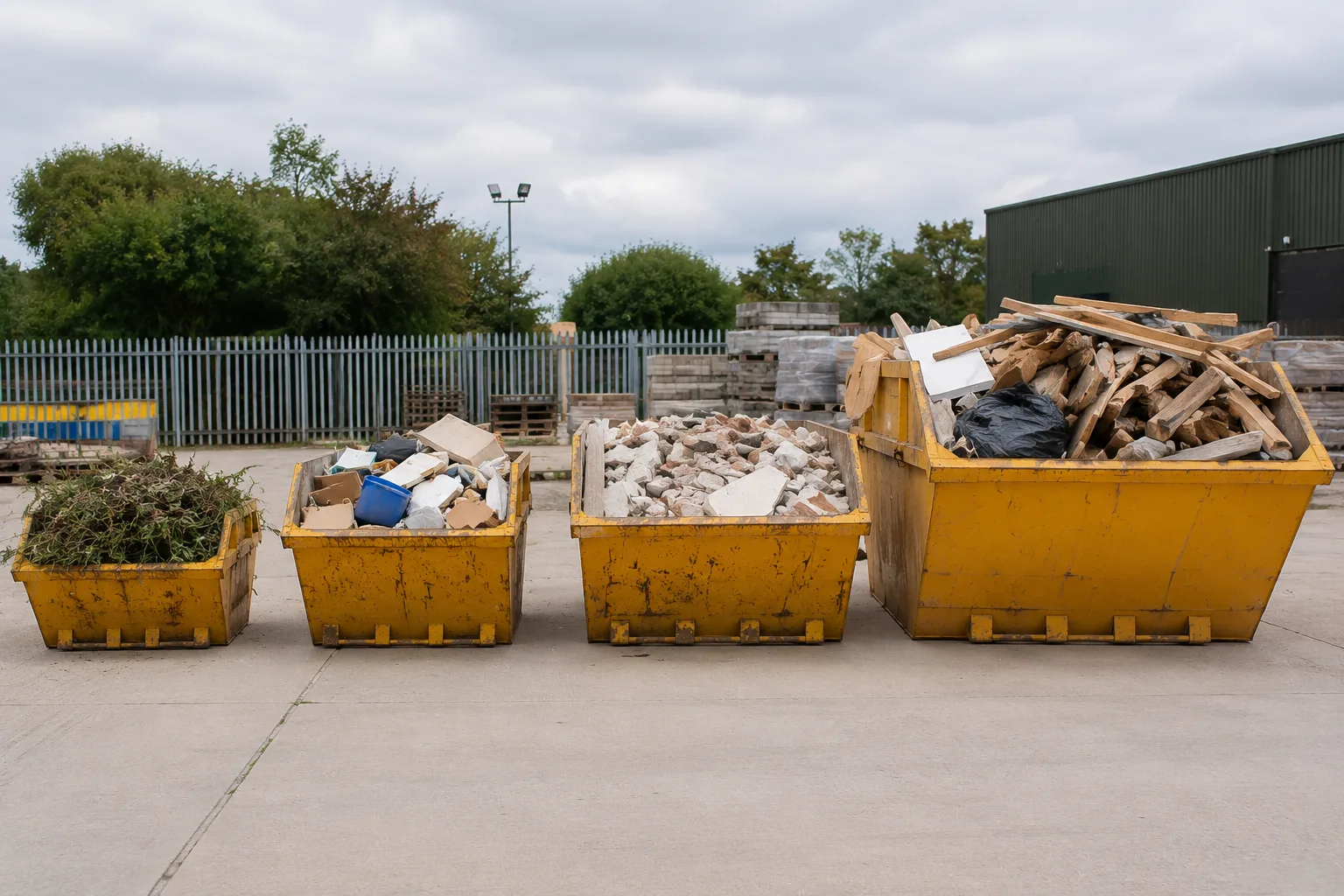
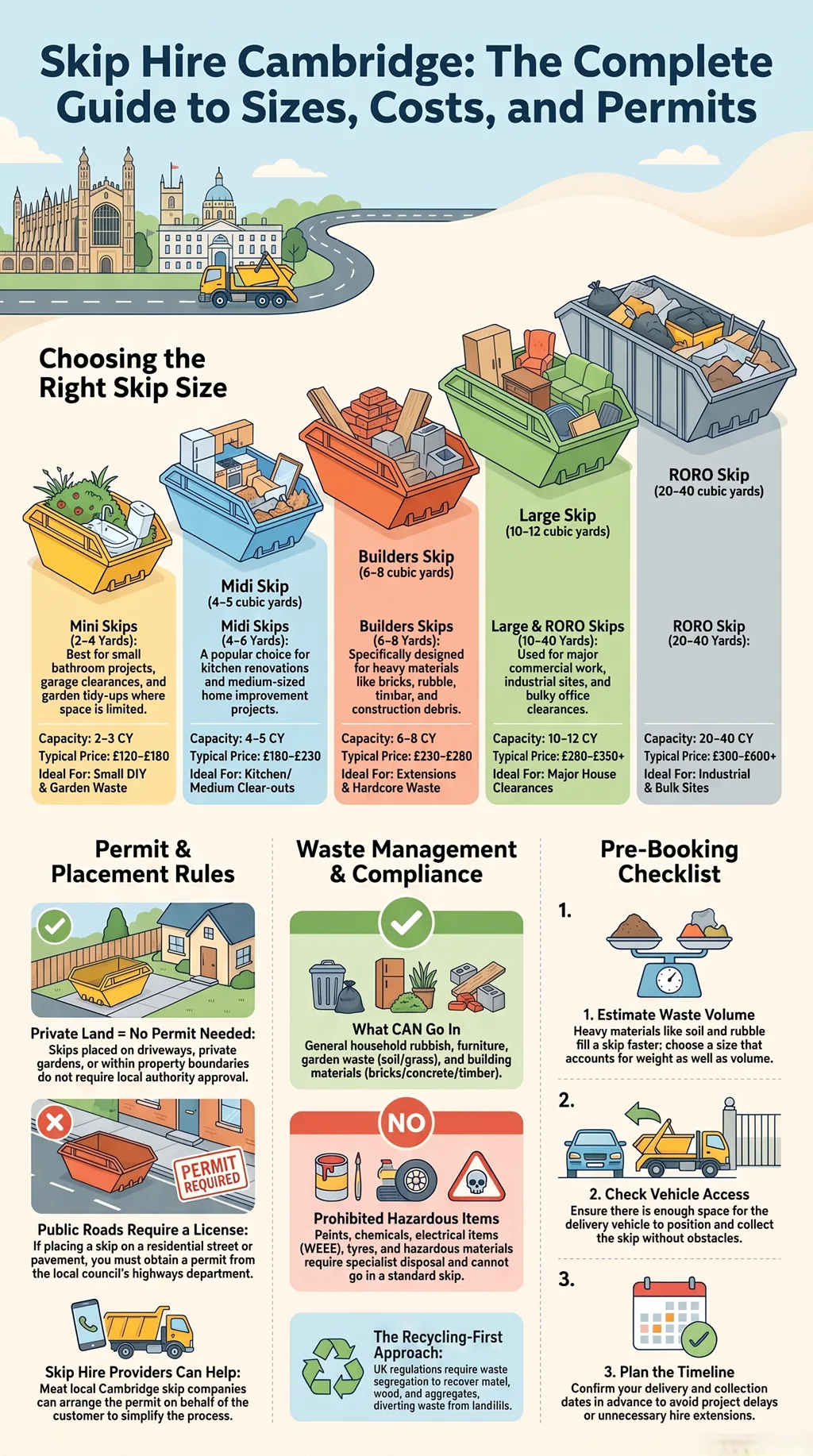
Choosing the right skip size can make waste removal easier from the start. A skip that is too small may fill up quickly, while one that is much larger than needed may not be the most practical choice. Understanding skip sizes in cubic yards explained helps match the correct skip capacity to the volume of waste, making it easier to avoid overfilling or underusing a skip.
Matching the skip size to the project helps keep waste organised and reduces the need for extra arrangements.
What Is a Mini Skip Best For? (2–3 Cubic Yards)
Mini skips suit small-scale projects that generate light waste volumes. Compact sizing makes them suitable for properties with limited space while still handling basic disposal needs.
Common uses include:
Small DIY tasks
Garden clearance
Minor household decluttering
Bathroom touch-ups
Light renovation waste
A 2–3 cubic yard skip is generally appropriate for short projects with minimal waste output.
When Is a Midi Skip the Right Choice? (4–5 Cubic Yards)
Midi skips provide additional capacity for projects that exceed the limits of a mini skip while remaining suitable for residential use.
Common uses include:
Kitchen refurbishment
Bathroom renovation
Medium garden landscaping
Flooring replacement
General household clearance
A 4–5 cubic yard capacity helps manage moderate waste levels without requiring a full builder skip.
What Is a Builders Skip Used For? (6–8 Cubic Yards)
Builders skips are designed for heavier waste types generated during construction and renovation work. Stronger capacity makes them suitable for mixed building materials.
Common materials include:
Bricks and rubble
Timber
Soil and hardcore
Concrete
Construction debris
An 8 cubic yard skip is commonly selected for renovation and extension projects.
When Is a Large Skip Suitable? (10–12 Cubic Yards)
Large skips are used for high-volume waste removal where frequent clearance or bulky materials are involved.
Common uses include:
Large property clearance
Commercial refurbishment
Bulk household waste
Construction site waste
Office or furniture disposal
Sufficient access space is important due to increased skip size and loading height.
What Is a Roll-On Roll-Off Skip? (20–40 Cubic Yards)
Roll-on roll-off (RORO) skips are designed for industrial-scale waste management where standard skips are insufficient.
Common uses include:
Major construction sites
Industrial clearance projects
Large demolition waste
Continuous commercial operations
Bulk material disposal
These skips require specialist delivery access and are typically used for long-term or large-scale projects.
How Much Does Skip Hire Cost?
Skip hire costs can vary depending on skip size, type of waste, hire duration, and placement requirements. Understanding these factors helps make pricing easier to plan before booking. For more detailed breakdown, see How much skip hire costs UK.
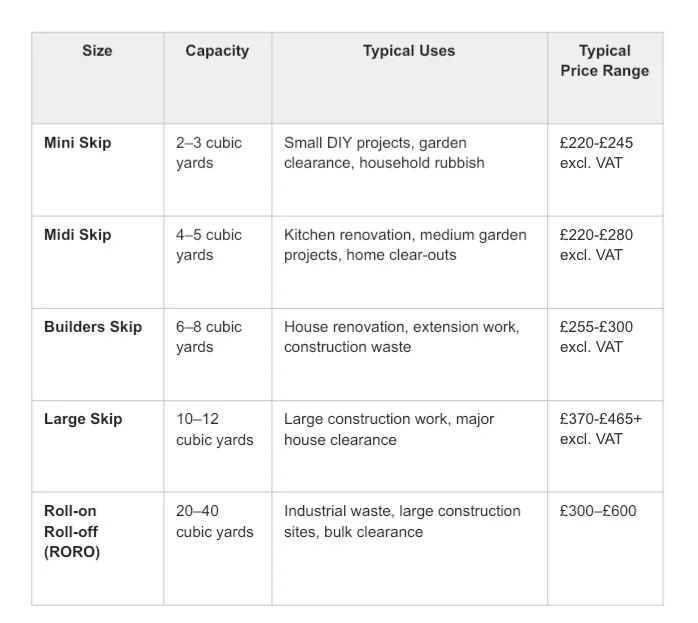
Larger skips generally cost more because they hold greater volumes of waste and are often used for heavier or more complex projects. Smaller skips are usually more suitable for quick household or garden jobs where waste levels are limited.
What Affects Skip Hire Prices?
Skip hire prices can vary depending on several factors, including skip size, waste type, hire length, and where the skip will be placed. Understanding these details before booking can make it easier to choose a suitable option and plan the project budget.
How Does Skip Size Affect the Price?
Skip size is one of the main factors that influences cost. Larger skips hold more waste and generally cost more than smaller ones. Choosing a skip that matches the amount of waste can help avoid the need for an additional skip.
Several points are worth considering before selecting a skip size.
Estimated amount of waste
Type of project
Space available for the skip
Weight of the waste materials
Heavy materials can fill a skip faster than lighter household waste, even when the skip is not full.
Does the Type of Waste Change the Cost?
The type of waste can also affect skip hire because some materials require different handling or disposal methods. Knowing what will go into the skip helps when selecting the most suitable option.
Common types of waste include:
Household rubbish
Garden waste
Building materials
Furniture
Renovation debris
Materials such as soil, concrete, and rubble are much heavier than general household waste and may require additional planning.
Does the Hire Period Make a Difference?
The length of the hire period can also influence overall costs. Smaller projects may only need a skip for a few days, while larger renovations or construction work may require a longer hire period.
Planning ahead can help avoid unnecessary delays during the project.
Expected project timeline
Amount of waste being produced
Delivery date
Collection date
A clear schedule can make waste removal easier to manage from start to finish.
Do Skip Placement and Permits Affect the Price?
Skip placement can influence the overall cost, especially if the skip needs to be placed on a public road. A skip kept on private land may not require the same arrangements.
Placement should be considered before booking a skip.
Private driveway
Public road
Local permit requirements
Space for delivery and collection
Checking the placement location in advance can help prevent delays on delivery day.
Does Same-Day or Next-Day Availability Affect Skip Hire?
Some projects need waste removed quickly because work starts sooner than expected or rubbish builds up faster than planned. In these situations, same-day or next-day skip hire may be a suitable option if availability allows.
Urgent bookings are often requested for projects such as:
Property clearances
Home renovations
Unexpected construction waste
Time-sensitive clean-up work
Availability depends on local scheduling and the type of skip required.
How Does the Council Skip Permit Process Work?
Skip placement on public roads requires approval from the local authority before delivery. Skip permits are issued in Cambridge by Cambridgeshire County Council.
When a skip cannot be placed on private land such as a driveway, a permit is required to ensure it is safely positioned and complies with highway regulations.
When a skip permit is required depends on whether the skip will be placed on public or private land, as well as local authority rules governing road and pavement usage.
“Contact your local council for a skip licence if you want to put a skip on a public road.” - GOV.UK (UK Government)
In Cambridge, skip permit applications are handled by Cambridgeshire County Council. In most cases, applications are submitted online, and many skip hire providers can arrange the permit on behalf of customers to simplify the process.
When a skip cannot be placed on private land such as a driveway, a permit is required to ensure it is safely positioned and complies with highway regulations.
When Is a Skip Permit Required?
A skip permit is needed whenever a skip is placed on public land, including:
Public roads
Residential streets
Pavements
Controlled parking areas
Skip hire providers often assist with the application, but approval is always issued by the local authority.
When Is a Skip Permit Not Required?
A permit is often unnecessary when the skip is placed entirely on private land. The location should provide enough space for both delivery and collection vehicles.
Private placement may include:
Driveways
Private gardens
Land within the property boundary
Off-road parking spaces
Checking the available space before booking can help avoid access or placement issues.
How Does Skip Hire With a Permit Work?
Some projects require a skip to be placed on a public road where a permit is necessary. Planning ahead can help allow enough time for any required arrangements before delivery.
Preparing in advance can make the process more straightforward.
Confirm the skip placement location
Check whether a permit is required
Allow time for delivery arrangements
Plan access for collection
Organising these details before booking can help the skip hire process run more smoothly from delivery through collection.
What Can Go in a Skip?
What can go in a skip UK is an important consideration when planning any type of waste removal project, as it helps ensure materials are disposed of correctly and in line with local guidelines.
Knowing which materials can go into a skip helps keep waste removal simple and reduces the chance of delays during collection. The type of waste also plays a part in choosing the most suitable skip size for the project.
What Household Waste Can Go in a Skip?
Home improvement projects, clearances, and everyday decluttering often produce a variety of general waste. Many common household items can be placed in a skip, provided they meet local disposal guidelines.
Household waste commonly includes:
Old furniture
General household rubbish
Carpets
Broken household items
Cardboard and packaging materials
Sorting waste before loading the skip can help make the most of the available space.
What Garden Waste Can Go in a Skip?
Garden projects can create large amounts of green waste, particularly during landscaping or seasonal maintenance. A skip offers a convenient way to collect outdoor waste in one place.
Common garden waste includes:
Soil
Grass cuttings
Branches
Plants
Landscaping debris
Separating garden waste from other materials can make loading the skip more organised.
What Construction and Building Waste Can Go in a Skip?
Renovation and construction projects often produce heavier materials than general household jobs. Choosing the correct skip size becomes more important when dealing with dense building waste.
Common construction waste includes:
Bricks
Concrete
Timber
Tiles
Renovation debris
Heavy materials can fill a skip quickly, even when there appears to be space remaining.
What Cannot Go in a Skip?
Some materials cannot be placed in a standard skip because they require special handling or disposal. Checking these restrictions before loading the skip can help prevent collection issues.
Items that are commonly restricted include:
Paint
Chemicals
Electrical items
Tyres
Hazardous waste
If there is any uncertainty about a particular item, checking the accepted waste guidelines before booking or loading the skip is recommended.
What Are the Compliance Rules for Construction and Household Waste in the UK?
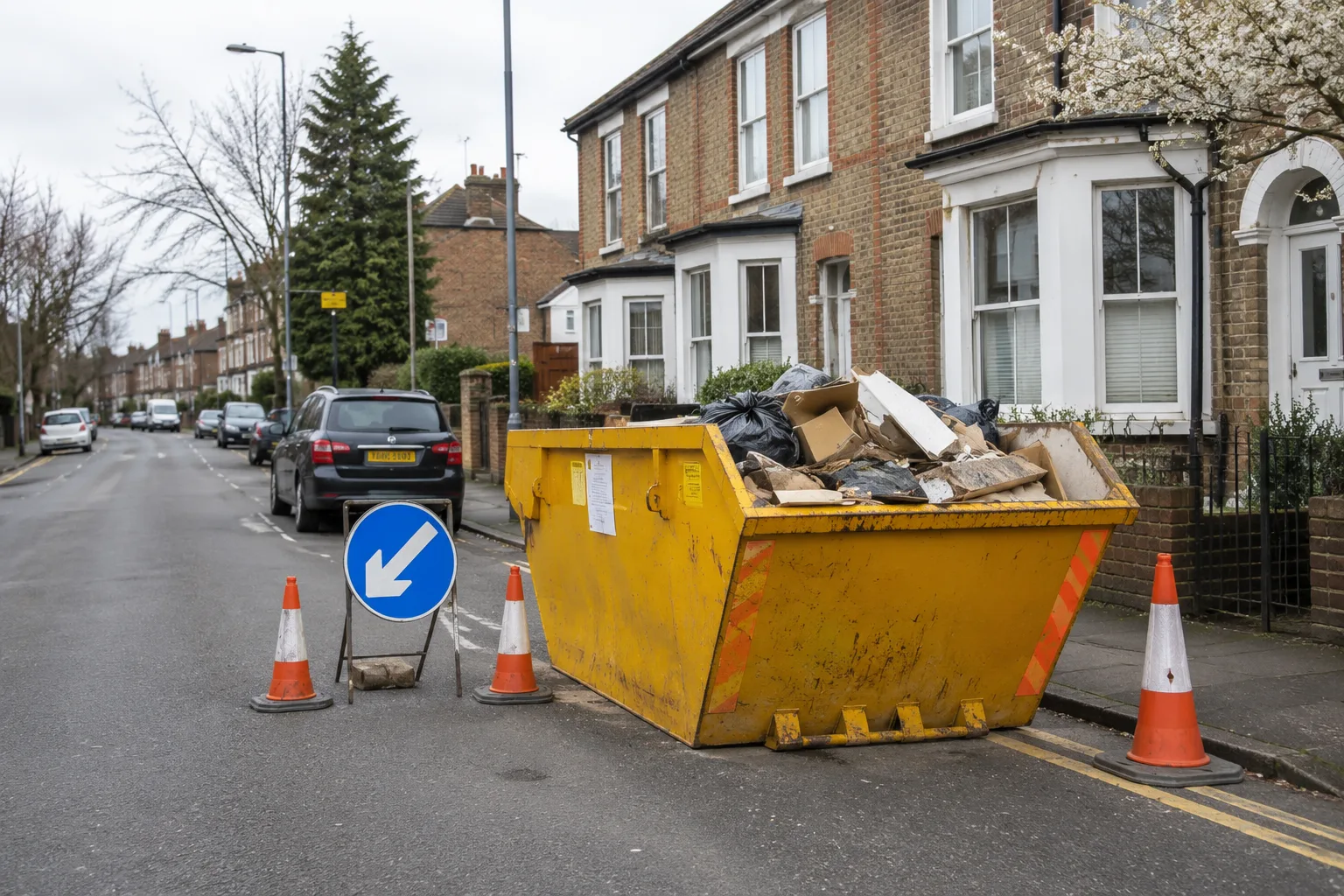
Different types of waste must be handled according to specific UK regulations to ensure safe disposal and high recycling rates. These rules apply to both domestic and construction-related waste streams.
Proper sorting and separation are essential to reduce environmental impact and comply with legal waste handling standards.
How Is Construction Waste Managed Under UK Regulations?
Construction waste must be carefully separated before disposal to improve recycling and reduce landfill use.
Key requirements include:
Separation of recyclable and non-recyclable materials
Proper handling of construction debris through licensed facilities
Recycling of materials such as metal, wood, and aggregates where possible
Controlled disposal of mixed building waste
Soil, rubble, and hardcore materials often require specialist recycling facilities due to their weight and composition.
What Are the Rules for Household Waste Disposal?
Household waste must also follow strict disposal guidelines to ensure safe and responsible handling.
Key requirements include:
Safe disposal of mixed domestic waste
Separation of recyclable household materials where possible
Proper handling of bulky items such as furniture and appliances
Compliance with local waste collection and disposal rules
How Are Hazardous and Electrical Items Handled?
Certain materials cannot be disposed of in standard waste streams and require separate processing.
These include:
Electrical items (WEEE waste)
Hazardous materials such as chemicals and paints
Items requiring specialist treatment or recycling
These materials must be taken to approved facilities for safe processing.
Why Is Waste Segregation Important?
Proper waste segregation helps:
Improve recycling efficiency
Reduce landfill dependency
Ensure compliance with UK waste regulations
Support environmental sustainability goals
Correct sorting at the source also helps skip hire providers process waste more efficiently and responsibly.
What Are Waste Management Regulations and Environmental Compliance Rules in the UK?
UK waste handling practices are governed by national legislation that sets requirements for proper treatment, transfer, and disposal of waste materials.
Under the Waste (England and Wales) Regulations 2011, waste management must follow a structured approach that prioritises prevention, reuse, recycling, and recovery before disposal.
These rules also require that waste is handled by authorised carriers to ensure environmental safety and legal compliance.
Common compliance areas include:
Proper segregation of recyclable materials
Safe handling of hazardous waste regulations UK
Controlled disposal through licensed waste carriers
Reduced landfill contribution through recycling processes
According to the UK Environment Agency, waste carriers must be registered and follow duty-of-care regulations to ensure materials are transported and disposed of legally.
How Does Recycling Policy Reduce Landfill Waste in the UK?
The UK waste management industry follows a recycling-first approach supported by national environmental targets. Skip hire providers play an important role by sorting collected waste to increase recycling rates and reduce reliance on landfill sites.
A major focus is ensuring that reusable materials are recovered wherever possible before disposal.
What Are the Key Focus Areas of UK Recycling Policy?
Key priorities in waste recycling and landfill reduction include:
Increasing landfill diversion rates across the country
Maximising material recovery from construction and demolition waste
Supporting circular economy initiatives
Reducing environmental impact from construction debris disposal
Why Is Construction Waste a Key Environmental Concern?
Construction and demolition waste is one of the largest waste streams in the UK. Because of its volume and mixed material types, it requires careful separation and processing.
Proper segregation helps:
Improve recycling efficiency
Reduce landfill dependency
Recover valuable materials such as metal, wood, and aggregates
Support national sustainability targets
How Do Skip Hire Services Support Recycling Goals?
Many skip hire providers help reduce environmental impact by:
Sorting mixed waste at licensed facilities
Separating recyclable materials
Diverting waste away from landfill
Supporting material recovery processes
These practices contribute to more sustainable waste management and align with broader environmental regulations.
How Can the Right Skip Hire Company Be Chosen?
Choosing a skip hire company is easier when the project requirements are clear from the beginning. Looking beyond price and considering practical details can help make the hiring process smoother from delivery through collection.
What Should Be Considered Before Booking?
Clear service information makes it easier to compare available options and choose a skip that suits the project. A little planning before booking can also help prevent unnecessary delays.
Important points to check include:
Available skip sizes
Areas covered
Delivery options
Collection arrangements
Skip permit support, where available
Reviewing these details in advance can help make the booking process more straightforward.
What Should Be Compared Between Local Skip Hire Services?
Comparing a few key details can help identify a service that matches the project's needs. Looking at more than one option also makes it easier to find suitable availability and skip sizes.
Useful points to compare include:
Skip availability
Service coverage
Skip size options
Waste types accepted
Collection arrangements
Taking a few minutes to compare these details can help avoid unexpected issues after booking.
Comparison can also extend across different UK locations to understand pricing and service variations, including skip hire in Liverpool, especially when evaluating regional differences in availability and cost structures.
Is the Cheapest Skip Hire Always the Best Option?
The lowest price may not always provide the most suitable solution for every project. Choosing the correct skip size and making sure it suits the type of waste can help avoid additional arrangements later.
A few practical factors are worth considering before making a decision.
Skip size required
Estimated amount of waste
Space available for delivery
Planned collection date
Balancing cost with project requirements can help make skip hire more efficient and easier to manage.
What Projects Commonly Use Skip Hire?
Skip hire is suitable for many types of projects, from small household jobs to larger construction work. Having a dedicated place for waste can help keep the work area cleaner and make rubbish easier to manage throughout the project.
When Is Skip Hire Useful for a House Clearance?
House clearances often produce more waste than expected, especially when removing unwanted furniture, old belongings, or damaged household items. A skip provides a convenient place to collect everything during the clearance.
Common house clearance waste includes:
Old furniture
Clothing and household items
Broken appliances
Cardboard and packaging
General household rubbish
Collecting waste in one place can help keep the property organised while the clearance is underway.
When Is Skip Hire Useful for a Garage Clearance?
Garages often become storage areas over time, making clear-outs larger than expected. A skip can help manage unwanted items without creating piles of waste around the property.
Garage clearance projects often include:
Storage boxes
Broken furniture
DIY waste
Garden equipment
General household clutter
Removing unwanted items as the project progresses can make the clearance easier to manage.
When Is Skip Hire Suitable for an Office Clearance?
Office clearances may take place during renovations, relocations, or workspace updates. These projects often create a mix of furniture, packaging, and general waste.
Office clearance waste commonly includes:
Office furniture
Shelving and storage materials
Cardboard and packaging
General rubbish
Renovation debris
Keeping waste together in a skip can help maintain a tidier working environment throughout the project.
When Is Skip Hire Used for Residential and Commercial Sites?
Construction and renovation sites can generate large amounts of waste over several days or weeks. A skip provides a practical way to collect materials and keep the site organised while work continues.
Common site waste includes:
Building materials
Timber
Rubble
Soil
Packaging materials
Choosing a skip that matches the expected waste volume can help support both residential and commercial projects.
How Do Skip Delivery and Collection Work?
Planning delivery and collection in advance can help the skip hire process run smoothly. Checking access, available space, and project timing before booking may reduce the risk of delays on delivery or collection day.
How Should a Property Be Prepared for Skip Delivery?
Preparing the delivery area before the skip arrives can make placement quicker and safer. Clear access also helps the delivery vehicle position the skip without unnecessary obstacles.
A few simple checks can help before delivery.
Driveway access
Enough space for the skip
Clear access for delivery vehicles
A safe and suitable placement area
Preparing the site in advance can help avoid delays and make delivery more straightforward.
What Happens During Skip Collection?
Once the project is complete or the skip is full, the collection vehicle removes the skip and its contents. Making sure the skip is ready for collection can help the process go smoothly.
A few points are worth checking before collection.
The skip is ready for collection
Clear access for the collection vehicle
The project has finished
Nothing is blocking the skip
Waste should not extend above the top edge of the skip, as this may affect safe collection.
When Is Wait and Load Skip Hire a Good Option?
Wait and load services can be useful where there is limited space for a skip or where long-term placement is not practical. Waste is loaded while the vehicle waits before the skip is taken away.
This option is often suitable for:
Busy streets
Areas with limited parking
Properties with small driveways
Quick waste removal projects
Wait and load services can provide a practical alternative when a skip cannot remain on-site after loading.
FAQ
Skip hire costs typically range from around £110 for a mini skip, excluding VAT, up to £600+ for large roll-on roll-off skips. Pricing depends on skip size, waste type, hire duration, and whether a permit is required. For a detailed breakdown, see how much skip hire costs UK.
Skip size depends on the amount and type of waste. Mini skips suit small DIY or garden projects, midi skips fit kitchen renovations and medium clear-outs, builders skips are suitable for construction waste, and larger skips are better for bulky or commercial loads.
A skip permit is required when a skip is placed on public roads, pavements, or controlled parking areas. No permit is needed when placement is on private land such as a driveway or garden. Permits are issued by the local authority and can often be arranged through the skip provider.
General household waste, garden waste, and construction materials such as wood, bricks, soil, and furniture are accepted. Items such as paint, chemicals, tyres, and electrical waste require separate disposal through authorised facilities.
Same-day or next-day delivery is often available depending on local availability and skip size. Advance booking is recommended for permits or larger skips to ensure smooth scheduling and delivery.
How Can Waste Removal Be Made Easier with Skip Hire?
Skip hire in Cambridge UK provides a practical way to manage waste from home improvements, garden projects, property clearances, and construction work.
Choosing the right skip size, understanding permit requirements, and knowing which materials can be placed in a skip can help make the process more straightforward. Planning delivery and collection in advance can also support a smoother project from start to finish.
Finding local skip hire does not have to be complicated. Search Skip Hire offers a simple way to compare local skip hire options across the UK, helping match domestic and commercial projects with suitable services.
Visit Search Skip Hire to explore local skip hire options and find information for the area where the project is taking place.
References
Related Articles
https://www.searchskiphire.co.uk/blog/skip-hire/when-skip-hire-is-the-best-solution/
https://www.searchskiphire.co.uk/blog/skip-sizes/skip-sizes-in-cubic-yards-explained/
https://www.searchskiphire.co.uk/blog/skip-waste-types/what-can-go-in-a-skip-uk/
https://www.searchskiphire.co.uk/blog/skip-permits/when-a-skip-permit-is-required/
https://www.searchskiphire.co.uk/blog/skip-hire-prices/how-much-skip-hire-costs-uk/
https://www.searchskiphire.co.uk/blog/skip-hire/skip-hire-liverpool-uk/
Filed under:
Skip Hire