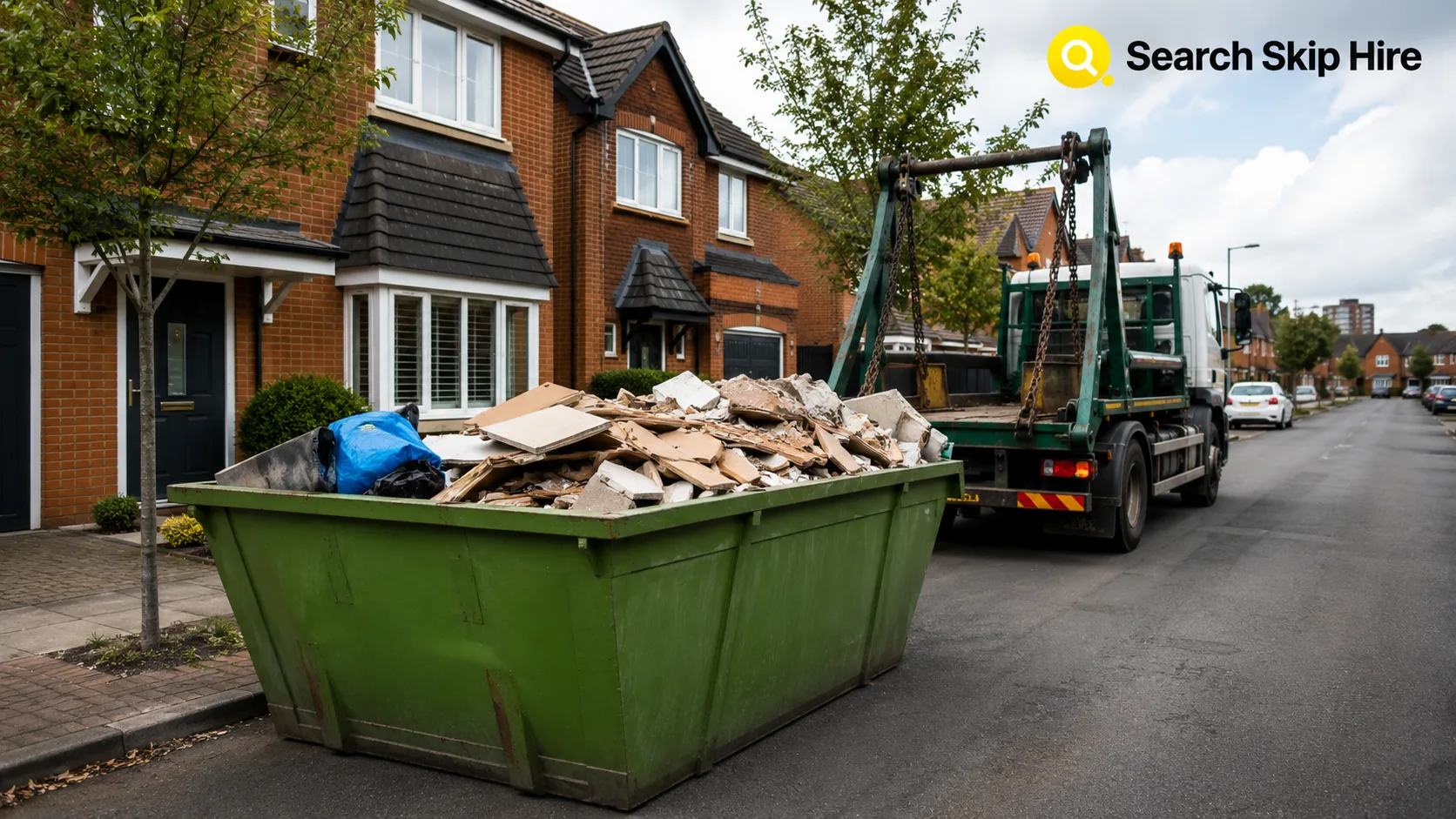
Skip hire in Liverpool gives us a simple way to manage waste from home projects, garden clearances, and construction work. Instead of making repeated trips to the tip, we place everything into one container and arrange collection when the job is finished.
Most residential properties use driveways, which can help avoid permit delays. Understanding skip sizes, permits, and costs before booking helps us avoid extra charges and choose the right option. For local options, visit Search Skip Hire to find Liverpool services.
What Should We Remember Before Booking Skip Hire?
Before booking a skip, it helps to understand the main factors that affect size, placement, and overall cost so we can plan better and avoid unnecessary issues.
Choosing the right skip size is important because it helps avoid paying for unused space and keeps the project more efficient.
A permit may be required if the skip is placed on a public road or shared space, especially when private driveway access is not available.
Skip hire is commonly used for a wide range of projects, including home clearances, renovations, garden work, and construction waste removal.
What Is Skip Hire and How Does It Work?
Skip hire is a waste removal service where a large container is rented to collect and dispose of rubbish from home, garden, office, or construction projects. The skip is delivered to a chosen location, filled with approved waste materials, and then collected for sorting and recycling once the work is finished.
This service provides a practical and efficient way to manage waste, especially in busy residential and commercial areas where ongoing activity is common.
Many parts of the city regularly use skip hire, including areas such as Anfield, Bootle, Toxteth, Wavertree, Crosby, Woolton, Garston, Childwall, Fazakerley, Lark Lane, and Smithdown Road. These locations often see home improvements, student housing changes, and small refurbishment projects.
Instead of making multiple trips to disposal sites, all waste is placed into a single container. This helps keep the process organised, saves time, and reduces effort throughout the project.
Skip hire is commonly used for:
Home renovations
Garden clearances
Garage cleanouts
Construction waste removal
The skip size is selected based on the expected volume of waste. This ensures the process runs smoothly from delivery to collection without unnecessary delays or extra costs.
Overall, skip hire is a flexible solution for both residential and commercial projects, helping keep waste management simple and efficient.
What Does Skip Hire Mean?
Skip hire is a service where a large container is rented to collect and remove waste for a short period. It is commonly used for home improvements, garden clearances, and building projects because it helps keep rubbish in one place and makes it easier to manage.
Households and businesses usually choose a skip based on the amount of waste expected from a project. Once delivered, it is filled with approved materials and collected when the hire period ends.
This approach helps keep waste organised on-site, improves efficiency, and reduces the need for multiple trips to disposal facilities.
People usually use skip hire for:
Home renovations
Garden clearances
Garage and loft cleanouts
Construction waste removal
Office and commercial rubbish disposal
How Skip Hire Works Step by Step?
If we are booking a skip for the first time, it helps to understand the process so everything feels more straightforward.
The usual skip hire processlooks like this:
Choose a skip size based on how much waste we expect
Request a quote for delivery and collection
Arrange delivery to a driveway or approved location
Fill the skip with accepted waste materials
Arrange collection when the project is finished
Waste is then sorted and recycled where possible
Having a clear idea of the waste amount before booking usually helps us choose the right skip size and avoid ordering changes later.
Why Local Skip Hire Is a Popular Choice?
Many people choose local skip hire because it can make delivery and collection more straightforward. It also helps when we need clearer guidance on placement rules, especially for different types of properties and project sites.
Local skip hire can support:
Same day availability in some areas
Better understanding of local permit requirements
Support for both household and commercial waste
A range of skip sizes for different project needs
This makes it easier to match the service with the type of work we are doing and keep waste management simple from start to finish.
What Types of Skip Hire Services Are Available?
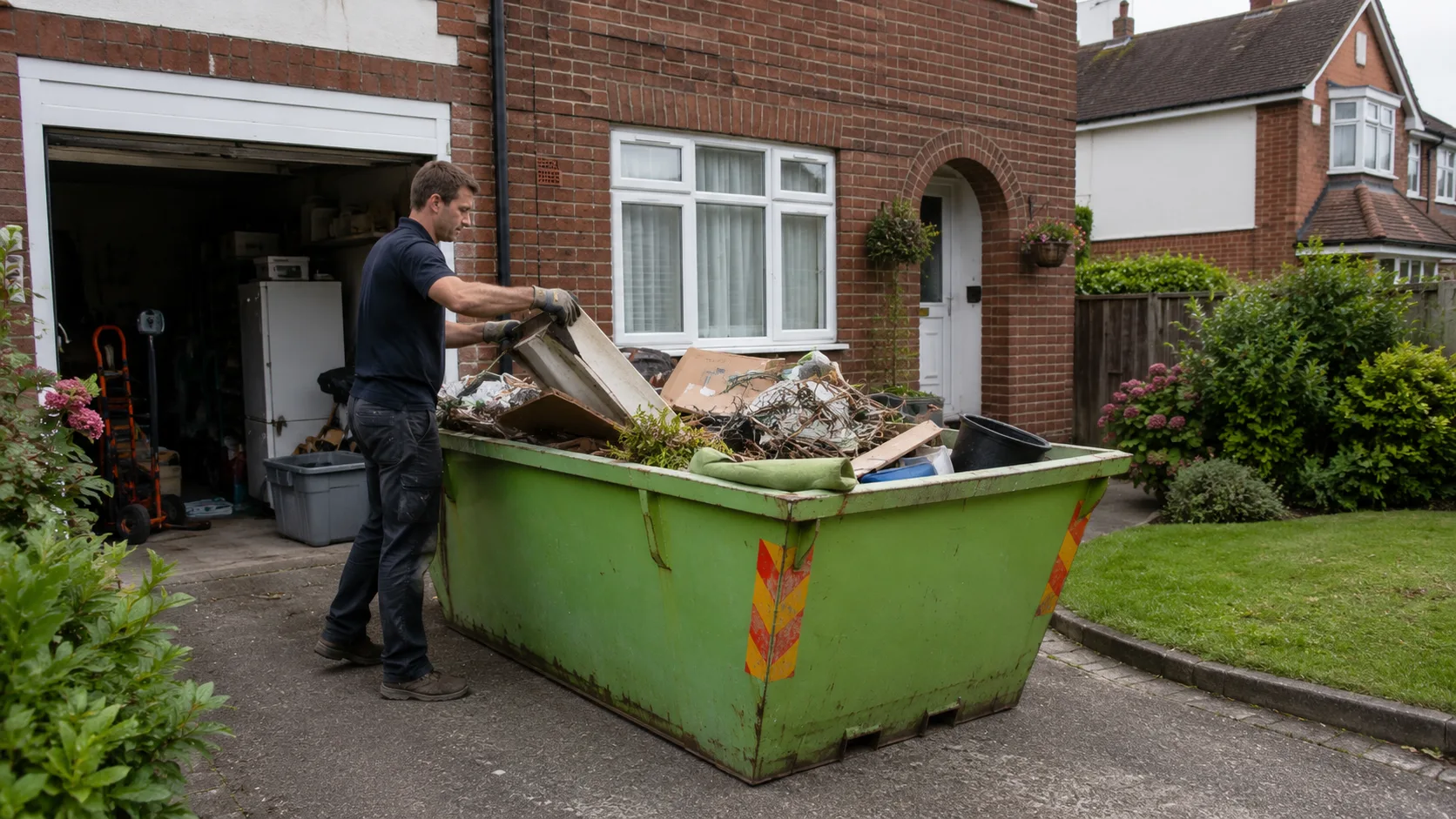
Different projects create different amounts of rubbish, which means one skip size or service may not suit every job.
Why Is Domestic Skip Hire Common in Residential Areas?
Domestic skip hire is often used for home projects where regular household bins are not enough. This includes situations like home improvements, seasonal clear-outs, or garden work that creates more waste than expected.
Domestic skip hire is widely used in residential areas like Woolton, Garston, Childwall, and Fazakerley, where home renovation and garden projects are common.
Many people look for Domestic Skip Hire Use Cases to better understand when this type of service is needed.
Domestic skip hire is often used for:
House clearance projects
Loft cleanups
Garage clearances
Garden waste removal
Renovation rubbish
Smaller skips are usually a practical choice for home projects because they are easier to place on driveways and work well for lighter types of waste.
Why Do Businesses in City Centre and Speke Use Commercial Skip Hire?
Commercial skip hire is used by contractors, businesses, and trade workers who need to manage larger amounts of waste during ongoing projects. It helps keep work sites organised when waste builds up quickly and needs to be removed safely.
This service is commonly used in busy business and industrial areas such as Liverpool City Centre, Speke Industrial Estate, Bootle docks area, and Kirkby, where commercial and construction activity is higher.
This type of skip hire is often used for:
Site clearances
Construction waste disposal
Office cleanouts
Builders waste removal
Heavy material collection
Larger skips are usually preferred for trade work because they can handle higher volumes of waste, especially on active or fast-moving project sites.
When Can We Get Same Day or Next Day Skip Hire?
Some projects can move quickly, especially during home renovations or larger clear-outs where waste builds up faster than expected. In these situations, quicker skip delivery can help keep the site tidy and manageable.
Depending on availability, skip hire services may offer:
Same day skip hire
Next day delivery
Flexible collection arrangements
Faster scheduling for urgent waste removal needs
Availability can vary depending on location, skip size, and current demand, so it is usually best to plan ahead where possible.
How Do We Choose the Right Skip Size?
Choosing the right skip size is important because it helps us avoid running out of space or paying for more capacity than we need. A good match makes the whole project run more smoothly, especially for home and garden work.
How Do Mini and Midi Skip Sizes Compare Skip Hire?
Mini and midi skips are often used for smaller household projects where waste levels are lighter and easier to manage.
Many people compare Mini skip vs midi skip differences to decide which option fits their project better.
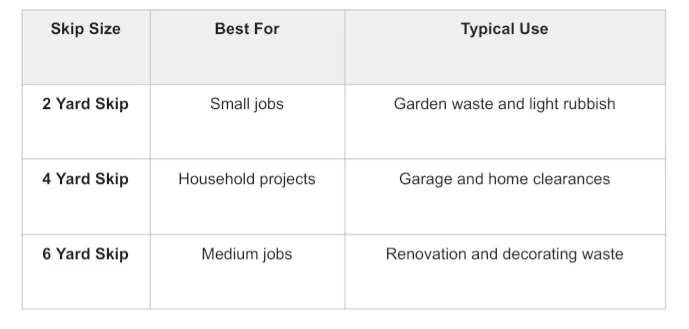
These smaller skip sizes are often suitable for driveways because they do not take up much space and work well for everyday home projects.
What Is Builders Skip Hire Used For?
Builders skips are commonly used for heavier waste generated during renovation and construction projects. They are designed to handle materials that are too heavy or bulky for standard household skips.
Heavy waste may include:
Concrete
Rubble
Soil
Hardcore materials
Mixed building waste
For larger renovation work, an 8 yard skip is often suitable for bulky and heavy materials.
What Are Large and Roll On Roll Off Skip Options?
Larger skip options are used when projects produce more waste than a standard skip can manage comfortably. These are more common on bigger construction sites or long-term projects.
Available larger skip options may include:
10 yard skip
12 yard skip
14 yard skip
16 yard skip
Roll on roll off skips
These skips are typically used for commercial projects or large site clearances where waste volume is significantly higher.
What Are Drop Door and Enclosed Skip Options?
Some skip hire projects may benefit from different skip designs that make loading easier or help keep waste more contained during use.
These special skip options may include:
Drop door skips, which make it easier to load heavy or bulky waste
Enclosed skips, which help keep waste covered and more controlled
Larger skips, which are often used for bulkier materials on bigger projects
The best choice usually depends on the type of waste we are handling and the size of the project, so it helps to think about access, loading needs, and waste volume before booking.
How Much Does Skip Hire Cost?
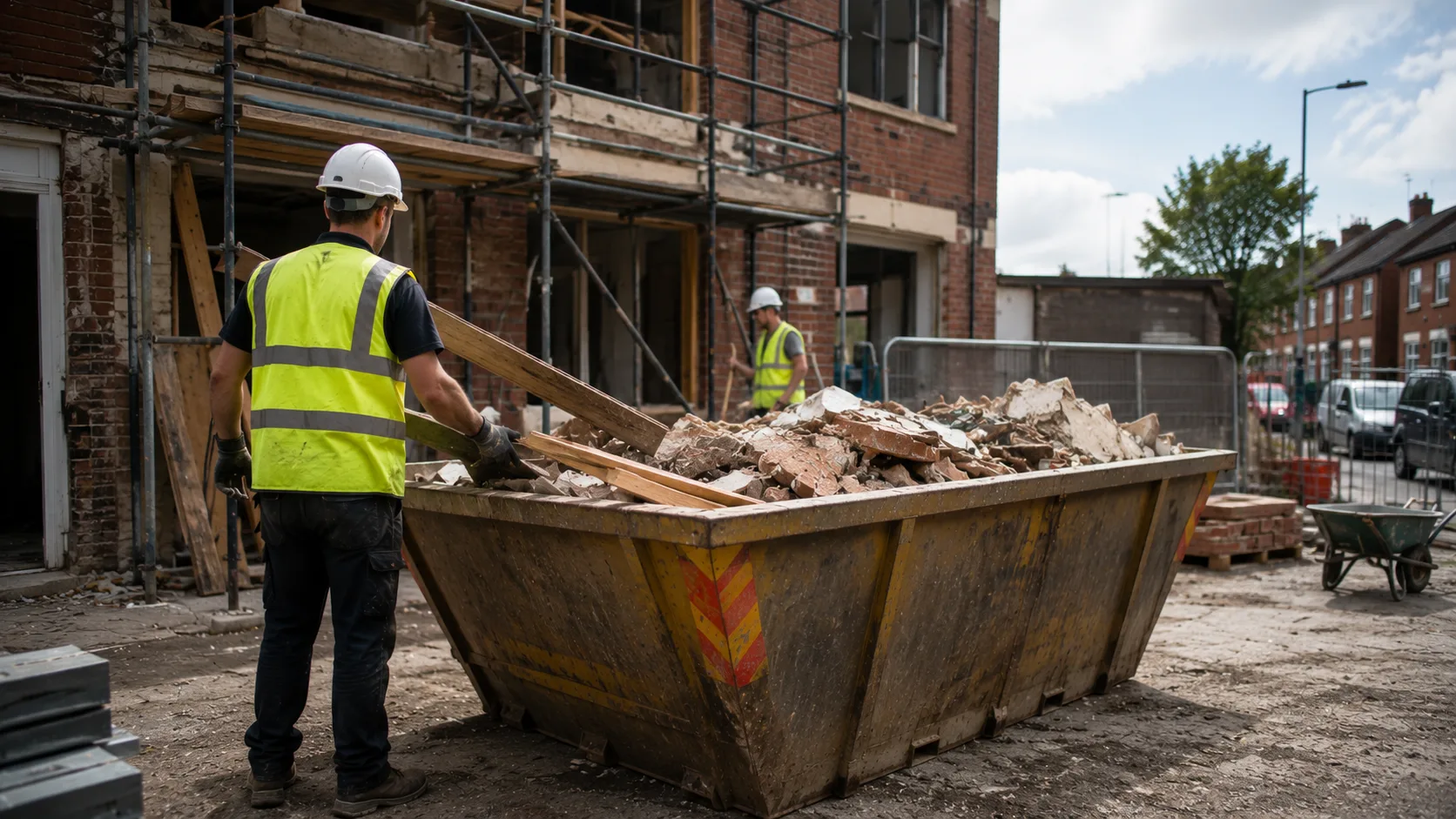
Skip hire typically costs between £80 and £450+, depending on skip size, placement location, waste type, permit requirements, and hire duration. These factors can significantly influence the final price, especially for roadside placements or heavier construction waste.
Skip Hire Price Range (2026)
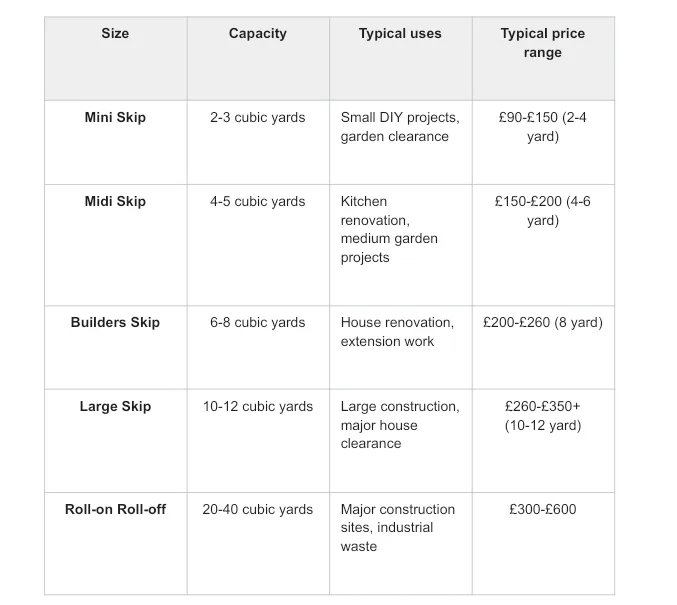
These are guideline price ranges only; actual Liverpool skip hire prices vary by provider, exact location, and current disposal costs.
What Determines Skip Hire Prices?
Several key factors influence the final cost of skip hire, depending on the details of the project and how the skip is used.
These usually include:
Skip size
Waste weight
Hire duration
Permit fees
Placement location
Collection timing
Heavier materials can sometimes increase costs because different types of waste may require different handling and disposal processes. Understanding these factors early helps us choose the right skip and avoid unexpected changes in price.
How Does Skip Hire Compare in Cost to Other UK Cities?
Skip hire prices are generally considered mid-range compared to other UK cities. Pricing is influenced not only by skip size and waste type, but also by regional waste handling infrastructure and transport distance to disposal and recycling facilities.
Liverpool benefits from established Merseyside waste infrastructure , which helps keep costs more balanced compared to larger metropolitan areas.
In comparison:
Liverpool = mid-range pricing supported by local Merseyside infrastructure
Manchester = slightly higher due to higher urban disposal demand
Leeds = similar cost structure with comparable regional logistics
London = significantly higher due to transport distance and landfill charges
These differences show how city infrastructure, waste transfer systems, and logistics efficiency directly influence skip hire pricing, even when the skip size and waste type remain the same.
How to Plan Your Skip Hire Budget?
Many people search for How much skip hire costs UK before booking because prices are not fixed and can change depending on each project. The same applies when arranging skip hire, where the final cost depends on several practical factors rather than a single set price.
The total price is usually based on key elements such as:
Skip size
Hire length
Waste type
Delivery location
Permit requirements for roadside placement
In general, pricing follows a clear pattern:
Smaller skips are cheaper because they hold less waste and are easier to collect
Larger skips cost more due to higher capacity and heavier waste handling
Roadside placement may increase the cost due to permit requirements
Longer hire periods can raise the overall price
Other factors like the type of waste and the exact location can also influence the final cost, especially when dealing with heavier or construction-related materials.
Once we have a rough budget in mind, it becomes much easier to request accurate quotes from local skip hire providers. This helps us compare options more clearly and choose a service that fits both the project needs and the expected budget.
How to Keep Skip Hire Costs Under Control?
Skip hire costs can vary depending on several factors, but there are practical ways to keep expenses manageable.
We can reduce unnecessary costs by:
Choosing the correct skip size from the start
Avoiding longer hire periods than needed
Placing the skip on private land when possible to avoid permit fees
Separating heavy or restricted waste early
Planning collection timing efficiently
By managing these factors carefully, we can keep the total cost predictable and avoid unnecessary surcharges. This also helps us choose the right skip and avoid unexpected changes in price.
Do We Need a Skip Permit?
Skip permits are generally required when a skip cannot be placed on private land and must instead be positioned in a public space, such as a road or shared area. This often occurs in situations where there is limited access or no available driveway, making public placement necessary for the skip delivery.
In these cases, skip permits are issued by the local council when the skip is placed on a public road or highway rather than on private land. This ensures the placement complies with local regulations and does not obstruct public access or create safety issues.
When Is a Skip Permit Required?
People often search for When a skip permit is required because the rules can feel unclear at first, especially for first-time skip hire users.this process is typically subject to approval by Liverpool City Council.
A skip permit may be required when the skip is placed in public or shared spaces such as:
Public roads
Pavements
Shared parking areas
Streets with limited access
In these cases, permission is needed because the skip occupies public space and must comply with local authority regulations.
If the skip is placed on private property, such as a driveway or garden, a permit is usually not required. This is because it does not affect public access or road safety.
This approach is consistent with official UK guidance, which explains that permission is mainly required when a skip is placed on public highways rather than private land:
“Skip permits are required when placing a skip on a public highway, and not usually required when it is placed on private land.” – GOV.UK
In many cases, skip hire companies in Liverpool can also arrange the permit on behalf of customers during the booking process, making it more convenient and ensuring compliance with local rules.
What Should We Know About Skip Permit Costs and Duration?
Skip permit rules can vary depending on where the skip is placed and how quickly approval is granted by the local authority. These factors can affect both timing and overall planning for a project.
Permit details may include:
Processing time before approval is given
How long the permit is valid for
Placement approval from the local authority
Road safety conditions that must be followed
Checking permit requirements early can help avoid delays and make sure the skip is delivered and placed without issues.
What Can We Put Into a Skip, and What Should We Avoid?
Understanding what can and cannot go into a skip helps avoid collection issues and keeps the disposal process simple and smooth.
Accepted waste types for standard skip hire usually include:
Garden waste
Household rubbish
Wood
Soil
Bricks
Renovation waste
Construction materials
Many people also search for What can go in a skip UK before booking because some materials need special handling or separate disposal arrangements.
Some waste types may require extra care depending on local disposal rules and environmental guidelines, so it is always best to check before placing them in the skip.
Which Types of Waste Need Special Handling Skip Hire?
Some items cannot always be placed in a standard skip because they fall under specific waste and environmental regulations. Understanding this helps us avoid rejected collections, delays, or extra handling costs.
Restricted items may include:
Electrical items
Chemicals
Paint products
Hazardous waste
Batteries
Electrical items are specifically regulated under UK rules for Waste Electrical and Electronic Equipment (WEEE), which require them to be separated and processed through approved recycling routes rather than general waste systems.
“Waste electrical and electronic equipment must be properly classified and managed separately to prevent environmental harm and support safe recycling processes.” - UK Government WEEE guidance
How Is Waste Managed in an Environmentally Friendly Way?
Waste management follows a structured recycling flow that reduces landfill dependency and improves material recovery across the region. Environmentally friendly waste management in the city focuses on recycling, responsible sorting, and reducing unnecessary disposal to landfill wherever possible.
“According to UK Government data referenced by DEFRA, the UK’s recycling rate has typically ranged around 44–50%, reflecting ongoing improvements in how waste is processed and reused instead of being sent to landfill.” - Department for Environment, Food & Rural Affairs (DEFRA)
The overall system works through a clear process. Waste is first collected from residential and commercial areas across Liverpool boroughs, then transferred to Merseyside waste transfer stations where it is sorted into recyclable streams. Materials such as metal, wood, and soil are separated for recovery, while remaining waste is processed for reuse or energy recovery.
By using skip hire, we help reduce unnecessary journeys to disposal sites. This also lowers transport emissions because waste is collected in a single container rather than through multiple trips.
Common recovery processes include:
Metal recycling, which helps recover valuable raw materials
Wood recycling, which can be reused or converted into energy recovery
Soil recovery, where clean soil is reused in construction projects
General waste separation, which improves overall recycling efficiency
Together, these processes support a lower environmental footprint and improve resource efficiency across both residential and commercial projects.
How Does Recycling Work in Local Waste Management Systems?
Modern waste systems are designed to separate materials so they can be processed properly instead of being sent directly to landfill.
Common recycling and recovery processes include:
Wood sorting
Metal recycling
Soil recovery
General waste separation
Careful sorting like this helps improve recycling rates and reduces the overall environmental impact of waste disposal.
Why Is It Important to Use a Licensed Waste Carrier?
Using a licensed waste carrier helps ensure that waste is handled safely and in line with UK regulations. This supports responsible disposal across both residential and commercial projects in Liverpool.
Key reasons this matters include:
Legal waste disposal compliance
Safe transport of materials
Better waste tracking systems
More responsible handling of rubbish
This can help projects run more smoothly for both homes and businesses.
How Do We Choose the Best Skip Hire Option?
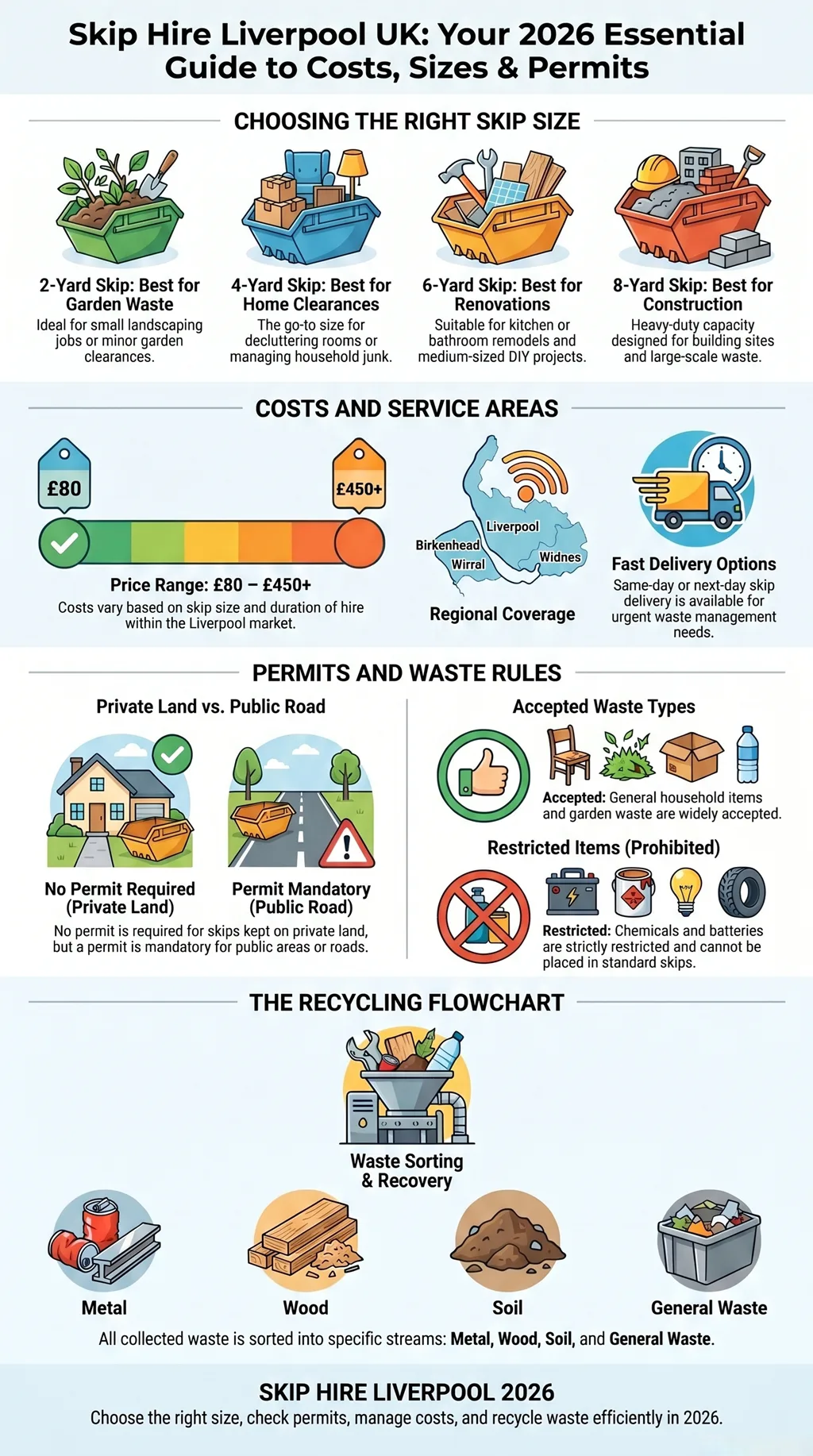
Choosing a skip hire service becomes easier when we focus on what the project actually needs instead of guessing or overestimating.
How Can Skip Hire Companies Be Compared?
Looking at different options helps us understand which service fits our project size and timing better.
Things worth comparing include:
Skip size options
Delivery speed
Collection flexibility
Permit support
Coverage areas
Understanding the scale of the project usually helps us make a clearer and more practical choice.
What Questions Should We Ask Before Booking a Skip?
Asking the right questions before booking can help avoid confusion and unexpected issues later in the process.
Helpful questions include:
What skip size is suitable for the job?
How long is the hire period?
Is a skip permit required?
What types of waste are accepted?
When will collection take place?
Clear answers make the whole waste removal process more predictable and easier to manage.
Why Do We Use Skip Hire for Waste Projects?
We use skip hire because it helps simplify waste removal and makes it easier to manage different types of projects without multiple trips to disposal sites.
Practical benefits include:
Access to local skip availability
A range of skip sizes for different needs
Support for both home and business projects
Coverage across Liverpool and surrounding areas
The main goal is to keep waste management simple, organised, and easier to handle from start to finish.
What Areas Are Covered?
Skip hire services support waste removal projects across Liverpool and nearby parts of Merseyside. This makes it easier for both residential and commercial projects to arrange collections in surrounding locations without extra complexity.
Coverage usually depends on service availability, skip size, and delivery access in each area.
Typical coverage areas include:
Liverpool city areas
Wider Merseyside region
Residential neighbourhoods
Commercial and industrial districts
Availability can vary depending on the type of skip needed and the exact delivery location.
Which Nearby Areas Are Covered by Skip Hire Services?
Many surrounding towns and nearby locations fall within the wider skip hire coverage zone, making it easier to arrange waste removal beyond the main city area.
Nearby locations can include:
Birkenhead
Wirral
Widnes
Ellesmere Port
Ormskirk
Checking service coverage in advance helps ensure delivery and collection run smoothly without delays or access issues.
FAQ
Smaller home renovation projects in Liverpool often suit 4 yard or 6 yard skips, while larger renovation jobs may need an 8 yard skip depending on the amount of waste produced.
Yes, a skip can be placed on a public road, but a permit may be required if it is not on private land such as a driveway or garden.
Skip hire periods can vary, but many people keep a skip for several days depending on how quickly their project is completed and how much waste is generated.
Yes, garden waste can usually go into a standard skip. However, some materials may need separate handling depending on disposal rules.
After collection, waste is typically sorted so that recyclable materials can be separated and processed where possible.
How Does Skip Hire Make Waste Removal Simpler?
Finding the right skip hire service becomes easier when we understand skip sizes, permit rules, waste types, and collection options before booking.
This helps with planning different types of projects, whether it is a house clearance, garden work, or renovation waste. Each job is different, so knowing the available options early makes waste removal more organised and less stressful.
When planning ahead, it is easier to avoid delays and choose the right skip for the job.
If we want to compare local availability or learn more about skip hire options, we can visit Search Skip Hire to compare local skip hire companies in Liverpool and surrounding Merseyside areas.
References
Related Articles
https://www.searchskiphire.co.uk/blog/domestic-skip-hire/domestic-skip-hire-use-cases/
https://www.searchskiphire.co.uk/blog/skip-types/mini-skip-vs-midi-skip-differences/
https://www.searchskiphire.co.uk/blog/skip-hire-prices/how-much-skip-hire-costs-uk/
https://www.searchskiphire.co.uk/blog/skip-waste-types/what-can-go-in-a-skip-uk/
Filed under:
Skip Hire