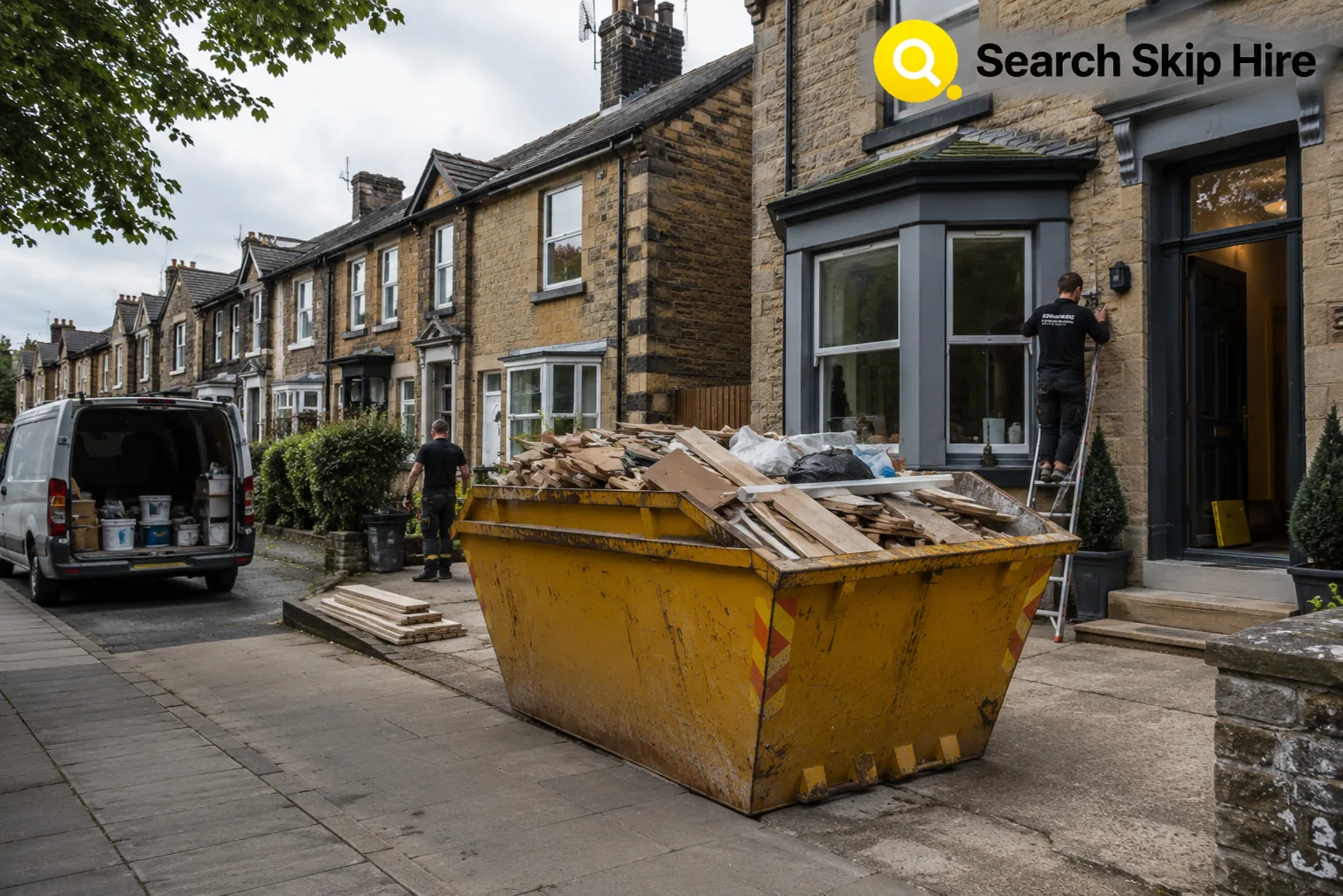
Skip hire in Sheffield UK provides a simple way to manage waste from home projects, garden work, office clear-outs, and building jobs in an organised and practical way.
Different skip sizes are available depending on the amount of waste ranging from small mini skips to larger builders skips used for heavier jobs.
Understanding permit rules delivery options and accepted waste types helps before making a booking so the process runs smoothly without delays or extra costs.
This guide explains skip hire in Sheffield in clear steps so choosing the right option becomes easier and more efficient. For more details and local availability continue reading or visit Search Skip Hire.
What Should Be Understood About Skip Hire in the Area?
Clear understanding of skip hire basics helps avoid mistakes and improves decision making for any project.
Mini, midi, builders, and large skips are available for different waste volumes
A permit may be required when placing a skip on public roads in Sheffield
Comparing options helps match cost, timing, and skip size correctly.
How Does Skip Hire in the Local Area Work?
Finding skip hire in the local area becomes easier when the basic process and service options are understood. Most services follow a simple structure, where the right skip size is selected, delivery is arranged, and waste is collected once the job is done. This helps keep home projects, garden work, and building tasks organised without unnecessary stress.
Skip hire also contributes to the UK’s circular economy, where waste materials are prioritised for reuse and recycling instead of being sent directly to landfill. This supports more sustainable waste management practices across residential and commercial projects.
Why Does Local Skip Hire Make the Process Easier?
Local skip hire can make waste removal more practical because delivery and collection usually follow nearby routes and schedules. This often helps when timing matters for projects like home clearances or renovations.
Local services are often chosen because they can support:
Faster delivery and collection times
Better awareness of local road access and placement needs
Support for both home and business waste
A range of skip sizes for different project types
How Are Skip Hire Options Compared?
Comparing skip hire options helps us choose a service that matches the type and amount of waste our project is likely to create. Smaller projects may only need a compact skip, while larger jobs may require more capacity for heavier materials and higher waste volumes.
In the UK, choosing a skip is not only about comparing prices and sizes but also understanding how waste is managed. Many providers follow the waste hierarchy principle, which focuses on reducing waste, reusing materials, and recycling wherever possible before disposal.
This is particularly important for renovation projects, as different materials, skip capacities, and recycling practices can affect how efficiently waste is handled. For example, planning the right solution for skip hire for home renovation waste can help us manage building materials more effectively while supporting responsible waste removal.
Looking at skip hire options across different regions, including services such as skip hire Manchester, can also help us understand how availability, pricing structures, delivery coverage, and service options may differ between urban and suburban areas. Considering these factors allows us to choose a skip hire solution that better matches our location, project size, and waste management requirements.
When comparing options, attention is usually given to:
Available skip sizes for the job
Delivery and collection timing
Support with permits if placement is outside private land
Types of waste accepted in each skip
What Areas Are Covered by Skip Hire Services Nearby?
Skip hire services are not limited to one location and often extend to surrounding areas. This helps support people who live slightly outside the main town or city but still need reliable waste removal.
Nearby coverage is often useful for:
Home improvement projects
Business and commercial waste
Garden clearance work
Construction and renovation sites
What Types of Skip Hire Services Are Available?
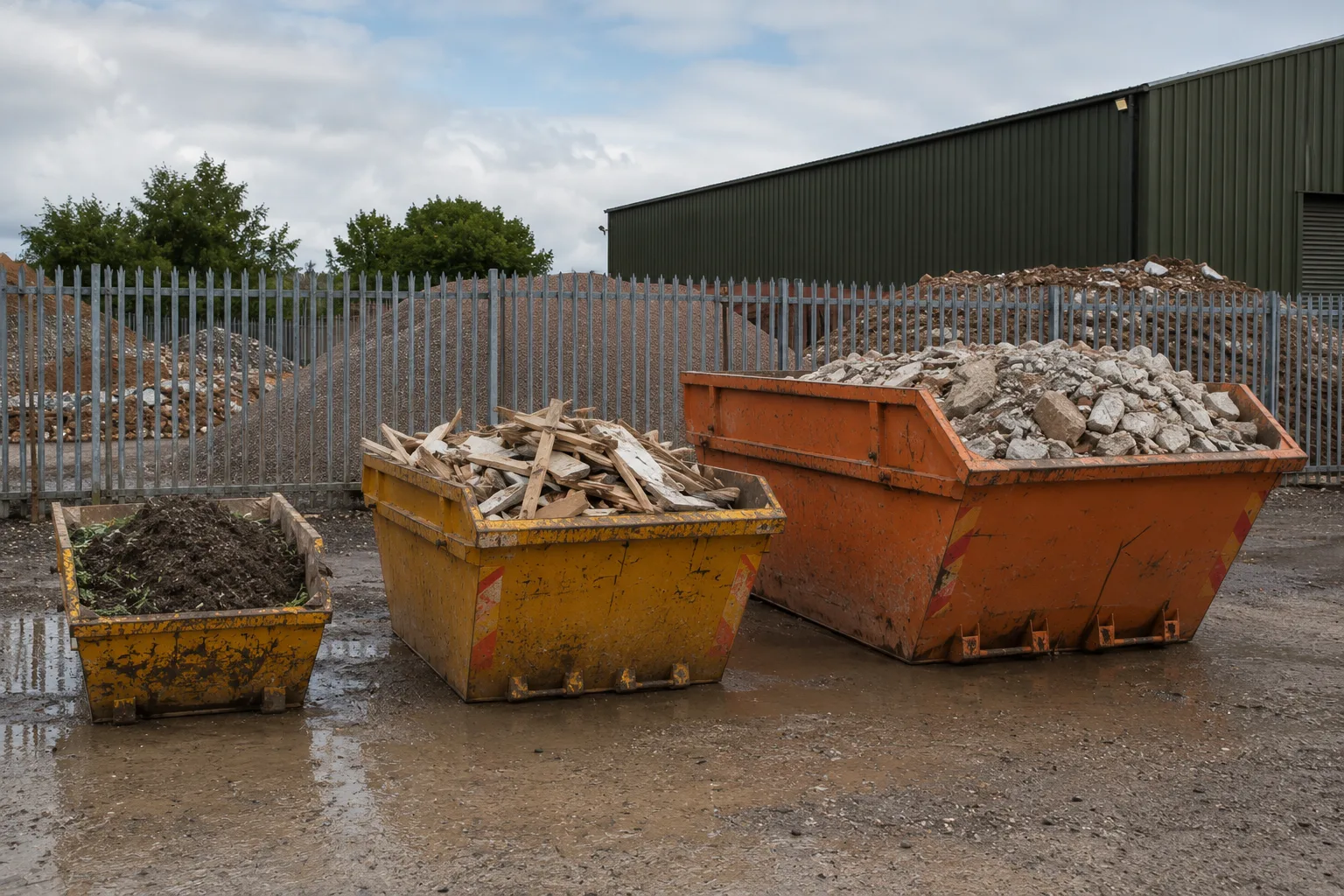
Different jobs create different amounts of waste, so understanding service types helps make better decisions before booking a skip. Each service type is designed to match specific needs, from small home projects to larger commercial and construction work.
What Is Domestic Skip Hire Used For?
Domestic skip hire works well for everyday home projects where normal bin collection is not enough. It helps manage waste from small renovations, furniture removal, and general household clean-ups.
Domestic skip hire is often used for:
Home renovations
Kitchen upgrades
Garage clearance
Household rubbish removal
What Is Commercial Skip Hire Used For?
Commercial skip hire supports workplaces that produce regular or larger amounts of waste during business operations or refurbishment work. It helps keep workspaces clear and organised during projects.
Commercial uses often include:
Office clearance
Retail refurbishment waste
Business property clean-ups
Trade waste projects
What Is Construction and Building Waste Skip Hire Used For?
Construction and building work often produces heavy materials that need proper disposal. This service helps manage rubble, wood, plasterboard, and general construction waste in a safe and organised way.
Construction waste is also affected by environmental regulations such as landfill tax UK, which increases the cost of sending waste to landfill. Because of this, more materials are diverted into recycling streams.
Construction skips are often useful for:
Property renovations
Extension projects
Builder waste removal
Site waste management
What Is Garden Waste Skip Hire Used For?
Garden work can quickly create large amounts of waste that do not fit into standard bins. A skip helps keep outdoor projects tidy and easier to manage.
Garden waste commonly includes:
Soil and turf
Hedge cuttings
Leaves and branches
Landscaping waste
What Is House Clearance Skip Hire Used For?
House clearance work often involves removing large volumes of unwanted items from a property. A skip helps collect everything in one place instead of making multiple disposal trips.
House clearance skips often help with:
Moving home clean-ups
End-of-tenancy waste
Old furniture disposal
General household clutter
How Does Skip Sizes Overview and Pricing Work?
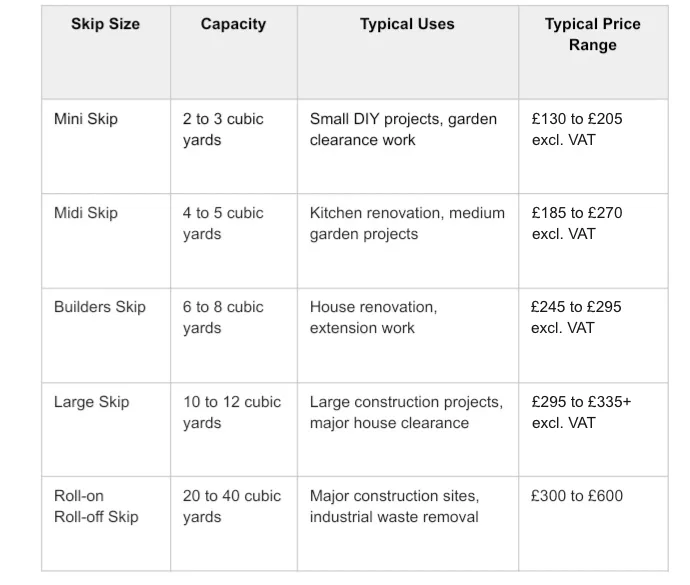
Choosing the right skip size helps avoid paying for unused space and keeps waste removal more efficient for different types of projects.
Each skip size has a clear capacity, typical use case, and price range, and these factors also directly influence overall skip hire costs. Understanding both size and pricing together makes it easier to plan waste removal without confusion.
This becomes clearer when looking at Skip sizes in cubic yards explained, since skip capacity is measured in cubic yards and directly determines how much waste each skip can hold.
How Is the Right Skip Size and Cost Linked?
Choosing the correct skip size directly affects the total cost of skip hire. Smaller skips usually cost less, but may not fit all waste from larger projects. Larger skips cost more but reduce the need for multiple collections, which can improve efficiency for bigger jobs.
Before choosing a skip size, these points are usually considered:
Total waste amount generated by the project
Type of work being carried out
Space available for skip placement
Weight and material type being disposed of
How Do Skip Hire Prices Work and What Affects Them?
Skip hire costs vary depending on skip size, hire period, and whether permits or special waste handling are required. Pricing is closely connected to skip capacity, meaning larger skips naturally come with higher costs due to increased waste handling needs.
Understanding the Factors affecting skip hire price helps clarify why costs can differ even for similar projects and skip sizes.
What Are Mini Skip Hire Prices Based On?
Mini skips are usually one of the most affordable options and are often used for smaller home projects and light clear-outs. Their lower capacity makes them suitable for simple jobs with limited waste.
Costs often depend on:
Skip size
Length of hire
Waste type
Delivery location
What Are Midi Skip Hire Prices Based On?
Midi skips cost more than mini skips because they handle a larger volume of waste. They are commonly used for medium-sized renovation or garden projects.
Pricing may change based on:
Skip capacity
Hire duration
Collection timing
Waste category
What Do Builders Skip Costs Depend On?
Builders skips are designed for heavier materials and construction waste, which makes them more expensive than smaller skips. They are often used for renovation and extension projects.
Costs may depend on:
Weight restrictions
Material types
Delivery location
Hire period
What Do Large Skip Hire Costs Depend On?
Large skips are used for high-volume waste and larger projects, which naturally increases cost due to capacity and handling requirements.
Price differences often relate to:
Skip size
Waste amount
Hire length
Permit needs
What Affects Skip Hire Prices in General?
Several factors influence the final price even when the same skip size is selected. These factors are closely linked to both operational needs and project requirements.
Common price factors include:
Skip size
Permit requirements
Waste material
Delivery area
Collection timing
How Can Skip Hire Costs Be Kept More Manageable?
Managing costs becomes easier when the right skip size is chosen from the start and waste is planned properly. This helps avoid extra charges from overfilling or booking multiple skips.
Cost efficiency also improves when waste is handled under the UK waste hierarchy, ensuring recyclable materials are separated early, reducing landfill dependency and disposal fees.
Ways to manage costs include:
Choosing the correct skip size
Planning waste in advance
Avoiding unnecessary permits
Comparing suitable skip options
What Are the Legal Requirements for Placing a Skip on Public Land?
Skip permits are needed in certain situations where a skip is placed in public areas. This helps ensure safety and keeps roads and shared spaces clear for general use. Understanding when a permit is required makes the process easier and avoids delays during delivery.
UK regulations governing the use of skips on public highways establish that placing a skip on roads, pavements, or other public land is subject to formal permission from the local authority. This legal framework ensures that public space is managed safely and responsibly while reducing risks to traffic and pedestrians.
A skip permit is usually required when the skip is placed outside private property and takes space on public land or roads. This rule helps manage shared spaces properly.
Permits are often required for:
Public roads
Residential streets
Pavements
Council managed spaces
“To place a builder's skip on a public highway in Sheffield you need to obtain a permit from us.” - Sheffield City Council
This statement reinforces that skip placement on public roads is strictly controlled by the local authority, meaning permission must be obtained before any skip can legally occupy public highway space.
When Is a Skip Permit Not Required?
A skip permit is not needed when the skip is placed fully on private land. This is because it does not affect public access or road safety.
“You don’t need a skip licence if you’re putting the skip entirely on private land.” - GOV.UK
A permit may not be needed for:
Driveways
Private gardens
Private parking areas
Rear outdoor spaces
How Does Skip Hire With Permit Work?
Some skip hire arrangements include support with permit planning when road placement is needed. This helps make the process smoother and ensures requirements are met before delivery.
Common checks usually include:
Permit timelines
Local placement rules
Road access suitability
Delivery scheduling
How Does Same Day and Next Day Skip Hire Work?
Fast skip delivery can help when waste builds up quickly or when a project needs to move on without delay. Understanding the difference between same day and next day options helps make planning easier and more practical.
What Is Same Day Skip Hire?
Same day skip hire is used when waste needs to be removed quickly, often during urgent or unexpected situations. This option helps keep spaces clear when time is limited.
Same day delivery may help with:
Emergency clear outs
Renovation waste
Garden projects
Last minute bookings
What Is Next Day Skip Hire?
Next day skip hire is suitable when a project is planned but still requires quick delivery. It offers a balance between preparation and fast service.
Next day hire often supports:
Home improvements
Property clearances
Construction jobs
Commercial clean ups
How Do Skip Hire Delivery and Collection Work?
Delivery and collection are planned steps that help ensure the skip arrives and is picked up without issues. Preparing the space properly helps avoid delays and keeps the process smooth.
Common preparation steps include:
Clearing driveway access
Planning waste placement
Keeping access areas open
Checking collection timing
What Waste Can Go Into a Skip?
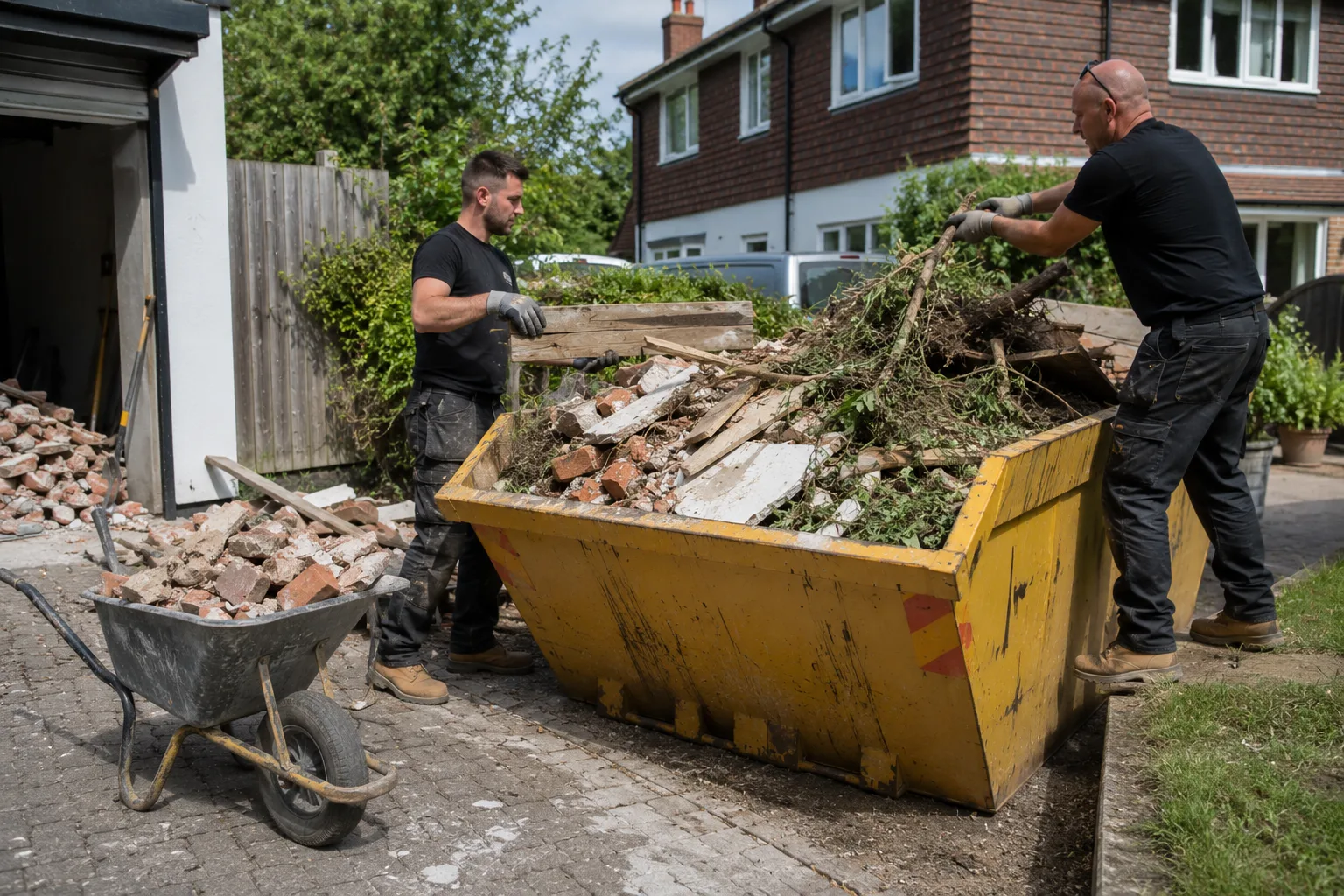
Knowing what waste can be placed in a skip helps avoid issues during collection and ensures disposal is handled correctly. Different types of waste are accepted depending on safety and handling requirements.
What Is Household Waste in a Skip?
Household waste usually comes from general home clear-outs, renovations, or decluttering projects. Most everyday items can be placed in a skip as long as they are non-hazardous.
All waste disposal must follow the UK duty of care for waste, meaning the waste producer is responsible for ensuring it is transferred to a licensed carrier and disposed of legally.
Household waste often includes:
Furniture
Packaging
Non-hazardous rubbish
General household clutter
What Is Garden Waste in a Skip?
Garden waste comes from outdoor maintenance, landscaping, or seasonal clean-ups. This type of waste is usually easy to manage and commonly accepted in skips.
Garden waste may include:
Branches
Grass cuttings
Soil
Hedge trimmings
What Is Construction Waste in a Skip?
Construction waste comes from building, renovation, or repair work. This type of waste is usually heavier and needs proper handling during disposal.
Building waste often includes:
Bricks
Concrete
Timber
Plasterboard
What Waste Cannot Be Put in a Skip?
Some materials cannot go into a skip because they require special treatment or separate disposal methods.
This includes electrical items covered under WEEE (Waste Electrical and Electronic Equipment) regulations, such as fridges, TVs, and other appliances. These must be recycled through approved facilities to recover usable components safely.
Restricted items may include:
Chemicals
Hazardous materials
Electrical appliances
Certain batteries
What Areas Are Covered for Skip Hire Services?
Skip hire services are not limited to one central location and often extend to nearby areas. This helps support both home and business projects that need reliable waste removal across a wider region.
What Does Skip Hire in the East Area Cover?
Skip hire in the eastern area often supports residential and small commercial projects. Many of these jobs involve home improvement or outdoor work that produces regular waste.
Common uses include:
Home improvements
Household clearances
Garden waste
Trade waste
What Does Skip Hire in the West Area Cover?
Skip hire in the western area is often used for renovation work and property clean-ups. These projects can range from small DIY tasks to larger home upgrades.
Typical projects include:
Landscaping
House clearances
DIY waste
Renovation rubbish
What Does South Yorkshire Skip Hire Coverage Include?
Skip hire coverage across South Yorkshire helps support projects outside the main city area. This allows both domestic and commercial users to access skip hire services when needed.
Coverage often supports:
Nearby towns
Home projects
Commercial jobs
General waste removal
How to Hire a Skip in the Local Area?
Hiring a skip is simple when each step is followed in order. The process helps make sure the right size is chosen, the skip is placed correctly, and waste is collected without delays. A clear plan also avoids extra costs or last-minute issues.
Step 1 – How Is the Right Skip Size Chosen?
The process starts with understanding how much waste needs to be removed. The type of material also matters because heavier waste may need a stronger or larger skip.
This step usually includes:
Estimating total waste volume
Checking if waste is light or heavy
Matching the skip size to the project
Getting the size right helps avoid overfilling or paying for unused space.
Step 2 – How Are Local Skip Options Compared?
Once the size is clearer, the next step is reviewing available skip options. This helps ensure the selected skip fits both the job and the amount of waste expected.
Key points to compare:
Available skip sizes
Suitability for the project type
Space needed for placement
This step helps balance cost and practical use.
Step 3 – When Should Permit Requirements Be Checked?
Permit checks should be done before delivery is arranged. This confirms whether the skip will sit on private land or in a public area.
Important permit checks include:
Whether the skip is on a driveway or road
If council permission is needed
Any local placement rules
Checking early helps prevent delays on delivery day.
Step 4 – How Are Delivery and Collection Arranged?
The final step is arranging delivery and planning where the skip will go. Once the project is complete, collection is scheduled to remove the waste.
This stage includes:
Setting a delivery date
Choosing a safe placement area
Booking collection after use
With these steps in place, skip hire becomes straightforward and well organised.
Why Compare Skip Hire Options in the Local Area?
Comparing skip hire options helps match the service to the type of waste and the needs of a project. It also makes it easier to find the right balance between cost, timing, and skip size without unnecessary complications.
How Can Better Prices Be Found?
Looking at different options helps highlight how pricing can change based on skip size and project requirements. This makes it easier to plan a budget before booking.
Better price awareness comes from:
Comparing skip sizes
Checking project needs
Understanding waste type costs
Why Do More Skip Size Options Matter?
Different projects create different amounts of waste, so having access to multiple skip sizes helps match the right capacity to the job.
More options help with:
Small home clean-ups
Medium renovation work
Large construction projects
Why Is Faster Delivery Availability Important?
Delivery timing can be important when work is on a deadline or waste builds up quickly. Faster availability helps keep projects moving without delays.
This is useful for:
Time-sensitive projects
Ongoing renovation work
Sudden waste removal needs
Why Does Local Availability Matter?
Local skip hire options help support projects across nearby areas and make access to waste removal more convenient when needed.
Local access can support:
Home improvement work
Commercial projects
Construction and garden waste removal
How Does Skip Hire Help Manage Waste?
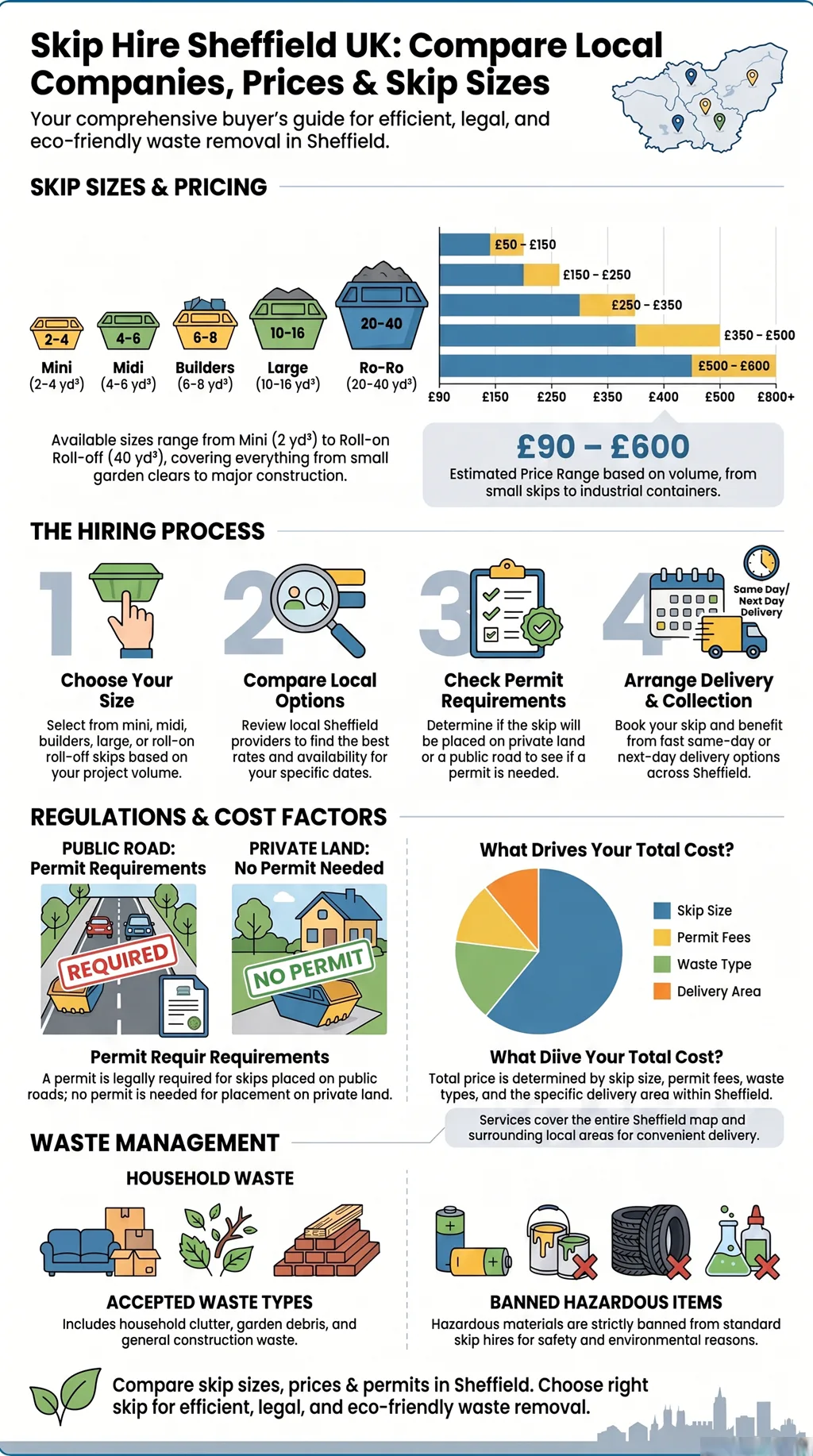
Skip hire in Sheffield UK makes waste management easier for a wide range of projects, including home improvements, construction work, garden clear-outs, and property clearances. It provides a simple way to collect and remove large amounts of waste in one place, helping keep work areas clean and organised.
It also supports responsible waste handling in line with UK environmental standards. This includes the circular economy approach, waste hierarchy principles, and duty of care regulations, which ensure waste is processed safely and legally from collection to final disposal.
Skip hire helps in practical ways such as:
Reducing the need for multiple trips to disposal sites
Keeping workspaces safe and clutter-free
Supporting proper sorting of recyclable materials
Ensuring waste is handled by licensed providers
Minimising environmental impact through better disposal practices
Overall, it offers a straightforward and compliant way to manage waste while supporting more sustainable disposal practices.
FAQ
A range of skip sizes is available, including mini, midi, builders, large, and roll-on roll-off skips. Each size is designed for different project needs, from small household clean-ups to large construction jobs.
A skip permit is required when the skip is placed on public land, such as roads, pavements, or council-managed areas. If the skip is placed entirely on private property, such as a driveway or private garden, a permit is usually not needed.
Skip hire prices depend on several factors, including skip size, hire duration, type of waste, delivery location, and whether a permit is required. Larger skips and more complex waste handling generally increase the overall cost.
Skips can accept household waste, garden waste, and construction materials such as wood, bricks, and soil. However, hazardous materials like chemicals, certain batteries, electrical appliances, and other restricted items are not allowed.
The process begins by selecting the appropriate skip size based on the amount of waste. The skip is then delivered to the chosen location, used for the duration of the hire period, and collected once the waste removal is complete.
How Does Skip Hire in Sheffield UK Help Manage Waste?
Skip hire in Sheffield UK helps make waste management simpler for home improvements, construction work, garden projects, and property clearances.
The process becomes easier when the right skip size is chosen, permit needs are understood early, and delivery is planned in advance. These small steps help reduce delays and keep the work area more organised.
For anyone looking to compare skip hire options or check availability across different UK areas, more information is available through at Search Skip Hire.
References
Related Article
https://www.searchskiphire.co.uk/blog/domestic-skip-hire/skip-hire-for-home-renovation-waste/
https://www.searchskiphire.co.uk/blog/skip-hire-prices/factors-affecting-skip-hire-price/
https://www.searchskiphire.co.uk/blog/skip-sizes/skip-sizes-in-cubic-yards-explained/
https://www.searchskiphire.co.uk/blog/skip-hire/skip-hire-manchester-uk/
Filed under:
Skip Hire