
Skip hire is one of the easiest ways to manage home renovation waste safely and efficiently. Whether we are replacing a kitchen, updating a bathroom, or taking on a full house refurbishment, renovation work often creates more waste than expected. Broken tiles, timber, flooring, plaster, and old fittings can pile up quickly and make the space harder to manage.
Having a skip nearby gives us one place to keep waste organised while work moves forward. It can also reduce repeated trips to recycling centres and help keep projects running smoothly. If we want practical guidance on skip sizes, permits, waste types, and loading tips, keep reading.
What to Know About Skip Hire for Home Renovation Waste ?
Before starting a renovation project, there are a few important things we should understand to make waste removal easier and less stressful.
Choosing the right skip size helps avoid unnecessary delays and extra collections.
Most renovation waste can go into a skip, although some materials need separate disposal.
Permit requirements depend on where the skip will be placed and local council rules.
Why Skip Hire Is Essential for Home Renovation Waste?
Home renovation projects often create more waste than we first expect. Even smaller jobs can leave behind broken tiles, packaging, timber, and bulky materials that quickly fill ordinary household bins.
Common Types of Renovation Waste Generated at Home
Most renovation projects produce a mix of waste, so understanding what needs to be removed can help us choose the right skip size and avoid unnecessary problems. Kitchen renovations often generate waste such as cupboards, sinks, worktops, and old fittings, while bathroom upgrades can leave behind baths, toilets, sinks, and broken tiles. Loft conversions may produce insulation, timber offcuts, and plasterboard, whereas extensions can generate rubble, hardcore, bricks, and packaging. Smaller DIY projects and property refurbishments also create waste from decorating, flooring removal, repairs, worn fixtures, and outdated fittings.
Kitchen and bathroom renovations can produce heavier waste than expected. Broken plaster, ceramic tiles, and removed units can add significant weight, making it important to consider both the volume and weight of the waste when choosing a skip. Planning ahead helps ensure the selected skip is suitable for the project.
Why Standard Bin Collection Is Not Enough
Household bin collections are designed for daily rubbish rather than construction-style waste. During renovation work, waste often grows faster than standard collection schedules can manage.
Bulky materials such as flooring, wood, plaster, and rubble can take up a surprising amount of space. Many councils also place limits on the amount of renovation debris collected from homes.
This is often where Skip hire for DIY projects becomes useful, especially when smaller home improvements still create more waste than expected. Having a skip nearby keeps materials in one place and helps maintain a cleaner work area.
Benefits of Using Skip Hire for House Refurbishments
Using a skip during renovations helps us stay organised and makes waste easier to manage throughout the project.
Keeps renovation spaces cleaner and safer
Helps manage bulky waste in one place
Reduces repeated journeys to disposal centres
Supports smoother project planning
Helps renovation work continue without unnecessary interruption
Many homeowners also explore Domestic Skip Hire Use Cases when planning projects because skip hire can support everything from renovations to general home improvements.
What Types of Renovation Waste Can Go in a Skip?
Many home renovation projects create mixed waste. Understanding what can usually go into a skip helps us avoid delays during collection.
Building Debris and Construction Waste
Most skips are suitable for common construction materials created during home renovation work, although heavier materials should still be distributed carefully to avoid weight issues. Typical waste includes bricks and rubble, concrete and hardcore, plaster and demolition debris, building waste from knock-down work, and small amounts of soil, depending on the skip type.
Builder’s skips are often used for renovation projects because they provide greater capacity for heavier materials. Checking the provider’s weight limits and accepted waste types before booking can help avoid collection problems.
Household Renovation Materials
Many materials removed during home improvements can usually go into a skip without difficulty, including flooring removal waste, tiles and ceramics, timber offcuts, old kitchen cupboards and fittings, bathroom suites and fixtures, shelving, cabinets, and other general refurbishment waste.
Old furniture, damaged flooring, and worn fittings can quickly take up available space, so choosing the right skip size can help prevent overcrowding and keep waste manageable throughout the project.
Waste That May Require Special Handling
Some materials require separate handling because UK waste regulations may restrict how they can be stored, transported, or processed. Plasterboard may need to be disposed of separately, while paints and chemicals generally cannot be placed in mixed skips. Electrical items may also require specialist recycling, and hazardous materials need appropriate disposal arrangements.
As noted by GOV.UK:
"Textiles and foam from waste upholstered domestic seating are likely to contain persistent organic pollutants and other hazardous chemicals. You must not send these for disposal in any class of landfill." – GOV.UK
Whether we are arranging skip hire in Kent or another part of the UK, checking accepted materials before loading the skip often helps avoid delays later.
Skip Size Guide for Common Renovation Projects
Choosing the right size can feel easier when we compare skip options based on common home renovation work.
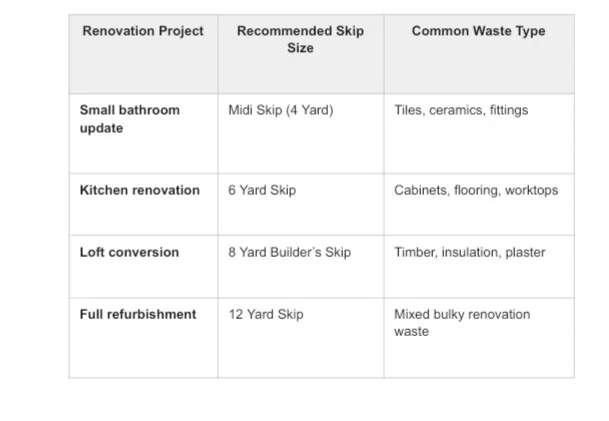
Choosing the Right Skip Size for a Renovation Project
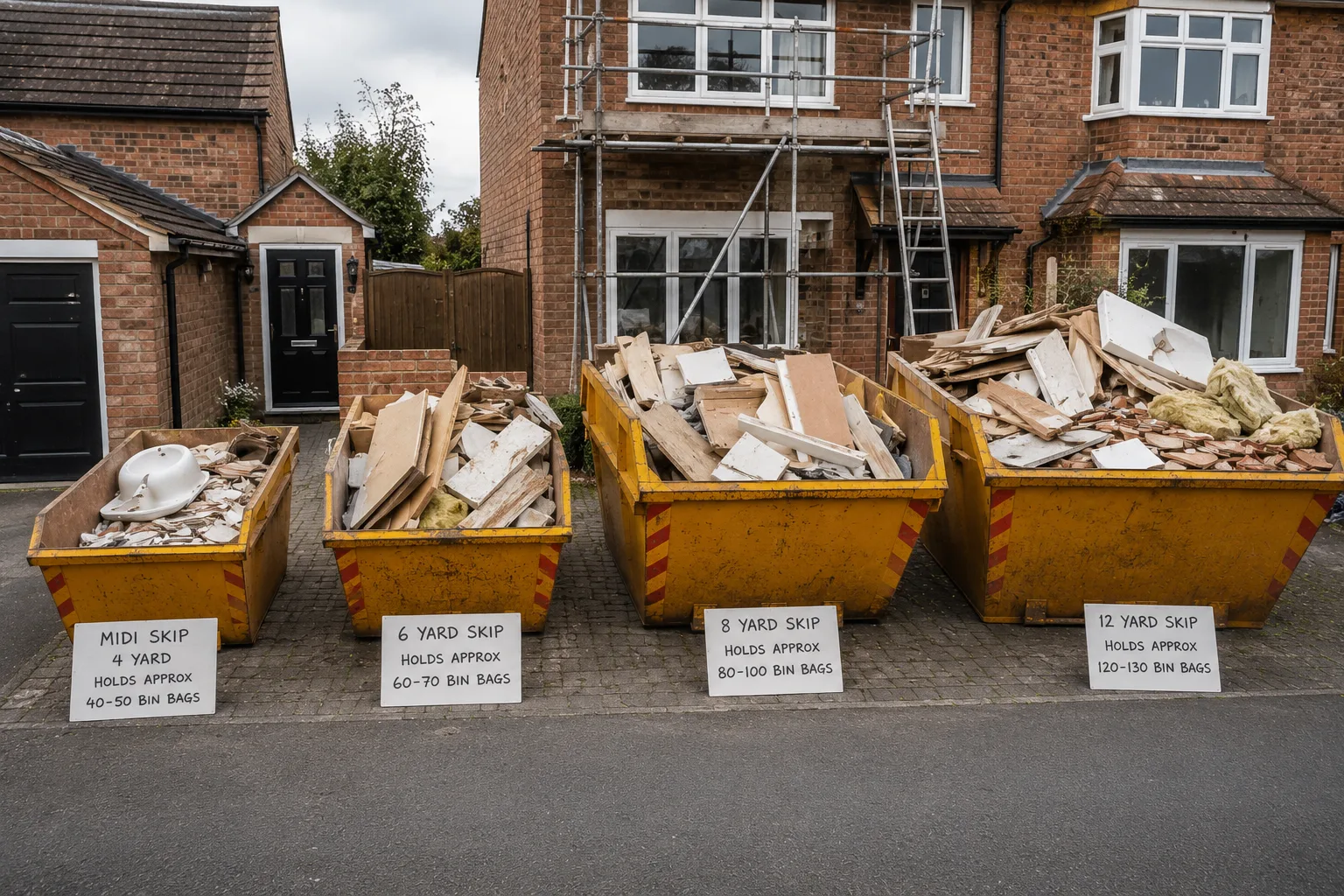
Picking the right skip size helps avoid overfilling and keeps waste removal more manageable throughout the renovation.
Mini and Midi Skip Hire for Small Renovations
Smaller skips are often suitable for lighter renovation projects where the amount of waste remains manageable. They can be useful for small bathroom upgrades, decorating waste, flooring replacement, and minor kitchen improvements.
For smaller renovation projects, a compact skip can provide enough capacity while fitting comfortably on a driveway or within the available space at smaller properties.
When a 6 Yard Skip Is the Best Choice?
A 6-yard skip is commonly chosen for medium-sized home renovation projects. It can accommodate kitchen renovation waste, bathroom replacements, moderate refurbishment work, and a mixture of household renovation materials.
This size can provide a practical balance between capacity and space, particularly when the waste includes a combination of heavy and bulky items.
Why an 8 Yard Builder’s Skip Is Popular?
An 8-yard skip can suit larger renovation projects, providing enough capacity for substantial amounts of waste without requiring frequent replacement. It can be useful for house refurbishments, extension work, kitchen rip-outs, and loft conversion debris.
For larger attic improvements, Skip hire for loft clearance can help manage insulation, timber, old storage materials, and bulky debris more efficiently.
When to Consider a 12 Yard Skip?
Larger renovations usually generate more waste over time and may require additional skip capacity. Full property refurbishments, major extensions, bulky renovation debris, and larger loft conversions can all produce substantial amounts of waste.
Having enough space for waste from the beginning can help keep the site organised and make the renovation project easier to manage as the work progresses.
Skip Hire for Different Home Renovation Projects
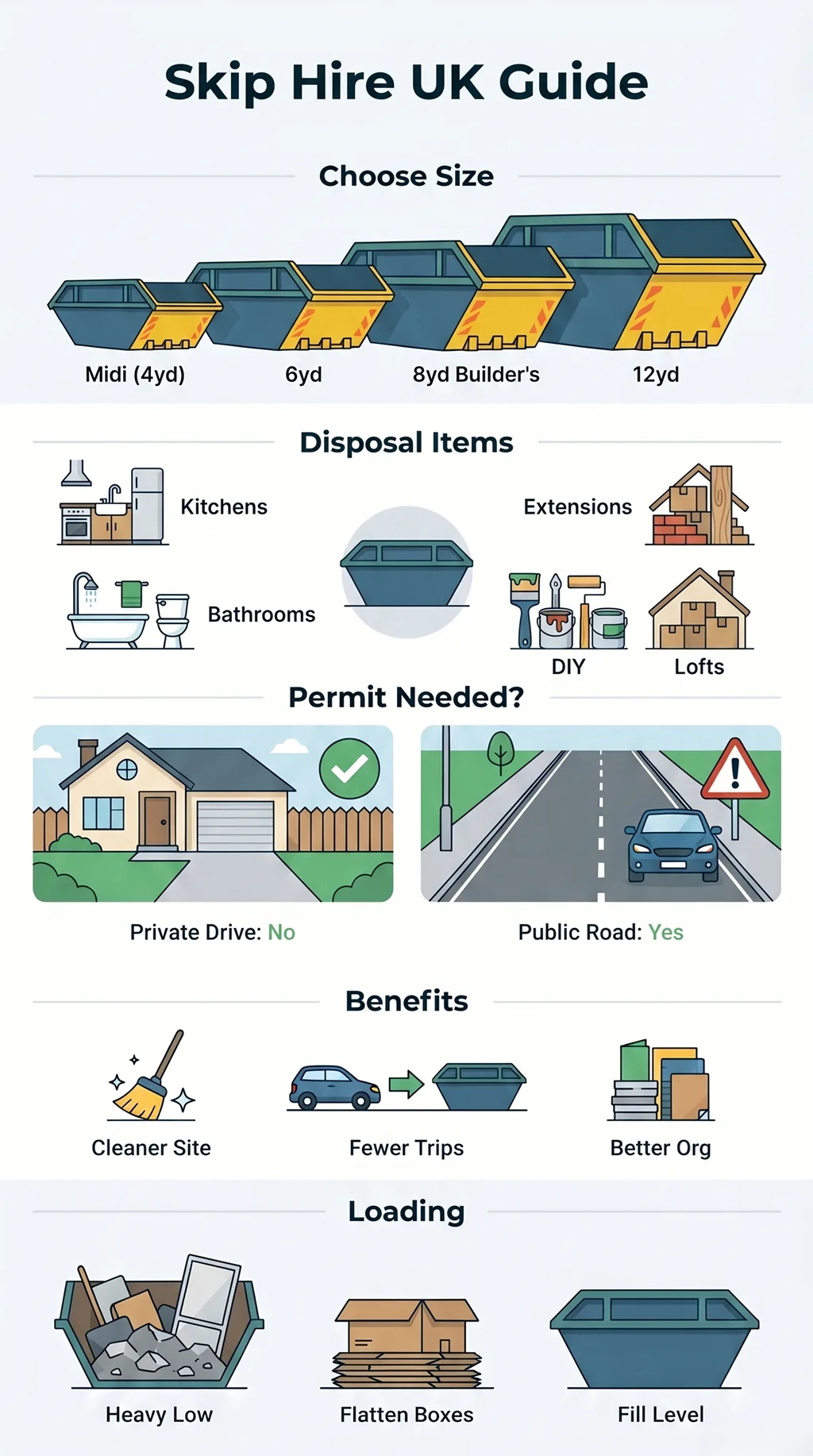
Different home improvement projects create different types of waste. Matching the skip to the project often makes waste management simpler.
Kitchen Renovation Waste Removal
Kitchen renovations can create bulky waste faster than expected, as worktops, cupboards, flooring, and broken fittings can quickly take up available space. Common waste includes cabinets and cupboards, kitchen rip-out debris, flooring materials, broken sinks and worktops, and old fixtures and fittings.
Planning waste removal before demolition begins can help keep the work area cleaner and make it easier to manage waste throughout the renovation.
Bathroom Renovation Waste Disposal
Bathroom renovation work often creates heavier waste because ceramics and plumbing fixtures can add weight quickly. Common waste includes old bathroom suites, broken wall tiles, ceramic flooring, plumbing debris, and other outdated bathroom fittings. Careful loading is particularly important with this type of waste, as the skip can reach its weight limit before it is completely full.
Skip Hire for Loft Conversions and Extensions
Loft conversions and extensions often produce a steady amount of waste throughout the project. Common materials include timber offcuts, insulation, plasterboard, rubble, and hardcore. Having a suitable skip available can make it easier to manage this waste as the work progresses.
Many homeowners also combine renovation work with Skip hire for house clearance when preparing storage spaces or removing unwanted items before building work starts.
Garden and Outdoor Renovation Waste
Outdoor renovation projects can generate bulky waste from landscaping, fencing, or paving work. A skip can often accommodate garden renovation waste, old fence panels, rubble and paving materials, small amounts of soil, and outdoor timber waste, provided these materials are accepted by the chosen provider.
Checking the waste restrictions before booking helps ensure everything from the project can be disposed of appropriately and avoids problems during collection.
For landscaping work or larger outdoor clean-ups, Skip hire for garden clearance UK may also be helpful when dealing with mixed outdoor waste.
Whether we are handling projects in Bedfordshire or elsewhere in the UK, outdoor renovation waste often builds up faster than expected.
Understanding Skip Hire Rules and Permits in the UK
Permit rules depend on where the skip will be placed and local council requirements.
Do We Need a Skip Permit?
A permit is usually required when a skip is placed on a public road rather than private land. Requirements can vary by location, so it is important to check the local authority’s rules, including the application process, waiting times, and any conditions that apply to skip placement.
As highlighted by Bristol City Council:
"You must have a permit to put a skip on a public road or highway." – Bristol City Council
In counties such as Essex or Lancashire, permit timing may vary depending on council processing times.
Driveway Skip Placement vs Public Road Placement
Placing a skip on private property is often simpler when enough space is available. A driveway may allow you to avoid a permit, while placing a skip on a public road may require approval from the local authority. The skip should be positioned safely without blocking important access, and visibility or placement rules may also apply depending on the location.
Using available driveway space can often make waste removal more straightforward, provided the area is suitable for delivery and collection.
Skip Hire Regulations Homeowners Should Know
Understanding a few basic rules can help avoid problems later. We should avoid overfilling the skip and follow the provider’s weight guidance when disposing of heavy materials such as soil, rubble, or concrete. Following these guidelines helps keep the skip safe and reduces the risk of collection issues.
Smart Skip Loading Tips for Renovation Waste
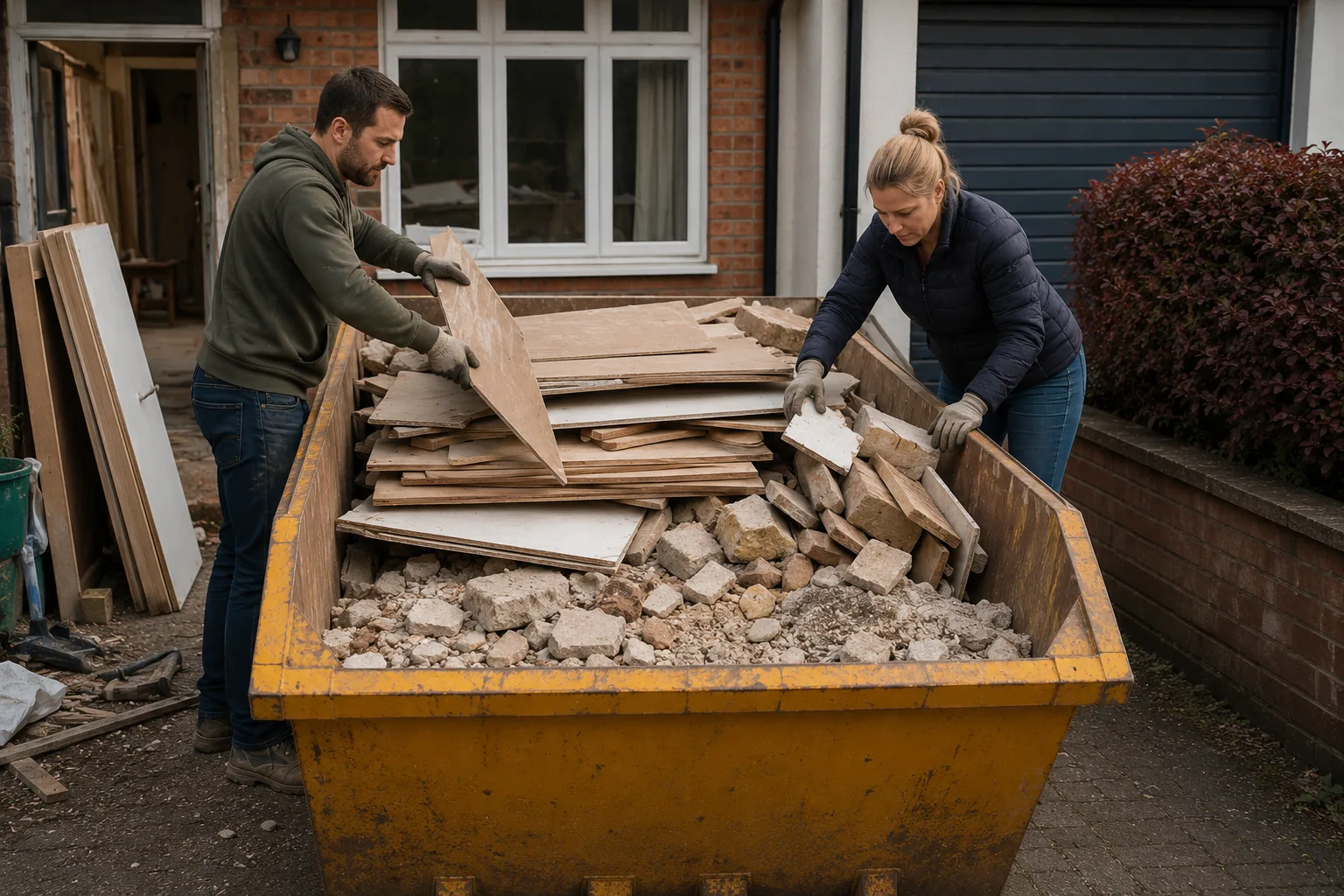
The way we load a skip can make a big difference during renovation projects.
How to Maximise Space in Your Skip?
Loading waste carefully can help make better use of the available space. Bulky items should be broken down where possible, while boxes and packaging can be flattened to reduce unnecessary gaps. Placing heavier waste at the bottom and using lighter materials to fill remaining spaces can also help keep the load organised.
A little planning during loading can prevent waste from overflowing too quickly and make the skip easier to manage.
Avoiding Common Loading Mistakes
Simple mistakes can sometimes delay collection or reduce the available space in a skip. To avoid problems, we should distribute waste evenly, keep all materials below the skip’s fill line, and separate any restricted items before loading. It is also important to keep clear access around the skip so the collection vehicle can reach it safely.
Taking extra care while loading can make collection easier and help prevent avoidable issues later.
Waste Segregation for Better Disposal
Separating materials can support recycling and reduce unnecessary landfill use.
Timber recycling
Brick and rubble recovery
Metal separation
Responsible waste disposal
In areas such as West Yorkshire, local guidance may place additional focus on recycling where possible.
Eco-Friendly Renovation Waste Disposal
Many homeowners now look for ways to reduce unnecessary waste during renovation work.
Why Responsible Waste Disposal Matters?
Managing renovation waste properly supports cleaner disposal and creates better opportunities for recycling. It can help reduce the amount of waste sent to landfill, encourage recycling, support responsible waste handling, and ensure disposal requirements are followed.
Even small efforts, such as separating different materials before disposal, can make renovation waste easier to manage and improve the chances of suitable materials being recycled or reused.
Recycling Construction and Refurbishment Waste
Many common renovation materials can often be recycled or reused, helping reduce the amount of waste sent to landfill. Timber can be recovered for reuse, while metals can be separated for recycling. Bricks may also be cleaned and reused, and ceramic materials can often be processed through suitable recycling schemes.
Waste management practices continue to improve across many parts of the UK, with recycling and reuse options becoming more widely available.
Choosing an Eco-Friendly Skip Hire Company
Understanding how waste is managed often helps us make more informed choices.
Licensed waste carrier checks
Waste sorting methods
Recycling approaches
Collection practices
Whether we are looking for services in Surrey or elsewhere in the UK, clear information often makes skip hire easier to understand.
How to Choose the Best Skip Hire Company in the UK?
Finding skip hire should feel practical and straightforward.
What to Look for in a Skip Hire Provider?
A few details can make planning easier during home renovations. Clear guidance on skip sizes helps us choose a suitable option, while flexible collection times make it easier to fit waste removal around the project schedule. National UK coverage can provide access to services in different locations, and a straightforward booking process can make arranging delivery and collection simpler.
Knowing what to expect from the start can help renovation projects feel more organised and less stressful.
Delivery and Collection Services
Reliable timing often matters when waste builds up quickly during home improvements. Depending on the provider and location, same-day delivery may be available, while flexible collection scheduling can make it easier to fit waste removal around the project timeline. Adjustable hire periods can also provide more time when work takes longer than expected, while coordinated waste removal helps keep the site organised.
Keeping waste under control can make renovation projects easier to manage and help work progress more smoothly.
Comparing Skip Hire Prices
Skip hire costs can vary depending on several practical factors.
Skip size
Waste type
Permit requirements
Hire length
Regional location
In areas such as Cornwall, Hertfordshire, or Greater Manchester, pricing may vary depending on local permit requirements and access.
FAQ
The right size depends on the project. Smaller bathroom updates may suit a midi skip, while larger refurbishments often need 6, 8, or 12 yard skips.
Plasterboard may need separate handling depending on local waste guidance. Checking accepted materials before booking often helps avoid problems.
A permit is usually required if the skip will be placed on a public road. Skips placed on private driveways often do not need one.
Hire periods vary, although many people arrange collection based on the length of the renovation project.
Yes. Even smaller projects often create more waste than expected, especially during decorating, flooring replacement, or DIY work.
Managing Skip Hire for Home Renovation Waste
Whether we are updating a kitchen, replacing a bathroom, converting a loft, or managing a full home renovation, waste can build up faster than expected. Planning how we will deal with it from the start often helps the project feel more organised and easier to manage.
Choosing the right skip size and understanding what can go inside can also help avoid delays once work is underway.
If we want a simple way to arrange skip hire for renovation waste across the UK, we can learn more through Skip Hire.
References
Related Articles
https://www.searchskiphire.co.uk/blog/domestic-skip-hire/skip-hire-for-home-renovation-waste/
https://www.searchskiphire.co.uk/blog/domestic-skip-hire/skip-hire-for-garden-clearance-uk/
https://www.searchskiphire.co.uk/blog/domestic-skip-hire/skip-hire-for-house-clearance/
https://www.searchskiphire.co.uk/blog/domestic-skip-hire/skip-hire-for-loft-clearance/
https://www.searchskiphire.co.uk/blog/domestic-skip-hire/skip-hire-for-diy-projects/
Filed under:
Domestic Skip Hire