
Skip hire is one of the most practical ways to handle waste when you are doing a DIY project at home. Whether you are clearing out a garage, knocking down a wall, or giving your garden a full overhaul, a skip gives you a single place to throw everything without multiple trips to the tip.
Keep reading to find out how to choose the right skip, what you can and cannot put in one, and how to make the whole process as simple as possible.
DIY Skip Hire Essentials
Planning your skip hire properly makes DIY projects easier, cleaner, and far more cost-effective from start to finish.
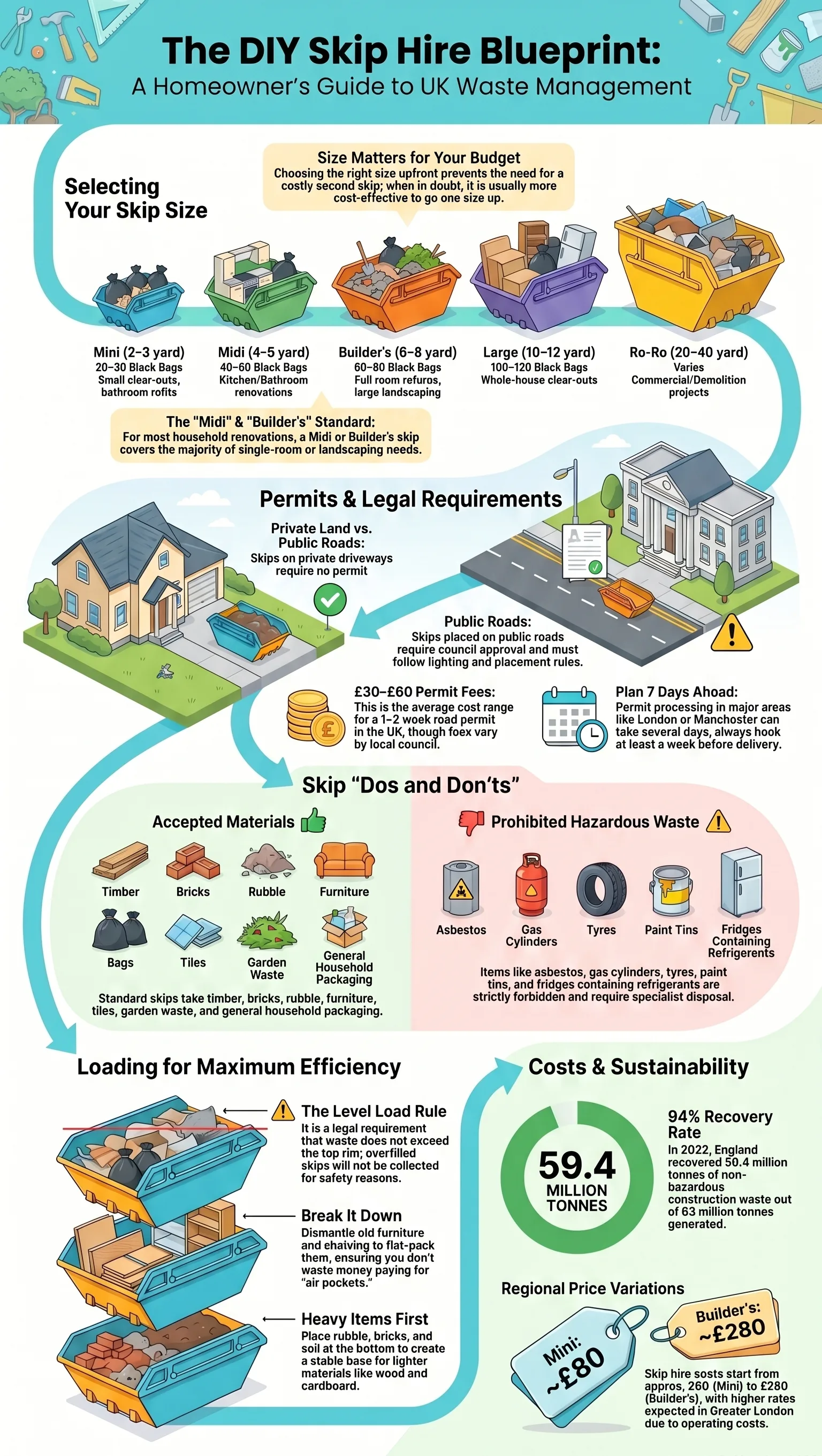
Choosing the right skip size upfront saves you money. Most DIY projects fall within the mini to midi skip range, but underestimating your waste can mean paying for a second skip.
You may need a permit if your skip goes on a public road. Rules vary across the UK, so it is worth checking with your local council before your skip is dropped off.
Not everything can go in a skip. Hazardous materials like asbestos, paint, and certain electrical items need to be disposed of separately.
Why Skip Hire Makes Sense for DIY Work
When you are in the middle of a DIY project, waste builds up faster than most people expect. Common examples include:
Old tiles
Broken plasterboard
Garden soil
Timber offcuts
General rubbish
All of it needs somewhere to go. Bagging everything up and loading a car for multiple tip runs takes time, and depending on how much you have, it can take days.
Skip hire removes that problem. You get a container delivered to your property, fill it at your own pace, and we collect it when you are done. That means:
No rushing to beat closing times at the tip
No hiring a van
No trying to squeeze a sofa into a hatchback
For most DIY jobs, it is simply the most convenient and cost-effective option available, especially across a wide range of domestic skip hire use cases where household waste builds up quickly.
It also means your driveway or garden stays cleaner during the project. Instead of waste piling up in corners, it all goes straight into the skip as you work. That keeps the site safer and makes the whole job feel more manageable.
What Size Skip Do You Actually Need?
Getting the skip size right is one of the most important decisions you will make. Too small and you are left with overflow waste. Too large and you are paying for space you do not use.
Before booking, think about:
The type of project you are doing
How much waste you expect
Whether you are disposing of heavy materials like rubble or soil
The table below gives you a clear overview of each size and the types of DIY jobs they are typically best matched to:
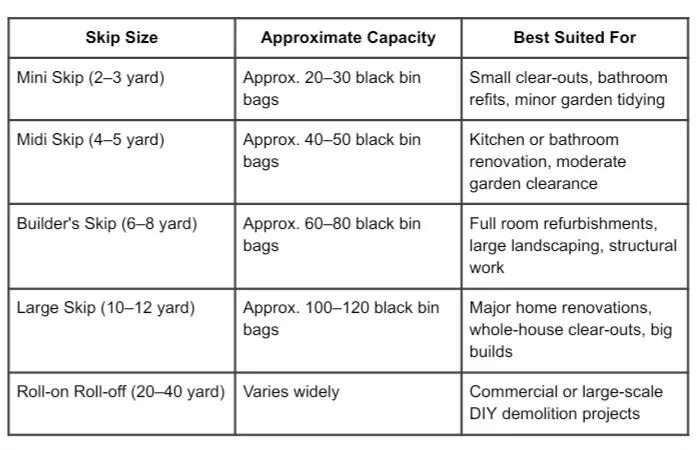
For most household DIY projects, a midi or builder's skip covers the majority of jobs, particularly when dealing with home renovation waste from kitchens, bathrooms, or structural work. If you are doing a single room renovation, a midi skip is usually plenty. If you are redoing an entire floor or tackling a loft conversion, a builder's skip is a safer bet.
When you are unsure, it is generally better to go one size up. A slightly larger skip means you have room for the extra bits and pieces that always seem to appear halfway through a project.
What Can You Put in a Skip?
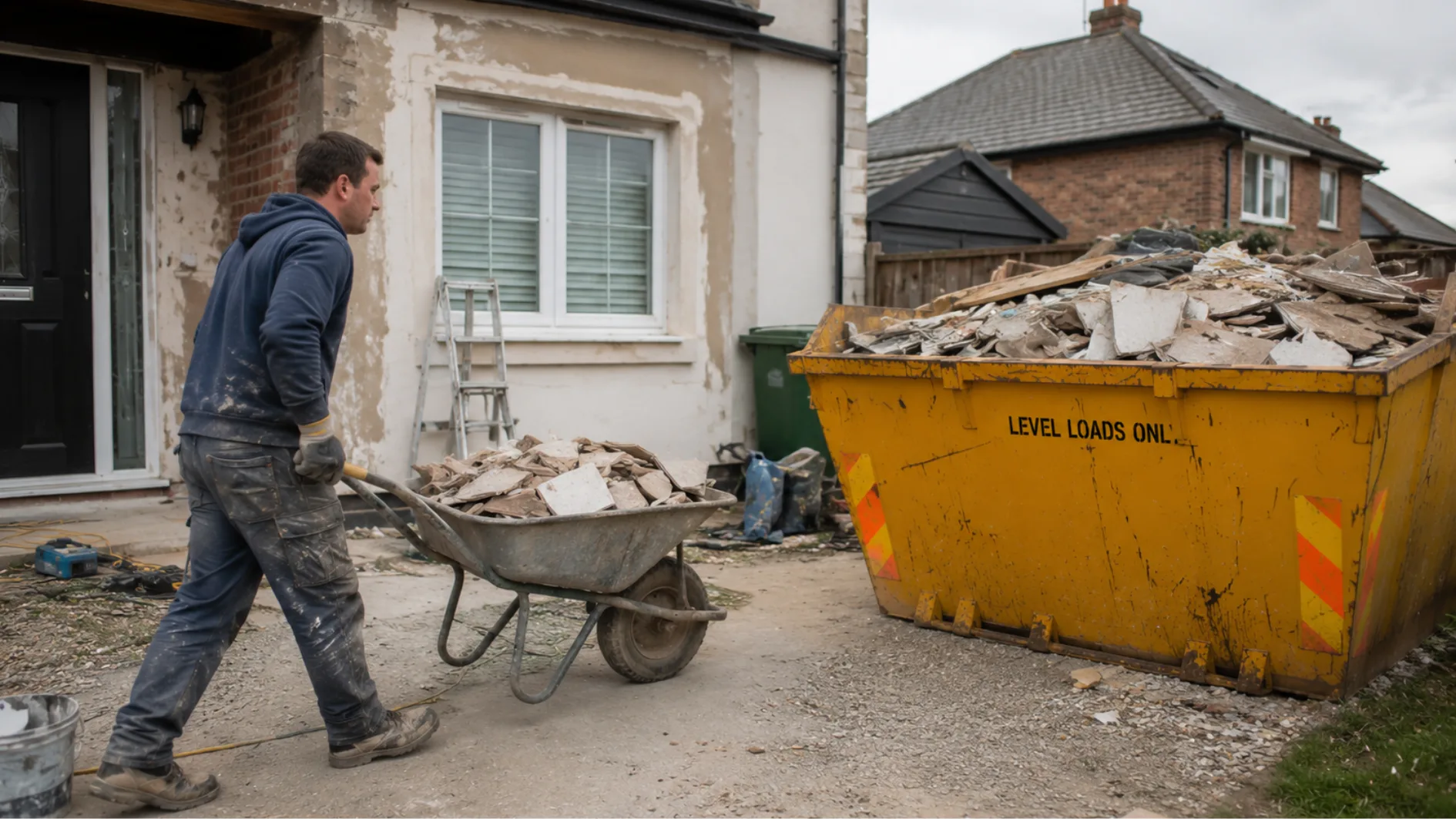
Most general DIY waste is fine to put in a skip, but there are some clear boundaries around what is not accepted. Knowing the rules before you start loading saves you from complications later.
The following types of waste are generally accepted in a standard skip:
Timber, wood offcuts, and MDF
Bricks, concrete, and rubble (in reasonable quantities depending on skip size)
Plasterboard and plaster
Old furniture and carpets
General household clutter and packaging
Garden waste including soil, turf, and branches
Ceramic tiles and sanitary ware
Metal and piping
There are also materials that cannot go into a standard skip, and these need to be disposed of through separate channels.
Most skip hire providers will not accept:
Asbestos
Gas cylinders and pressurised containers
Tyres
Electrical waste and batteries (in large quantities)
Paint tins, solvents, and chemical containers
Fridges and freezers containing refrigerants
Clinical or medical waste
If your project involves any of these materials, you will need to look into specialist collection services or your local council's hazardous waste disposal options. It is worth sorting this out before your skip arrives so you are not left with items you cannot place inside it.
Do You Need a Permit for Your Skip?
Whether or not you need a permit depends on where the skip is going to be placed. This is one of the most commonly misunderstood parts of the booking process, so it is worth getting clear on it early.
If the Skip Is on Private Land
If your skip fits entirely on private land, such as your driveway, you do not need a permit. The skip sits on your property, and no council approval is required.
This is:
The simplest situation
The most straightforward option
The setup used for most domestic DIY bookings
If the Skip Is on a Public Road
If the skip needs to go on a public road or pavement, you will need a permit from your local council. This is because the skip becomes an obstruction on public land, and councils need to track its location for road safety reasons.
The permit usually covers:
Lighting requirements
Placement rules
Approved hire periods
In areas like Greater London and Greater Manchester, permit timelines can vary, so it is a good idea to apply well before your planned delivery date. In areas like Kent and other more rural counties, timelines can vary too.
We can advise you on the permit process when you book, and in many cases we handle the permit application on your behalf.
Permit fees vary depending on your local council and how long you need the skip on the road. As a rough guide, across the 197 UK highway authorities we have checked, half charge between £40 and £90 for a road permit, with a typical figure of about £62, though they run from £12.40 to £260.
How Long Can You Keep a Skip?
Standard skip hire periods in the UK typically run between seven and fourteen days. For most DIY projects, that gives you plenty of time to complete your work and fill the skip without feeling rushed.
If your project runs longer than expected, most skip hire providers offer extensions. It is usually easier and cheaper to extend your hire period upfront rather than after the skip has already been collected.
If you think you might need longer, mention it when you book so you can:
Avoid additional collection charges
Keep the skip for the full duration of your project
Prevent scheduling issues later
For short-burst projects like a single weekend clear-out, some providers offer shorter hire periods. It is worth asking about this at the time of booking if your timeline is tight.
Practical Tips for Filling Your Skip Efficiently
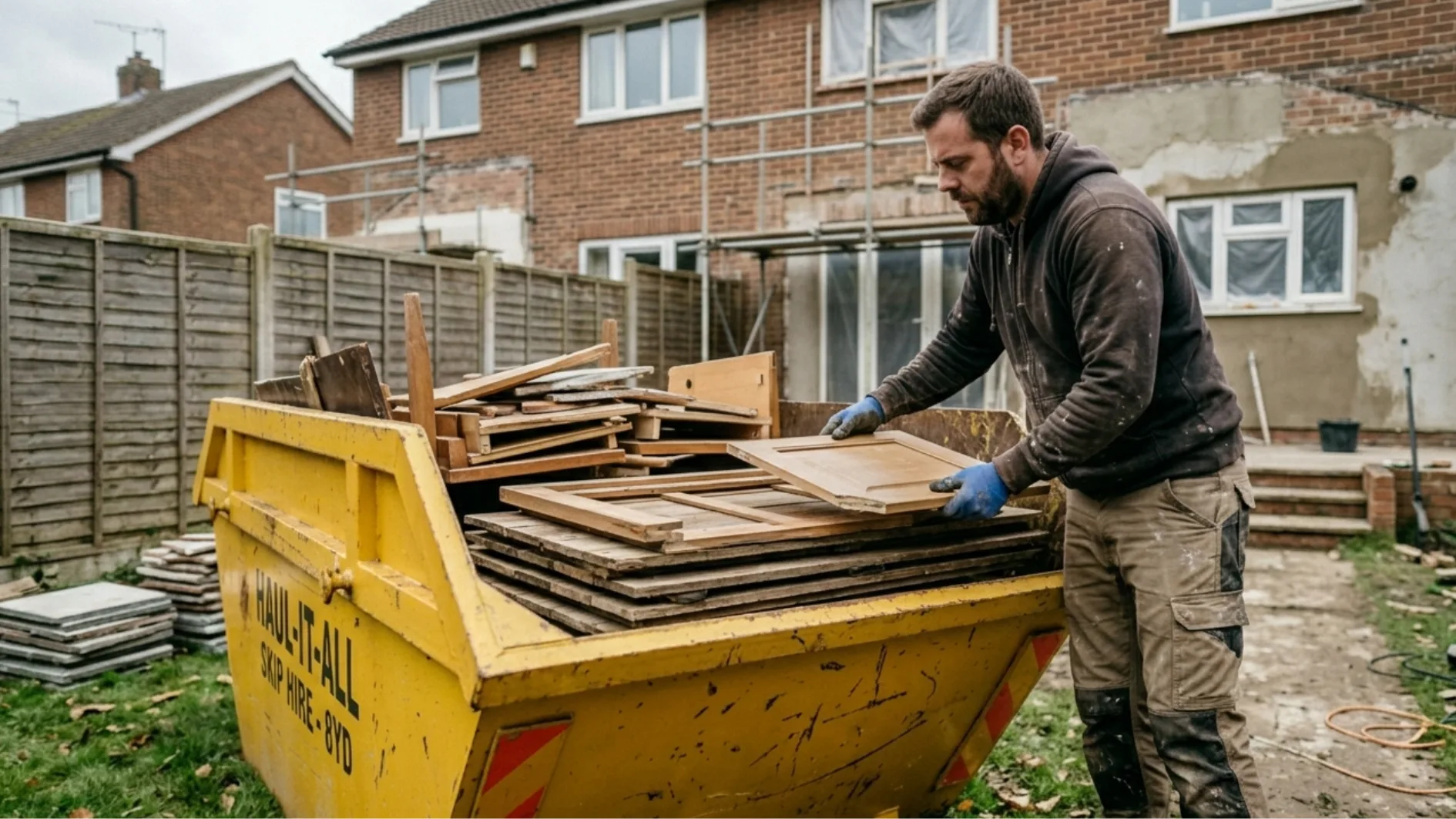
How you load a skip makes a real difference to how much you can fit inside it. A few simple habits can help you make the most of the space you are paying for.
Safe loading is not just about getting more in, it is also about avoiding injury. As noted by the Health and Safety Executive:
"Of all main industry sectors, agriculture, forestry and fishing continues to have the highest rate of fatal injury per 100,000 workers followed by waste and recycling." — Health and Safety Executive
Before you start loading, it helps to think about what you will be putting in and how. Here are some practical guidelines that make a genuine difference:
Break down large items where you can. Flat-packed furniture, dismantled shelving, and cut-up timber all take up much less space than whole pieces thrown in at odd angles.
Load heavy items first. Rubble, bricks, and soil should go in at the bottom to create a stable base. Lighter materials like cardboard, wood, and bags can sit on top.
Fill gaps as you go. Push smaller pieces into the spaces around larger items rather than leaving air pockets.
Do not overfill. Skips must not be loaded above the top rim. This is a legal requirement during transport, and any waste sitting above the fill line will need to be removed before collection.
Separate recyclable material if possible. Keeping clean timber, metals, and cardboard separate means more of your waste can be recycled rather than going to landfill.
These small habits add up quickly, especially on longer projects where you are filling the skip over several days.
How Much Does Skip Hire Cost for a DIY Project?
Skip hire prices in the UK vary depending on your location, the skip size, and the hire duration.
As a general guide, excluding VAT:
Mini skips typically cost around £110 to £250
Midi skips usually fall in the £150 to £310 range
Builder's skips commonly cost between £200 and £340
Prices in areas like Greater London tend to be higher than in other parts of the UK due to higher operating costs and permit requirements.
These figures are a guide only. Your actual quote will depend on:
Your postcode
Current demand
Skip availability
Permit handling requirements
Additional services requested
The best way to get an accurate price is to check availability and pricing for your specific location directly through our platform.
It is also worth noting that splitting waste between a smaller skip and a single car tip run can sometimes work out cheaper on smaller jobs.
However, for anything above a single-room clear-out or larger house clearance jobs, a dedicated skip hire booking almost always works out more cost-effective when you factor in your time and the number of runs you would otherwise need to make.
What Happens After the Skip Is Collected?
Once we collect your skip, the waste goes to a licensed waste transfer station. At this point, materials are sorted and as much as possible is diverted away from landfill through recycling and reuse.
The UK's track record on this is strong. Data from the Department for Environment, Food and Rural Affairs demonstrates:
"In 2022, England generated 63.0 million tonnes of non-hazardous C&D waste, of which 59.4 million tonnes was recovered." — Defra, UK Statistics on Waste
In the UK, skip hire companies are required by law to operate under a waste carrier licence issued by the Environment Agency. This means your waste is handled legally and responsibly, which matters particularly if you have any building or renovation permits tied to your project.
You do not need to do anything extra on your end. We handle the disposal process in full, including:
Transporting the waste
Sorting recyclable materials
Processing disposal legally
Providing documentation if requested
You can request a waste transfer note if you need documentation for your records. This is more commonly needed for commercial projects, but it is available for domestic bookings too.
FAQ
You do not always need to be present, but you do need to make sure the delivery location is clear and accessible. The area should be free from parked vehicles, there should be enough room for the lorry, and access points should not be blocked. It is also important to mention any low cables or narrow driveways when booking. If the driver cannot safely place the skip, the delivery may need to be rescheduled.
Yes, for most general DIY waste you can mix materials in the same skip. The exception is hazardous materials, which must always be separated and disposed of through the appropriate channels. If you are unsure whether something qualifies as hazardous, it is always better to check before placing it in the skip.
If you fill your skip before your hire period ends, you can request an early collection, swap it for a new skip, or upgrade to a larger size. This is something to flag with us as soon as you realise, as availability can vary by area.
Standard hire periods are usually seven to fourteen days, but some providers do offer shorter arrangements depending on location and availability. If you only need a skip for a weekend, it is worth asking about short-hire options and flexible collection scheduling when you get your quote.
Yes, skips do have weight limits that vary by size. Builder's waste like rubble, bricks, and soil is very heavy, and a skip that looks half empty can still be at its weight limit if it is filled with dense materials. If your project involves a significant amount of heavy rubble, a smaller skip filled to a lower level is often safer, easier to transport, and more cost-effective. We can advise you on this when you book.
Wrapping Up Your DIY Skip Hire Plan
Skip hire for DIY projects is straightforward once you know what size you need, where the skip can go, and what you can put in it. Getting those three things right before you book means there are no surprises once the project starts. For most home renovation and garden projects across the UK, a midi or builder's skip covers the work, and booking is typically a quick online process.
Whether you are looking for skip hire in the West Midlands, planning a renovation in Greater Manchester, or clearing out a property in Kent, our national platform makes it easy to find availability and pricing for your exact location.
We cover hundreds of towns and cities across the UK, so you can check what is available near you in just a few minutes.
Ready to get started? Visit Search Skip Hire to check skip sizes, availability, and pricing for your area today.
References
https://www.gov.uk/government/statistics/uk-waste-data/uk-statistics-on-waste
https://press.hse.gov.uk/2026/07/01/latest-annual-work-related-fatalities-published-2/
Related Articles
Filed under:
Domestic Skip Hire