Skip hire Somerset is a practical way to manage household, garden, renovation, and construction waste efficiently.
Choosing the right skip size and understanding the costs can make any project easier, whether we are clearing a home, improving a garden, or handling building work.
Through Search Skip Hire, we can explore suitable skip hire options based on our location and project requirements. Keep reading to learn how skip hire works, what options are available, and what we should consider before booking.
What Should We Know Before Choosing Skip Hire?
Before choosing a skip, understanding the main factors can help us avoid extra costs and select the right option for our needs.
Skip hire prices in Somerset usually depend on skip size, waste type, location, hire duration, and permit requirements.
Choosing the correct skip size helps us avoid paying for unused space or arranging an additional skip later.
A skip permit is only needed when the skip is placed on public roads, pavements, or other public areas.
What Is Skip Hire And How Does It Work?
Skip hire is a simple way to manage waste from home projects, garden clearances, renovations, and building work. We can hire a skip container, have it delivered to a suitable location, fill it with approved waste, and arrange collection when the job is complete. For a wider explanation of how skip hire works, including common uses and key considerations, we can explore our guide on skip hire UK fundamentals.
A skip helps us keep waste in one place instead of making repeated trips to disposal sites. It is a practical option for tasks such as house clearances, DIY projects, office clean-outs, and construction waste removal.
The process is straightforward:
Choose a skip size that matches the amount of waste.
Arrange delivery to the required location.
Fill the skip with accepted materials.
Schedule collection when the skip is ready.
By selecting the right skip option for our project, we can keep waste removal organised, save time, and make the overall process easier to manage.
How Much Does Skip Hire Cost?
The cost of hiring a skip can vary depending on several factors, including the skip size, type of waste, delivery location, hire period, and whether a permit is required. Understanding these details helps us choose the right option and plan our budget before starting a project. We can also learn more about typical pricing factors through our guide on how much skip hire costs in the UK.
Typical price ranges include:
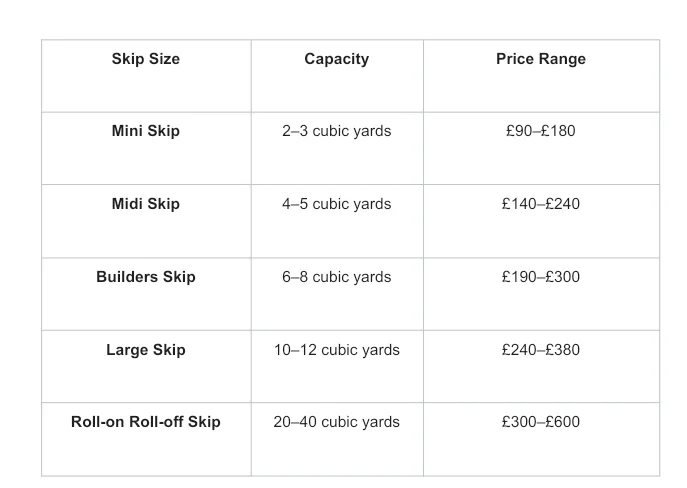
The final cost may also depend on the materials being removed. Heavy waste such as soil, rubble, and concrete may need specific disposal arrangements. Choosing a suitable skip size from the start helps us avoid extra collections and keeps waste removal simple and manageable.
How Do We Choose The Right Skip Size For Our Project?
Choosing the right skip size depends on how much waste we need to remove and the type of work we are completing. A smaller skip may be suitable for a garden clear-out, while larger projects such as renovations or construction work often need more space.
Common skip sizes include:
Mini skip (2–3 yards): A good choice for small DIY tasks, garden waste, and minor clearances.
Midi skip (4–5 yards): Suitable for bathroom updates, kitchen renovations, and medium-sized projects.
Builders skip (6–8 yards): Often used for home improvements, extensions, and building waste.
Large skip (10–12 yards): Better suited for bigger clearances and larger renovation work.
RoRo skip (20–40 yards): Designed for high-volume waste from commercial and large-scale projects.
Selecting the right size helps us make better use of the available space. If we expect a large amount of waste, a bigger skip can help reduce the need for additional collections and keep the project running smoothly.
For another example of choosing suitable skip services based on location and project needs, we can explore our guide on skip hire Edinburgh.
What Waste Can We Put In A Skip?
Knowing what we can put in a skip makes waste removal easier and helps us avoid issues during collection. Most everyday household, garden, and building waste can be placed in a skip, making it a useful option for many different projects.
Common items we can usually include are:
Household rubbish
Cardboard and paper
Plastic materials
Furniture
Garden waste
Soil and turf
Wood and timber
Bricks and concrete
Tiles and ceramics
Some waste types need separate disposal and should not be placed in a standard skip. These include asbestos, chemicals, paint, batteries, gas bottles, medical waste, electrical items, and tyres.
Before filling a skip, we should check which materials are accepted, especially for renovation or construction work. Items such as plasterboard, rubble, and soil may need specific arrangements to ensure they are handled correctly.
Do We Need A Skip Permit For Skip Hire?
Whether we need a skip permit depends on where the skip will be placed. If it stays on private property, such as a driveway or front garden, a permit is usually not needed. However, placing a skip on public roads, pavements, parking areas, or outside property boundaries normally requires permission.
"Licences for skips on the highway are only issued to accredited contractors" - Somerset Council states
Which means skips placed on public highways must follow local licence requirements before they can be used. This helps ensure skips are positioned safely and according to local rules.
Permit costs can vary depending on the local area. Typical costs include:
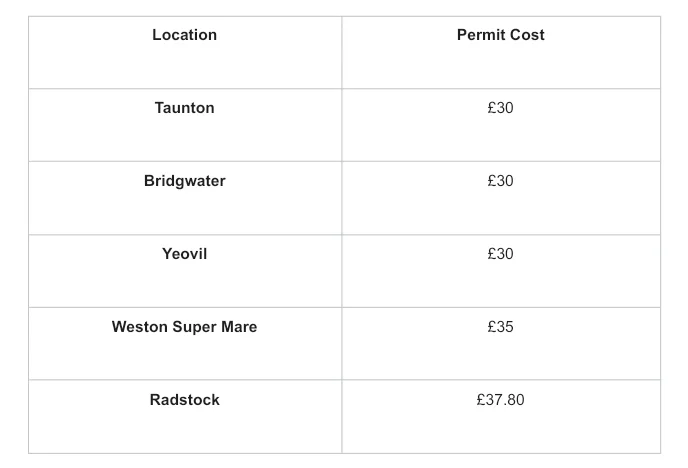
Most permits last around one week and usually take about five working days to process. Before arranging skip delivery, we should check the requirements for our location. This helps us avoid delays and makes sure the skip can be placed safely and legally.
Where Can We Find Local Skip Hire Services?
Finding a nearby skip hire service makes it easier to arrange delivery and collection based on our project location. Local availability can be helpful for home clearances, garden work, renovations, and other waste removal needs.
Skip hire services are available in many areas, including:
Taunton
Bridgwater
Weston Super Mare
Yeovil
Bath
Frome
Wellington
Burnham on Sea
Langport
Shepton Mallet
Chard
Minehead
Glastonbury
Street
The location of our project can affect delivery times and costs, especially when access is limited or the property is further from the service area. Before booking, we should check whether there is enough space for safe delivery and collection.
For readers looking at local services in other parts of the UK, our location guide on skip hire Birmingham provides another example of how local skip availability can vary by area.
What Types Of Skip Hire Options Are Available?
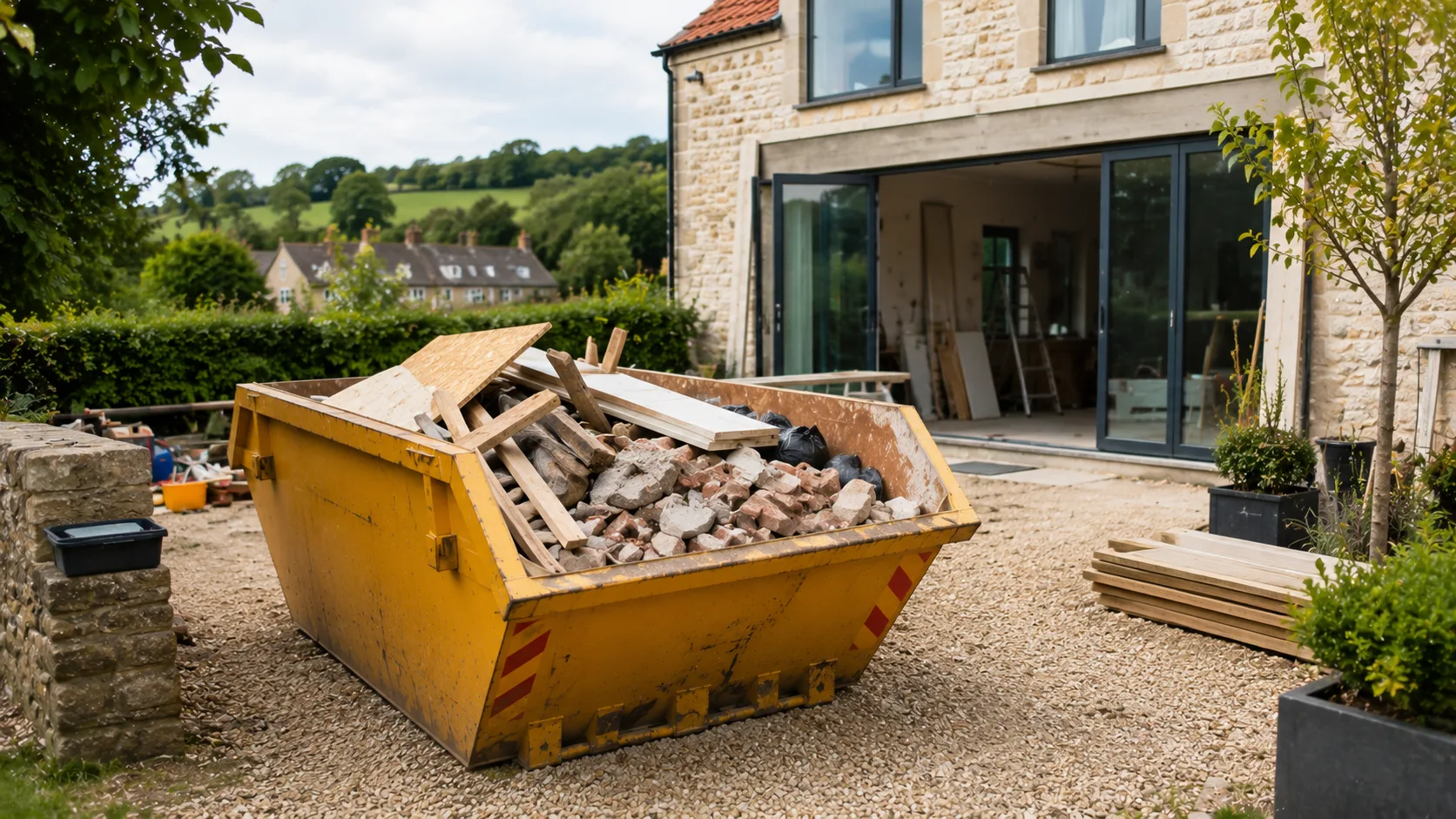
Skip hire can support different types of projects, from small household clearances to larger building work. Choosing the right option depends on how much waste we need to remove and the type of materials involved.
Common skip hire options include:
Domestic skip hire: Suitable for home clearances, garden waste, DIY projects, and moving house.
Commercial skip hire: Designed for offices, businesses, and projects that produce larger amounts of waste.
Builders skip hire: A practical choice for renovation work, construction materials, and building projects.
Trade skip hire: Useful for contractors who regularly need waste removal for different jobs.
Smaller skips are often suitable for simple clear-outs, while larger containers may be better for renovation or construction projects with more waste. Choosing the right skip type helps us keep the work area organised and makes waste handling easier from start to finish.
How Can We Book Skip Hire Online?
Booking skip hire online makes arranging waste removal easier because we can choose an option that matches our project needs and location. The process is usually simple and allows us to plan delivery and collection at a suitable time.
The booking process typically includes:
Entering the delivery location.
Choosing the right skip size.
Selecting a suitable delivery date.
Confirming the type of waste.
Arranging collection when the skip is full.
Same day or next day delivery options may be available depending on location and availability. However, planning ahead can help, especially during busier periods when more people are working on home improvements or clear-out projects.
Before booking, we should consider:
The amount of waste we expect to remove.
The space available for the skip.
Whether a permit is required.
The type of materials we need to dispose of.
Checking these details beforehand helps us choose the right service and keeps the waste removal process running smoothly.
Why Is Responsible Waste Management Important?
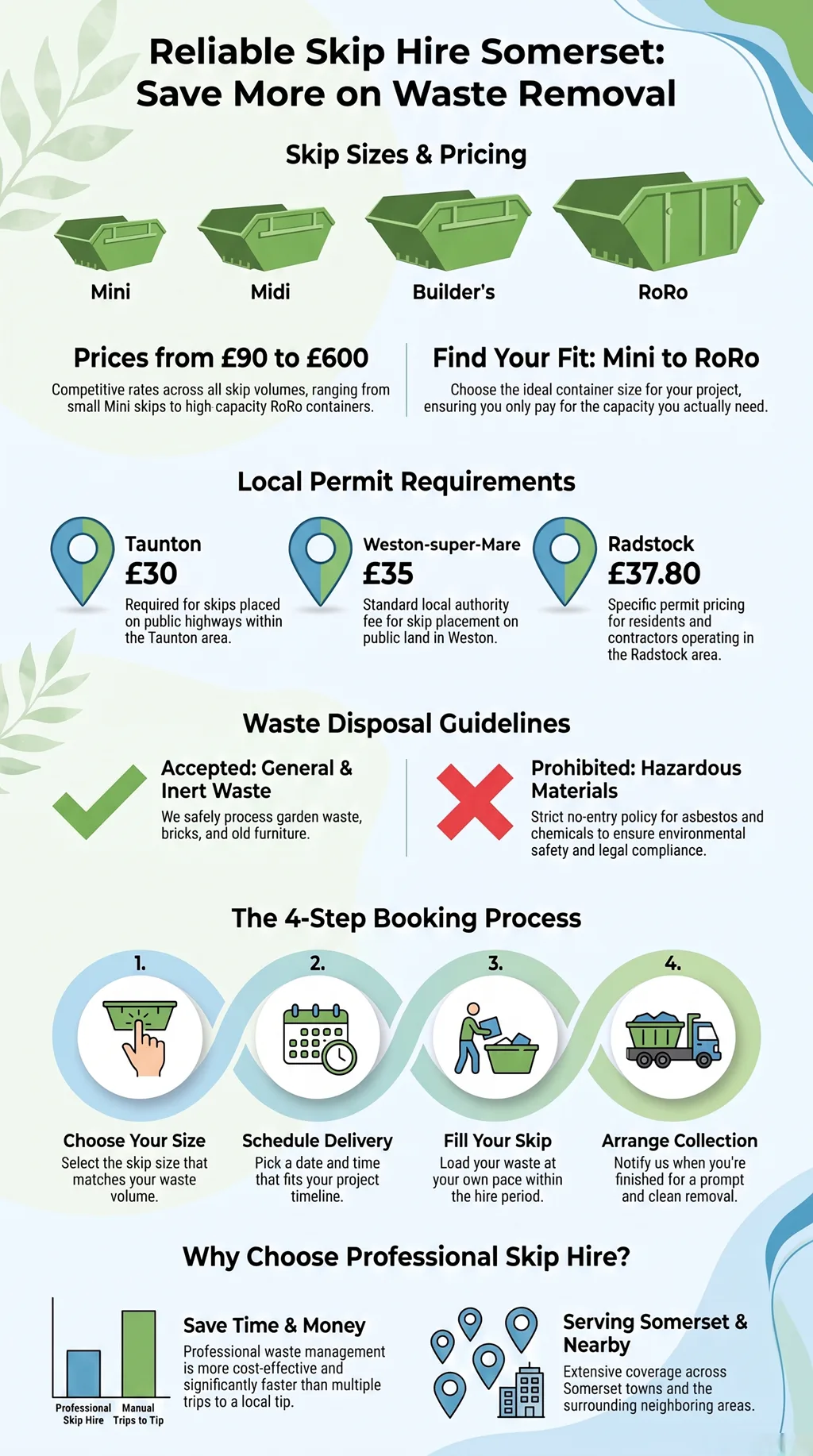
Choosing a licensed waste carrier helps ensure waste is collected, transported, and handled according to the correct requirements. Proper waste management also supports better recycling practices and helps reduce unnecessary landfill use.
"All businesses based in England who transport, buy, sell or dispose of waste, or arrange for someone else to do so, must be registered with the Environment Agency." - The Environment Agency
This highlights why checking waste carrier registration is an important step when arranging waste removal.
Eco-friendly waste removal focuses on sorting suitable materials and finding the right way to process different types of waste after collection.
Responsible waste handling includes:
Separating recyclable materials where possible.
Reducing the amount of waste sent to landfill.
Following waste disposal regulations.
Using suitable methods for different waste types.
When we plan a waste removal project, considering how materials are handled helps us keep the process organised and make more responsible choices. Proper waste management allows us to complete projects while reducing the impact of unwanted materials on the environment.
FAQ
The cost of Skip Hire Somerset depends on factors such as skip size, waste type, location, hire duration, and whether a permit is required. Typical prices range from around £90 for a mini skip to £600 for larger roll-on roll-off skips.
The right skip size depends on the amount and type of waste we need to remove. Mini skips are suitable for small clear-outs and garden projects, while builders skips, large skips, and RoRo skips are better for renovations, construction, and high-volume waste.
A skip permit is usually only required when placing a skip on public areas such as roads, pavements, or parking spaces. If the skip is placed on private property like a driveway, a permit is generally not needed.
Most household, garden, and construction waste can be placed in a skip, including cardboard, furniture, wood, soil, bricks, and concrete. However, restricted items such as asbestos, chemicals, batteries, medical waste, and gas bottles require separate disposal methods.
Booking Skip Hire Somerset online usually involves entering the delivery location, choosing the correct skip size, selecting a delivery date, confirming the waste type, and arranging collection once the skip is full. Planning ahead helps ensure the right skip is available when needed.
How Can We Find The Right Skip Hire Option For Our Project?
Skip hire provides a practical way to manage waste from home clearances, garden projects, renovations, and construction work. By choosing the right skip size, checking permit requirements, and understanding accepted waste types, we can make waste removal easier and avoid unexpected problems during the project.
Whether we need a small skip for a simple clear-out or a larger option for building work, selecting the right solution helps keep everything organised. We can explore suitable options and arrange waste removal through Search Skip Hire to find a skip that matches our project requirements.
References
https://environment.data.gov.uk/support/faqs/275877825/275877892
https://www.somerset.gov.uk/roads-travel-and-parking/apply-for-skip-licence/
Related Articles
Filed under:
Skip Hire