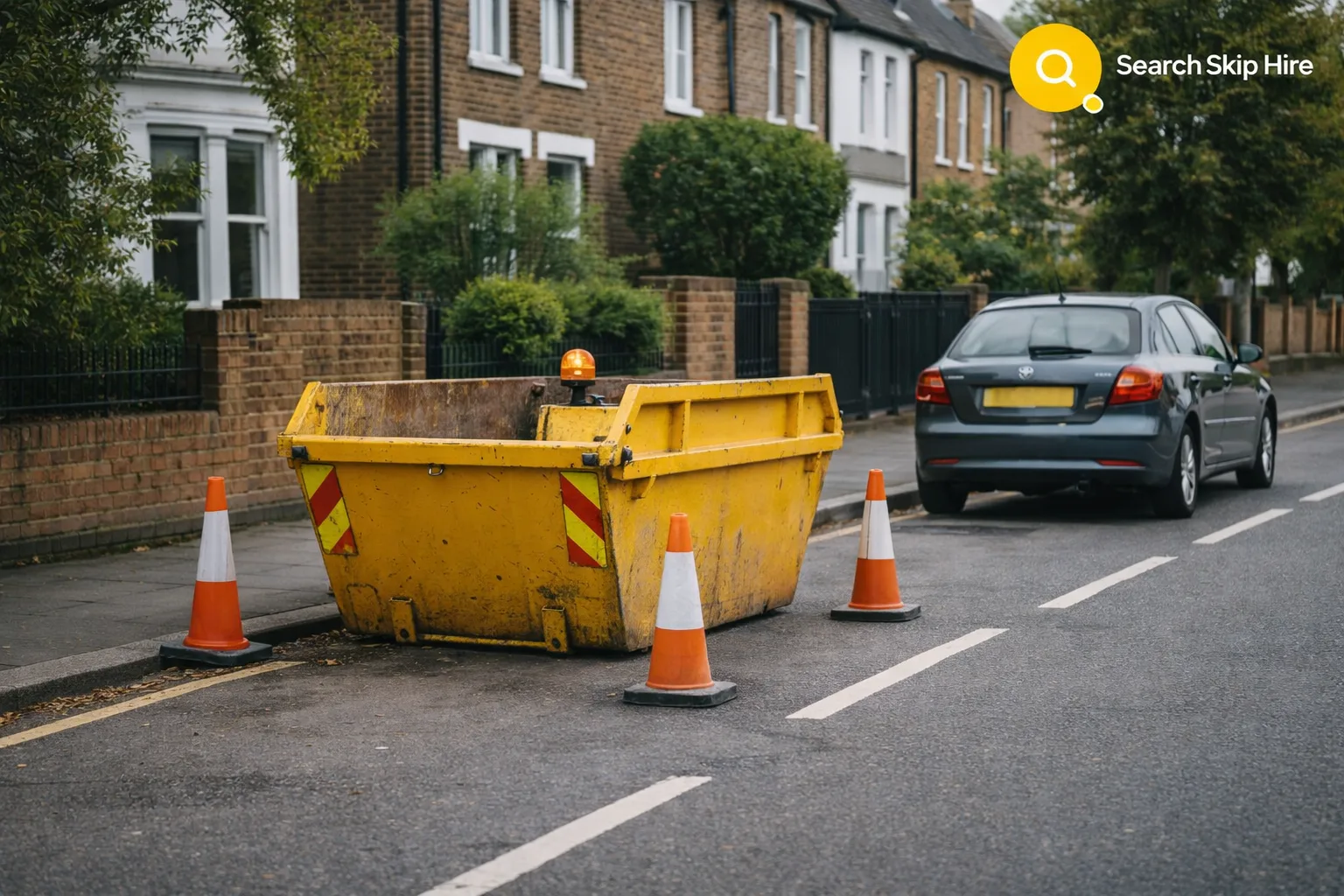
Skip on road rules in the UK mean we usually need a permit from the local council before placing a skip on a public road, pavement, or verge.
These rules come from the Highways Act 1980 and help keep roads safe, prevent obstruction, and protect access for everyone. If we do not follow them, we may face fines, delays, or removal of the skip.
The process is straightforward once we understand the steps. Keep reading to learn how to stay compliant and avoid common issues.
Skip on Road Rules: Key Points to Know
Understanding skip rules early helps avoid delays, fines, and confusion during your project. These are the three most important points to remember.
A permit is required for any skip placed on a public road, pavement, or verge in most UK areas
Safety rules such as lighting, cones, and reflective markings must always be followed
The responsibility usually sits with the skip hire provider, but we must still confirm arrangements
What Are Skip on Road Rules in the UK?
Skip on road rules are in place to keep public highways safe, clear, and easy to use. They apply whenever a skip is placed on public land.
In practice, delays often happen when permit details are unclear or arranged too late. Taking a few minutes to confirm requirements early can prevent most issues.
Legal Definition of Skip Placement on Public Roads
When we place a skip on a public road, it is classed as occupying part of the highway. This means it is regulated under local council requirements.
To make this easier to understand, here is how placement is typically defined.
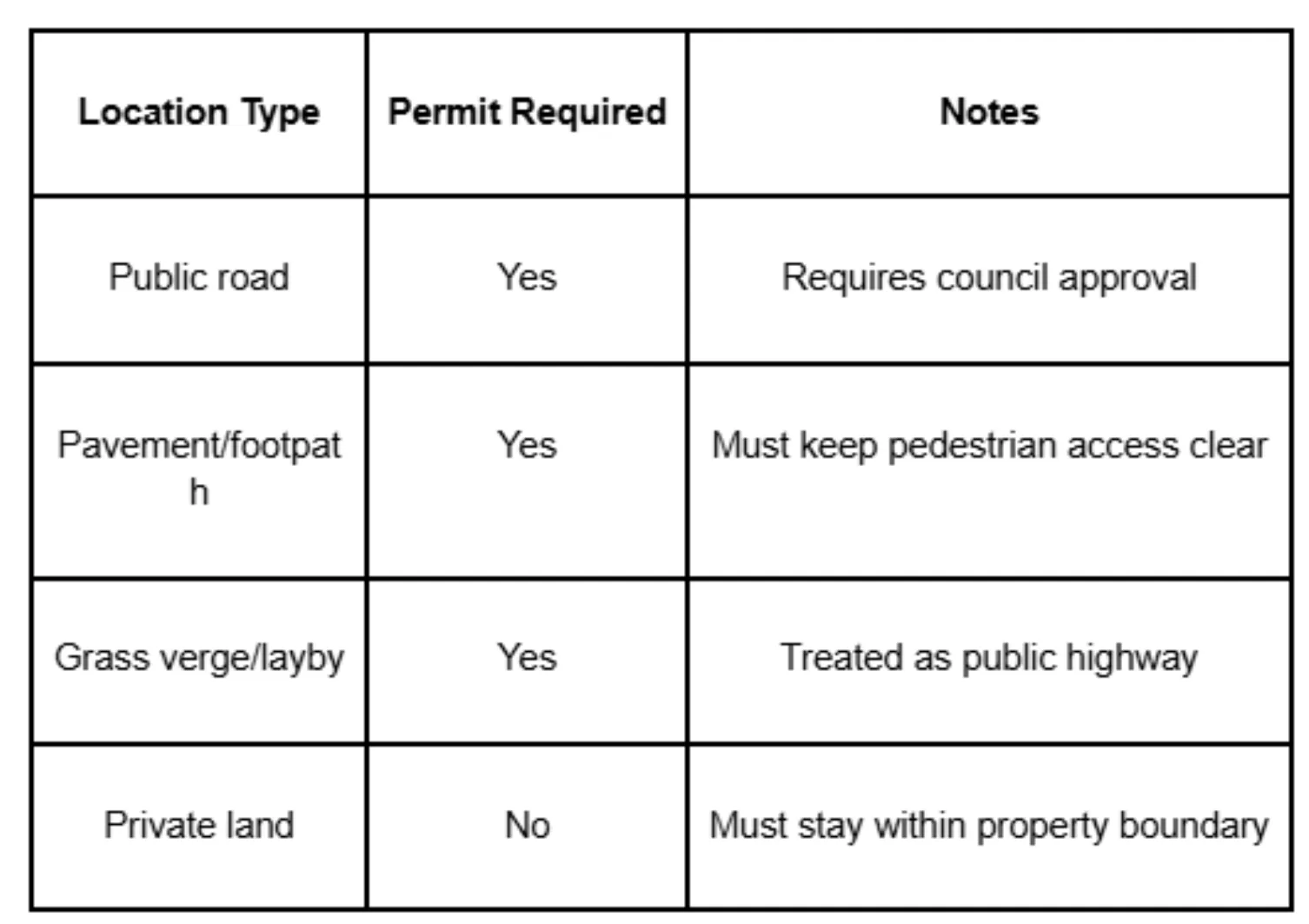
Even a small part of a skip on public land requires a permit. This is a common point of confusion.
Overview of Highways Act 1980 Regulations
The Highways Act 1980 sets the legal framework for skip placement and road use across the UK. Councils use this law to manage safety and access.
These are the key sections we need to understand.
Section 139 requires a permit before placing a skip on a public highway
Section 140 allows councils to remove skips that do not comply
Local highways teams manage approvals and enforcement
For a broader view of how these rules apply in practice, we can refer to Legal rules, permits and compliance.
When a Skip Permit Is Required
In most cases, a permit is required whenever a skip is placed on public land. This includes common residential and construction scenarios.
To keep things clear, here are the typical situations where a permit applies.
On public roads, including residential streets
On pavements or footpaths
On verges, laybys, or roadside areas
For a clearer breakdown of situations where permits apply, we can refer to When a skip permit is required.
Skip Permit Requirements and Council Application Process

How to Apply for a Skip Licence from the Council
Most permits are arranged through the skip hire provider, but understanding the steps helps us stay informed.
Here is how the process usually works.
Applications are submitted online or by phone
Council portals are commonly used
Details of the skip operator must be included
For more detail on legal requirements, we can refer to Skip hire legal requirements UK.
According to the Crown Prosecution Service, placing a skip on a highway without a license is a summary offence, and "the maximum penalty for an offence of this nature is a fine up to level 3 on the standard scale."
Required Documents and Site Plans
Councils require basic information to assess placement and ensure road safety compliance.
Preparing these details in advance can help speed up approval.
A site plan showing the exact skip location
A simple map or sketch of the road layout
Measurements and placement details
In some areas, especially busy streets, more detailed plans may be requested.
Processing Time and Approval Stages
Permit approval usually takes a few working days, depending on the council and location.
Understanding the timeline helps avoid last-minute issues.
Most applications are processed within a few days
Some may require a site inspection
Approval is often confirmed by email
In short, applying early helps keep the project on schedule.
Skip Placement Rules on Public Roads, Pavements, and Highways
Placement rules are designed to maintain traffic flow and ensure public safety. Following them is essential.
Legal Placement Conditions on Highways
There are clear restrictions on where a skip can be placed on public roads.
These conditions help prevent disruption and reduce risk.
Skips cannot be placed on double yellow lines
Narrow streets may limit placement options
Busy roads may require additional approval
In areas like Greater London or the West Midlands, these rules are often applied more strictly.
Rules for Pavements, Verges, and Footpaths
When placing a skip on a pavement, we must ensure pedestrian access remains safe and unobstructed.
These rules protect everyday road users.
Walkways must remain clear
Skips must not block footpaths
Verges and laybys still require permits
Failure to follow these conditions may lead to removal.
Traffic Management and Safety Compliance
In some cases, councils require additional safety planning, especially on busy or restricted roads.
These measures support road safety compliance.
A traffic management plan may be required
Chapter 8 signage rules must be followed
Safe distances from junctions must be maintained
As noted in a 2026 road safety focus, official initiatives emphasize that "reducing the risk of collisions and protecting vulnerable road users" remains a top priority for infrastructure management.
Safety Requirements for Skip Hire on Roads

Mandatory Lighting and Visibility Rules
Good visibility is essential, especially during low light conditions.
To stay compliant, we must ensure the skip is clearly visible.
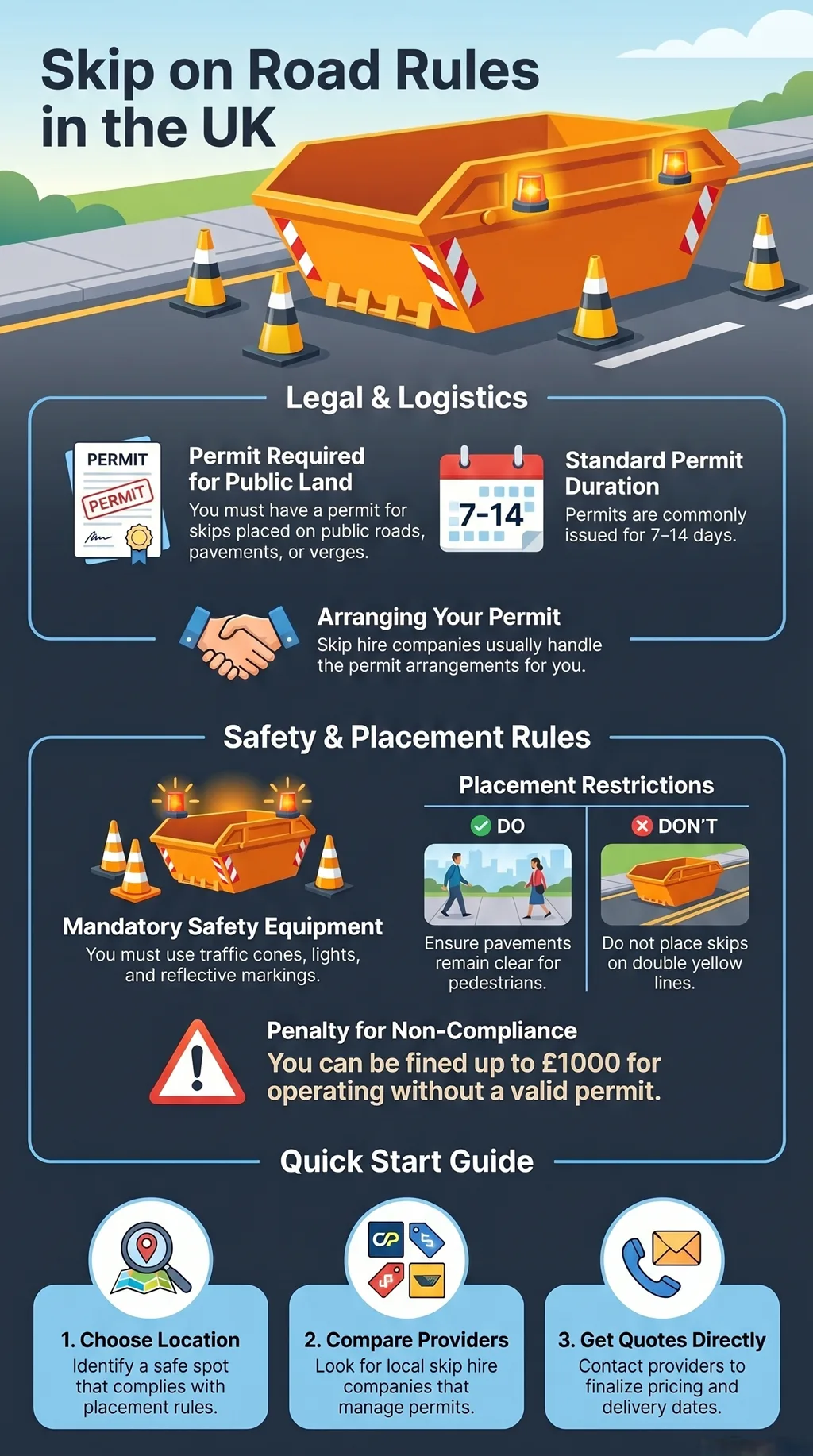
Lights must be used from dusk to dawn
Reflective markings must be visible
Yellow reflective strips are required
These features help prevent accidents.
Signage and End Marker Requirements
Clear signage ensures the skip is easy to identify on the road.
These simple steps improve safety for everyone nearby.
End markers must be fitted
Traffic cones should be placed around the skip
Warning signs must be visible
Even small skips must follow these rules.
Public Safety and Obstruction Prevention
We must always ensure the skip does not create a hazard or block access.
This is a basic part of legal placement rules.
Do not block emergency routes
Keep entrances and driveways accessible
Avoid causing traffic disruption
These steps help maintain a safe environment.
Skip Permit Duration, Fees, and Extensions
Permits are issued for a limited time and vary depending on local council requirements.
Typical Permit Duration in the UK
Most permits are short-term and need to be planned carefully.
Here are the common timeframes.
Around 7 days for short-term use
14 days is common across many councils
Some areas allow up to two weeks
In areas like Greater Manchester, these durations are commonly applied.
Skip Permit Costs Across Councils
Costs vary depending on location, traffic conditions, and council policies.
Understanding the general range helps with planning.
Typically between £15 and £180
Higher in busy city areas
May increase for high-traffic roads
Regulations may vary slightly between councils, so requirements in areas like Kent can differ from those in Greater London.
How to Extend or Renew a Skip Permit
If more time is needed, we must request an extension before the permit expires.
Taking early action helps avoid penalties.
Contact the council in advance
Submit a renewal request
Pay any additional fees
Extensions are usually straightforward when handled early.
Responsibilities of Homeowners and Skip Hire Companies
Clear responsibility helps avoid confusion and ensures compliance throughout the hire period.
Who Is Responsible for the Permit?
In most cases, the skip hire provider arranges the permit. However, we should always confirm this before delivery.
This simple step helps prevent misunderstandings.
Providers usually handle permits
We should double-check arrangements
Responsibility can vary by agreement
Requirement for Registered Skip Operators
Only approved operators should place skips on public roads.
This ensures compliance with legal and safety standards.
Must be registered with councils
Require a waste carrier licence
Must hold public liability insurance
These requirements help protect both the public and the customer.
Standard Compliance Conditions for Skip Hire
Each permit includes conditions that must be followed throughout the hire period.
These rules support safe and legal use.
Follow placement and safety rules
Maintain lighting and signage
Remove the skip when the permit ends
Penalties and Enforcement for Skip Permit Violations
Failure to follow skip rules can lead to enforcement action by local councils.
Fines for Skips Without a Permit
Placing a skip without a permit is a legal offence under highway regulations.
It is always better to arrange approval in advance.
Fines can reach up to £1000
Additional charges may apply
Repeat issues may lead to stricter action
Council Enforcement and Removal Rules
Councils have the authority to remove skips that do not meet permit conditions.
This can affect project timelines and increase costs.
Skips may be removed without notice
Removal fees may apply
Inspections are carried out regularly
Appeal Process for Skip Licence Issues
If there is a dispute, councils usually offer a formal appeal process.
This allows us to provide clarification or additional details.
Submit an appeal through the council
Provide supporting information
Wait for a review decision
Special Cases and Exceptions in Skip Road Rules
Some situations follow different rules depending on location and urgency.
Skip Placement on Private Land
Placing a skip on private land avoids the need for a permit.
This is often the simplest option.
No permit required
Must stay within property boundaries
Safety still needs to be considered
Emergency and Fast-Track Permits
Some councils offer faster approval for urgent situations.
This can help when time is limited.
Emergency permits may be available
Faster approval may be possible
Additional fees may apply
Special Rules for Busy Areas and City Centres
City centres often have stricter rules due to traffic and limited space.
Planning ahead is important in these locations.
Restricted zones may apply
Extra safety measures may be required
Additional permit conditions may apply
Practical Tips to Stay Compliant with Skip Road Regulations
Choosing a Council-Approved Skip Hire Company
Working with an approved provider helps ensure everything is handled correctly.
This reduces risk and improves reliability.
Check council registration
Confirm licences and insurance
Ensure permit handling is included
Avoiding Common Permit Mistakes
Many issues come from small mistakes that are easy to prevent.
Being aware of these helps keep the project on track.
Placing a skip without a permit
Blocking access or pathways
Forgetting to extend permits
Best Practices for Safe and Legal Skip Placement
Good planning supports both safety and compliance.
These simple steps help keep everything running smoothly.
Choose a safe and suitable location
Follow all safety requirements
Check the skip regularly during use
FAQ
Yes, in most cases a skip permit is required for any placement on a public road, pavement, or verge. This is set by local council regulations.
Yes, if the skip remains fully within private property boundaries, a permit is not required.
Most permits last between 7 and 14 days, depending on local council conditions.
Usually, the skip hire provider arranges the permit, but we should always confirm this before delivery.
We may face fines, delays, or removal of the skip if a permit is required but not arranged.
Skip on Road Rules Explained: Final Thoughts and Next Steps
Skip on road rules become much easier to manage once we understand the basics. If a skip is placed on a public road, pavement, or verge, we need a permit and must follow safety requirements such as proper lighting and clear placement.
These rules are there to support road safety and prevent disruption. Taking time to plan ahead helps avoid fines and delays.
If we are preparing for a project, we can compare local providers and check availability through Skip Hire. Visit Search Skip Hire to find skip hire options near us and choose what works best for our needs.
References
https://www.cps.gov.uk/prosecution-guidance/road-traffic-summary-offences
https://www.infrastructure-ni.gov.uk/news/lets-focus-road-safety-save-lives-2026-kimmins
Related Articles
Filed under:
Skip Permits