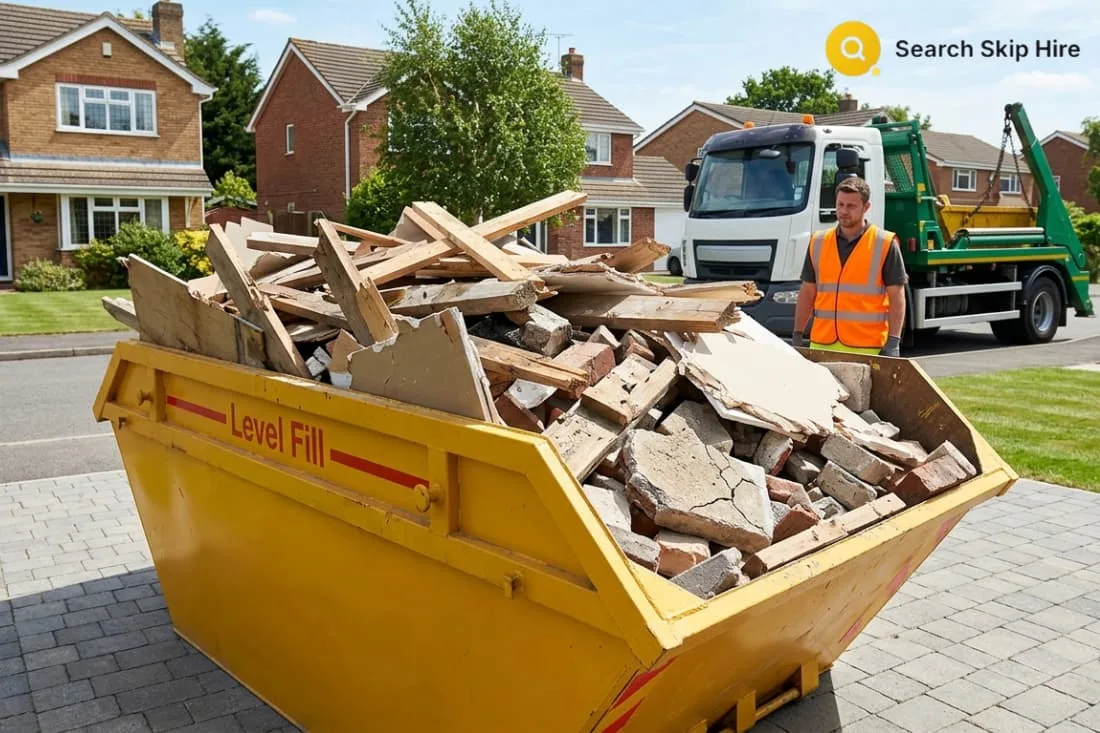
If a skip is overfilled, the driver will almost certainly refuse to collect it. This means your waste stays put, your project gets delayed, and you will face extra charges.
Overfilling is a breach of safety regulations and your hire agreement, not just an inconvenience. The rules are strict to protect everyone on the road and ensure waste is transported legally.
We see this situation often. Someone fills a skip until waste is piled above the top rails, thinking it will be fine. When the lorry arrives, the driver says no and leaves. This leaves you with an overflowing skip blocking your driveway.
To learn exactly why skips get refused and how to prevent it, keep reading.
Overfilled Skips: The Costs You Don’t See Coming
These key points show how overfilling a skip leads to delays, extra costs, and serious safety risks you can easily avoid.
An overfilled skip will be refused collection, causing immediate project delays and requiring you to remove the excess waste.
Overfilling leads to extra costs, including re-collection fees, potential fines, and the cost of hiring a second skip.
The practice is a safety hazard and legal breach, creating risks for the driver, the public, and your own liability.
Defining an Overfilled Skip
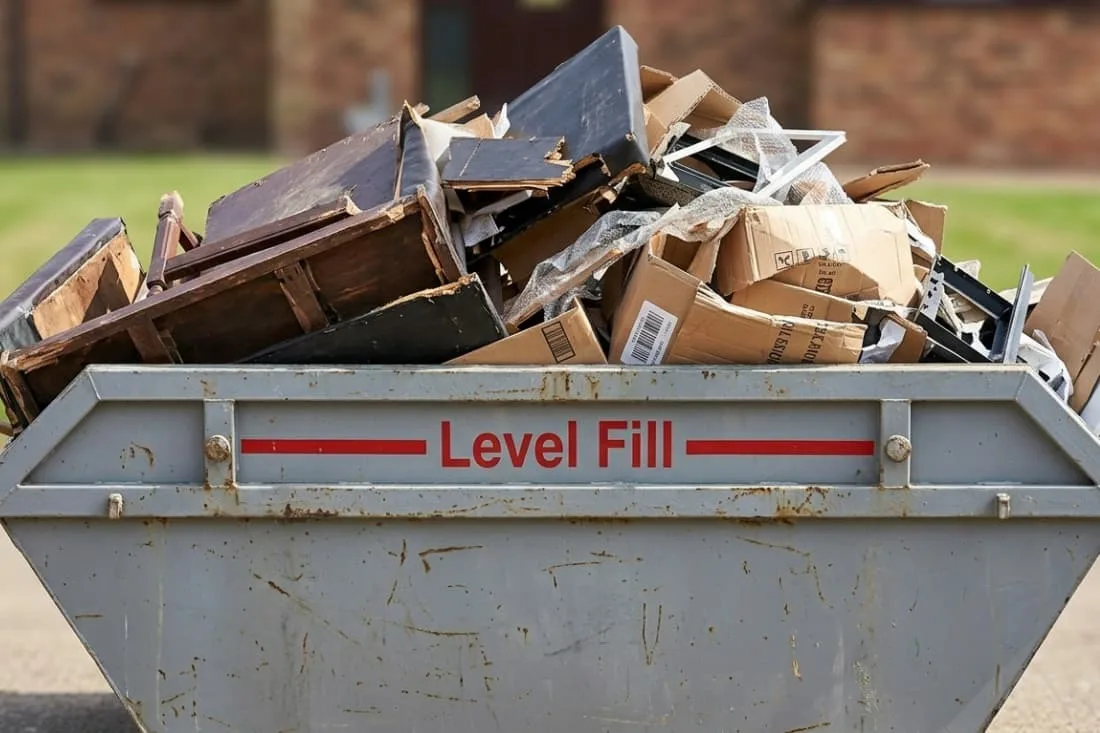
A skip is considered overfilled when the waste inside exceeds specific safety boundaries. It is not just about how full it looks.
When is a skip overfilled?
Waste above the top edge. The main rule is that no waste should be above the top edge of the skip's walls. If any item sticks up above this line, the skip is overfilled.
Exceeding the weight limit. A skip can look only half full but be overweight if it contains dense materials like soil, bricks, or concrete. Exceeding this limit is just as serious as overfilling by volume, especially without proper skip sizes waste estimation before loading.
An unstable load. This happens when waste is piled into a high peak in the middle or if bulky items are loaded unevenly. This makes the load unsafe to lift and transport.
The definition is clear for safety reasons, whether you are in Greater London or Gwent.
The Immediate Aftermath of Overfilling

When a collection driver arrives, their first job is to inspect the skip. They check if the load is level and that nothing is above the top rails.
They also assess if the skip looks overweight based on the type of waste visible. This inspection takes only a moment.
If the skip is overfilled, the driver will refuse to collect it. They are legally obligated to do this. The skip lorry will simply drive away, leaving the overfilled skip where it is. You are then responsible for the waste. The driver cannot and will not help you remove items on the spot.
This refusal causes an immediate delay. Your project timeline is disrupted because the waste you expected to be gone is still there.
You must now take action to reduce the load before you can rebook the collection, which often could have been avoided by taking time to estimate waste volume more accurately at the start. This process often takes extra days, pushing back whatever work you had planned next.
Why Collection Refusals Are Mandatory
Skip companies refuse overfilled skips because it is a matter of safety and law. Why skips get refused:
Safety hazard. The primary reason is the risk of debris falling from the skip during transport. Loose items sticking out can fall onto the road, creating a dangerous hazard for cyclists, motorists, and pedestrians. The driver and the company are liable if this causes an accident.
Equipment and vehicle safety. The lorry's lifting arms are designed to handle a balanced, level load. An overfilled or uneven skip can swing, shift, or put uneven stress on the equipment. This can damage the lorry or even cause it to become unstable during the lift, endangering the driver.
Legal and insurance compliance. Transporting an overfilled skip can breach the conditions of the operator's license and insurance. If the vehicle is stopped and inspected by authorities, the operator could face fines and penalties. They refuse collection to avoid these serious legal and financial risks for their business.
As highlighted by Health and Safety Authority (HSA)
"It is against the law for a skip lorry to be overloaded or for material from a vehicle or skip to fall out onto the public road. All loads that are carried by vehicles, including skips and their contents, must be properly secured to the vehicle at all times. Skips must be covered so that material inside does not fall out onto the road, or onto people or vehicles, while being lifted on or off the vehicle or transported." - Health and Safety Authority
The Financial Penalties of an Overfilled Skip
Overfilling a skip leads directly to additional costs. The first charge is usually for the failed collection attempt.
The company has sent a lorry and driver out, so they will charge for this wasted trip. You will then need to pay again for a second collection once the skip is correctly loaded.
You may also face a labour charge if the company has to send staff to help you repack or reduce the load.
In some cases, if the skip is too full to safely reduce, you might be forced to hire a second, smaller skip for the excess waste. This doubles your hire costs.
In a recent analysis by GOV.UK
"Failure to comply with the duty of care requirements is a criminal offence and could lead to prosecution. [...] Examples of activity that would breach a permit condition or exemption limit include the transfer of waste in a condition which means that it cannot be managed or stored safely pending removal—for example, waste being stored outside the confines of buildings or [containers]." - GOV.UK
Typical extra charges for an overfilled skip
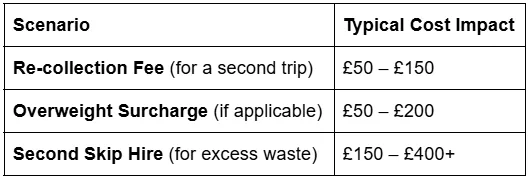
These are direct costs. The indirect costs of project delays and your own time spent fixing the problem can add up even more.
Legal and Compliance Repercussions
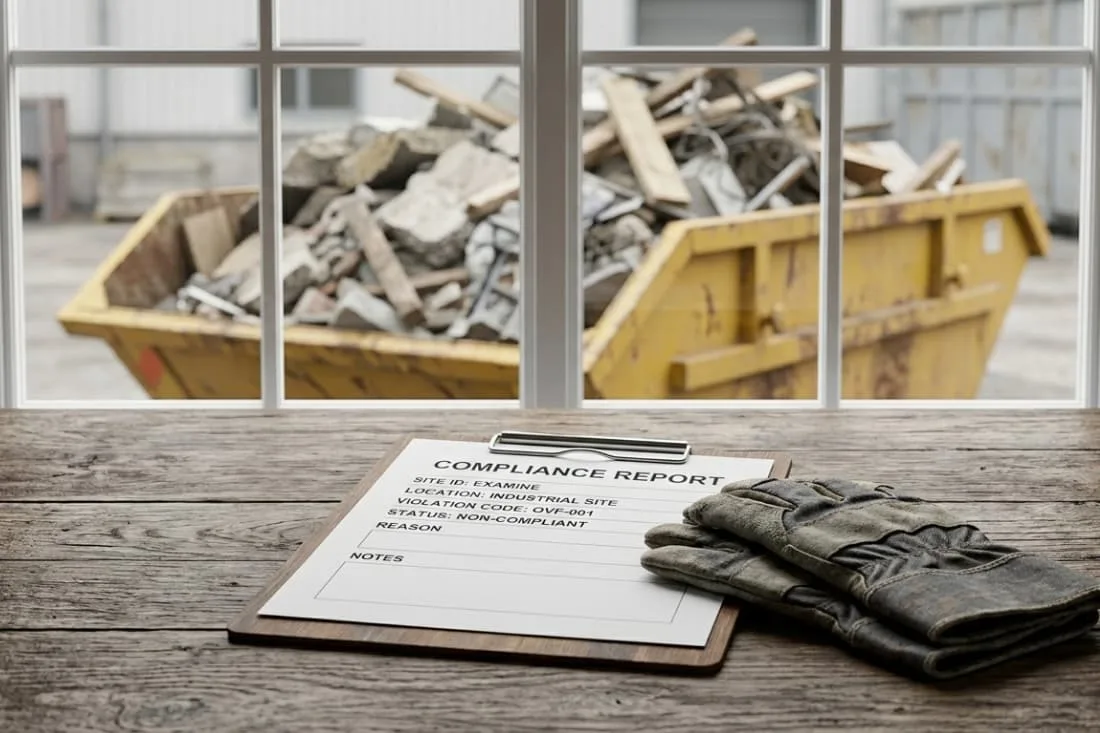
There can be legal consequences. If your skip is placed on a public road or pavement, you are responsible for ensuring it is safe. An overfilled skip that spills debris or causes an obstruction can lead to action from your local council. They can issue a fine or a notice to have it moved immediately.
The broader legal framework comes from the Road Traffic Act, which governs vehicle safety. While the legal onus is on the transport operator, if an accident is traced back to your overfilled skip, you could be held partially liable.
This is especially relevant if you are a business or contractor, as it could breach health and safety regulations.
In areas with strict enforcement, like parts of Surrey or the West Midlands, council officers may patrol and issue penalties for unsafe skips.
The risk is real, and it is another reason why skip hire companies are so strict about their collection policies. They are helping you avoid these legal complications.
The Safety Hazards Created by Overfilling
The safety hazards of an overfilled skip are immediate and serious.
Key safety hazards of an overfilled skip
Debris falling during transport. Waste falling off the skip can hit other vehicles, potentially causing a road traffic accident. It can also injure pedestrians or cyclists.
Unstable lifting and transport. During the lifting process, an unbalanced skip can swing or twist, endangering the driver and potentially damaging nearby property, which ties directly to broader weight limits and overloading risks in skip transport.
Risk to people on site. Even before collection, an overfilled skip is a hazard. Items can easily fall out if they are precariously balanced above the sides, creating a danger for children, pets, and anyone walking past.
The fill line rule exists to keep the load contained and stable at all times.
Waste Types That Commonly Lead to Overfilling
Some types of waste are more likely to cause overfilling problems. Heavy, dense materials are the main culprits for weight-based overloading, while bulky, lightweight items often cause volume overfilling.
Heavy, dense materials (risk: weight overload). These materials can hit the skip's weight limit long before the space is full.
Soil, sand, and rubble
Bricks, concrete, and tiles
Mixed building waste
Bulky, lightweight items (risk: volume overfill). These items take up a lot of space and can easily be stacked above the fill line.
Furniture and mattresses
Cardboard and packaging
Garden waste
Knowing your waste type helps you choose the right skip size and load it correctly from the start.
Best Practices to Prevent Overfilling
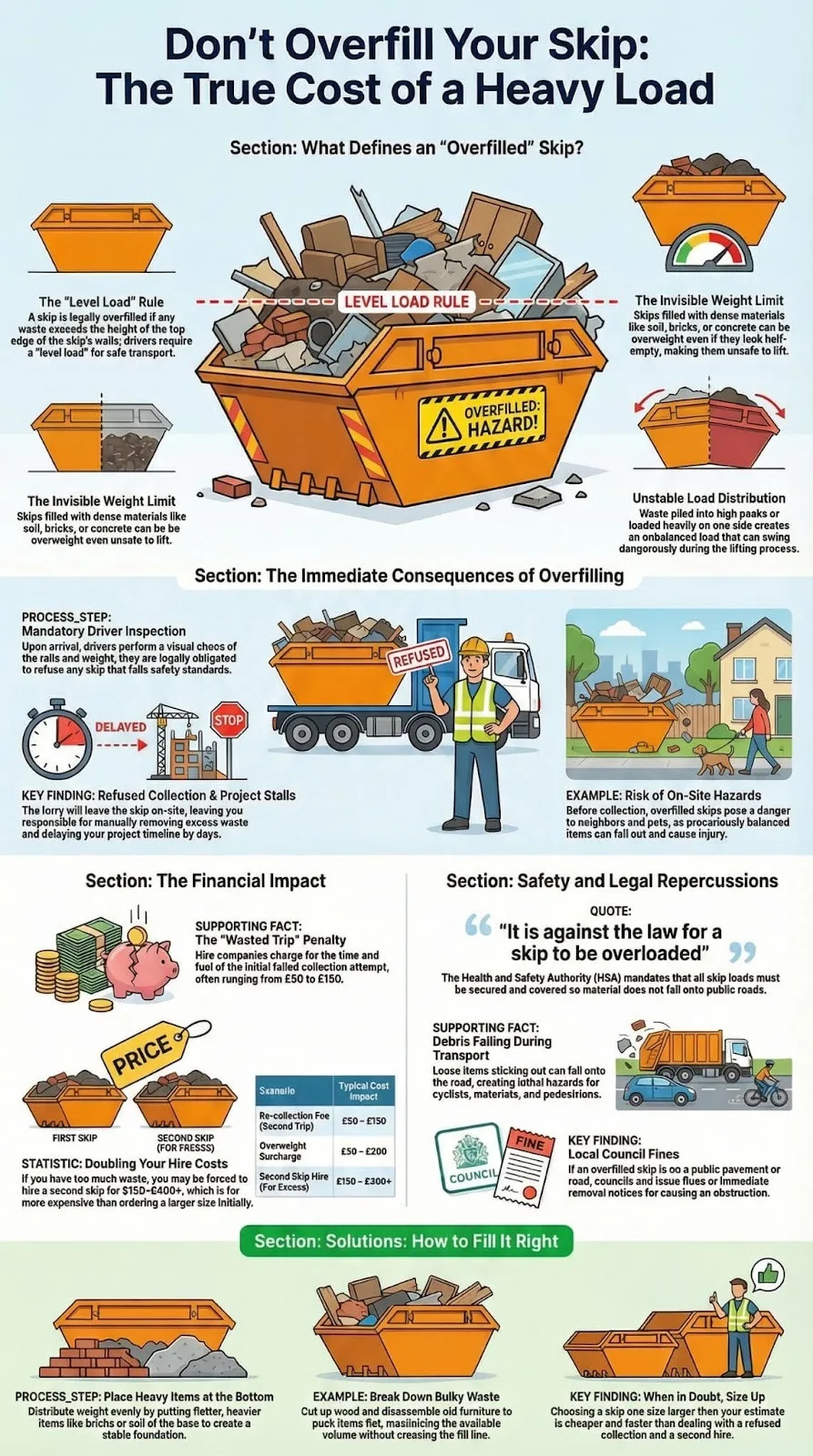
Avoiding overfilling is straightforward with good planning. How to prevent an overfilled skip:
Never load above the top edge. Treat the sides of the skip as an absolute limit. If you cannot fit an item without it protruding, you cannot put it in.
Distribute weight evenly. Place heavier, flatter items at the bottom and try to create a level surface. Break down large items where possible, like disassembling old furniture or cutting up wood, to pack them flat and save space.
Choose the correct skip size. If you are unsure, it is better to choose a size larger than you think you need. The small extra cost is almost always less than the cost and hassle of dealing with an overfilled skip. When you book, describe your waste to the hire company so they can advise you.
Cost Analysis: Overfilling Versus Correct Sizing
It is almost always cheaper and smarter to hire the correct size skip, or a second one, than to overfill. Overfilling seems like it saves money, but the hidden costs quickly make it the more expensive option.
Cost comparison: Overfilling vs. hiring correctly
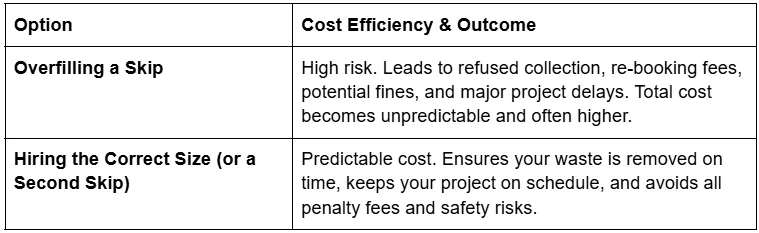
The financial penalty for overfilling, combined with the value of your own time lost, makes proper planning the clear winner. It is a reliable way to manage your budget and your project timeline.
FAQ
Overfilling a skip beyond the fill line creates serious safety hazards and can prevent collection. A skip hire company will refuse pickup if waste exceeds maximum fill lines or rises above the skip walls. Excess waste can fall during transport on a skip lorry. This situation can lead to extra charges, legal action, and violations of UK law and safety regulations.
You should not add extra waste or bulky items once you reach the correct skip size and fill line. Overfilling a skip makes lifting mechanisms unsafe for the skip operator and truck driver. Heavy items and uneven loads increase safety issues. Always choose the right size of skip for your domestic project, garden project, or building work.
You must not place hazardous chemical waste, flammable items, Gas Bottles, or Electrical items such as TV/computer monitors and Fridge /freezers in a skip. These materials create environmental hazards and safety risks. They require proper waste disposal through recycling facilities or a recycling centre. Following waste management rules supports responsible recycling and protects natural water resources.
You will usually face extra charges if your skip is overfilled. A skip provider may apply fees for excess waste, double collections, or additional waste removal. Overfilled skips can also disrupt waste transport and processing at waste transfer stations. Keeping waste within maximum fill lines helps you avoid unnecessary costs and delays.
You should load your skip by placing flat objects at the base and distributing waste evenly for better space maximisation. Keep all waste below the fill line and avoid stacking above the skip walls. Place black bin bags, green waste, and heavy items carefully. Position the skip on flat, dry and stable land, away from the public highway.
Fill It Right, Avoid the Hassle
Overfilling a skip leads to one outcome, problems. From refused collections to extra costs and delays, ignoring fill lines creates avoidable setbacks. These rules exist for a reason, safe transport and compliance on public roads.
A small oversight can quickly turn into a bigger issue. But loading your skip correctly keeps your project smooth, efficient, and stress free.
Start your skip hire search at https://www.searchskiphire.co.uk/ to find verified local providers who can guide you on the right size and safe loading practices.
References
Related Articles
Filed under:
Skip Sizes