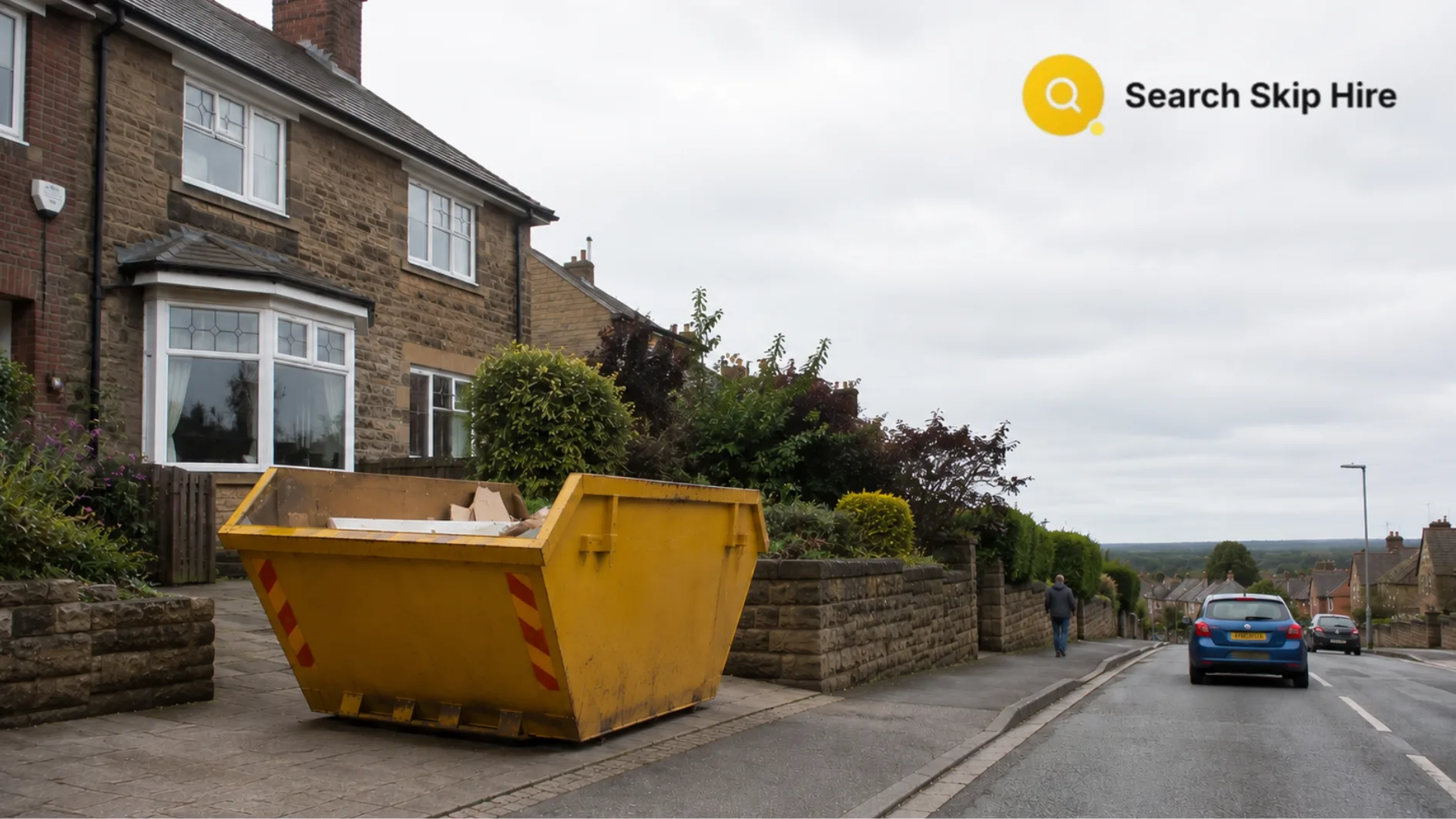
The cheapest way to hire a skip in County Durham is a Mini Skip, which typically costs between £120 and £215 excluding VAT, depending on your location and the type of waste you need to dispose of.
This makes it ideal for smaller jobs such as garden clearances, DIY projects, and household decluttering. Prices increase based on skip size, hire duration, and whether you need a council permit.
Larger skips are better suited to home renovations, building work, and major clearances, while heavier waste such as soil and rubble may cost more.
Read on for skip prices, permit costs, sizes, and everything you need before booking.
Quick Reads: Skip Hire in Brief
This section sums up everything you need to know before booking, so you can skip ahead if you are short on time.
Skip prices range from around £120 (excluding VAT) for a Mini Skip to £600 for a Roll-on Roll-off skip, and the right size depends on your project.
You only need a permit if the skip sits on a public road, pavement, or parking space, and permit costs across the area sit between £15 and £33.
Hazardous items such as asbestos, paint, chemicals, and electricals cannot go in a standard skip, while household, garden, and most building waste is accepted.
How Much Does Skip Hire Cost?
Skip hire prices depend on the size of the skip you choose and what you plan to throw away. Below is a breakdown of the typical price ranges you can expect.
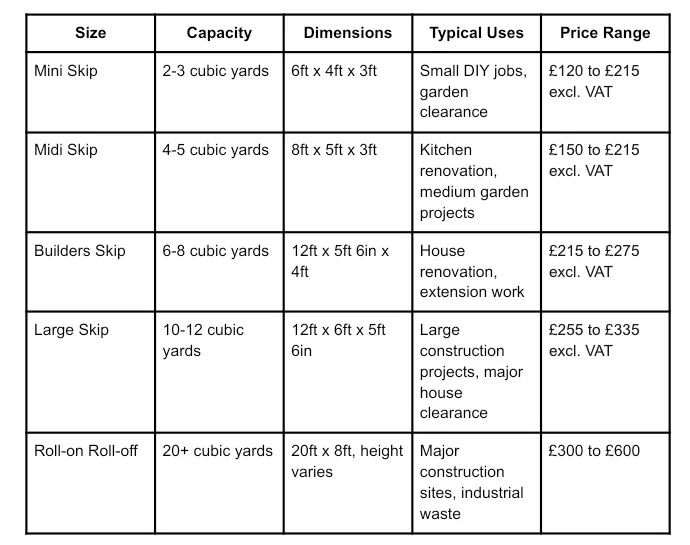
These figures are a general guide, and the exact price you pay will depend on your town, the company you choose, and how long you need the skip for. We recommend comparing a few local quotes before you commit to one.
What Affects Skip Hire Prices?
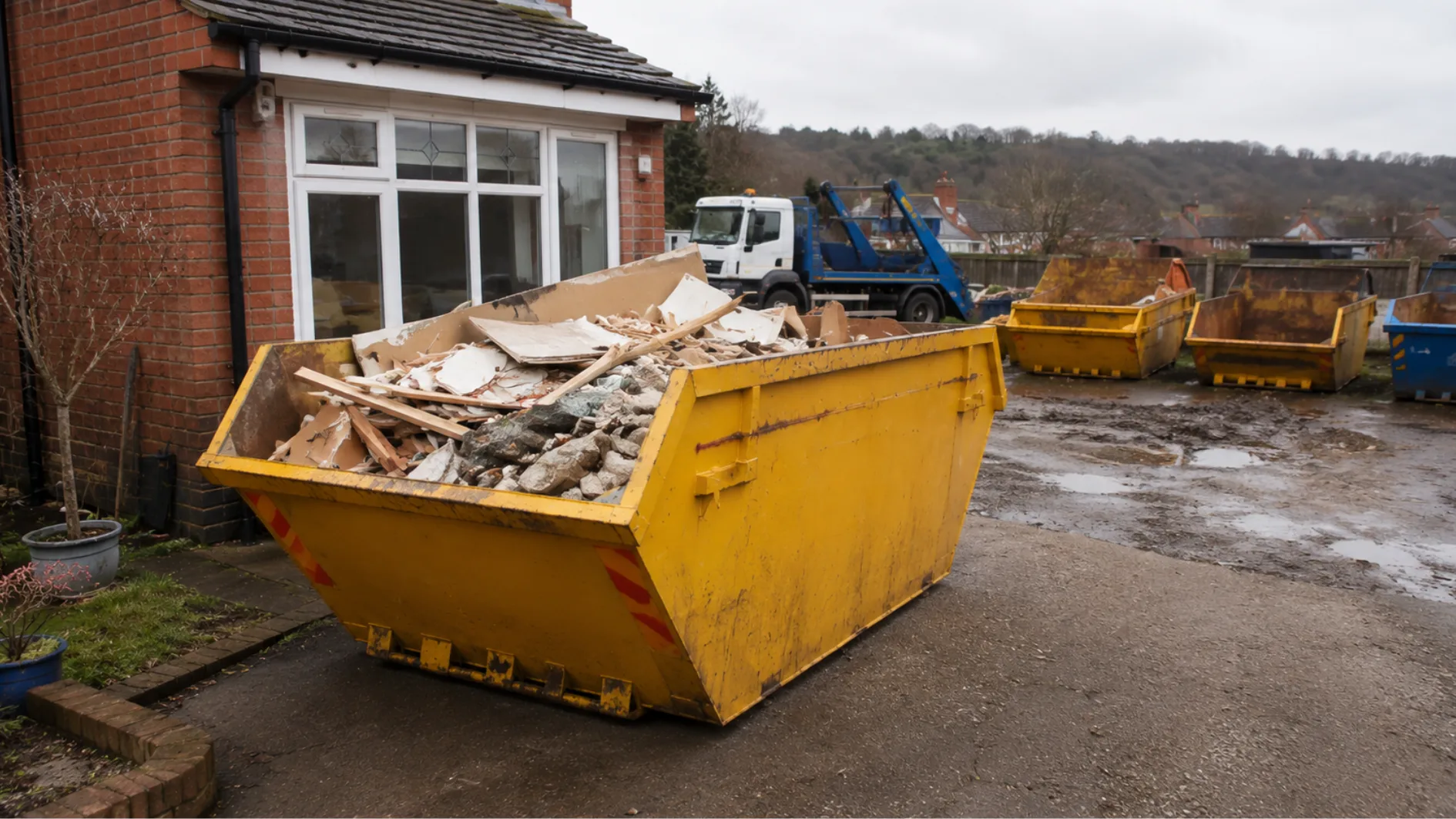
A number of factors combine to set the final price you pay for a skip. Understanding these skip hire fundamentals can help you avoid surprise costs and choose the option that suits your budget.
Skip size plays the biggest role, and a larger skip often gives you more space per pound than hiring two smaller ones.
Hire duration matters too, since most companies include two weeks of hire in the price, though some charge extra beyond that.
The type of waste you throw away affects price, as heavier materials like soil, rubble, and plasterboard usually cost more to dispose of than general household waste.
Your exact location changes the price, because delivery costs rise the further you are from a company's depot.
The time of year shapes pricing as well, with spring and summer being the busiest and often the most expensive months to book.
Household waste such as furniture and garden cuttings is generally the cheapest to dispose of, while heavier materials and specialist items usually come with an added charge. It is always worth asking your chosen company exactly what is included in their price before you book.
Do You Need a Permit for Your Skip?
Whether you need a permit depends entirely on where the skip will sit once it is delivered. If it stays fully on your own driveway or private property, you generally do not need a permit. However, if it is placed on a public road, pavement, or parking space, you will need to apply for one through your local council.
A permit is not simply about giving you permission to place a skip on the road. The council also needs to make sure the skip can be positioned safely and will not create unnecessary risks for pedestrians or passing traffic.
As highlighted by Durham County Council:
“Permits are issued subject to an assessment of the planned position, skip dimensions, visibility to traffic, care and disposal of skip contents, lighting, security and the skip's removal.” – Durham County Council
The table below shows permit costs and durations for towns across County Durham, since pricing varies by council area.
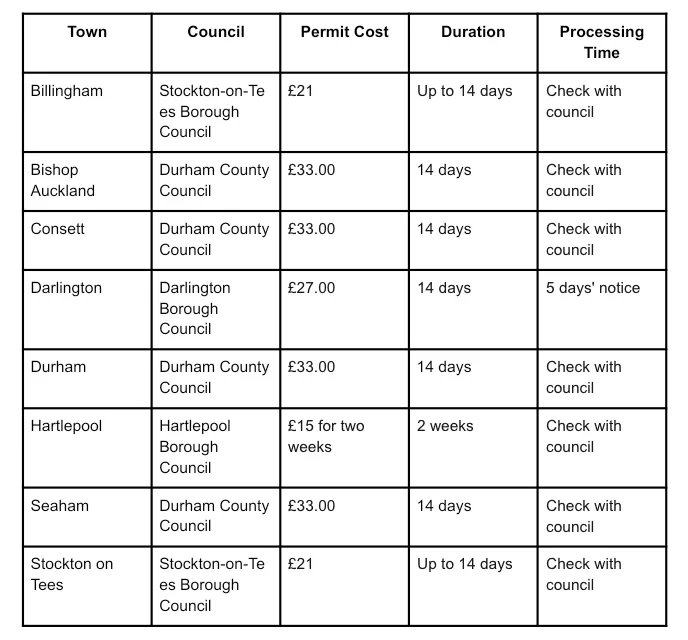
Darlington Borough Council's standard skip licence fee applies with five days' notice, so it is worth applying early if you know your skip will need to sit on the road.
Your skip hire company can usually arrange the permit on your behalf, though the cost and responsibility for it remain yours.
What Can and Cannot Go in a Skip?
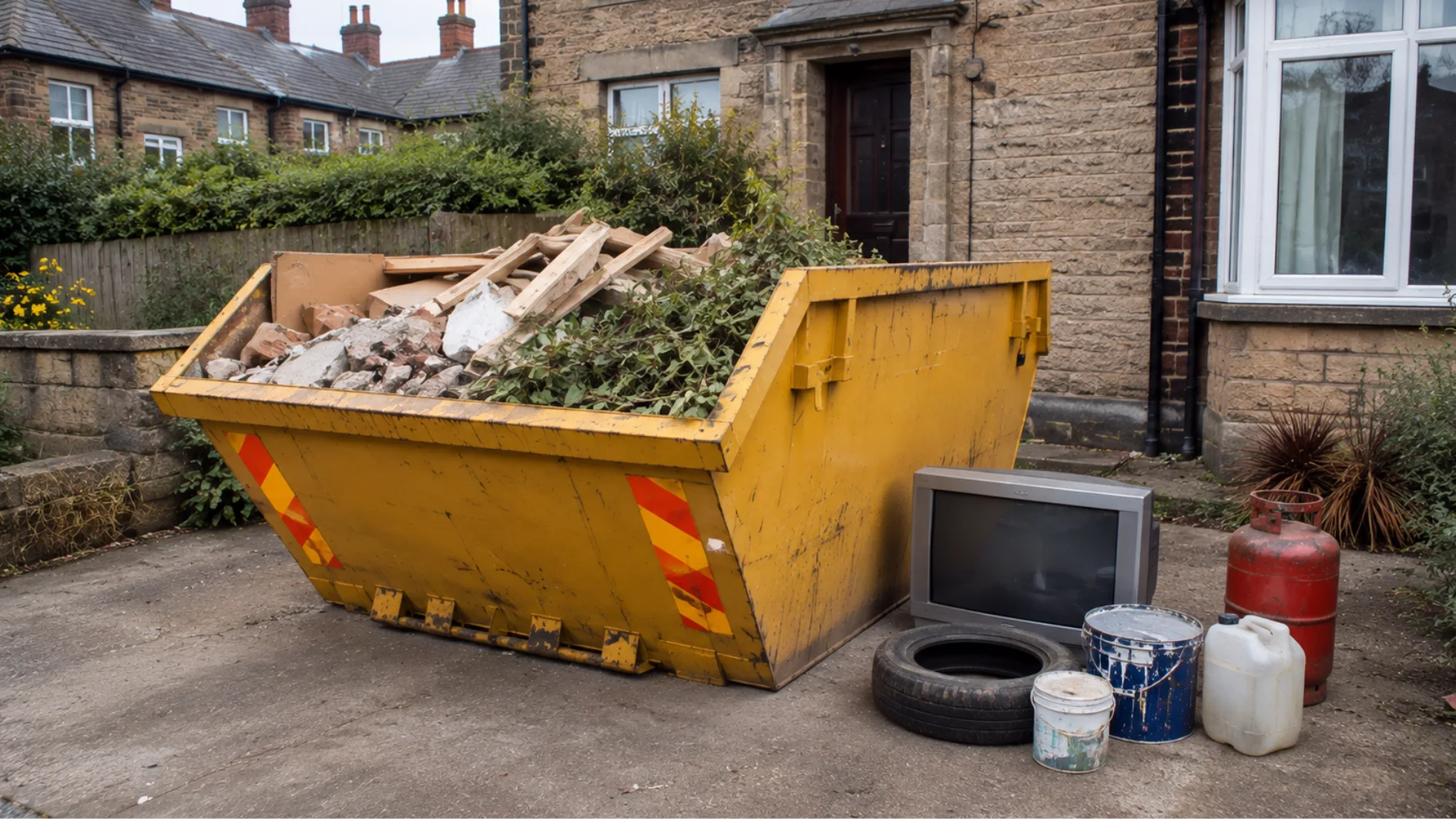
Certain items are banned from standard skips for safety and environmental reasons, no matter which company you hire from. It helps to sort your waste in advance so nothing gets rejected on collection day.
Asbestos and other materials that release harmful fibres when disturbed.
Paint, solvents, chemicals, and oils that can contaminate soil and water.
Batteries, fluorescent tubes, and other items containing hazardous substances.
Fridges, freezers, TVs, and other electrical appliances that need separate recycling.
Tyres, gas bottles, and medical waste, which all require specialist disposal routes.
The area has a strong industrial history, which means older properties sometimes contain asbestos that needs licensed removal rather than a standard skip.
Asbestos is one of the most important materials to watch out for, particularly when clearing older properties or carrying out renovation work. It can release dangerous fibres when damaged or disturbed, which is why it should never be placed in a standard skip.
The World Health Organization highlights the serious health impact of asbestos exposure:
“Exposure to asbestos at work causes more than 200 000 deaths globally every year. This represents over 70% of deaths from work-related cancers. In addition to this estimate of mortality, exposure to asbestos is also estimated to cause a substantial burden of ill health.” – WHO
For this reason, asbestos should be handled and removed through an appropriate specialist service rather than mixed with general household or building waste.
If you suspect that materials in your property may contain asbestos, avoid disturbing them and check the appropriate disposal requirements before starting your project.
What Is the Difference Between Domestic and Commercial Skip Hire?
Skip hire serves two main groups of people, and knowing which one you fall into helps you pick the right size and service. Homeowners and tenants tend to need skips for smaller, one-off jobs, while contractors often need something more frequent and larger in scale.
The same basic approach applies when comparing skip hire in Clwyd with other parts of the UK, although local pricing and availability can vary.
Domestic customers usually hire a skip for garden clearances, home renovations, or clearing out a house before a move, and a Mini or Midi Skip is often enough.
Commercial customers, including small and medium builders, often need Builders Skips, Large Skips, or even Roll-on Roll-off skips for bigger jobs like extensions or full site clearances.
Contractors working across multiple sites may also benefit from setting up regular collections rather than booking a single skip each time.
Whether your job is a weekend garden tidy up or a full building project, telling the company what kind of work you are doing helps them recommend the right skip size and avoid you paying for space you do not need.
Can You Get the Same Day Skip Hire?
Same day skip hire is possible in many towns, although availability depends on the company you contact and how early you get in touch. Local availability can also vary depending on the season and how busy the area is. Booking before midday generally gives you a better chance of same day delivery, as many companies plan their routes in the morning.
Availability may be better in quieter towns and during off-peak months such as December and January, while busy periods like spring and summer can see same day slots fill up quickly. If your project cannot wait, calling a few local providers directly may be worthwhile, as you can get a quicker answer about current availability than relying on online booking alone.
How Should You Prepare for Your Skip Delivery?
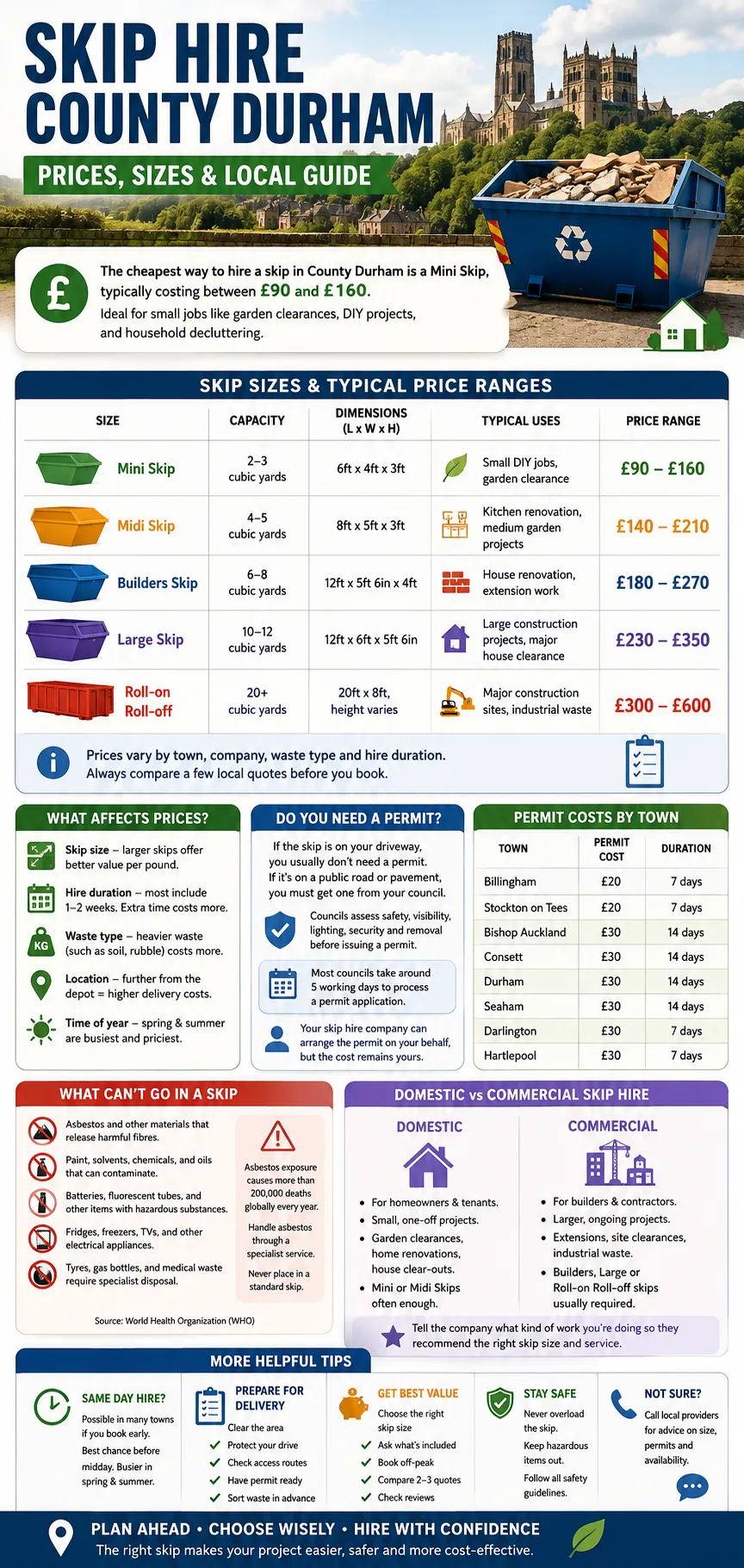
A little preparation before your skip arrives helps the delivery go smoothly and keeps your property free from damage. This is especially useful if you have limited space or a shared driveway. Clear the delivery area of cars, plant pots, and anything else that might block the driver, and consider laying down boards or a similar protective layer if the skip will sit on a driveway you want to protect.
It is also important to check that access routes are wide enough for a delivery lorry, especially on narrow residential streets. If the skip will be placed on a public road, have your permit ready in advance. You can also start sorting your waste into categories beforehand, making it quicker and easier to load the skip once it arrives.
Taking these steps before delivery day reduces the chance of delays and helps you make the most of your hire period from the moment the skip lands.
Tips to Get the Best Value from Your Skip Hire
Getting good value is not just about picking the cheapest quote, it is about matching the right service to your actual needs. If you are comparing prices in different areas, the same approach can help when looking at skip hire in Cornwall, where local pricing and availability can vary. A few simple habits can help you avoid paying more than you should.
Measure or estimate your waste volume beforehand so you book a skip size that fits, rather than paying for space you will not use.
Ask each company upfront what is included in the price, including permit handling and any charges for heavier waste.
Book outside of peak months where possible, since demand is lower and pricing tends to be more competitive.
Get quotes from two or three providers before deciding, since prices can vary even for the same skip size.
Check reviews around delivery reliability and customer service, since a smooth experience is often worth more than a slightly lower price.
Small steps like these help you get a fair price and a skip that actually suits your project, without any unwanted surprises along the way.
FAQ
Skips are available across towns including Billingham, Bishop Auckland, Consett, Darlington, Durham, Hartlepool, Seaham, and Stockton on Tees. Availability depends on which local companies serve your specific area.
Most companies include two weeks of hire in the price and arrange collection at no extra charge. Some may charge a fee if you need it longer, so it is worth checking the terms when you book.
Hazardous items such as asbestos, paint, chemicals, batteries, and electrical goods cannot go in a standard skip. Tyres, gas bottles, and medical waste are also excluded and need to be disposed of through separate specialist services.
This depends on the scale of your project. A Mini Skip suits small DIY jobs and garden clearances, while a Builders Skip or Large Skip is better suited to renovation work or major house clearances. If you are unsure, it is worth asking your chosen company for guidance based on your specific job.
If the skip will sit anywhere on a public road, pavement, or parking space in Durham city centre, you will need a permit from Durham County Council. Permits here cost £33 and cover the first 14 days.
Wrapping Up Skip Hire in County Durham
Hiring a skip in County Durham comes down to picking the right size for your project, checking whether you need a permit, and confirming what waste your chosen company accepts.
Prices range from around £120 (excluding VAT) for a small clearance job to £600 for major construction waste, with your exact cost shaped by location, hire duration, and the type of rubbish you are getting rid of. If you are ready to compare local providers and get started, you can find skip hire companies in County Durham here.
References
Related Articles
Filed under:
Skip Hire