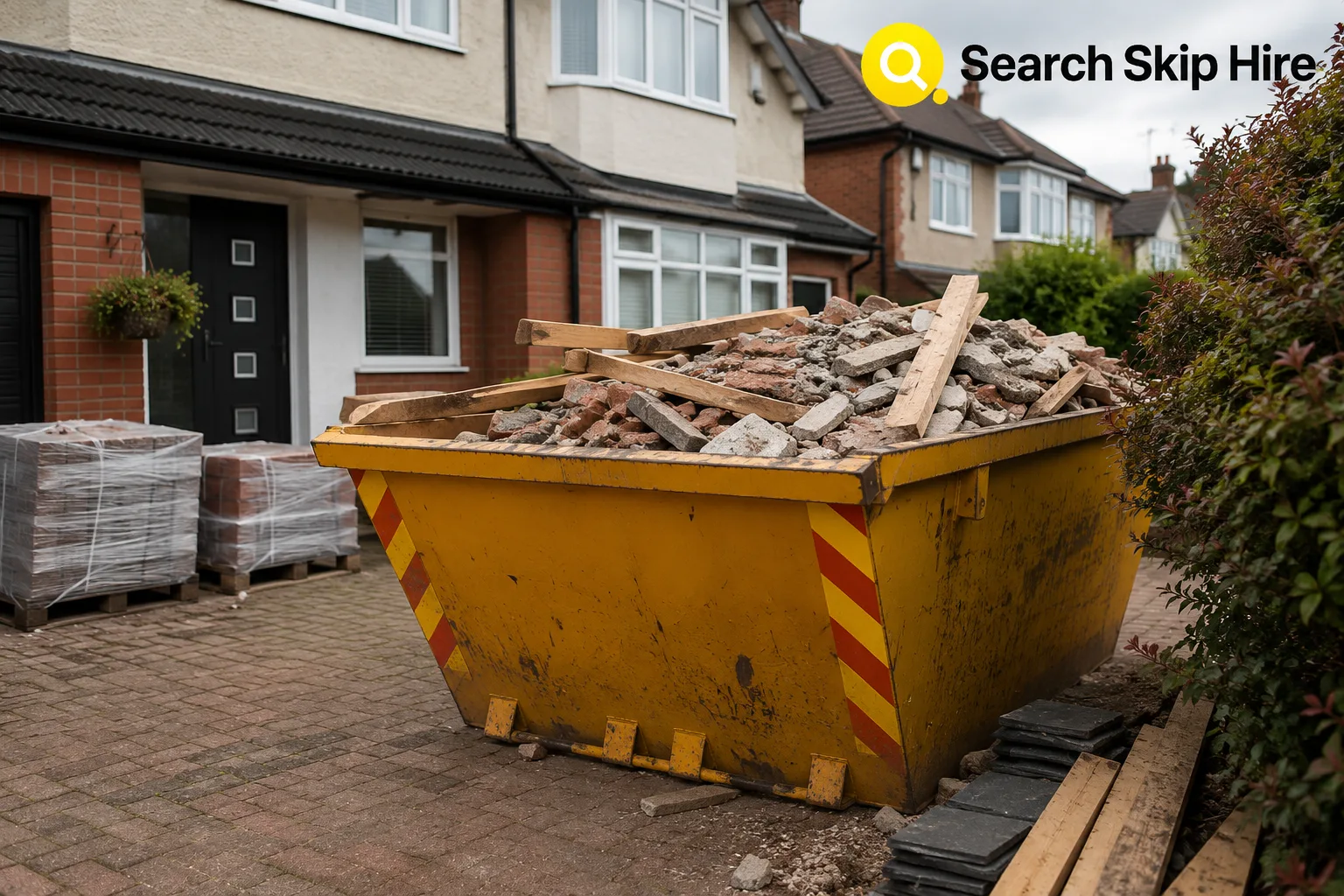
Skip hire in Leicester UK is a simple way to manage and remove large amounts of waste from home, garden, and construction projects. A suitable skip is selected based on waste volume, delivered to the location, filled during the project, and collected after completion. This keeps sites clean and reduces trips to disposal facilities.
From small home improvements to larger building work, the right skip helps keep waste organised and easier to handle. Keep reading to understand skip sizes, pricing, and how the process works, or visit Search Skip Hire to get started.
What Should Be Considered Before Choosing a Skip?
Before choosing a skip, these points help clarify the most important factors for different projects and budgets.
Selecting the correct skip size helps avoid paying for unused space or needing an additional skip later.
Skip hire prices vary depending on skip size, hire duration, location, and permit requirements.
Different projects produce different types of waste, so the right skip improves organisation and disposal efficiency.
What Is Important to Know Before Hiring a Skip?
Choosing a skip involves more than selecting a container for waste. A clear understanding of how the service works, why it is useful, and what happens during the hire process helps make it easier to choose the right option for different types of projects. If you're new to the service, Skip Hire fundamentals offers a helpful introduction to the essential concepts before exploring local skip hire options.
The sections below explain the basics before moving on to skip sizes, prices, and booking details. For a clearer overview of categories, see Different skip types explained simply.
What Is Skip Hire?
Skip hire refers to a waste collection service that provides a large container for storing waste during a project. Once the skip is full or the hire period ends, it is collected and taken to a licensed facility where the contents are sorted for recycling and proper disposal.
This service is commonly used for different types of work, such as:
Home renovations
Garden clearances
House clearances
Garage clean-outs
Office refurbishments
Construction work
Instead of making multiple trips to a recycling centre, all waste can be placed in one container until collection. This helps keep the work area organised and saves time throughout the project.
As part of how waste is managed in the UK, sorting and separation is an important step after collection:
"From 31 March 2026, by default, waste collectors must collect the following types of waste separately: food and garden waste, paper and card, all other dry recyclable materials (glass, metal and plastic, including cartons), residual waste (non-recyclable waste that is sent for energy recovery or to landfill)" - GOV.UK (Department for Environment, Food & Rural Affairs)
This shows how waste is grouped into clear categories during processing, which supports the way skip waste is later separated for recycling and disposal.
Why Is Skip Hire Useful?
Many projects produce more waste than standard bins can handle. A skip provides extra capacity to store waste safely while work is ongoing.
This supports several practical benefits:
Keeps work areas cleaner and safer
Helps manage bulky household and construction waste
Reduces repeated trips to disposal facilities
Keeps waste organised in one place
Supports responsible waste handling through licensed collection
Skip hire can be suitable for home improvements, garden work, and property clearances where waste builds up quickly.
How Does Skip Hire Work?
Skip hire follows a simple process that helps manage waste from start to finish.
A suitable container size is chosen based on the project
Delivery date and location are arranged
The container is delivered and positioned on site
Waste is placed inside during the hire period
Collection is arranged once the project is completed
Understanding the process step by step can make it easier to plan a project from the beginning. How skip hire works step by step is often broken down into these simple stages so users can follow it without confusion.
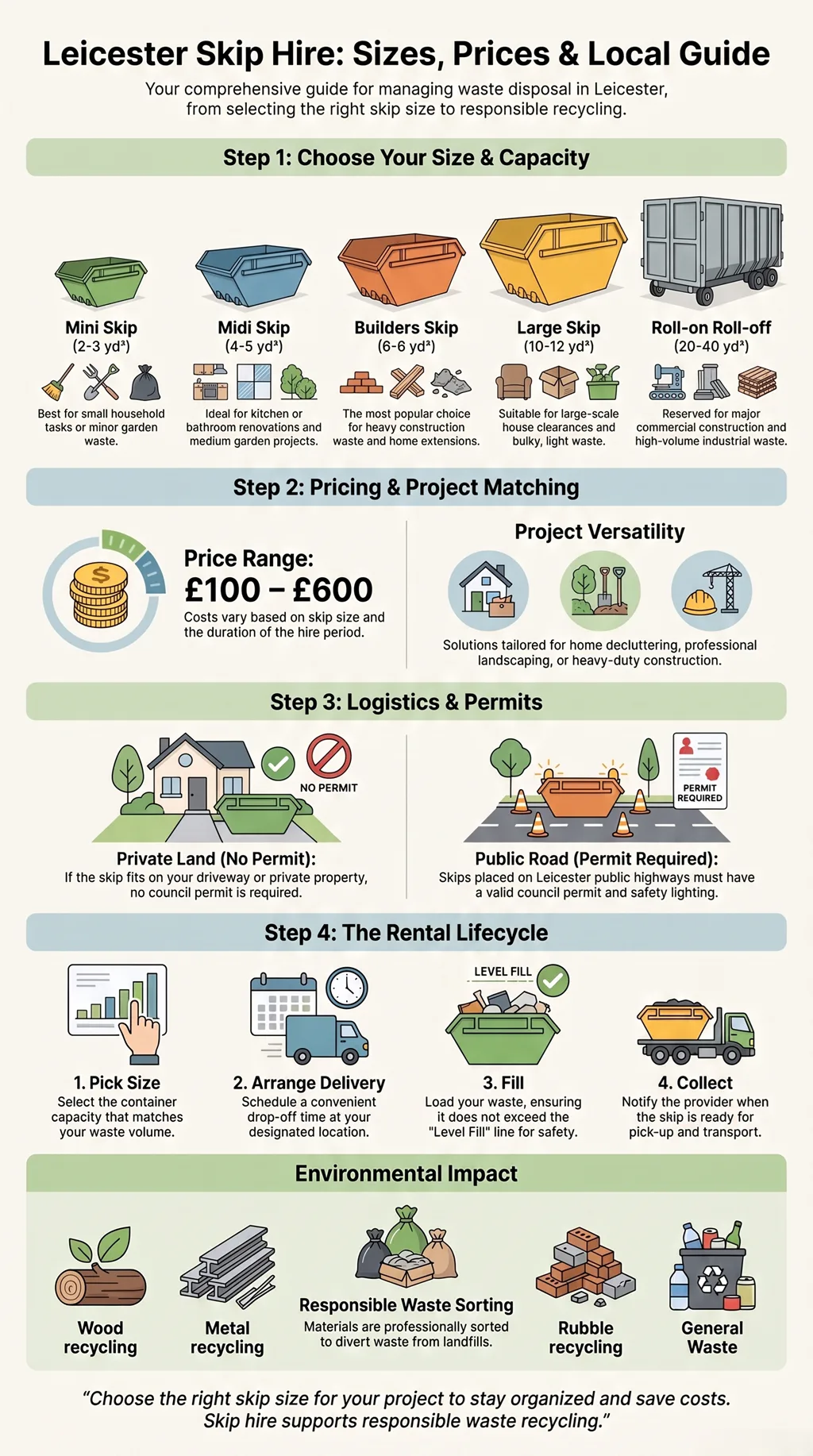
A permit may be required if the container is placed on a public road. This ensures placement follows local regulations and safety requirements.
"If you’re using someone else to get rid of your waste, for example, a skip company or house clearance service" - GOV.UK
This strengthens the section by confirming that skip hire is part of an official waste removal process where a licensed service provider handles disposal on behalf of households or businesses.
It supports the explanation that skip hire works through a structured, regulated system rather than informal waste disposal.
What Skip Sizes and Prices Should Be Considered?
Skip sizes and prices are closely connected because both depend on the amount of waste generated and the type of work involved. Each skip size is designed for a specific level of waste, while pricing changes based on capacity, hire duration, location, and waste type.
Understanding this relationship helps make planning simpler and avoids selecting an option that does not match the project needs.
Which Skip Sizes Are Available?
Skip sizes come in a range that fits different types of work, from small home clean-ups to large construction projects. The main difference between each option is capacity, which affects how much waste can be handled in one collection. Smaller skips are usually enough for light domestic jobs, while larger skips are better suited for heavier or continuous waste.
To make the options easier to compare, the main skip sizes are outlined below.
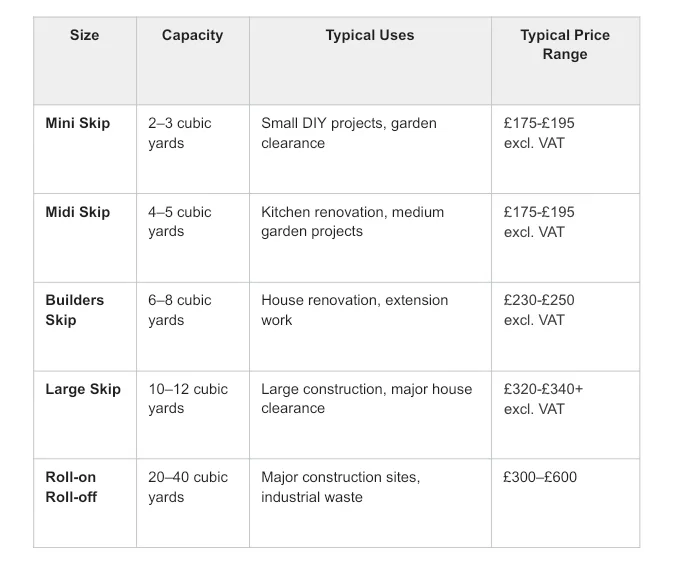
Each size is designed to match a certain level of waste output. Mini and midi skips are commonly used for smaller household tasks and light garden work. Builders skips are often chosen for renovation projects where waste types are mixed and more frequent collection is not practical.
Larger skips are used when projects generate higher volumes of waste over a longer period. Roll-on roll-off skips are typically used in construction or industrial settings where space and capacity need to support continuous work without interruption.
How Do Skip Sizes Relate to Different Projects?
The type of project usually decides which skip size works best. Waste volume, material type, and how long the work lasts all play a role in this choice. Smaller jobs tend to create lighter waste, while larger projects often produce mixed or heavy materials that need more space.
In many cases, skip sizes can be matched to project scale like this:
Small household tasks: light waste such as packaging, old items, or garden cuttings
Home renovation work: mixed waste like wood, tiles, and general building materials
Commercial projects: higher waste output from refurbishments or fit-outs
Industrial or large sites: continuous waste from construction or demolition work
Light domestic projects usually fit well into smaller skips because waste is limited and easy to manage. These are often used for quick clean-ups or small improvement jobs.
Renovation work is more complex since it often combines different types of waste. Mid-sized skips are commonly used here because they offer enough space for mixed materials without needing frequent collection.
Larger projects, especially in commercial or industrial settings, generate waste on a much higher scale. In these cases, larger skips or roll-on roll-off containers are often preferred to support ongoing work and reduce interruptions caused by full loads.
What Influences Skip Hire Costs?
Skip hire costs are not fixed and usually depend on several practical details. The total price changes based on how the skip is used, where it is delivered, and how much waste needs to be handled. Each factor adds a different level of cost depending on the project.
Common factors that affect cost include:
Skip size and capacity
Length of the hire period
Type of waste being disposed of
Delivery distance and site access
Permit requirements for public land placement
Larger skips generally cost more because they require more transport and processing. Longer hire periods can also increase the total cost, especially when projects run beyond the expected timeline. Waste type may affect pricing when special handling is needed, while difficult access or longer delivery routes can also add to the cost.
How Are Skip Prices Generally Grouped?
Skip prices are usually arranged in simple tiers based on size and usage. This helps make it easier to understand where each option fits in terms of cost and project type.
Lower range: smaller skips used for light household and garden waste
Mid range: builders skips used for renovation and general construction work
Higher range: large roll-on roll-off skips used for commercial and industrial projects
Smaller skips are generally more affordable because they handle lower volumes of waste. Mid-sized skips sit in the most commonly used range for home improvement work. Larger skips are priced higher due to their capacity and the logistics involved in transport and collection.
What Helps Keep Skip Hire Costs Manageable?
Managing costs often comes down to planning rather than focusing only on the lowest price. Choosing the right skip size is important so that space is used efficiently without overpaying for unused capacity.
Helpful steps include:
Estimating waste volume before booking
Matching skip size to the project type
Avoiding the need for a second skip
Planning hire duration realistically
Checking permit needs early
Good preparation helps reduce unexpected costs and makes the process more predictable from delivery to collection.
What Details Are Needed for a Skip Quote?
A skip quote is based on a few key details that help match the correct service to the project. Clear information ensures the right skip is provided and helps avoid changes later on.
Important details include skip size, delivery location, and hire duration. Waste type is also considered so that disposal can be handled correctly. Placement information, such as whether the skip will be on private land or public space, is also required.
Providing accurate details at the start helps keep the booking process simple and ensures the quote reflects the actual project needs.
How Does Skip Hire Support Recycling and the Environment?
Skip hire helps manage waste in a more responsible way by making sure most materials go through licensed recycling facilities after collection. Instead of everything going to landfill, the waste is sorted into different types so each material can be treated properly.
Typical materials separated during processing include:
Wood from renovation or furniture
Metal such as fittings and frames
Soil and rubble from garden or building work
General construction waste
Mixed recyclable items
Once sorted, many of these materials can be reused or processed into new products. This reduces the amount of waste sent to landfill and supports more efficient use of resources during home and construction projects.
A large portion of skip waste can often be recycled, depending on what is placed inside and the condition of the materials. Keeping waste reasonably separated during a project can help improve how much can be recovered later during processing.
How Do UK Waste Regulations Apply to Skip Hire?
Skip hire in the UK follows clear environmental rules to make sure all waste is handled safely and does not harm people or the environment. Waste must be collected by licensed carriers and taken to approved facilities where it is processed, sorted, or recycled properly. This helps keep the system controlled from the moment waste leaves a site until it reaches its final destination.
These regulations also help prevent unsafe or illegal dumping and ensure every step of the process is properly managed. In practice, this applies to both small home projects and larger commercial work.
As stated in UK Government guidance:
"You may need an environmental permit if you do an activity that could cause pollution or harm the environment." - GOV.UK (UK Government)
This highlights why certain waste activities, including handling and moving large amounts of waste, must follow regulated systems. It supports the idea that skip hire is not just about convenience, but also about making sure waste is managed in a safe and environmentally responsible way.
Key parts of these regulations include:
Use of licensed waste carriers for all collections
Transport of waste only to approved facilities
Compliance with Duty of Care requirements
Safe handling for both domestic and commercial waste
The Duty of Care rules apply across all types of projects, meaning responsibility for proper waste handling continues even after the skip is collected.
How Is Skip Hire Used for Different Types of Work?
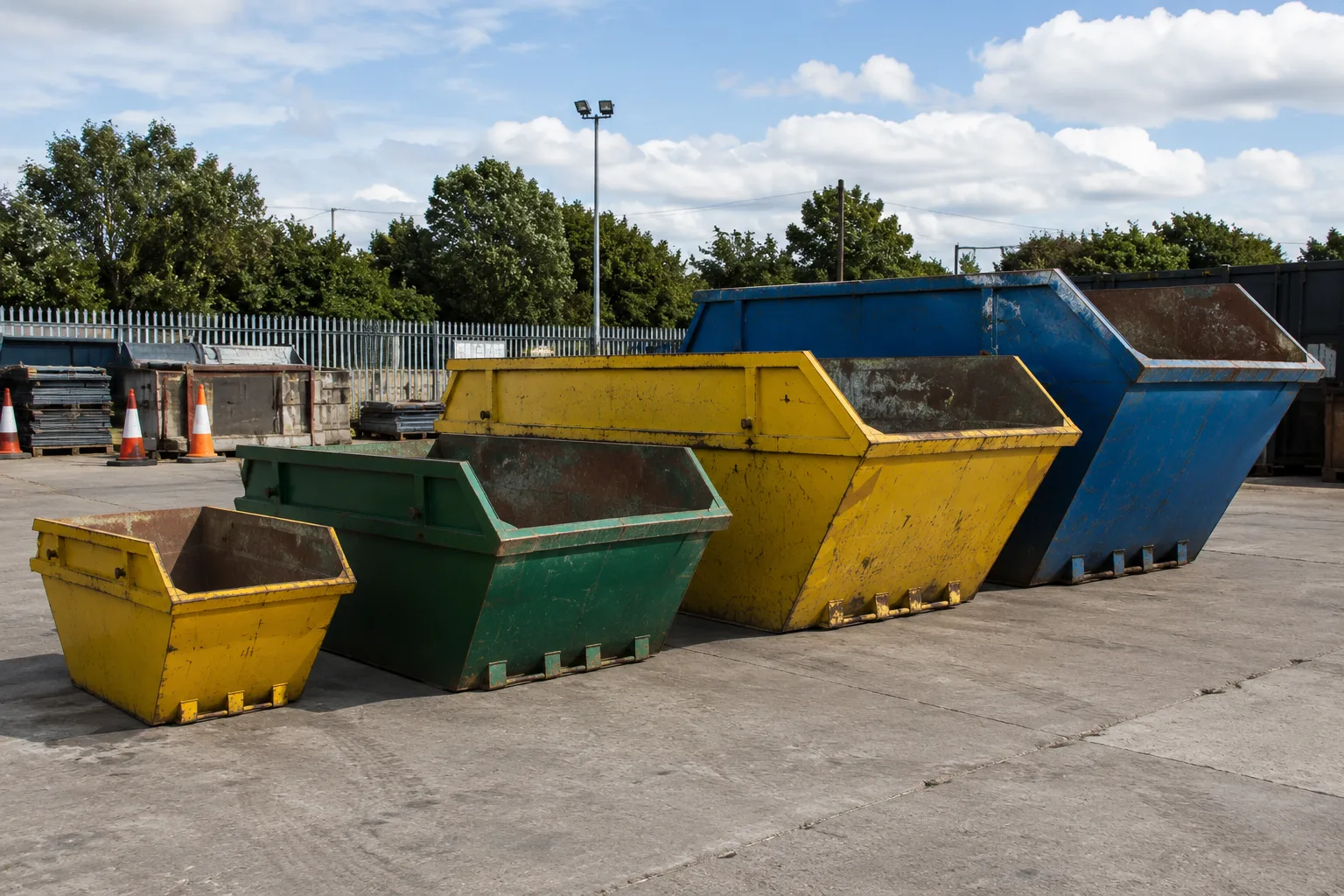
Different projects create different waste, so the right skip helps keep things organised from the start until the job is done.
How Do Home Renovations Create Waste?
Home improvements often produce more waste than expected. Old fixtures, broken materials, and packaging can build up quickly during the work.
Common renovation waste includes:
Kitchen units and fittings
Bathroom materials
Flooring and underlay
Paint and decorating waste
Loft materials
Small structural offcuts
A skip gives one clear place for all waste, helping keep the home space more manageable during the project.
What Kind of Waste Comes From Garden Work?
Garden projects often create bulky and green waste that is not easy to fit into regular bins.
Typical garden waste includes:
Branches and twigs
Grass cuttings
Leaves and plants
Shrubs and hedge trimmings
Soil and small roots
A skip helps keep outdoor areas tidy while landscaping or seasonal clean-ups are carried out.
What Usually Happens During a House Clearance?
House clearances often involve a mix of old furniture, household items, and general rubbish that builds up over time.
Common items include:
Furniture and mattresses
Cardboard boxes
Clothing and textiles
Toys and personal items
General household clutter
A skip makes it easier to gather everything in one place, especially during moving or property clearance work.
What Waste Comes From Clearing a Garage?
Garages often become storage areas over the years, which means clearing them can uncover a wide range of unwanted items.
Typical garage waste includes:
Old tools and equipment
Broken shelves
Storage containers
Garden tools
Bicycles and spare parts
A skip helps clear space efficiently and makes the area easier to use again.
What Waste Is Produced in Office Clearances?
Office spaces usually generate bulky waste when furniture is replaced or layouts are changed.
Common office waste includes:
Desks and chairs
Filing cabinets
Shelving units
Packaging materials
Flooring and fixtures
A skip helps keep the workspace more organised while the clearance or refurbishment is taking place.
What Waste Comes From Construction Work?
Construction projects often produce heavier materials that need proper handling and regular removal.
Typical construction waste includes:
Bricks and rubble
Concrete
Tiles
Timber offcuts
Plasterboard
A skip provides a practical way to keep building areas clear and reduce clutter during ongoing work.
How Does Domestic and Commercial Skip Hire Work?
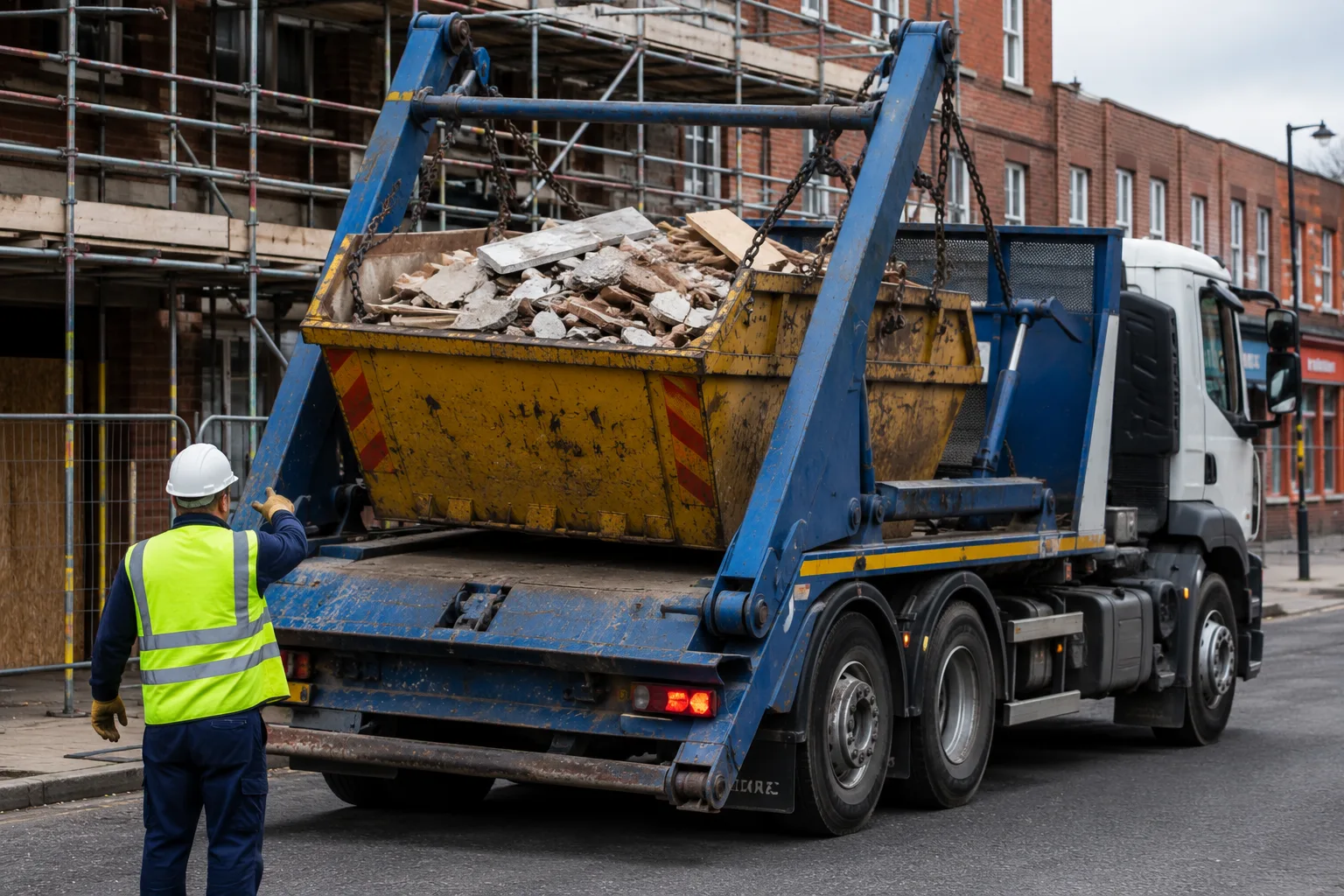
Skip hire can support many kinds of projects, from small home improvements to larger business or industrial work. The main difference comes down to the scale of waste and the type of site involved.
What Is Domestic Skip Hire Used For?
Domestic skip hire is used for household projects where waste builds up more quickly than normal bin collections can manage. It is commonly chosen by homeowners, tenants, and landlords.
Typical uses include:
Home renovations
Garden improvements
House clearances
Garage clean-outs
Moving home
DIY projects
Most domestic work is handled with small or mid-sized skips, depending on how much waste is produced.
What Does Commercial Skip Hire Cover?
Commercial skip hire is used for business settings where waste needs to be managed during maintenance, upgrades, or everyday operations. It helps keep working areas clear and easier to manage.
Common uses include:
Office refurbishments
Shop fit-outs
Property maintenance
Restaurant renovations
Warehouse clearances
Business relocations
The right skip size helps keep the site organised and reduces disruption while work is ongoing.
What Is Industrial Skip Hire Used For?
Industrial skip hire is designed for larger sites where waste is produced in higher volumes and often includes heavier materials.
Typical uses include:
Manufacturing facilities
Factory refurbishments
Distribution centres
Industrial maintenance work
Large construction projects
Warehouse operations
Larger skips or roll-on roll-off containers are often used here to manage continuous and high-volume waste safely.
When Is a Skip Permit Needed for Skip Hire?
A skip permit is not always required, but it depends on where the skip will be placed. Getting this right early helps avoid delays and keeps the process simple from delivery to collection.
When Is a Skip Permit Required?
A permit is usually needed when the skip sits on public land. This is because the local authority must approve use of shared spaces.
A permit is commonly required for:
Public roads
Streets outside a property
Public highways
Pavements (where permitted)
Requirements can vary by location, so checking placement details before booking helps avoid unexpected issues.
When Is a Skip Permit Not Needed?
A permit is often not needed when the skip is placed on private land. This is usually the simplest option when space is available.
Common private locations include:
Driveways
Private gardens
Private property land
Construction sites with controlled access
Placing the skip on private ground also helps keep it closer to the work area, which can make loading more convenient.
What Should Be Considered for Road Placement?
When private space is not available, road placement may be used. This option is common, but a few details need to be planned in advance.
Key points to keep in mind:
A permit may be required before delivery
The skip must be placed safely and securely
Public access should remain clear where needed
Collection should be arranged at the end of hire
With proper planning, road placement can still be a practical and smooth solution for the project.
What Are the Skip Hire Delivery Options?
Skip delivery can be arranged in different ways depending on how quickly the project needs to start. Choosing the right timing helps keep preparation simple and avoids delays once work begins.
When Is Same Day Skip Delivery Available?
Same day delivery may be possible when a skip is available and the delivery schedule has space. It often depends on how early the booking is made and local demand.
Same day delivery is commonly used for:
Unexpected clear-outs
Urgent repair work
Last-minute renovation tasks
Quick garden clean-ups
Booking early in the day usually improves the chance of availability, especially during busy periods.
When Does Next Day Delivery Make Sense?
Next day delivery is a common choice for planned projects. It gives a little time to prepare the space before the skip arrives, which helps everything run more smoothly.
This option is often used for:
Home improvement projects
House clearances
Garden landscaping work
Small construction jobs
Having the area ready before delivery helps avoid delays and makes loading easier from the start.
How Does Skip Collection Work?
Once the project is finished, the skip can be collected and the waste removed for sorting and disposal. Planning the collection time helps keep the site clear and organised.
Before collection, a few simple points help:
Load waste without overfilling
Keep access clear for the vehicle
Make sure no restricted items are inside
Arrange collection once work is complete
Following these steps helps the collection process stay smooth and efficient without unnecessary delays.
What Types of Waste Are Suitable for Skip Hire?
Different projects produce different kinds of waste, so understanding what can go into a skip helps make the process simpler and more efficient. It also helps when choosing the right size for the job.
What Counts as Household Waste?
Household waste usually comes from general clear-outs or small home projects. It often includes mixed items that are no longer needed.
Common household waste includes:
Furniture
Cardboard boxes
Clothing and textiles
Toys
General rubbish
Non-electrical household items
A skip helps keep all items in one place, making home clearances more organised during the work.
What Is Included in Garden Waste?
Garden waste is mostly organic material created during maintenance, trimming, or landscaping work. It can build up quickly, especially during larger outdoor projects.
Typical garden waste includes:
Grass cuttings
Leaves
Branches
Plants
Hedge trimmings
Small shrubs
Keeping garden waste separate can also make disposal more straightforward after collection.
What Is Construction Waste Made Of?
Construction waste tends to be heavier and more solid, coming from building, renovation, or repair work.
Common construction waste includes:
Bricks
Concrete
Rubble
Tiles
Stones
Timber
Loading heavier materials carefully helps keep transport safe and efficient.
What Falls Under Commercial Waste?
Commercial waste comes from business-related work such as refurbishments, relocations, or regular maintenance.
Typical commercial waste includes:
Packaging materials
Office furniture
Shelving units
Display items
Non-confidential business waste
General refurbishment waste
Using a skip helps keep business spaces clearer and easier to manage while work is ongoing.
What Areas Are Covered for Skip Hire?
Skip hire services cover a wide area across Leicester and nearby parts of Leicestershire. This includes central locations, surrounding neighbourhoods, and several nearby towns, making delivery easier to arrange for different types of projects.
Coverage typically includes LE1 to LE5 postcodes, along with nearby towns and communities. This wide reach helps support home projects, construction work, and business sites without needing long-distance transport, keeping the process more practical and efficient.
Which Areas in Leicester Are Covered?
Skip hire is available across different parts of the city, with services adapted to both small and large projects.
Leicester City
Covers a mix of home, commercial, and construction work. Skip sizes range from small domestic jobs to larger site clearances.
East Leicester
Commonly used for home renovations, garden clearances, and general property maintenance.
West Leicester
Supports household improvements, building projects, and business waste removal.
North Leicester
Often used for home renovations, DIY work, and general household clear-outs.
South Leicester
Covers domestic waste removal, landscaping projects, and commercial refurbishments.
Which Nearby Towns Are Included?
Skip hire also extends beyond the city into wider Leicestershire areas, helping support both residential and commercial needs.
Commonly covered towns include:
Melton Mowbray
Loughborough
Hinckley
Coalville
Market Harborough
Wigston
How Should Coverage Be Checked Before Booking?
Availability can vary depending on location and demand. Checking service coverage before booking helps ensure the right delivery area is selected and avoids delays on the day.
How Is Skip Hire Booked in Leicester?
Booking a skip is usually a straightforward process when the main steps are understood in advance. A bit of planning helps avoid delays and makes sure the right skip arrives at the right time for the project.
How Does the Skip Hire Decision Process Work?
For users exploring other regions, the booking process is generally similar across the UK. The same straightforward steps also apply to skip hire Norwich, where selecting the right skip size, arranging delivery, and following local permit requirements are handled in much the same way.
Typical steps include:
Understanding how skip hire works for the project type
Comparing skip sizes based on expected waste
Choosing a delivery time and location
Finalising the booking
This approach helps reduce mistakes, such as selecting a skip that is too small or too large for the job.
For users exploring other regions, the process is generally similar in different UK cities, including skip hire Worcester, where booking steps and requirements follow the same basic structure.
How Is the Right Skip Size Chosen?
Choosing the correct size depends mainly on how much waste is expected and what type of materials are involved. Taking a little time at this stage helps keep costs and space under control.
Common considerations include:
Estimating total waste volume
Identifying light or heavy materials
Matching skip size to the project type
Avoiding undersized skips that fill too quickly
Avoiding oversized skips with unused space
A well-matched skip makes the work easier and keeps the site more organised.
What Details Are Needed for Delivery?
Once the skip size is selected, delivery details are arranged so the skip arrives in the right place at the right time.
Usually required details include:
Delivery address or postcode
Preferred delivery date
Placement type (private land or public road)
Access space for the vehicle
Any site timing restrictions
Clear details help the delivery run smoothly without unnecessary delays.
What Happens When the Skip Is Delivered?
When the skip arrives, it is placed in the agreed position and can be used straight away. Preparing the area beforehand helps everything go more smoothly.
Before delivery, it helps to:
Clear enough space for placement
Ensure the ground is stable
Keep access routes open
Confirm permit approval if required
Once in place, the skip can be used throughout the hire period.
How Should a Skip Be Filled Safely?
Safe loading helps make full use of the space and ensures smooth collection later on.
Good practice includes:
Breaking down large items where possible
Distributing weight evenly
Keeping waste below the top edge
Placing heavier items at the bottom
Avoiding restricted materials
It is also important to understand the risks of improper loading, especially when waste exceeds the container limit. For example, What happens if a skip is overfilled is that the skip may become unsafe to transport, and the collection driver may refuse to take it or require excess waste to be removed before pickup.
These steps help keep the skip stable and ready for transport.
What Happens During Skip Collection?
Once the project is finished, the skip is collected and the waste is taken to a licensed facility for sorting and processing.
Before collection, it helps to:
Keep the skip accessible
Ensure it is not overfilled
Confirm the collection date
Remove any restricted items
With these steps in place, collection usually goes ahead without complications.
FAQ
Choosing a skip size depends on how much waste the project is likely to produce. Small home or garden tasks usually fit into mini skips, while renovation work often needs mid-sized builders skips. Larger projects with mixed or heavy waste are better suited to big skips or roll-on roll-off options.
Yes, a skip can be placed on a public road if there is enough space, but a permit is usually required. Private driveways or land are often used instead when available, as this can simplify the process and avoid additional approvals.
Some materials cannot be placed in a skip for safety and environmental reasons. These commonly include hazardous waste, chemicals, asbestos, batteries, gas cylinders, and certain electrical items. Checking restrictions before loading helps avoid issues during collection.
Hire periods vary depending on the booking, but the standard hire period is 1 week. Extensions are usually available if more time is needed, especially for ongoing renovation or construction projects.
After collection, the waste is taken to a licensed facility where it is sorted into different materials such as metal, wood, soil, and general waste. Many of these materials are recycled where possible, helping reduce landfill use and support more responsible waste handling.
How Does Skip Hire Help Manage Waste in Home, Garden, and Commercial Projects?
Skip hire provides a straightforward way to manage waste from home, garden, and commercial projects without unnecessary stress. Choosing the right skip size, understanding basic permit rules, and planning delivery in advance helps keep any job organised and easier to manage. From small clear-outs to larger construction work, the right skip helps maintain a cleaner and more efficient workspace.
Once ready to book, the next step is simply selecting the right skip and arranging delivery to suit the project timeline. For full details and to get started, explore trusted options for Search Skip Hire and choose a service that fits the job requirements.
References
https://www.gov.uk/guidance/check-if-you-need-an-environmental-permit
https://www.gov.uk/guidance/simpler-recycling-household-recycling-in-england
Related Articles
https://www.searchskiphire.co.uk/blog/skip-hire/how-skip-hire-works-step-by-step/
https://www.searchskiphire.co.uk/blog/skip-types/different-skip-types-explained-simply/
https://www.searchskiphire.co.uk/blog/skip-sizes/what-happens-if-a-skip-is-overfilled
https://www.searchskiphire.co.uk/blog/skip-hire/skip-hire-uk-fundamentals/
https://www.searchskiphire.co.uk/blog/skip-hire/skip-hire-worcester/
https://www.searchskiphire.co.uk/blog/skip-hire/skip-hire-norwich/
Filed under:
Skip Hire