Skip hire Buckinghamshire is a practical way to manage waste from home renovations, garden clearances, house clear-outs, and construction projects.
Choosing the right skip size, understanding typical costs, and knowing whether a permit is required can help us avoid unnecessary expenses and delays.
Comparing local options also makes it easier to find a service that fits our project. Keep reading to learn how skip hire works and discover helpful booking tips with Search Skip Hire.
Before You Book Your Skip
These simple points can help us choose the right skip and avoid common mistakes before arranging delivery.
Choose a skip size that matches the amount and type of waste to avoid paying for space we do not need or arranging a second skip later.
Check whether a permit is required if the skip will be placed on a public road, pavement, or other public land.
Compare local prices, hire terms, and collection options so we can find a service that fits both our project and budget.
How Can We Choose the Right Skip for Our Project?
Choosing the right skip is easier when we know how much waste we expect and what type of project we are working on. A small garden tidy-up or DIY job may only need a mini skip, while a home renovation or house clearance often calls for a larger one.
Many local providers offer services for a range of projects, including:
Domestic waste collection
Commercial and trade waste
Garden clearances
House clearances
Builders waste
Same-day delivery, where available
Next-day delivery
It is also worth comparing skip sizes, delivery times, and collection options before booking. Spending a few minutes checking these details can help us choose a skip that suits the job, keeps waste under control, and makes the whole process feel straightforward from delivery through collection. If we are new to hiring a skip, our Skip Hire UK Fundamentals guide explains the basics before we book.
What Skip Size and Price Should We Expect?
Choosing the right skip hire Buckinghamshire service starts with matching the skip to the amount of waste our project will produce. A small garden tidy-up or DIY job may only need a mini skip, while larger renovations or construction work often require more capacity. Comparing sizes and typical prices before booking makes it easier to choose the right option.
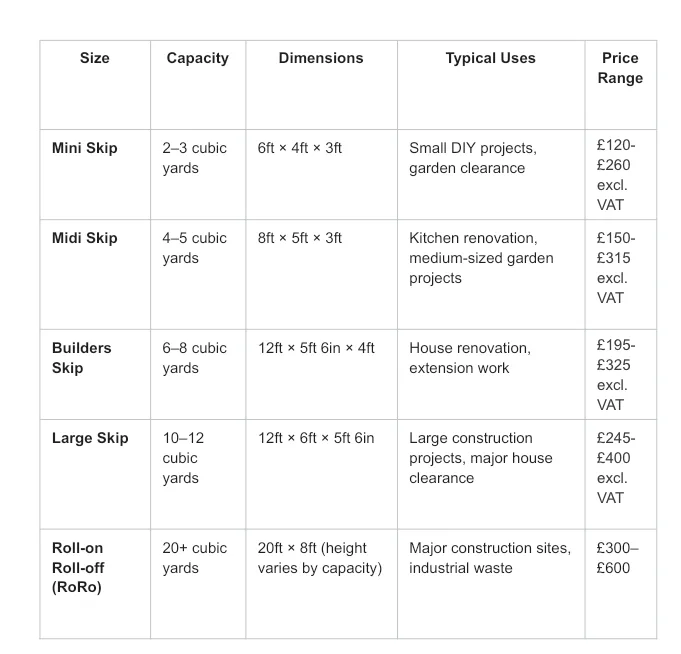
When comparing quotes, check what is included in the price, such as delivery, collection, waste disposal, and any permit fees.
"The price for your collection service should include: The cost of the containers, bins or skips, unless you already own them." - WRAP
Looking at the full cost instead of only the starting price helps us choose a skip that suits both our project and budget.
What Affects Skip Hire Prices?
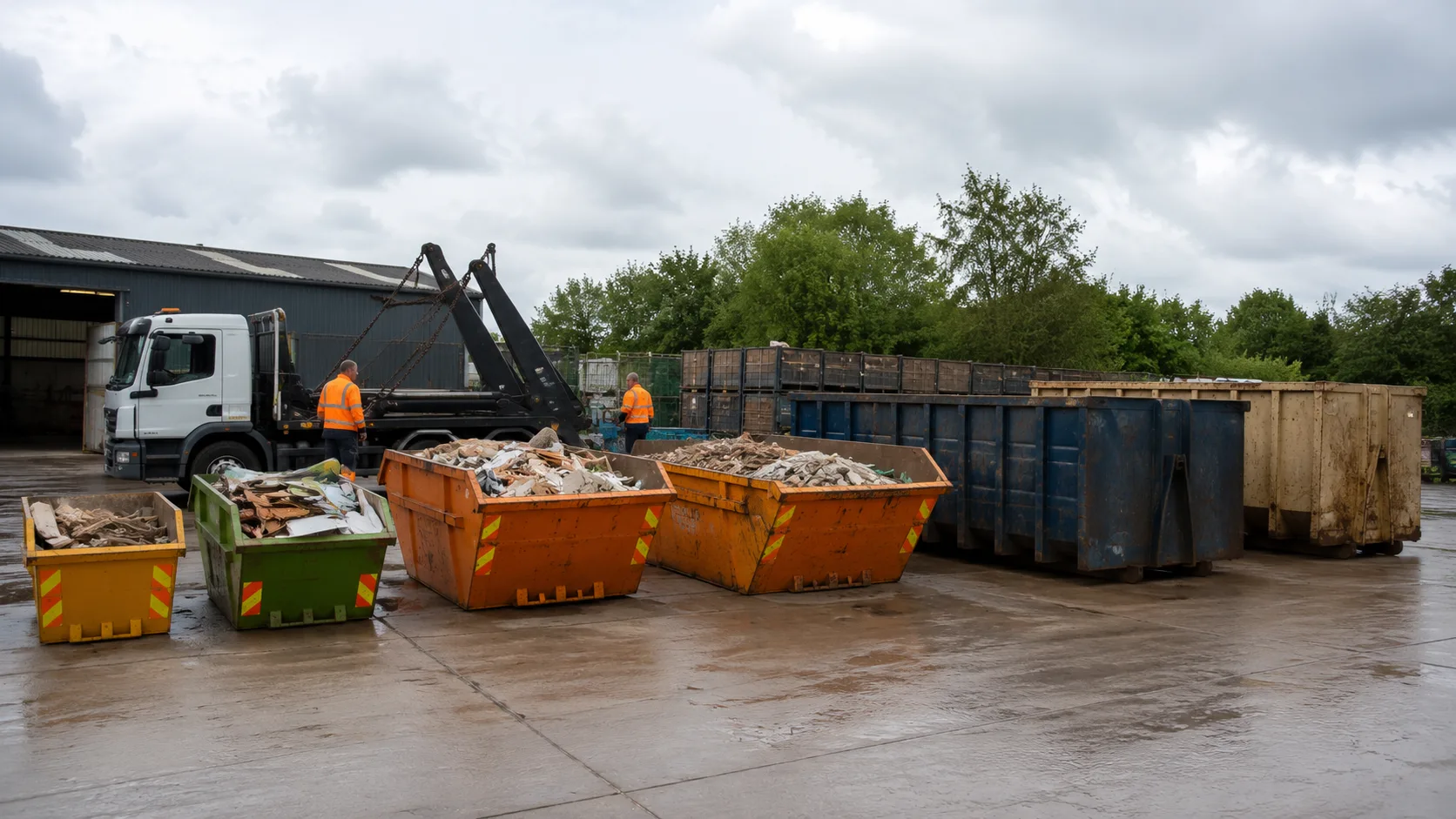
The cost of hiring a skip can vary from one project to another. Knowing what affects the price before booking makes it easier to plan ahead and choose an option that fits both our waste removal needs and budget.
A few common factors can affect the final cost:
Skip size
Hire period
Type of waste
Delivery location
Skip permit fees
Time of year
In most cases, larger skips cost more because they hold more waste. The type of waste also makes a difference. Materials such as soil, bricks, rubble, and plasterboard may have extra disposal charges, while hazardous waste cannot usually go into a standard skip.
Delivery location also plays a part. Limited access or the need for a permit to place the skip on a public road can increase the overall cost. During spring and summer, demand is often higher as more people start home improvements and garden projects, so prices and delivery availability may vary. For a closer look at budgeting and comparing quotations, see our Skip Hire Costs & Pricing Decisions guide.
Do We Need a Skip Permit?
Before booking a skip, it is worth checking whether a permit is needed. The answer depends on where the skip will be placed and which local council covers the area.
"A skip licence is needed if you want to place a skip on the public highway." - Buckinghamshire Council
Checking this before delivery can help us avoid delays and make the booking process much smoother.
Here are the main things to remember:
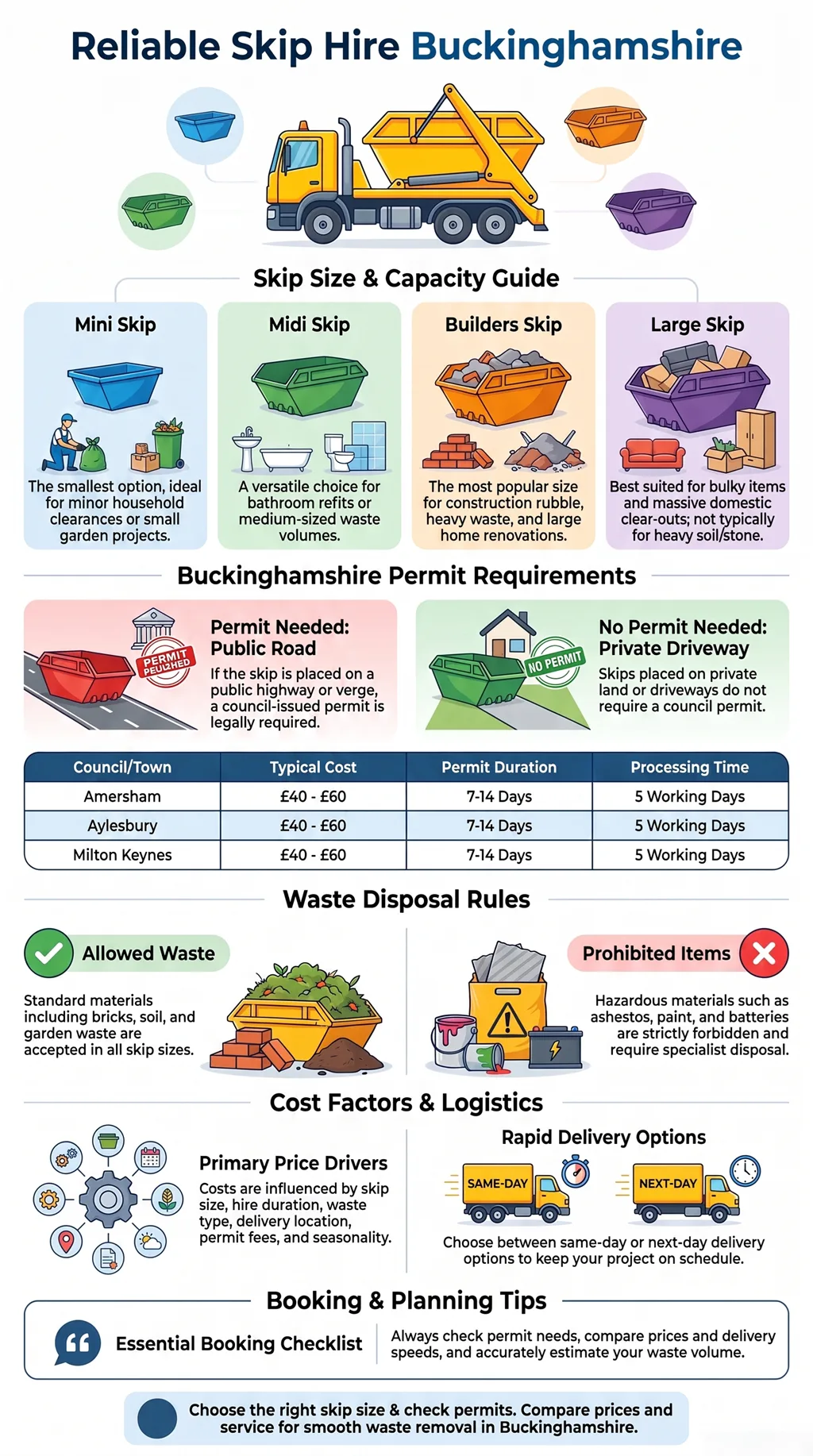
A permit is usually required if the skip will be placed on a public road, pavement, or on-street parking space.
A permit is not normally needed if the skip stays on a private driveway or within our property boundary.
Permit fees and durations vary between local councils.
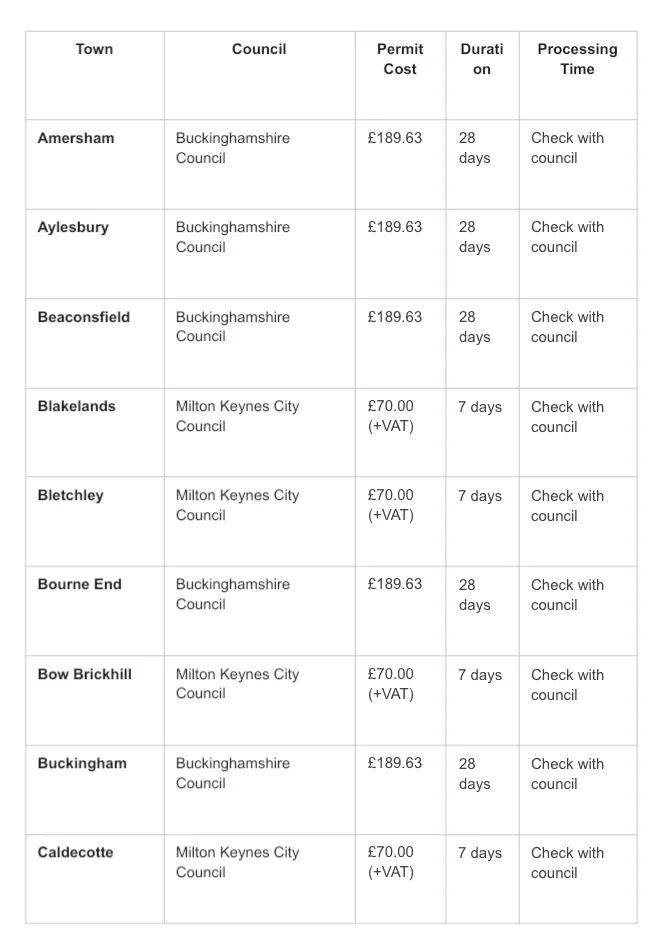
Buckinghamshire Council charges £189.63 for the first 28 days, and Milton Keynes City Council charges £70.00 plus VAT for the first 7 days.
The table below shows the typical permit costs, durations, and processing times for towns across the area.
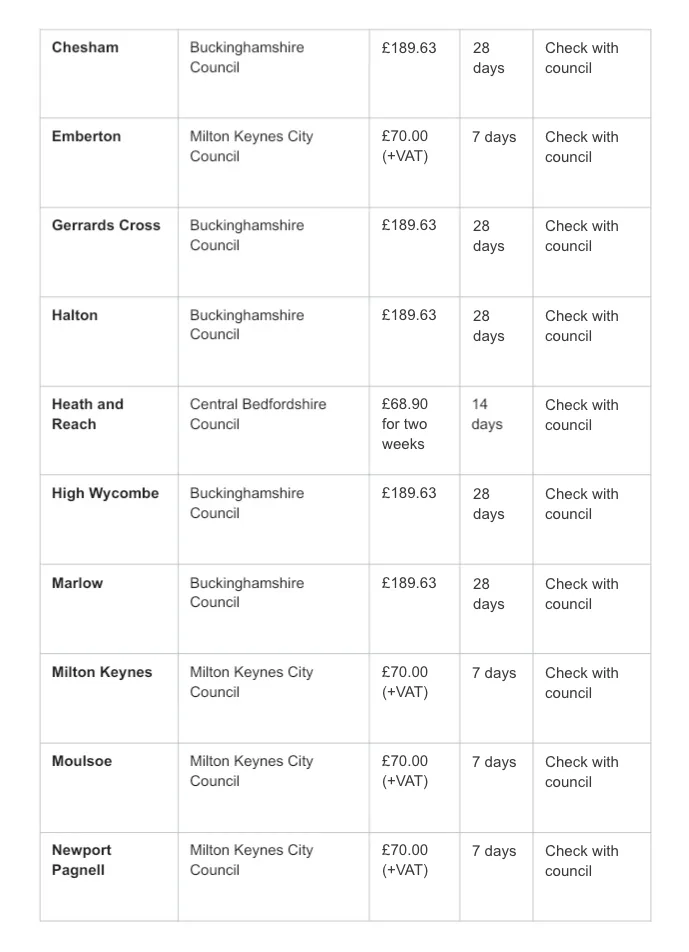
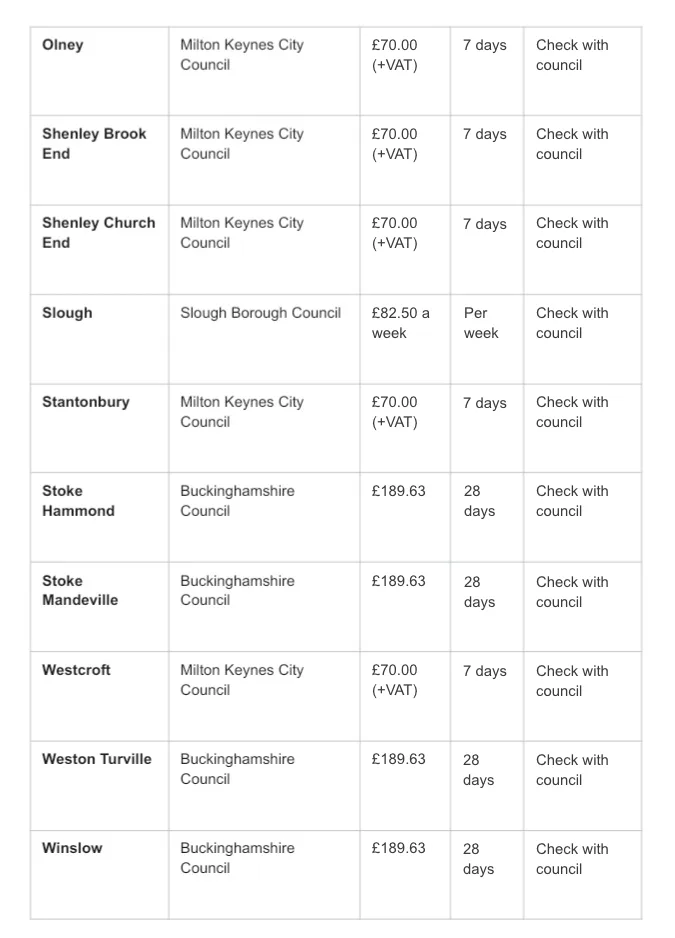
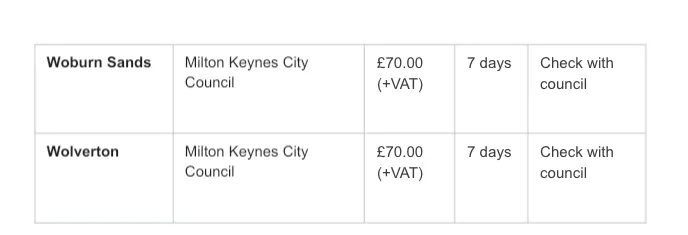
Many local skip providers can arrange the permit as part of the booking process. Even so, it is still worth checking that the permit has been approved before the skip is delivered, especially if it will be placed on a public road or pavement.
What Can and Cannot Go in a Skip?
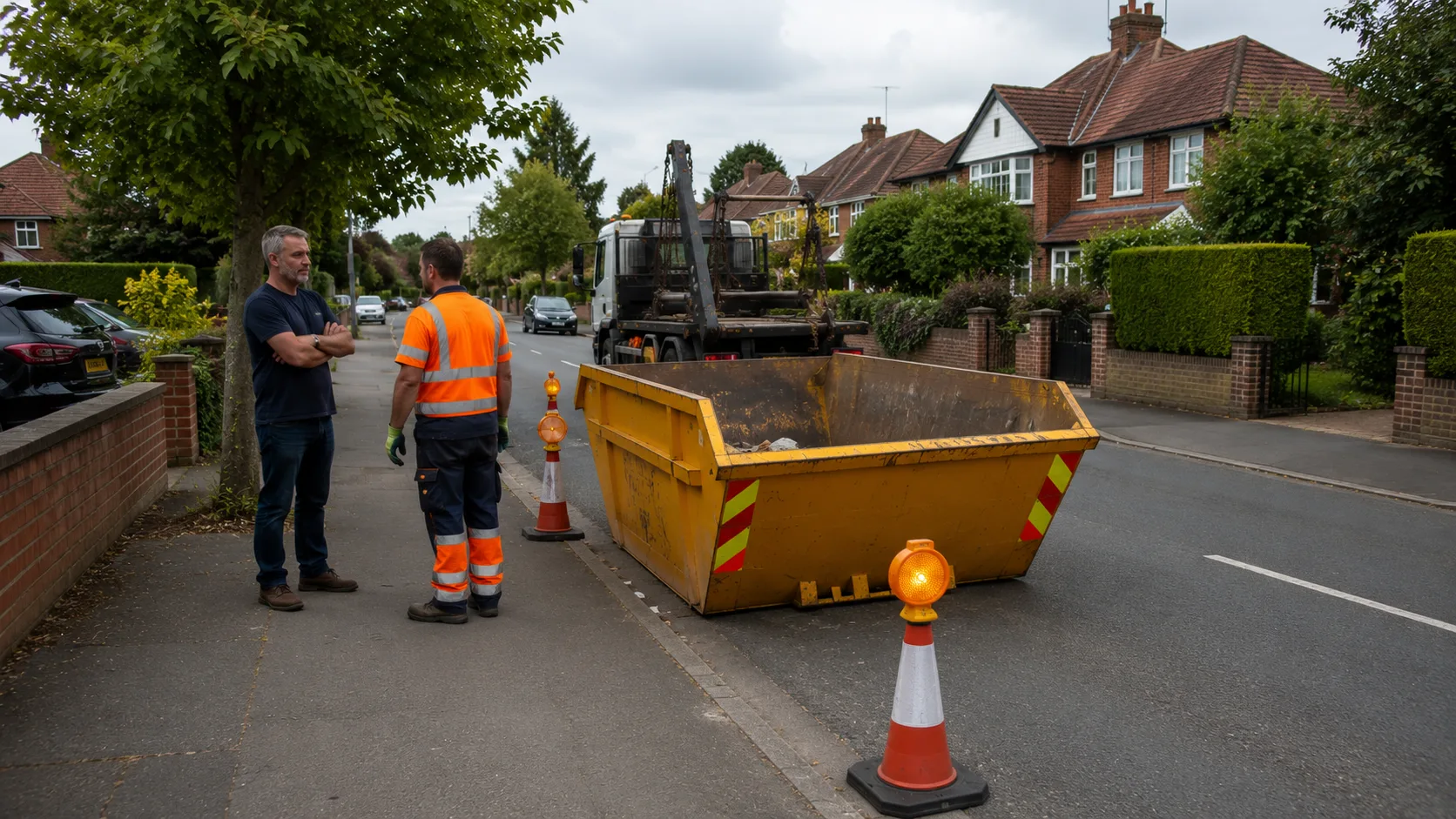
Knowing what can go into a skip before loading it can save time and help avoid problems on collection day. Most everyday household and building waste is accepted, but a few items need to be disposed of in a different way.
You can usually place these items in a standard skip:
Household rubbish
Cardboard and paper
Plastic
Garden waste, such as grass, branches, and plants
Wood and timber
Bricks and concrete
Tiles and ceramics
Plasterboard (this may have an extra disposal charge)
Some items should never go into a standard skip because they require specialist handling:
Asbestos
Paint, chemicals, and solvents
Engine oil
Car and household batteries
Fluorescent tubes
Fridges and freezers
TVs and computer monitors
Tyres
Gas bottles
Medical waste
If we are not sure about an item, it is always worth asking before loading the skip. A quick check can help avoid delays, extra charges, or the need to remove items before collection.
How Can We Compare Local Skip Providers?
Choosing a local skip provider does not have to be complicated. A little research before booking can help us find a service that matches our project and avoids unnecessary surprises later.
Many providers cover towns including Aylesbury, High Wycombe, Buckingham, Amersham, Chesham, Beaconsfield, Marlow, Gerrards Cross, Milton Keynes, Winslow, and nearby areas. It is always worth checking that delivery is available for our location before booking.
Here are a few things to compare:
Clear and upfront pricing
A range of skip sizes
Flexible hire periods
Delivery and collection times
Licensed waste collection
Recycling and waste handling
Online quotes or booking
Price is important, but it should not be the only thing we look at. Taking a few minutes to check the hire terms, delivery dates, and permit arrangements can make the whole process easier. It also helps us choose a service that fits our project and keeps everything running smoothly from delivery to collection. If we are comparing nearby areas as well, our skip hire Berkshire guide may also be helpful.
FAQ
Most skip hire companies offer flexible hire periods. Many standard bookings last 1 to 2 weeks, although this can vary between providers. If we need the skip for longer, it is best to discuss this before booking, as additional charges may apply.
If the skip fills up before our project is finished, we may need to arrange another skip or an additional collection. Estimating the amount of waste before booking can help us choose the right size and avoid extra costs.
Yes, but a permit is usually required if the skip will be placed on a public road, pavement, or on-street parking space. If the skip stays on private property, such as a driveway, a permit is generally not needed.
Many heavy materials, including bricks, concrete, soil, and rubble, can be placed in a skip. However, some providers charge extra for these materials because they cost more to dispose of. It is always worth checking what is included in the quote before loading the skip.
Comparing a few key details can make choosing a provider much easier. Look for clear pricing, suitable skip sizes, flexible hire periods, delivery availability, collection options, and whether permit arrangements are included. Taking a little time to compare these details can help us find a service that fits our project and budget.
Ready to Book a Skip?
Choosing the right skip starts with understanding our project, estimating how much waste we need to remove, and selecting a skip size that fits the job. It also helps to check permit requirements, compare prices, and review collection options before booking.
A little planning can make waste removal simpler and help keep everything on schedule, whether we are clearing a garden, renovating a home, or managing building work.
When we are ready to compare local providers and arrange delivery, Skip Hire can help us explore options across the UK. We can compare local companies, request quotes, and find a service that suits our project by visiting Search Skip Hire
References
Related Articles
Filed under:
Skip Hire