
If we need a skip for a house clearance, garden project, renovation, or building work, we can choose a suitable option by checking the skip size, waste type, location, and permit requirements.
Getting these details right can help us plan the job and avoid problems with delivery or collection. Keep reading to understand the main costs, skip sizes, waste rules, and practical steps for arranging skip hire in Cumbria.
Quick Reads for Skip Hire in Cumbria
This quick summary brings together the most useful points for planning a skip hire project from start to finish.
We should choose the skip size based on the amount and type of waste we expect to produce.
We may need a permit if the skip is placed on a public road, pavement, verge, or footpath.
We should check accepted waste before loading the skip because hazardous and restricted materials need separate arrangements.
How Much Does Skip Hire Cost in Cumbria?
Skip hire prices depend on the size of the skip, the type of waste, the delivery location, and whether additional arrangements are required.
We can use the following figures as a general guide when estimating the cost of a skip for a project.
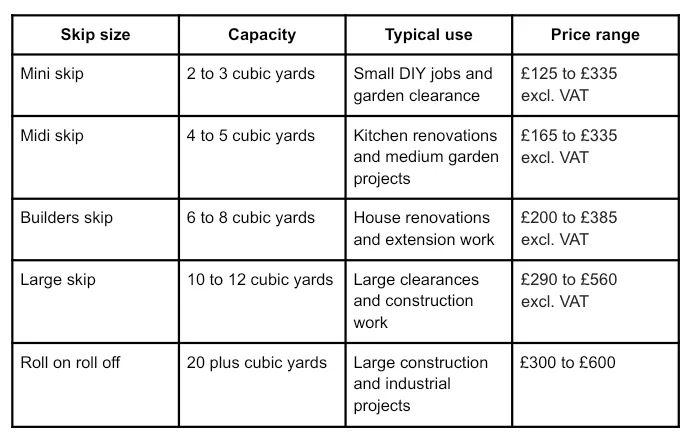
The figures above are general price ranges rather than guaranteed prices. The final cost can change depending on the project and delivery location.
A mini skip may be enough for a small garden clearance, while a builders skip can provide more room for renovation waste. Larger projects may need a 10 to 12 cubic yard skip or a roll on roll off skip.
We should also consider the type of waste before focusing only on the skip price. Heavy materials such as soil, concrete, and rubble can have different handling requirements.
Which Skip Size Should We Choose?
The right skip size depends on how much waste our project is likely to produce and what materials we need to remove. These are some of the skip hire fundamentals we should consider before choosing a suitable size.
We can use these general examples to help estimate the amount of space we may need.
A mini skip can suit small DIY tasks, limited clearances, and smaller garden projects.
A midi skip can suit medium jobs such as kitchen work, furniture removal, and larger garden clearances.
A builders skip can suit many home renovations, extensions, and building projects.
A large skip can suit major clearances and projects that produce a high volume of waste.
A roll on roll off skip can suit large construction projects and substantial amounts of waste.
We should avoid choosing a skip based only on its physical size. The type and weight of the waste can also affect which option is suitable.
For example, a skip filled with bricks or concrete can become very heavy before it is full. If we have a large amount of heavy waste, we should discuss the material with the skip hire provider before booking.
We should also keep waste below the top of the skip. Overfilled skips may not be safe to transport and may need to be adjusted before collection.
What Can Change the Price of Our Skip Hire?
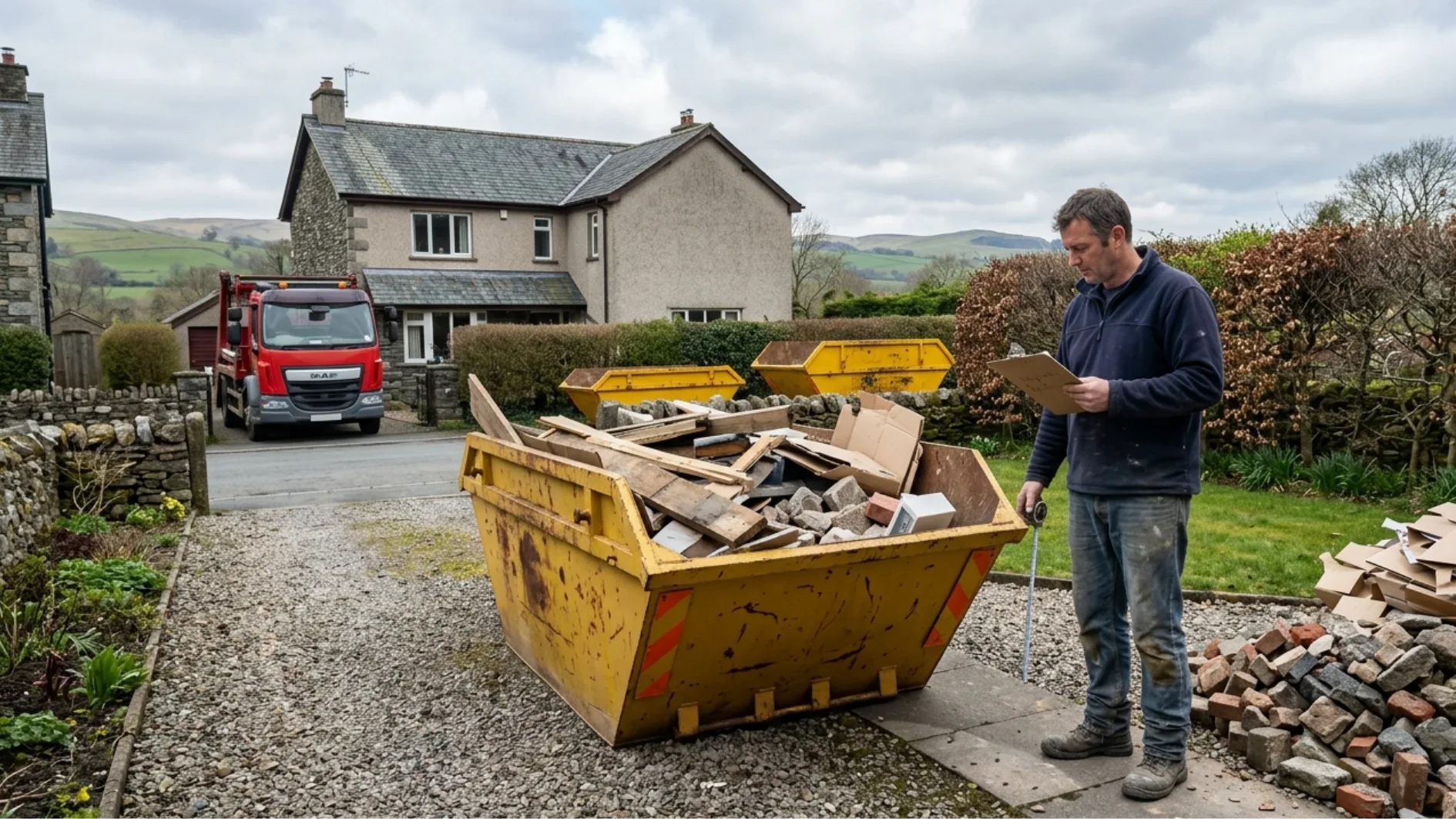
Several parts of a skip hire order can affect the final cost, so we should check each one before confirming the booking.
We can look at these factors when working out our likely budget.
The skip size affects how much waste we can put inside and normally affects the basic hire price.
The waste type can affect disposal and handling costs.
The delivery location can affect transport costs and availability.
The hire period can affect the total price if we need the skip for longer than the agreed period.
A public highway permit can add another cost when the skip needs to be placed on public land.
The size is usually one of the first things we need to consider. A larger skip costs more but can reduce the risk of needing another collection.
Waste type is also important. Soil, rubble, concrete, bricks, and other heavy materials can require different handling from lighter household waste.
Location can affect delivery arrangements. We should mention narrow roads, difficult entrances, steep driveways, or other access issues before delivery.
The hire period also matters. We should check how long the skip can stay at our property and whether extra charges apply if we need more time.
Do We Need a Skip Permit in Cumbria?
We generally need a skip permit when the skip is placed on public highway space rather than entirely on private property. This is also an important point to consider when arranging skip hire Clwyd, as placement rules can affect how a skip is arranged.
The following locations can require a permit depending on the council rules covering our area.
Public roads
Pavements
Grass verges
Public footpaths
Other areas forming part of the public highway
As highlighted by Cumberland Council:
"A skip permit allows you to place a skip on a road, grass verge, pavement, public footpath. Only registered skip hire companies can apply for a skip permit." - Cumberland Council
Current council guidance states that registered skip hire companies apply for permits when skips are placed on public highways.
If our skip is fully inside our private property, such as on a suitable driveway, a highway skip permit is generally not required.
We should still check the local rules because Cumbria is covered by different local authorities. The exact application process and fee can depend on where our property is located.
We should also plan ahead because Westmorland and Furness Council asks for at least three working days notice for a skip permit application.
What Waste Can We Put in a Skip?
Many common household, garden, and construction materials can go into a suitable skip, but we should always check the specific waste rules before loading it.
Commonly accepted materials can include the following items.
Household rubbish
Cardboard
Paper
Plastics
Textiles
Soil
Turf
Branches
Logs
Plants
Leaves
Grass cuttings
Bricks
Concrete
Wood
Timber
Tiles
Ceramics
Different materials can have different conditions. Plasterboard is one example because gypsum waste has specific landfill requirements.
The Environment Agency states that gypsum based waste needs to be separated for recovery or disposed of in an appropriate separate landfill cell where applicable.
We should therefore confirm whether plasterboard can go into our chosen skip and whether it needs to be separated.
Heavy waste also needs careful planning. We should tell the skip hire provider if our project involves a large quantity of soil, concrete, bricks, or rubble.
Which Materials Cannot Go Into a Standard Skip?
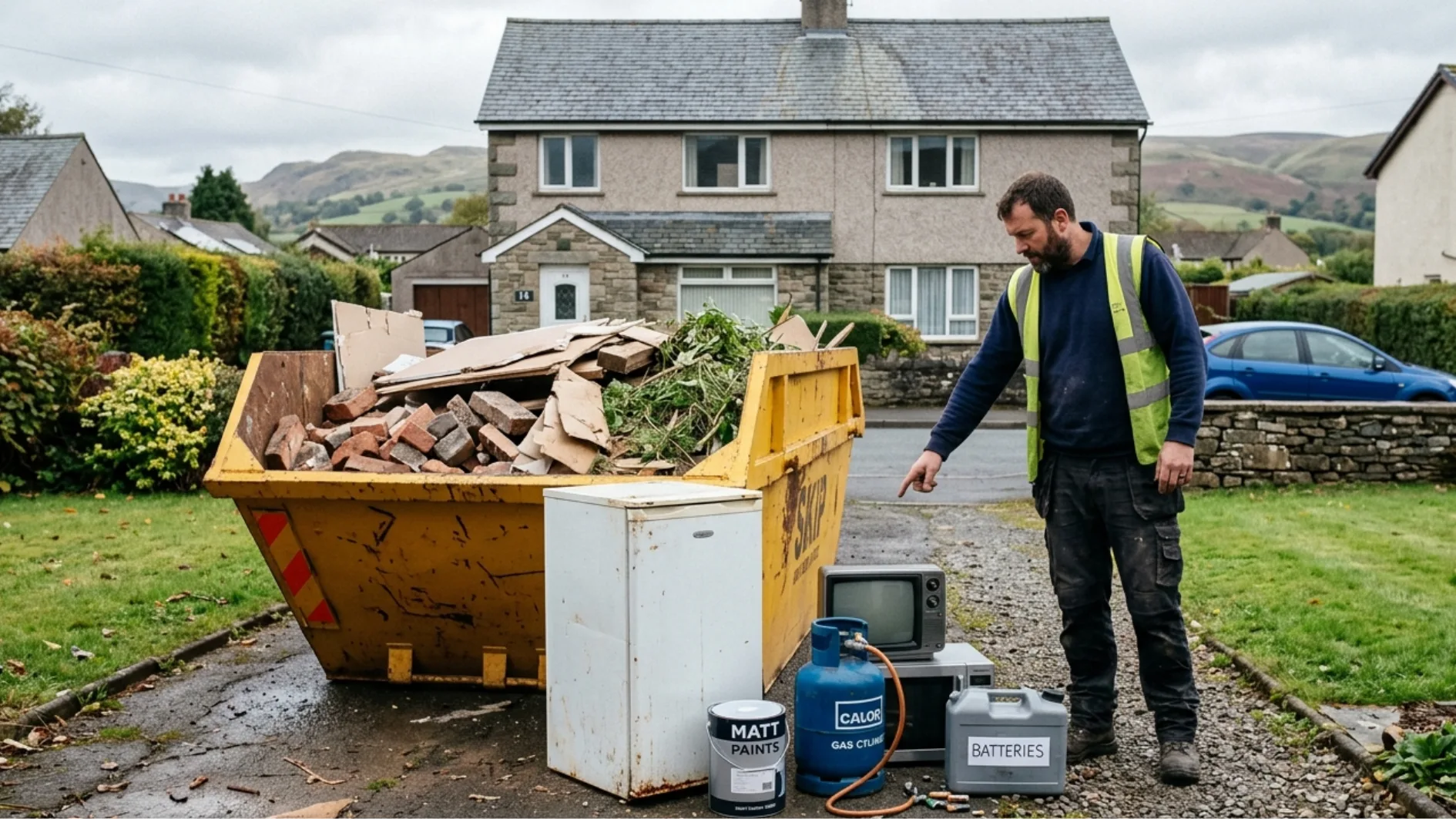
Some materials should not be placed into a standard skip because they may require specialist handling or disposal.
We should keep the following materials separate unless specific arrangements have been confirmed.
Asbestos
Chemicals
Oils
Solvents
Batteries
Fluorescent tubes
Fridges and freezers
Some electrical equipment
Gas bottles
Tyres
Medical waste
Other hazardous materials
Asbestos needs particular care because asbestos containing waste can be classified as hazardous waste and requires appropriate disposal arrangements.
Electrical equipment may also need separate treatment rather than being placed into a general mixed waste skip.
We should tell the skip hire provider what materials we have before delivery. This gives us a chance to confirm whether they are accepted or whether separate disposal is needed.
As noted by Westmorland and Furness Council:
"Hazardous waste must not just be placed in skips without consulting a member of staff first. Hazardous items include things like: asbestos, chemicals, such as weed killer, brake fluid, petrol, diesel, paint stripper and oil-based paint, batteries" - Westmorland and Furness Council
How Long Can We Keep Our Skip?
The amount of time we can keep a skip depends on the hire terms and, when relevant, the period allowed by a highway permit.
We should check these details before the skip arrives.
The agreed delivery date
The expected collection date
The standard hire period
Whether an extension is available
Whether extra charges apply for additional time
The permit period when the skip is placed on a public highway
If our project has a fixed schedule, we can arrange delivery around the work. This can help prevent the skip from sitting unused for longer than necessary.
If our project may take longer than expected, we should ask about extensions before booking. This is especially important when a skip is placed on public highway space because the permit period also needs to be considered.
How Can We Prepare for Skip Delivery?
Good preparation can make delivery easier and help us avoid access problems when the skip arrives.
We should check the following points before the delivery date.
We have enough space for the skip.
The delivery route is accessible.
The driveway or other surface can safely support the skip.
Gates and entrances can be opened if needed.
The skip will not block important access.
A highway permit has been arranged if required.
We have checked which waste is accepted.
Restricted materials have been kept separate.
The skip will not be filled above its sides.
We should also tell the skip hire provider about any unusual access conditions. Narrow roads, parked vehicles, low branches, steep entrances, or limited turning space can affect delivery.
If the skip needs to go on a public road, we should arrange the permit before delivery. Current council guidance states that registered skip hire companies apply for the relevant permits.
How Can We Choose the Right Skip for Our Project?
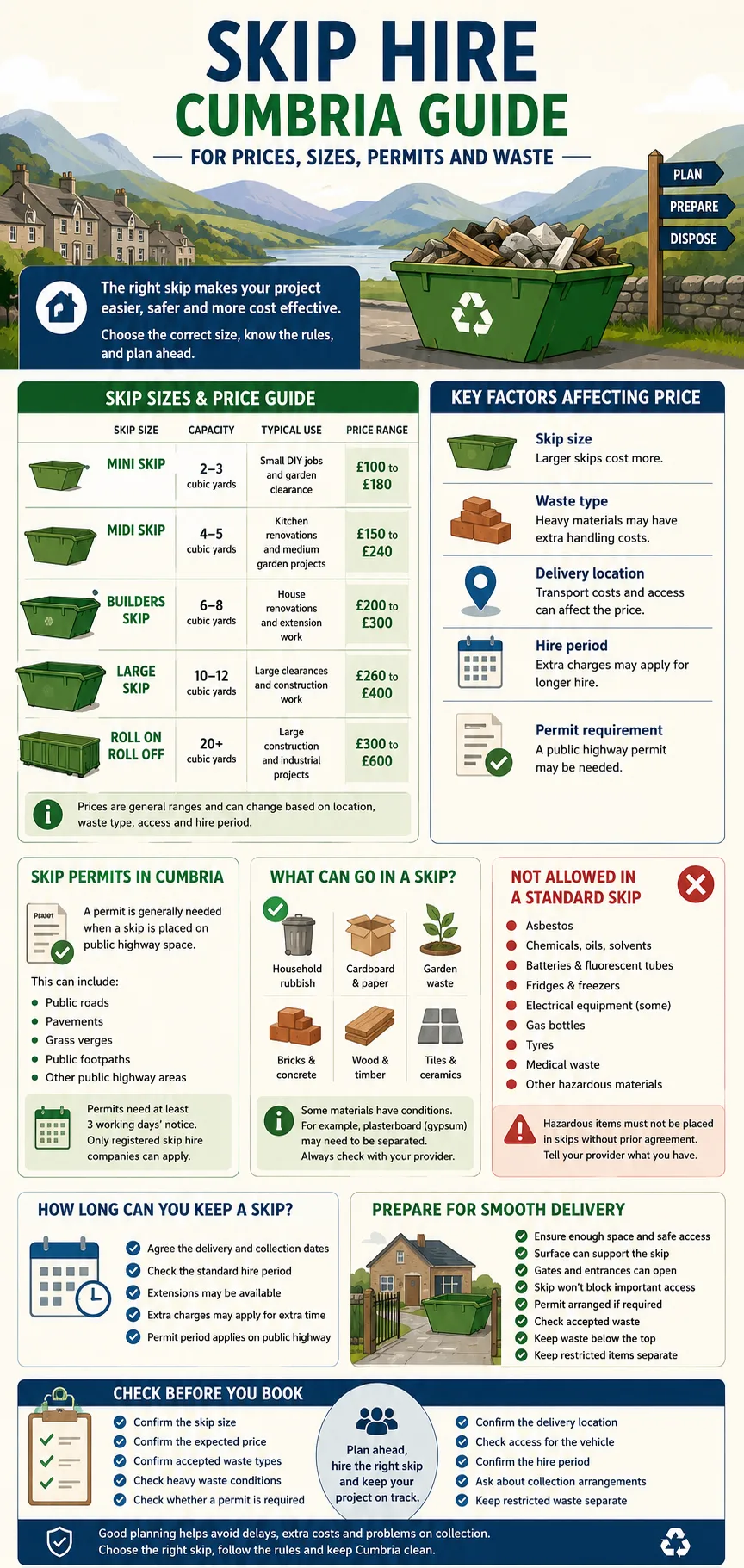
We can choose a suitable skip by considering the amount of waste, the material type, the delivery location, and the length of the project. These same factors can also matter when arranging skip hire Cornwall for a different type of project.
These questions can help us make the decision.
How much waste will our project create?
Is the waste mostly light household material or heavy building material?
Where will the skip be placed?
Will the skip be on private property or public highway space?
How long will we need the skip?
Do any of our materials need separate disposal?
Could our project produce more waste than expected?
For a small clearance, a mini or midi skip may provide enough space. For a larger renovation, a builders skip may be more suitable.
If we are unsure about the size, we should describe the project and the waste to the skip hire provider before booking. This gives us a better basis for choosing the right capacity.
Choosing a slightly larger suitable skip can also be practical when we know the project will produce a large amount of waste. However, we should not choose a large skip simply because it is available if our project only produces a small amount of waste.
What Should We Check Before Booking Skip Hire in Cumbria?
Before booking, we should confirm the main details so the skip matches our project and delivery location.
We can use this simple check before arranging delivery.
Confirm the skip size.
Confirm the expected price.
Confirm the accepted waste types.
Check whether heavy waste has special conditions.
Check whether a permit is required.
Confirm the delivery location.
Check access for the delivery vehicle.
Confirm the hire period.
Ask about collection arrangements.
Keep restricted waste separate.
Taking these steps can make the booking process clearer. It also gives us an opportunity to deal with problems before the skip arrives rather than during the project.
FAQ
Skip hire costs vary according to size, waste type, location, and other requirements. General price ranges can start at around £125 (excluding VAT) for a mini skip and reach £600 or more for a large roll on roll off skip.
Yes, a permit is generally required when the skip is placed on a public road, pavement, grass verge, or public footpath. The relevant council provides the permit rules for the area.
We should choose based on the volume and type of waste. Mini skips suit smaller jobs, while builders and larger skips provide more space for renovations, clearances, and construction projects.
Garden waste such as branches, leaves, plants, turf, and grass cuttings can often be accepted, but we should confirm the conditions before booking. Different waste types can have different handling requirements.
We should not place asbestos into a standard skip. Asbestos waste requires suitable handling and disposal arrangements because it can be classified as hazardous waste.
Skip Hire Cumbria for Your Next Project
We can make our waste removal project easier by choosing a suitable skip size, checking the accepted materials, preparing the delivery area, and confirming whether a permit is required.
The cost will depend on our project, but checking these details before booking gives us a clearer idea of what we need.
We can continue by checking the available options for our area through the Skip Hire Cumbria. From there, we can review the options and choose the arrangement that fits our project and waste requirements.
References
Related Articles
Filed under:
Skip Hire