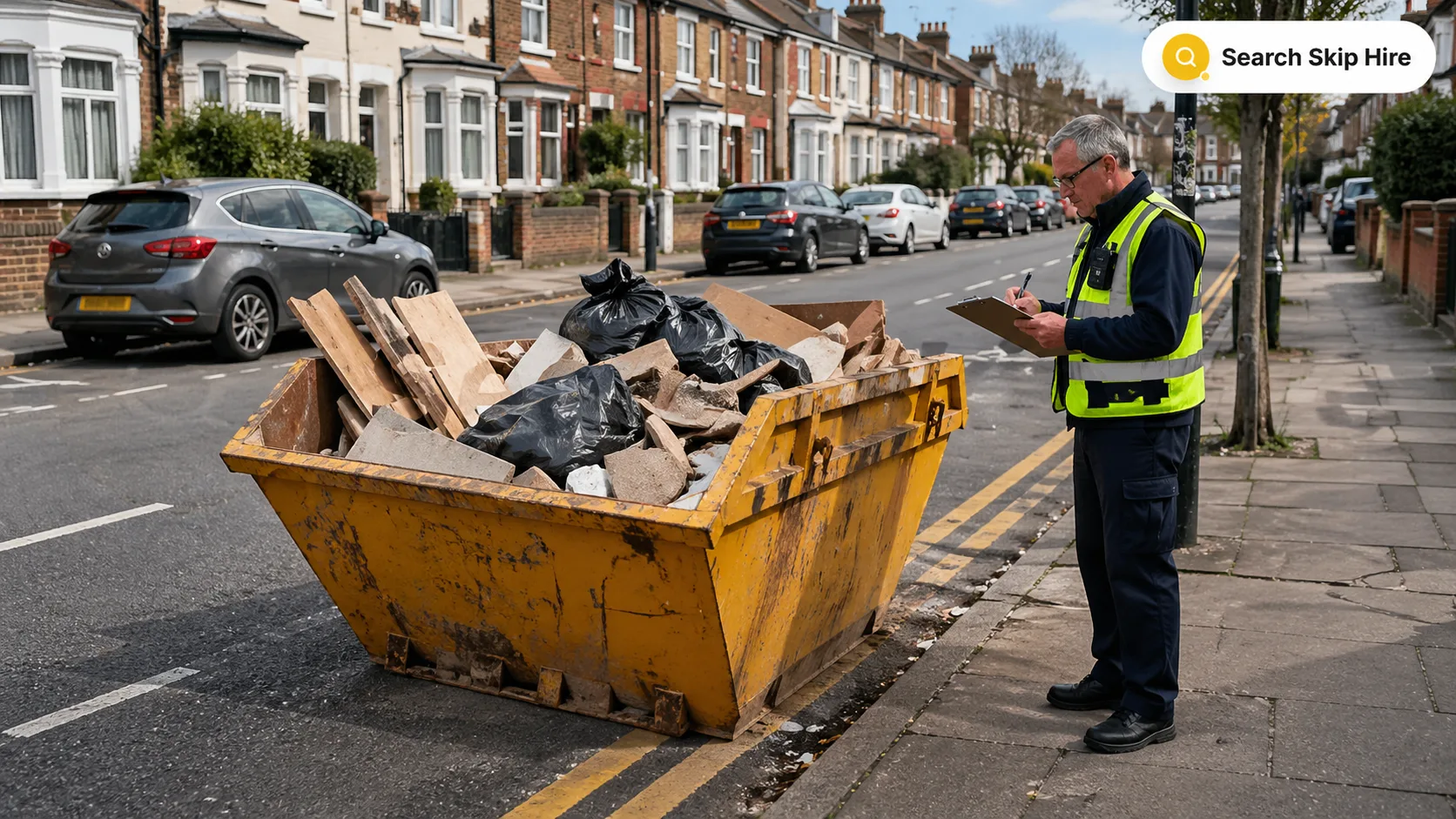
Illegal skip usage fines in the UK can reach £1,000 or more, and in some cases lead to court action, removal costs, and extra charges.
These penalties usually happen when we place a skip without a permit, block access on a road or pavement, or miss basic safety steps like lights and markings.
The rules are in place to protect public safety and manage waste properly. While it may seem complicated at first, most fines are avoidable when we follow simple guidance.
Keep reading to understand the common risks and how we can avoid them.
Illegal Skip Usage Fines: Key Points to Know
Before we go further, these are the key points we need to keep in mind when dealing with skip usage rules in the UK.
Most fines happen because of missing permits or expired licences
Safety issues like missing lights or cones can lead to penalties
Waste violations, especially hazardous materials, carry the highest fines
What Counts as Illegal Skip Placement
Illegal skip placement happens when we do not follow council rules on where and how a skip can be placed. These rules are there to keep roads safe and make sure people can move around without risk.
According to official government safety guidance, it is a requirement that
"each skip shall be positioned so that its longer sides are parallel to the edge of the carriageway and as near to the edge of the carriageway as is reasonably practicable."
Placing a skip on a public road without a permit
Putting a skip on a pavement without approval
Using restricted areas like double yellow lines
Placing skips too close to junctions
In busy areas like Greater London, even small placement issues can quickly lead to enforcement action due to traffic flow and pedestrian safety.
Legal Framework Governing Skip Fines

Skip use in the UK is guided by national law and local council rules, which work together to manage safety, traffic flow, and proper waste handling.
These regulations rely on clear placement standards, permits, and visibility requirements to reduce risks to workers and the public; according to the Health and Safety Executive, the waste sector carries a higher-than-average risk of injury, reinforcing the need for strict compliance.
As reported by the Health and Safety Executive,
“the waste and recycling industry has a rate of injury significantly higher than the average across all industries.”
Highways Act 1980 (Section 139 and 140)
Local council enforcement powers
Environment Agency regulations for waste
Common Types of Skip Permit Violations

There are several ways rules can be broken, and many of them are simple mistakes. Understanding these helps us avoid problems early. For a broader explanation, we can explore how these rules fit within overall legal rules, permits & compliance.
No Permit or Expired Permit Violations
Not having a valid permit is one of the most common reasons for fines. This often happens when we assume a permit is not required.
Placing a skip on a road without a licence
Continuing to use a skip after the permit expires
Being charged retrospective permit fees
We can better understand this by looking at skip hire legal requirements in the UK, which explain when permits are needed.
Skip Placement & Obstruction Offences
Placement matters because a poorly placed skip can disrupt daily life. Councils take these issues seriously, especially when public access is affected.
Blocking footpaths or driveways
Causing traffic obstruction
Creating a public nuisance
Being reported through CCTV evidence
Safety Requirement Violations
Safety rules are simple but important. Skips must be clearly visible, especially in low light or busy areas.
Missing safety lights during night hours
No traffic cones around the skip
Lack of reflective markings
Financial Penalties and Charges Breakdown
Fines are not always a single cost. In many cases, there are additional charges depending on what went wrong. A key step in avoiding this is understanding when a skip permit is required before arranging delivery.
Fixed Penalty Notices and Fines
Councils can issue fines quickly when rules are broken. Ignoring them can lead to higher costs.
Fines up to £1,000 under the Highways Act
Fixed penalty notices issued by councils
Additional court costs if prosecuted
Additional Council Charges
When a skip causes disruption, councils may step in and recover their costs from us.
Skip removal by council teams
Storage charges after seizure
Failed inspection fees
Hidden Costs and Surcharges
Some costs are less obvious but still important. These can build up if we do not stay compliant.
Late permit application fees
Compliance audit charges
Insurance claims being denied due to violations
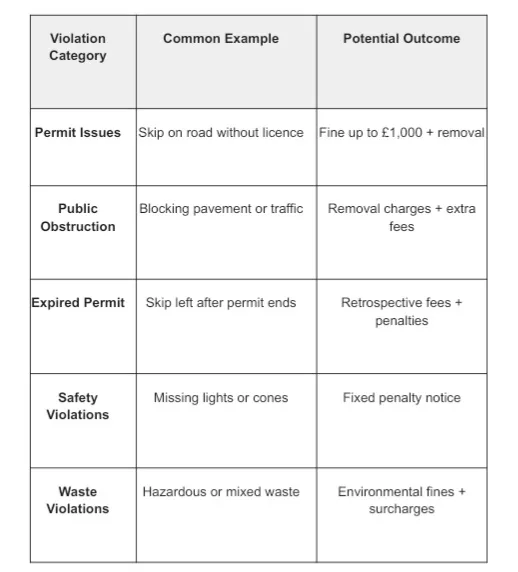
Skip Fine Overview Table
Understanding how different violations connect to penalties helps us stay prepared and avoid common mistakes.
Waste-Related Violations and Environmental Fines
Waste handling is a key part of skip hire. Rules are strict because they protect the environment and public health.
Illegal Waste Disposal in Skips
We are responsible for the waste inside the skip, even if others add to it. This is known as duty of care.
Fly tipping liability
Waste producer responsibility
Duty of care breaches leading to fines
Hazardous Waste Penalties
Some materials are not allowed in skips because they are dangerous. These are closely monitored.
Asbestos disposal fines
Chemicals, paints, and liquids
Environmental permit breaches
Contamination and Recycling Penalties
Mixing the wrong types of waste can cause problems at recycling centres and lead to extra charges.
Mixed waste contamination fees
Tyres and batteries surcharges
Recycling rejection costs
Real-Life Examples of Skip Fine Cases
Real examples help us see how rules are applied and why it is important to stay compliant.
High-Profile UK Cases
Some cases have resulted in large fines, showing how serious violations can become.
Oxford Street case with a £12,000 fine
Birmingham magistrates court prosecution
Council Enforcement Examples
Councils regularly act against repeated or serious breaches to keep areas safe and controlled.
Multiple illegal skips leading to prosecution
Operators being blacklisted
Licence revocation cases
Enforcement Actions by Councils
Councils actively monitor skip use and respond when rules are not followed. This helps prevent ongoing issues.
Council Investigation and Monitoring
Routine checks help councils make sure skips meet legal and safety standards.
Skip inspections by officers
Compliance audits
Permit database checks
Legal Enforcement Measures
If problems continue, stronger actions may be taken to resolve the situation.
Skip seizure by highways teams
Court prosecution and legal records
Public nuisance enforcement
Business Risks for Skip Hire Operators
For operators, staying compliant is essential. Small mistakes can lead to larger problems over time.
Licensing and Registration Violations
Operating legally requires proper licences and registrations. Missing these can lead to penalties.
Operating without a valid licence
Waste carrier registration breaches
Annual licence revocation
Operational Compliance Risks
Daily operations must follow clear rules to avoid fines and delays.
Overloaded skips
Unauthorized storage sites
Missing waste transfer notes
Reputation and Financial Impact
Non-compliance can affect long-term stability, not just immediate costs.
Being blacklisted by councils
Losing contracts
Reduced customer trust
How to Avoid Illegal Skip Usage Fines
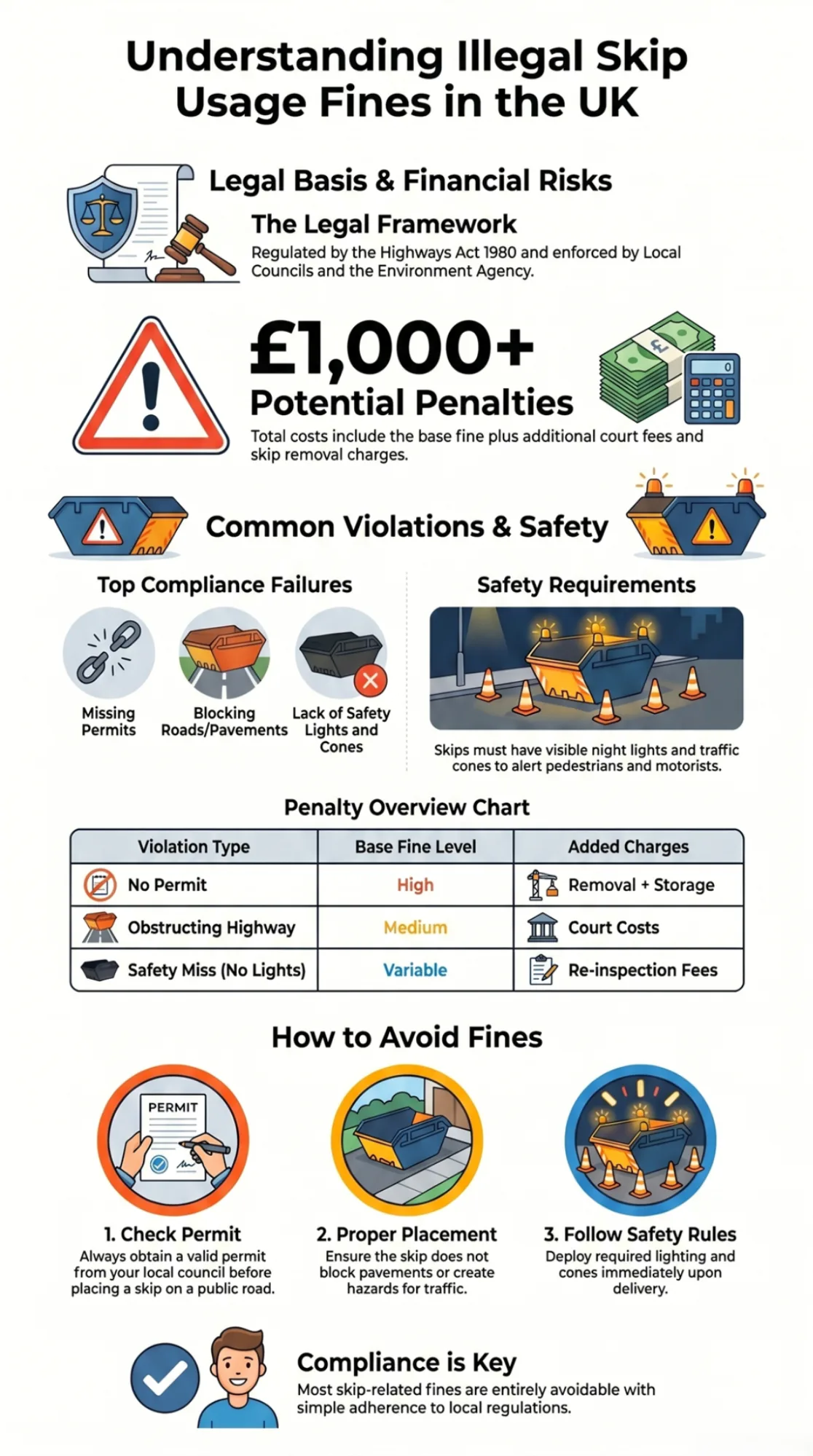
Avoiding fines is mostly about planning ahead and following simple steps. This makes the process much smoother.
Proper Permit Application Process
We need to make sure the correct permit is in place before placing a skip on public land.
Check if a permit is required
Apply through the local council
Confirm correct placement location
In areas like Kent or Greater Manchester, requirements can vary slightly, so checking local rules is always important.
Compliance Best Practices
Simple checks can prevent most issues. Staying organised helps us stay within the rules.
Use proper lighting, cones, and markings
Only place allowed waste in the skip
Monitor permit expiry dates
What to Do If We Receive a Fine
If a fine does happen, it is best to deal with it early and clearly.
Review the reason for the fine
Gather supporting evidence
Submit an appeal if needed
FAQ
We only need a permit if the skip is placed on public land such as a road or pavement. Private land does not usually require one.
Fines can reach up to £1,000, but total costs may be higher if removal, storage, or court fees are added.
We are responsible for the waste, even if someone else adds to it. This is part of our duty of care.
Yes, councils can remove a skip if it is placed illegally or causing a problem. We may also be charged for removal and storage.
If a permit expires and the skip remains in place, we may face fines or additional permit charges.
Illegal Skip Usage Fines in the UK: Staying Compliant and Avoiding Penalties
Illegal skip usage fines can feel overwhelming, but in most cases, they are avoidable when we understand the basic rules. Permits, correct placement, and safe waste handling all play a part in keeping things compliant.
When we take a little time to check requirements before placing a skip, we reduce the risk of fines, delays, or added costs. This applies whether we are working on a small home project or a larger job.
At Skip Hire, we aim to keep the process clear and simple so we can stay within the rules from the start. Whether we are arranging a skip in Essex, Lancashire, or any other part of the UK, having the right setup makes everything smoother.
If we want a straightforward way to get started while staying compliant, we can explore our options with Skip Hire.
References
Related Articles
Filed under:
Skip Permits